






Why Earth Day Is Celebrated on April 22 and Its Importance for Students
Earth Day is a global environmental event celebrated every year to raise awareness about protecting our planet. It encourages people to take action against environmental problems such as pollution, climate change, deforestation, and biodiversity loss. The day unites millions of people across countries to promote sustainable living and environmental conservation. Understanding when and why Earth Day is celebrated helps students and competitive exam aspirants grasp its importance in global environmental movements.
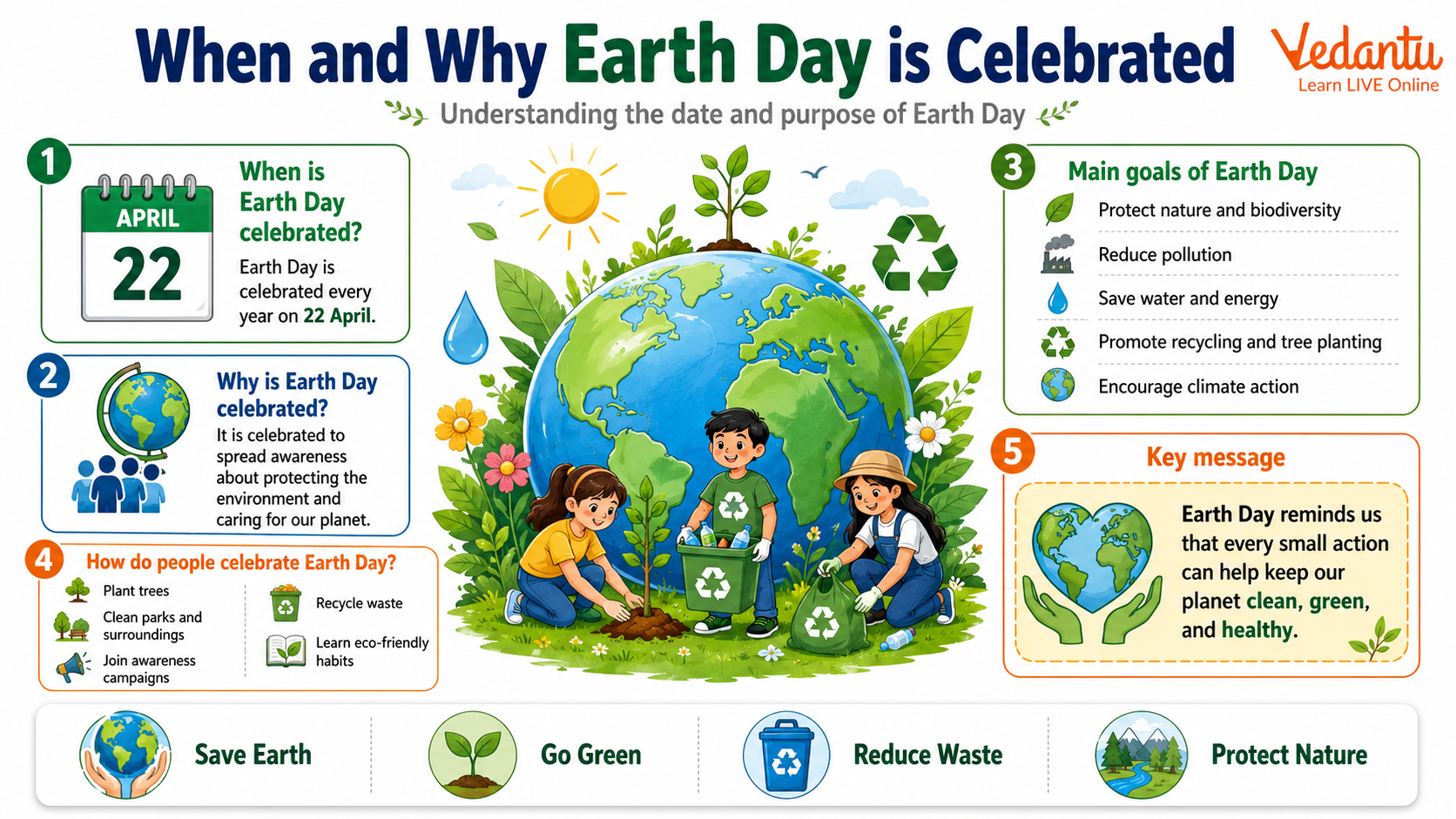
When Is Earth Day Celebrated?
Earth Day is celebrated every year on 22 April. The date remains the same annually and is observed worldwide. On this day, people, schools, organizations, and governments organize events and activities focused on environmental protection.
Global Observance
- Celebrated annually on 22 April.
- Observed in more than 190 countries.
- Supported by schools, colleges, NGOs, and governments.
- Includes environmental campaigns and awareness programs.
History of Earth Day
The first Earth Day was celebrated on 22 April 1970 in the United States. It was initiated by US Senator Gaylord Nelson after witnessing the environmental damage caused by oil spills and industrial pollution. He wanted to create public awareness about environmental issues and encourage government action.
More than 20 million Americans participated in the first Earth Day. This massive participation led to the creation of important environmental laws and the establishment of the Environmental Protection Agency in the United States. Over time, Earth Day became a global movement.
Why Is Earth Day Celebrated?
Earth Day is celebrated to highlight environmental challenges and motivate individuals and governments to protect the planet. Rapid industrialization, urbanization, and excessive use of natural resources have caused serious environmental problems.
Main Reasons for Celebration
- To raise awareness about climate change.
- To reduce air, water, and soil pollution.
- To promote conservation of natural resources.
- To encourage planting trees and protecting forests.
- To support sustainable development and green energy.
Key Facts About Earth Day
| Aspect | Details | Significance |
|---|---|---|
| Date | 22 April | Annual global environmental awareness day |
| First Celebrated | 1970 | Started modern environmental movement |
| Founder | Gaylord Nelson | Initiated environmental reforms |
The table above summarizes the essential information about Earth Day, including its date, origin, and importance. These facts are commonly asked in general knowledge and competitive examinations.
Major Environmental Issues Highlighted on Earth Day
- Global warming and rising temperatures.
- Melting glaciers and rising sea levels.
- Deforestation and habitat destruction.
- Plastic pollution in oceans.
- Loss of biodiversity.
How Earth Day Is Celebrated
Earth Day is celebrated through various activities that promote environmental responsibility. Educational institutions and organizations play an important role in spreading awareness.
- Tree plantation drives.
- Clean-up campaigns in parks and beaches.
- Workshops and seminars on environmental protection.
- Awareness rallies and social media campaigns.
- Promotion of renewable energy and recycling practices.
Importance of Earth Day for Students and Competitive Exams
Earth Day is an important topic in General Knowledge, Environmental Studies, and competitive exams such as UPSC, SSC, banking exams, and state-level examinations. Questions often focus on the date, founder, purpose, and significance of the event.
- Helps in understanding environmental movements.
- Encourages responsible citizenship.
- Promotes awareness of sustainable practices.
Conclusion
Earth Day is celebrated on 22 April every year to promote environmental awareness and inspire action for protecting the planet. Initiated in 1970 by Gaylord Nelson, it has grown into a global movement involving millions of people. The day highlights critical environmental issues and encourages sustainable living. Understanding when and why Earth Day is celebrated helps students and citizens recognize their role in preserving Earth for future generations.
FAQs on When and Why Earth Day Is Celebrated Each Year
1. When is Earth Day celebrated every year?
Earth Day is celebrated every year on April 22 to promote environmental protection and awareness worldwide.
- The date April 22 was first observed in 1970.
- It marks a global movement for climate action, environmental conservation, and sustainability.
- Over 190 countries participate in Earth Day activities.
- It is one of the largest civic observances focused on saving the planet and reducing pollution.
2. Why is Earth Day celebrated?
Earth Day is celebrated to raise awareness about environmental issues and encourage people to protect the Earth.
- Highlights problems like climate change, global warming, deforestation, and pollution.
- Promotes eco-friendly practices such as recycling and tree plantation.
- Encourages governments and individuals to adopt sustainable development goals.
- Spreads awareness about conserving natural resources for future generations.
3. Who founded Earth Day?
Earth Day was founded by U.S. Senator Gaylord Nelson in 1970.
- Inspired by the 1969 Santa Barbara oil spill.
- Organized as an environmental teach-in across the United States.
- Supported by activist Denis Hayes.
- Led to the creation of important laws like the Clean Air Act and Clean Water Act.
4. What is the theme of Earth Day?
Each year, Earth Day has a specific theme focusing on major environmental challenges.
- Themes address issues like climate action, plastic pollution, renewable energy, and biodiversity.
- The theme changes annually to highlight urgent global concerns.
- Organized by EARTHDAY.ORG.
- Encourages worldwide participation in environmental campaigns.
5. How is Earth Day celebrated around the world?
Earth Day is celebrated through environmental activities and awareness programs globally.
- Tree plantation drives and clean-up campaigns.
- Educational seminars on climate change and sustainability.
- Rallies, workshops, and eco-friendly initiatives.
- Promotion of green energy and waste reduction practices.
6. What is the importance of Earth Day for students?
Earth Day is important for students because it builds awareness about protecting the environment from a young age.
- Teaches the value of environmental conservation.
- Encourages habits like recycling and saving water.
- Develops responsibility toward Mother Earth.
- Helps in preparation for GK exams and competitive exams.
7. What are the main objectives of Earth Day?
The main objectives of Earth Day are to promote environmental awareness and inspire positive action.
- Reduce air, water, and soil pollution.
- Promote renewable energy sources.
- Protect wildlife and biodiversity.
- Encourage global cooperation for sustainable living.
8. Is Earth Day a public holiday?
Earth Day is not a public holiday but is widely observed worldwide.
- Schools and colleges organize special programs.
- Environmental groups conduct awareness drives.
- Government and private organizations support green initiatives.
- It remains a working day dedicated to environmental activism.
9. What is the difference between Earth Day and World Environment Day?
Earth Day and World Environment Day are different global environmental observances.
- Earth Day is celebrated on April 22 and started in 1970.
- World Environment Day is observed on June 5 and led by the United Nations.
- Both focus on environmental protection and sustainability.
- They promote awareness about climate change and conservation.
10. How can individuals contribute on Earth Day?
Individuals can contribute on Earth Day by adopting eco-friendly habits and spreading awareness.
- Plant trees and reduce carbon footprint.
- Avoid single-use plastics and practice recycling.
- Conserve water and electricity.
- Support campaigns for climate action and sustainable development.
