






Meaning, History, and Facts about India’s National Anthem “Jana Gana Mana”
The National Anthem of India is "Jana Gana Mana", a song that reflects the unity, diversity, and rich cultural heritage of the country. It is a symbol of national pride and is sung on important national occasions such as Independence Day, Republic Day, and other official ceremonies. The anthem inspires patriotism and reminds citizens of their duty towards the nation. Understanding the history, meaning, and significance of the National Anthem of India is important for students, competitive exam aspirants, and general readers.
History of the National Anthem of India
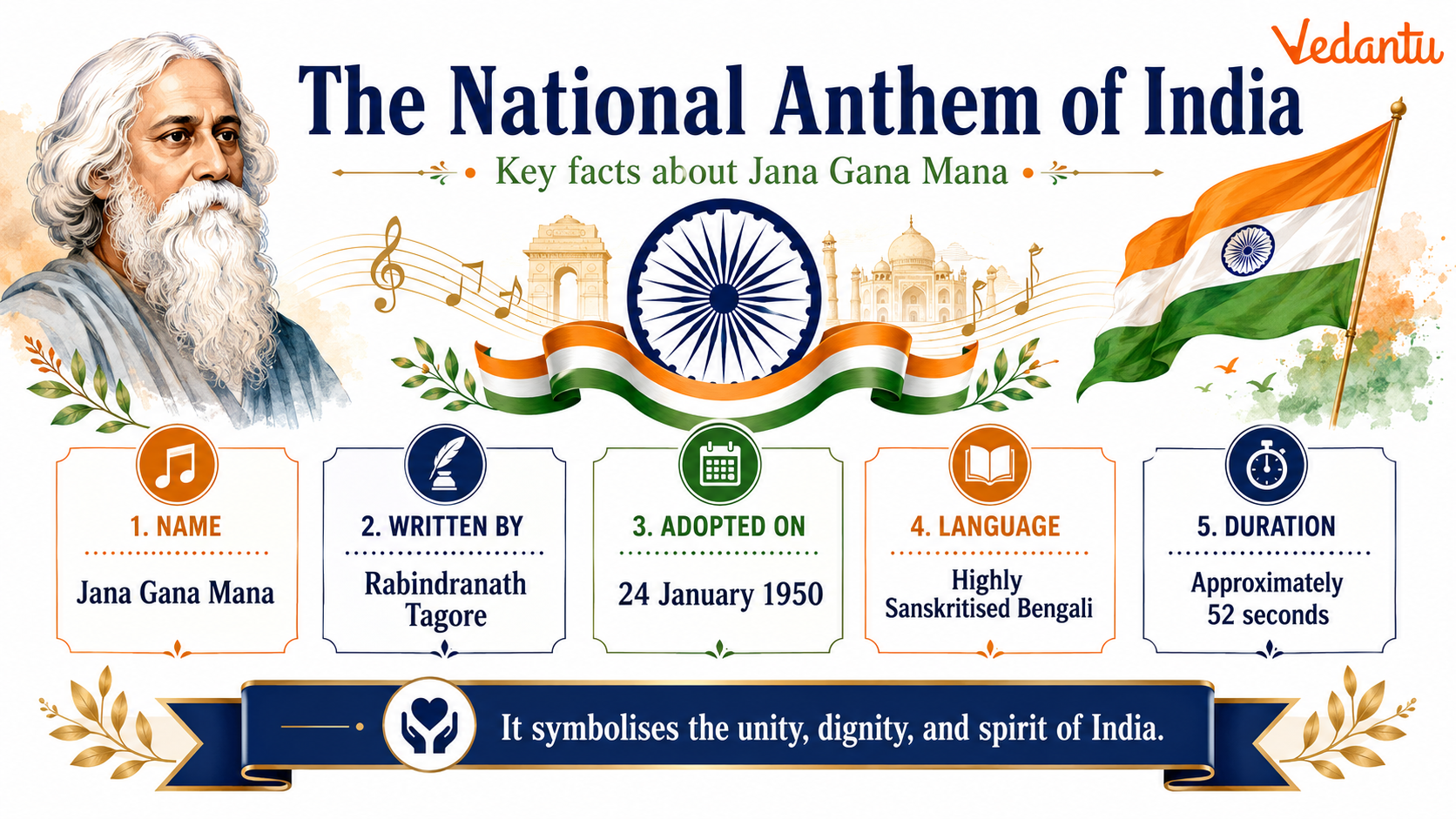
"Jana Gana Mana" was originally composed in Bengali by the great poet Rabindranath Tagore. The song was first sung on 27 December 1911 at the Calcutta Session of the Indian National Congress. It was later adopted as the National Anthem of India by the Constituent Assembly on 24 January 1950.
- Written and composed by - Rabindranath Tagore
- Originally written in - Bengali (highly Sanskritized)
- First sung on - 27 December 1911
- Adopted as National Anthem on - 24 January 1950
- Official duration - Approximately 52 seconds
Original Lyrics of the National Anthem
The National Anthem consists of the first stanza of Tagore's song. It is written in a highly Sanskritized form of Bengali.
Jana-gana-mana-adhinayaka jaya he
Bharata-bhagya-vidhata
Punjab-Sindh-Gujarat-Maratha
Dravida-Utkala-Banga
Vindhya-Himachala-Yamuna-Ganga
Uchchala-Jaladhi-taranga
Tava shubha name jage
Tava shubha ashisha mage
Gahe tava jaya gatha
Jana-gana-mangala-dayaka jaya he
Bharata-bhagya-vidhata
Jaya he, jaya he, jaya he
Jaya jaya jaya, jaya he
Meaning of the National Anthem
The anthem praises the guiding spirit of India and highlights the unity of different regions of the country. It mentions major geographical and cultural regions such as Punjab, Gujarat, Maratha, Dravida, Utkala, and Banga. The rivers and mountains symbolize the natural beauty and strength of the nation.
- Celebrates unity in diversity
- Honors the cultural and geographical richness of India
- Expresses devotion and respect for the nation
- Invokes blessings for the prosperity of India
Key Facts About the National Anthem of India
| Aspect | Details | Year |
|---|---|---|
| Composer | Rabindranath Tagore | 1911 |
| Adoption as National Anthem | By Constituent Assembly | 1950 |
The anthem takes about 52 seconds to sing in its complete form. A shorter version of about 20 seconds is also played on certain ceremonial occasions.
Rules and Etiquette
The Prevention of Insults to National Honour Act, 1971 ensures respect towards the National Anthem. Citizens are expected to stand at attention when the anthem is played.
- Stand in attention position.
- Do not engage in any activity during the anthem.
- Show proper respect and maintain silence.
Importance in General Knowledge and Competitive Exams
Questions about the National Anthem of India frequently appear in school exams and competitive exams such as UPSC, SSC, Railways, and state-level exams. Students should remember key facts such as the composer, year of adoption, duration, and important legal provisions related to the anthem.
- Name of the composer
- Date of first performance
- Date of adoption
- Duration of the anthem
- Related legal provisions
Conclusion
The National Anthem of India, "Jana Gana Mana", is a powerful expression of national unity and pride. Written by Rabindranath Tagore, it represents the spirit, culture, and diversity of the country. Every citizen should understand its meaning, respect its significance, and remember the important facts related to it. Knowledge of the National Anthem is not only essential for academic and competitive exams but also for developing a sense of responsibility and patriotism towards the nation.
FAQs on The National Anthem of India – Complete Guide for Students
1. What is the National Anthem of India?
The National Anthem of India is "Jana Gana Mana", which represents the unity and sovereignty of the nation.
- Written by Rabindranath Tagore
- Originally composed in Bengali (Sanskritised)
- Adopted as the National Anthem on 24 January 1950
- Symbolizes national unity, integrity, and patriotism
It is one of India’s most important national symbols, often searched under GK topics like Indian national symbols and constitutional facts.
2. Who wrote the Indian National Anthem?
The Indian National Anthem was written by Rabindranath Tagore, a Nobel Prize-winning poet.
- Full name: Rabindranath Tagore
- Awarded the Nobel Prize in Literature (1913)
- Also composed the National Anthem of Bangladesh
- Originally titled "Bharoto Bhagyo Bidhata"
Tagore’s contribution is frequently asked in competitive exams under topics like Indian freedom movement and national symbols GK.
3. When was Jana Gana Mana adopted as the National Anthem of India?
Jana Gana Mana was officially adopted as India’s National Anthem on 24 January 1950.
- Adopted by the Constituent Assembly of India
- Just two days before India became a Republic (26 January 1950)
- Recognized as a symbol of independent India
This date is important for GK, UPSC, SSC, and other competitive examinations.
4. How long does it take to sing the National Anthem of India?
The full version of the Indian National Anthem takes approximately 52 seconds to sing.
- Full version duration: 52 seconds
- Short version duration: 20 seconds
- Must be sung with proper respect and decorum
Questions about duration are common in school GK tests and competitive exams.
5. In which language was the National Anthem originally written?
The National Anthem of India was originally written in Bengali (Sanskritised Bengali).
- Literary style: Tatsama Sanskrit words
- First published in 1912
- English translation provided by Rabindranath Tagore himself
This is a commonly searched query under "language of Jana Gana Mana" and Indian culture GK.
6. Where was Jana Gana Mana first sung?
Jana Gana Mana was first sung at the Calcutta Session of the Indian National Congress in 1911.
- Date: 27 December 1911
- Occasion: Indian National Congress Session
- Marked an important moment in India’s freedom movement
This historical fact is frequently asked in GK quizzes and competitive exams.
7. What is the meaning of Jana Gana Mana?
The meaning of Jana Gana Mana is a prayer to the "Dispenser of India’s destiny" celebrating unity in diversity.
- Praises the guiding spirit of the nation
- Mentions regions like Punjab, Sindh, Gujarat, Maratha, Dravida, Utkala, and Bengal
- Emphasizes national integration and harmony
Its meaning reflects India’s cultural diversity and is often searched as "meaning of Indian National Anthem."
8. What are the rules for singing the National Anthem of India?
There are specific rules and guidelines for singing the Indian National Anthem to maintain respect.
- Citizens must stand at attention position
- Should not indulge in any disrespectful behavior
- Governed by the Prevention of Insults to National Honour Act, 1971
- Must be sung in the prescribed 52-second duration
These rules are important for civic awareness and constitutional GK.
9. What is the short version of the National Anthem of India?
The short version of the National Anthem of India lasts about 20 seconds and includes the first and last lines.
- Duration: 20 seconds
- Used for brief ceremonial occasions
- Approved by the Government of India
This question is commonly asked in school exams and quizzes related to Indian national symbols.
10. Why is the National Anthem important for India?
The National Anthem of India is important because it represents the country’s unity, sovereignty, and patriotic spirit.
- Symbol of national identity
- Reflects unity in diversity
- Played during national events and ceremonies
- Encourages feelings of patriotism and respect
Its significance is widely discussed under topics like Indian Constitution, national symbols, and civic studies GK.
