






Types of Vitamins: Fat-Soluble and Water-Soluble Explained
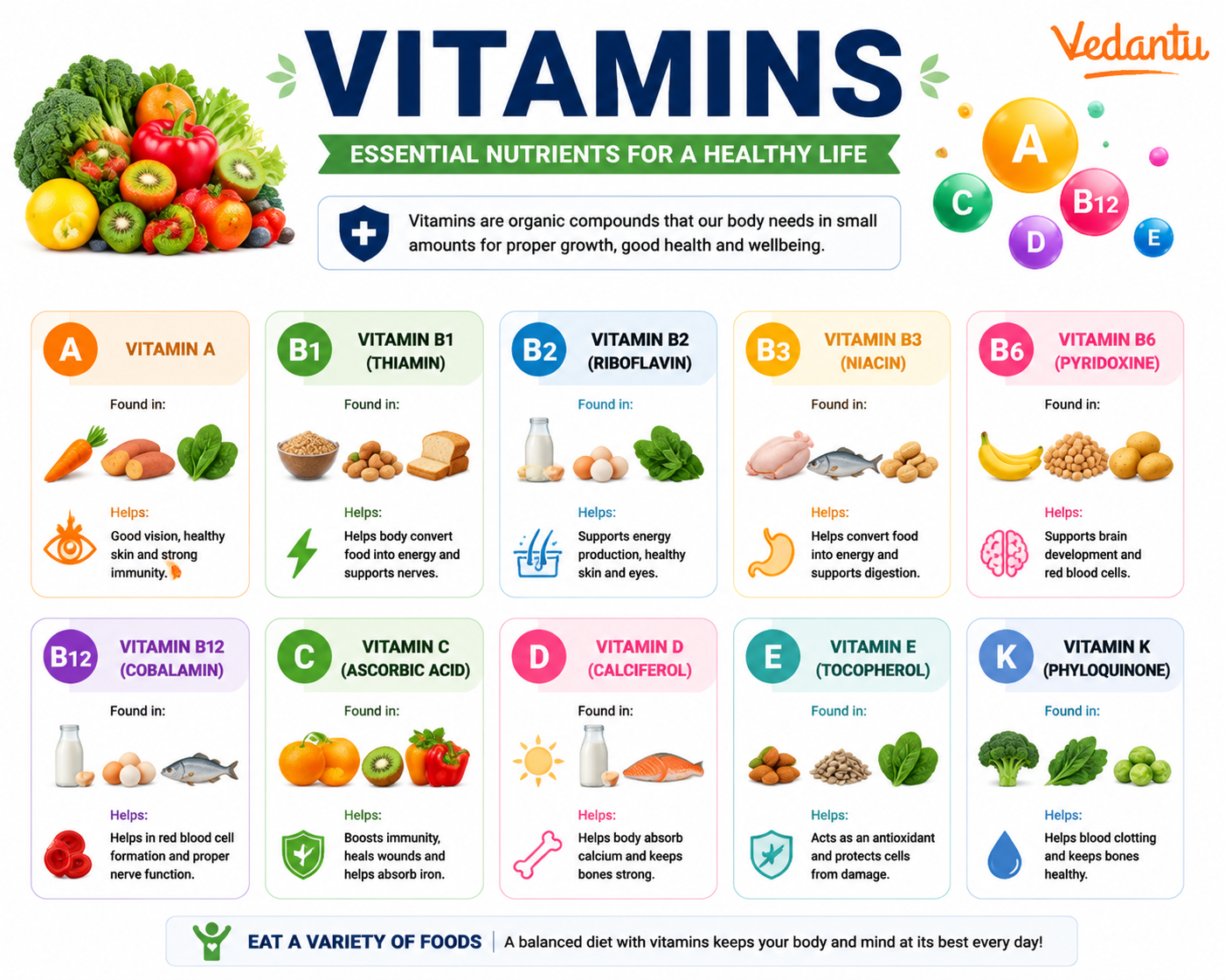
Vitamins are organic compounds required in small amounts for normal growth, development, and maintenance of the human body. They play a vital role in regulating metabolism, strengthening immunity, maintaining healthy skin and vision, and supporting various biochemical reactions. Since the body cannot synthesize most vitamins in sufficient quantities, they must be obtained from food. For students and NEET aspirants, understanding vitamins is important because questions are frequently asked about their functions, sources, deficiency diseases, and classification.
What are Vitamins?
Vitamins are micronutrients that act as coenzymes or precursors of coenzymes in many metabolic reactions. They do not provide energy directly like carbohydrates, proteins, or fats, but they help in energy production and other essential physiological processes. Each vitamin has a specific function, and deficiency can lead to characteristic diseases.
Classification of Vitamins
Vitamins are classified into two main groups based on their solubility.
1. Fat-Soluble Vitamins
- Vitamin A
- Vitamin D
- Vitamin E
- Vitamin K
These vitamins dissolve in fats and oils and can be stored in the liver and adipose tissue. Excess intake may lead to toxicity.
2. Water-Soluble Vitamins
- Vitamin B-complex group
- Vitamin C
These vitamins dissolve in water and are not stored in large amounts in the body. Regular dietary intake is necessary as excess is usually excreted in urine.
Major Vitamins, Sources and Deficiency Diseases
| Vitamin | Main Sources | Deficiency Disease |
|---|---|---|
| Vitamin A | Carrot, spinach, milk, liver | Night blindness |
| Vitamin D | Sunlight, fish oil, egg yolk | Rickets in children |
| Vitamin C | Citrus fruits, amla, guava | Scurvy |
Apart from the above, Vitamin B1 deficiency causes beriberi, Vitamin B3 deficiency causes pellagra, Vitamin B12 deficiency leads to pernicious anemia, and Vitamin K deficiency results in delayed blood clotting.
Functions of Important Vitamins
Vitamin A
- Maintains normal vision
- Supports immune function
- Promotes healthy skin and epithelial tissues
Vitamin D
- Regulates calcium and phosphorus absorption
- Essential for strong bones and teeth
Vitamin C
- Helps in collagen synthesis
- Improves wound healing
- Acts as an antioxidant
Vitamin B-Complex
The B-complex group includes B1, B2, B3, B5, B6, B7, B9, and B12. These vitamins mainly help in energy metabolism and red blood cell formation.
Vitamin Deficiency and Prevention
Vitamin deficiencies usually occur due to poor diet, malabsorption, chronic illness, or lack of sunlight exposure in the case of Vitamin D. A balanced diet rich in fruits, vegetables, whole grains, dairy products, and proteins helps prevent most deficiencies.
- Consume a variety of fresh fruits and vegetables daily.
- Include milk, eggs, and whole grains in the diet.
- Get adequate sunlight exposure for Vitamin D.
- Avoid overcooking food to prevent vitamin loss.
Vitamins for NEET Preparation
For NEET and other medical entrance exams, students should focus on classification, chemical names, sources, deficiency diseases, and functions of each vitamin. Questions are often conceptual and may involve matching types, symptoms, and biochemical roles. Understanding differences between fat-soluble and water-soluble vitamins is especially important.
Conclusion
Vitamins are essential micronutrients required for maintaining health and preventing deficiency diseases. They regulate key metabolic functions and support growth, immunity, and overall well-being. A balanced diet is the best way to obtain adequate vitamins. For competitive exam preparation like NEET, a clear understanding of their classification, functions, sources, and associated diseases is crucial for scoring well in biology-related questions.
FAQs on Vitamins Explained: Types, Sources, and Benefits
1. What are vitamins and why are they important for our body?
Vitamins are essential micronutrients that help the body grow, function properly, and stay healthy.
- They support immunity, metabolism, and cell repair
- Help in energy production and maintaining organs
- Prevent deficiency diseases like scurvy and rickets
- Act as protective nutrients required in small amounts
Common searches include: what are vitamins, importance of vitamins, types of vitamins, functions of vitamins.
2. How many types of vitamins are there?
There are 13 essential vitamins classified into two main types based on solubility.
- Fat-soluble vitamins: A, D, E, K (stored in body fat)
- Water-soluble vitamins: B-complex (B1, B2, B3, B5, B6, B7, B9, B12) and C (not stored in large amounts)
These categories are important for understanding absorption, storage, and deficiency risks.
3. What are fat-soluble vitamins?
Fat-soluble vitamins are vitamins that dissolve in fat and are stored in the body’s fatty tissues.
- Include Vitamin A, D, E, and K
- Stored in liver and adipose tissues
- Excess intake may cause toxicity (hypervitaminosis)
- Found in foods like milk, butter, fish, and green leafy vegetables
Common queries: examples of fat-soluble vitamins, functions of vitamins A D E K.
4. What are water-soluble vitamins?
Water-soluble vitamins dissolve in water and are not stored in large quantities in the body.
- Include Vitamin C and B-complex vitamins
- Need regular intake through diet
- Excess is excreted through urine
- Help in energy metabolism and red blood cell formation
Popular searches: water-soluble vitamins list, B-complex benefits, vitamin C function.
5. What diseases are caused by vitamin deficiency?
Vitamin deficiency can lead to specific deficiency diseases affecting growth and immunity.
- Vitamin A: Night blindness
- Vitamin B1: Beriberi
- Vitamin C: Scurvy
- Vitamin D: Rickets (children), Osteomalacia (adults)
- Vitamin K: Excessive bleeding
These are commonly asked in GK and competitive exams under nutrition and health topics.
6. Which foods are rich sources of vitamins?
A balanced diet provides all essential vitamins from natural food sources.
- Fruits: Citrus fruits (Vitamin C), Mango (Vitamin A)
- Vegetables: Spinach (Vitamin K, Folate)
- Dairy products: Milk (Vitamin D)
- Eggs and fish: Vitamin B12 and D
- Nuts and seeds: Vitamin E
Searches include: vitamin-rich foods list, natural sources of vitamins, healthy diet for vitamins.
7. What is the role of Vitamin D in the body?
Vitamin D is essential for strong bones and proper calcium absorption.
- Helps absorb calcium and phosphorus
- Prevents rickets and osteoporosis
- Produced when skin is exposed to sunlight (sunshine vitamin)
- Supports immune system function
Frequently searched as: benefits of vitamin D, importance of sunlight vitamin, vitamin D deficiency symptoms.
8. Why is Vitamin C important for health?
Vitamin C is a powerful antioxidant that boosts immunity and promotes healing.
- Prevents scurvy
- Supports collagen formation for healthy skin
- Improves iron absorption
- Strengthens immune defense
Also known as ascorbic acid, it is commonly asked in nutrition and health GK questions.
9. Can excess intake of vitamins be harmful?
Yes, excessive intake of certain vitamins, especially fat-soluble ones, can cause toxicity.
- Hypervitaminosis A: Liver damage
- Excess Vitamin D: Calcium imbalance
- Overuse of supplements may lead to side effects
- Water-soluble vitamins are generally safer but still require moderation
Common queries: vitamin overdose symptoms, risks of vitamin supplements.
10. What is the difference between vitamins and minerals?
Vitamins are organic compounds, while minerals are inorganic elements needed for body functions.
- Vitamins: Made by plants/animals (e.g., A, B, C, D)
- Minerals: Found in soil and water (e.g., Iron, Calcium, Zinc)
- Both are essential micronutrients
- Work together for growth, immunity, and metabolism
Frequently searched: difference between vitamins and minerals, micronutrients in human body.
