






Key Features of the Mesolithic Period: Tools, Shelter, and Daily Life
The Mesolithic Age, also known as the Middle Stone Age, represents a transitional phase between the Paleolithic Age and the Neolithic Age. It marks an important period in human history when people gradually shifted from a purely hunting and gathering lifestyle to a more settled way of living. The Mesolithic Age is generally dated between 10,000 BCE and 8,000 BCE in many parts of the world, although the timeline may vary by region. This period is characterized by the use of microliths, development of early settlements, domestication of animals, and adaptation to changing climatic conditions after the Ice Age.
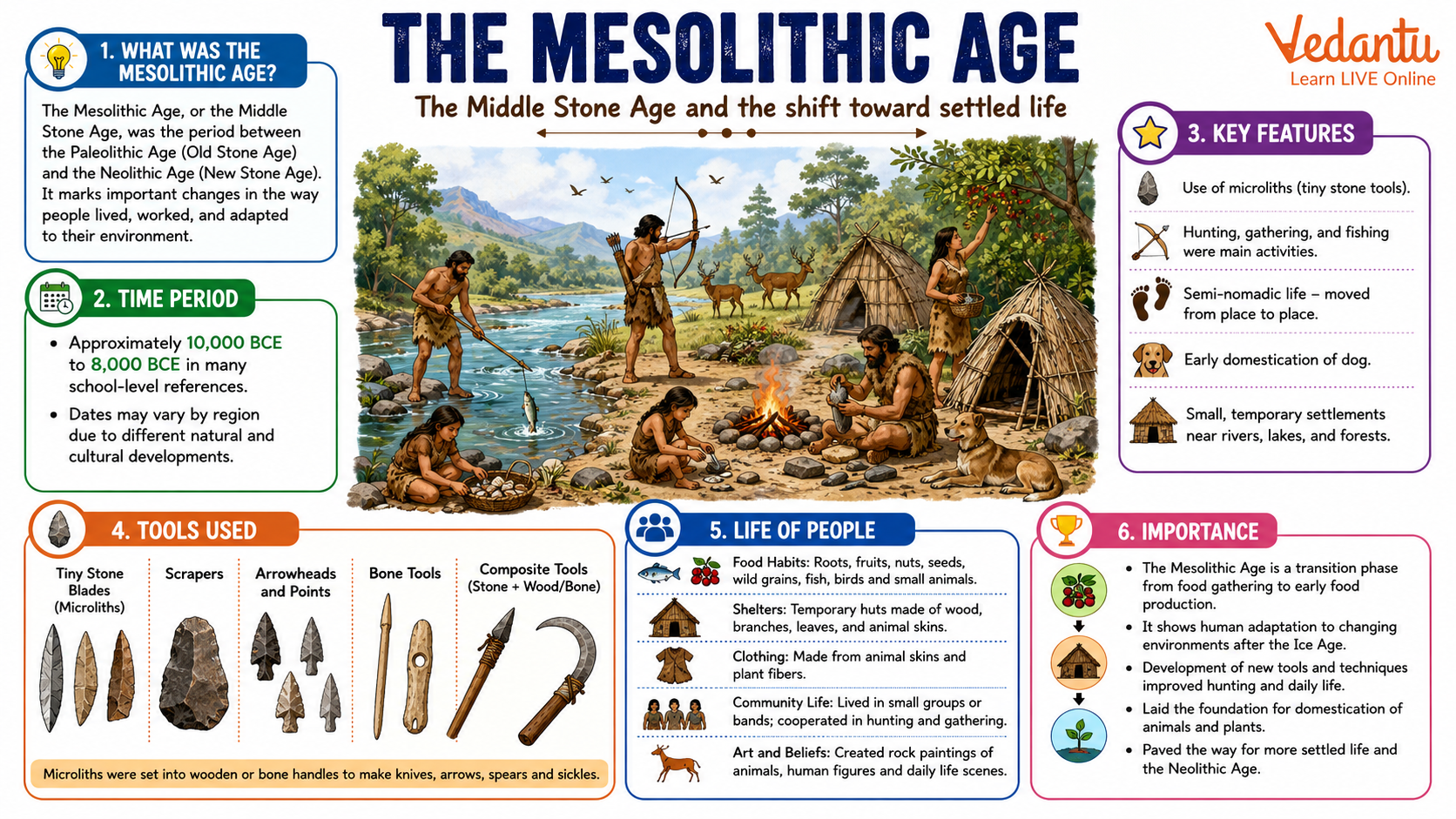
Time Period and Background
The Mesolithic Age began at the end of the last Ice Age, when the climate became warmer and more stable. The melting of glaciers led to the formation of rivers, lakes, and forests. These environmental changes greatly influenced human life, food habits, and settlement patterns. People started exploring new areas and developed better tools to adapt to their surroundings.
- Time period - Around 10,000 BCE to 8,000 BCE
- Transition phase between Paleolithic and Neolithic Ages
- Marked by climatic improvement after the Ice Age
- Development of semi-permanent settlements
Features of the Mesolithic Age
1. Tools and Technology
The most significant feature of the Mesolithic Age was the use of microliths. These were small stone tools made from flint or chert. They were sharper and more efficient than earlier tools and were often attached to wooden or bone handles to make spears, arrows, and sickles.
- Microliths - small and finely crafted stone tools
- Use of bow and arrow for hunting
- Fishing tools such as hooks and harpoons
- Grinding stones for processing food
2. Lifestyle and Food Habits
People of the Mesolithic Age were primarily hunters and gatherers, but their lifestyle showed signs of change. They began domesticating animals such as dogs. Fishing became an important activity due to the availability of water bodies. Some groups started experimenting with early forms of plant cultivation.
- Hunting deer, wild cattle, and small animals
- Fishing in rivers and lakes
- Gathering fruits, nuts, and seeds
- Early domestication of animals like dogs
3. Settlements
Unlike the Paleolithic people who were mostly nomadic, Mesolithic communities began living in semi-permanent settlements. They built temporary huts made of wood, bones, and animal skins. Many settlements were located near rivers and lakes for easy access to water and food resources.
4. Art and Culture
Mesolithic people continued the tradition of rock art. However, their paintings became more detailed and depicted scenes of hunting, dancing, and daily life. These paintings provide valuable insights into their social and cultural practices.
- Rock paintings in caves and shelters
- Use of natural colors from minerals and plants
- Depiction of group activities and rituals
Comparison of Stone Ages
| Feature | Paleolithic Age | Mesolithic Age |
|---|---|---|
| Tools | Large and crude stone tools | Small and sharp microliths |
| Lifestyle | Nomadic hunters | Semi-settled hunters and gatherers |
The Mesolithic Age served as a bridge between the Old Stone Age and the New Stone Age. It introduced technological improvements and social changes that later led to the development of agriculture and permanent settlements in the Neolithic Age.
Important Mesolithic Sites in India
Several Mesolithic sites have been discovered in India, which provide evidence of tools, rock paintings, and human habitation.
- Bhimbetka - Madhya Pradesh
- Bagor - Rajasthan
- Adamgarh - Madhya Pradesh
- Langhnaj - Gujarat
Significance of the Mesolithic Age
The Mesolithic Age is significant because it represents a period of adaptation and innovation. Humans responded to environmental changes by improving their tools and gradually adopting new ways of living. This period laid the foundation for agriculture, animal domestication, and permanent settlements in the Neolithic Age. Understanding the Mesolithic Age helps students trace the gradual evolution of human society and technological progress.
Key Points for Quick Revision
- Mesolithic Age means Middle Stone Age
- Famous for microlith tools
- People lived in semi-permanent settlements
- Early domestication of animals began
- Important transition toward agriculture
In conclusion, the Mesolithic Age was a crucial transitional phase in human history. It reflects human adaptability, technological advancement, and the early stages of settled life. A clear understanding of this period is essential for General Knowledge preparation, competitive exams, and building a strong foundation in ancient history.
FAQs on The Mesolithic Age: Understanding the Middle Stone Era
1. What is the Mesolithic Age?
The Mesolithic Age was the transitional period between the Paleolithic (Old Stone Age) and the Neolithic (New Stone Age).
- It is also called the Middle Stone Age.
- It began around 10,000 BCE and lasted until about 6,000–4,000 BCE (varies by region).
- Marked by the use of microliths (small stone tools).
- Humans shifted from pure hunting to food gathering and early domestication.
This period is important in understanding early human adaptation, climate change after the Ice Age, and the beginnings of settled life.
2. What were the main features of the Mesolithic Age?
The main features of the Mesolithic period include technological and lifestyle changes after the Ice Age.
- Use of microlith tools made of flint and stone.
- Development of bow and arrow for hunting.
- Beginning of animal domestication (especially dogs).
- Semi-nomadic lifestyle with temporary shelters.
- Evidence of rock paintings and cave art.
These features show the transition from hunter-gatherers to early agricultural communities.
3. What tools were used during the Mesolithic Age?
The Mesolithic people mainly used small and specialized stone tools called microliths.
- Tiny stone blades fixed on wood or bone handles.
- Tools included scrapers, borers, arrowheads, and blades.
- Use of bone and antler tools.
- Invention of the bow and arrow for efficient hunting.
These advanced tools improved hunting skills and survival techniques in the Middle Stone Age.
4. How did people live during the Mesolithic Age?
People in the Mesolithic Age lived a semi-nomadic life based on hunting, fishing, and gathering.
- Lived in temporary huts, caves, and rock shelters.
- Formed small social groups or tribes.
- Depended on wild animals, fish, fruits, and nuts.
- Settled near rivers and lakes for water supply.
This lifestyle marks the gradual shift from pure nomadic hunting to early settled communities.
5. What is the difference between the Paleolithic and Mesolithic Age?
The key difference lies in tools, lifestyle, and environmental adaptation.
- Paleolithic Age: Large crude stone tools, fully nomadic hunters.
- Mesolithic Age: Small refined microlith tools and semi-nomadic life.
- Climate in Mesolithic became warmer after the Ice Age.
- Early signs of animal domestication appear in Mesolithic.
Thus, the Mesolithic period represents a transitional phase in prehistoric human development.
6. What kind of art was developed in the Mesolithic Age?
The Mesolithic Age is known for its vibrant rock art and cave paintings.
- Paintings found in places like Bhimbetka (India).
- Scenes of hunting, dancing, and daily life.
- Use of natural colors from minerals and plants.
- Shows social and cultural development.
These artworks help historians understand prehistoric culture, beliefs, and communication methods.
7. Where are important Mesolithic sites found in India?
Several important Mesolithic sites in India provide evidence of early human life.
- Bhimbetka (Madhya Pradesh) – famous for rock shelters.
- Bagor (Rajasthan) – evidence of animal domestication.
- Adamgarh and Langhnaj – microlith tools found.
- Sites near rivers like the Narmada and Ganga.
These sites are crucial for studying Indian prehistory and early Stone Age cultures.
8. Why is the Mesolithic Age important in history?
The Mesolithic Age is important because it marks the transition from hunting-gathering to early farming.
- Adaptation to post-Ice Age climate change.
- Development of advanced stone tools.
- Beginning of animal domestication.
- Foundation for the Neolithic agricultural revolution.
It bridges the gap between the Old Stone Age and the New Stone Age in human evolution.
9. What was the climate during the Mesolithic Period?
The climate during the Mesolithic Period became warmer and more stable after the Ice Age.
- End of the last glacial period.
- Growth of forests and grasslands.
- Increase in animal and plant diversity.
- Encouraged human settlement near water sources.
This climatic improvement supported new survival strategies and cultural changes.
10. How did the Mesolithic Age lead to the Neolithic Age?
The Mesolithic Age laid the foundation for the Neolithic Age by introducing early domestication and settlement patterns.
- Gradual shift from hunting to food production.
- Domestication of animals like dogs, sheep, and goats.
- Experimentation with plant cultivation.
- Formation of stable communities.
These developments eventually led to agriculture, permanent villages, and the rise of civilization in the New Stone Age.
