






Types of Seasons in India and Their Key Features
Seasons in India play a vital role in shaping the country’s climate, agriculture, lifestyle, and cultural traditions. Due to its vast geographical area and diverse physical features, India experiences different seasonal patterns across regions. The climate of India is mainly influenced by the monsoon winds, latitude, altitude, and distance from the sea. Understanding the seasons in India is important for students, competitive exam aspirants, and general readers, as it is a frequently asked topic in General Knowledge and geography-based examinations.
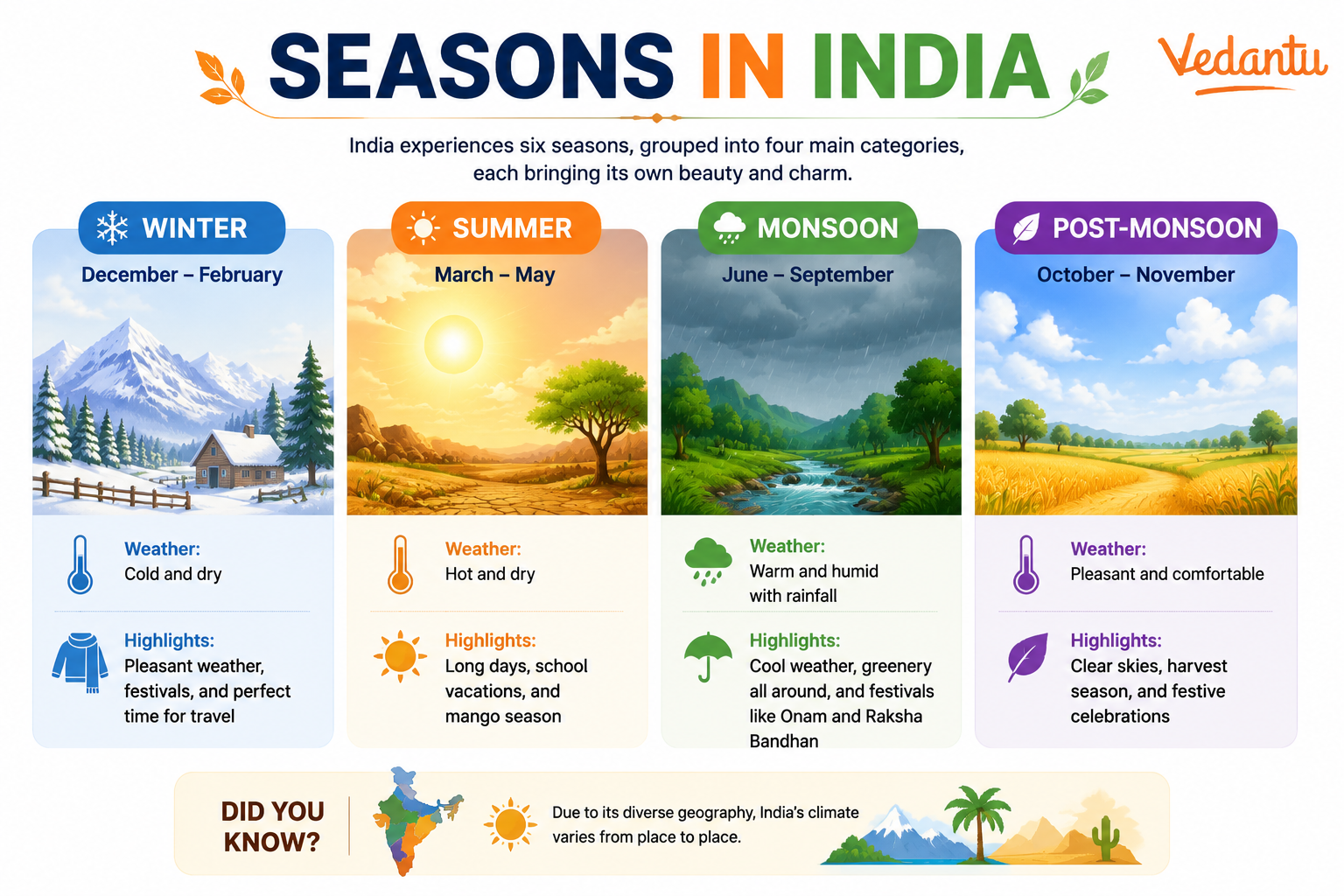
Major Seasons in India
The Indian Meteorological Department divides the year into four main seasons. Each season has distinct weather conditions, temperature patterns, and rainfall characteristics. These seasons directly impact agriculture, festivals, and economic activities across the country.
Four Main Seasons in India
| Season | Duration | Main Features |
|---|---|---|
| Winter Season | December to February | Cool temperatures, dry weather, snowfall in northern mountains |
| Summer Season | March to June | High temperatures, heat waves, low humidity in many regions |
| Monsoon Season | June to September | Heavy rainfall, humid climate, southwest monsoon winds |
| Retreating Monsoon | October to November | Withdrawal of monsoon, moderate temperature, rainfall in southeast India |
These four seasons define the climatic rhythm of India. However, slight variations may occur depending on regional geographical factors such as mountains, plateaus, deserts, and coastal areas.
1. Winter Season in India
The winter season in India lasts from December to February. During this period, the sun’s rays fall more directly on the Southern Hemisphere, making the Northern Hemisphere cooler. Northern India experiences cold waves, while the Himalayan region receives snowfall.
Key Characteristics of Winter
- Temperature ranges from 10°C to 15°C in northern plains
- Very low temperatures in Himalayan regions
- Pleasant climate in southern India
- Western disturbances bring light rainfall in northwestern India
Winter is important for Rabi crops such as wheat, barley, and mustard. Many famous festivals like Makar Sankranti, Pongal, and Lohri are celebrated during this season.
2. Summer Season in India
The summer season extends from March to June. During this period, temperatures rise sharply, especially in northern and central India. The Thar Desert region experiences extremely high temperatures, sometimes exceeding 45°C.
Key Characteristics of Summer
- High temperatures and dry winds called Loo in northern plains
- Low humidity in interior regions
- Pre-monsoon showers in Kerala and Karnataka
- Dust storms in northwestern India
The summer season prepares the ground for the arrival of the monsoon winds. It is crucial for the growth of certain crops like rice and cotton that depend on monsoon rainfall.
3. Monsoon Season in India
The monsoon season begins in June and continues until September. It is the most important season for India as it provides about 75 percent of the country’s annual rainfall. The southwest monsoon winds originate from the Indian Ocean and bring heavy rainfall across most parts of the country.
Branches of the Southwest Monsoon
- Arabian Sea Branch - Affects western coast and central India
- Bay of Bengal Branch - Affects northeastern states and eastern India
Monsoon rainfall supports Kharif crops such as rice, maize, and pulses. However, excessive rainfall can cause floods, while weak monsoon can lead to drought conditions.
4. Retreating Monsoon Season
The retreating monsoon season occurs from October to November. During this period, the southwest monsoon winds withdraw from the Indian subcontinent. The weather becomes clear, and temperatures begin to fall gradually.
Key Features of Retreating Monsoon
- Decrease in humidity levels
- Rainfall in Tamil Nadu due to northeast monsoon winds
- Pleasant weather in northern India
This season is especially important for the southeastern coast of India, which receives significant rainfall from the northeast monsoon.
Factors Affecting Seasons in India
Several geographical and atmospheric factors influence the seasonal changes in India.
- Latitude - India lies in the tropical and subtropical zones
- Himalayan Mountains - Block cold winds from Central Asia
- Distance from the Sea - Coastal areas have moderate climate
- Monsoon Winds - Major source of rainfall
- Altitude - Higher regions experience cooler temperatures
Importance of Seasons in India
The seasonal cycle in India is closely linked to agriculture, economy, and cultural practices. Farmers depend on timely monsoon rains for crop production. Seasonal festivals reflect climatic conditions, and tourism patterns are influenced by weather changes.
- Supports agricultural planning and food production
- Influences water resources and hydropower generation
- Determines clothing, housing, and lifestyle patterns
- Affects biodiversity and natural vegetation
Quick Revision Points for Exams
- India has four main seasons - Winter, Summer, Monsoon, and Retreating Monsoon
- Southwest monsoon provides most of the annual rainfall
- Tamil Nadu receives rainfall during the retreating monsoon
- Western disturbances bring winter rainfall in northwestern India
- Heat waves and Loo are common in summer season
Conclusion
Seasons in India are shaped by complex climatic factors and play a crucial role in the country’s environmental and economic framework. From the cold winters in the north to the life-giving monsoon rains across the plains, each season has unique characteristics and significance. A clear understanding of these seasons helps students strengthen their geographical knowledge and prepare effectively for competitive examinations.
FAQs on Seasons in India: Understanding India’s Climate Changes
1. What are the main seasons in India?
India has four main seasons based on climate and weather patterns. The major seasons in India include:
• Winter Season (December to February) – Cold weather, especially in North India.
• Summer Season (March to June) – Hot and dry climate in most regions.
• Monsoon/Rainy Season (June to September) – Heavy rainfall due to the Southwest Monsoon winds.
• Post-Monsoon/Autumn Season (October to November) – Retreating monsoon and moderate temperatures.
These seasons are influenced by monsoon winds, geographical diversity, and regional climate conditions.
2. Why does India experience different seasons?
India experiences different seasons mainly due to its geographical location and monsoon system. The key reasons include:
• The Tropic of Cancer passes through India, affecting temperature variations.
• Seasonal shift of monsoon winds (Southwest and Northeast Monsoon).
• The presence of the Himalayas, which block cold Central Asian winds.
• India’s proximity to the Indian Ocean, Arabian Sea, and Bay of Bengal.
These factors create distinct climatic seasons in India throughout the year.
3. What is the monsoon season in India?
The monsoon season in India is the rainy period caused by seasonal wind reversal bringing heavy rainfall. Important features include:
• Occurs from June to September.
• Caused by the Southwest Monsoon winds.
• Vital for agriculture and crop production.
• Brings heavy rain to states like Kerala, Maharashtra, Assam, and West Bengal.
The monsoon is crucial for India’s economy, farming, and water supply.
4. Which is the hottest season in India?
The summer season is the hottest season in India. Its main characteristics are:
• Lasts from March to June.
• Temperatures can rise above 45°C in North and Central India.
• Hot dry winds called Loo blow in northern plains.
• Common in states like Rajasthan, Delhi, Uttar Pradesh, and Madhya Pradesh.
This season often leads to heatwaves and water scarcity in several regions.
5. Which is the coldest season in India?
The winter season is the coldest season in India, especially in northern regions. Key points include:
• Occurs from December to February.
• Temperatures can drop below 0°C in hilly areas like Himachal Pradesh and Jammu & Kashmir.
• Northern plains experience cold waves and fog.
• Southern India has mild and pleasant winters.
Winter is important for Rabi crops such as wheat and mustard.
6. What is the retreating monsoon or post-monsoon season?
The retreating monsoon or post-monsoon season occurs when monsoon winds withdraw from India. Important facts include:
• Takes place from October to November.
• Also known as the Autumn Season.
• The Northeast Monsoon brings rainfall to Tamil Nadu and coastal Andhra Pradesh.
• Weather becomes clear and humid after heavy rains.
This season marks the transition between rainy and winter seasons in India.
7. How do seasons affect agriculture in India?
Seasons in India play a vital role in determining agricultural cycles and crop production. The seasonal impact includes:
• Kharif crops (rice, maize) depend on the monsoon rains.
• Rabi crops (wheat, barley) grow during the winter season.
• Zaid crops (watermelon, cucumber) grow in the short summer period.
• Irregular monsoon can cause droughts or floods.
Thus, the Indian monsoon and seasonal climate directly influence the country’s economy.
8. What are the characteristics of the summer season in India?
The summer season in India is marked by high temperatures and dry weather conditions. Its main features are:
• Intense heat from March to June.
• Hot winds known as Loo in northern plains.
• Frequent dust storms in Rajasthan and Delhi.
• Pre-monsoon showers called Mango Showers in Kerala and Karnataka.
Summer significantly affects daily life, water resources, and health.
9. Why is the monsoon important for India?
The monsoon season is crucial for India’s survival and economic stability. Its importance includes:
• Provides water for irrigation and drinking purposes.
• Supports agriculture-based economy.
• Fills rivers, reservoirs, and groundwater.
• Influences hydroelectric power generation.
A good monsoon ensures food security, rural employment, and balanced climate in India.
10. How are seasons in North India different from South India?
Seasons in North and South India differ due to latitude, altitude, and distance from the sea. The major differences are:
• North India experiences extreme summers and cold winters.
• South India has a moderate, tropical climate throughout the year.
• Snowfall occurs in northern hill stations but not in southern plains.
• Tamil Nadu receives rainfall from the Northeast Monsoon unlike most parts of India.
These variations highlight India’s diverse climatic conditions and regional weather patterns.
