






India’s Cheetah Reintroduction Mission: Goals, Benefits, and Challenges
Project Cheetah is a wildlife conservation initiative launched by the Government of India to reintroduce cheetahs into the country after their extinction in 1952. It marks the first intercontinental translocation of a large carnivore species in the world. The project aims to restore ecological balance, enhance biodiversity, and revive India’s grassland ecosystems. Project Cheetah is significant for environmental studies, biodiversity conservation, and competitive examinations such as UPSC, State PSC, and other GK-based exams.
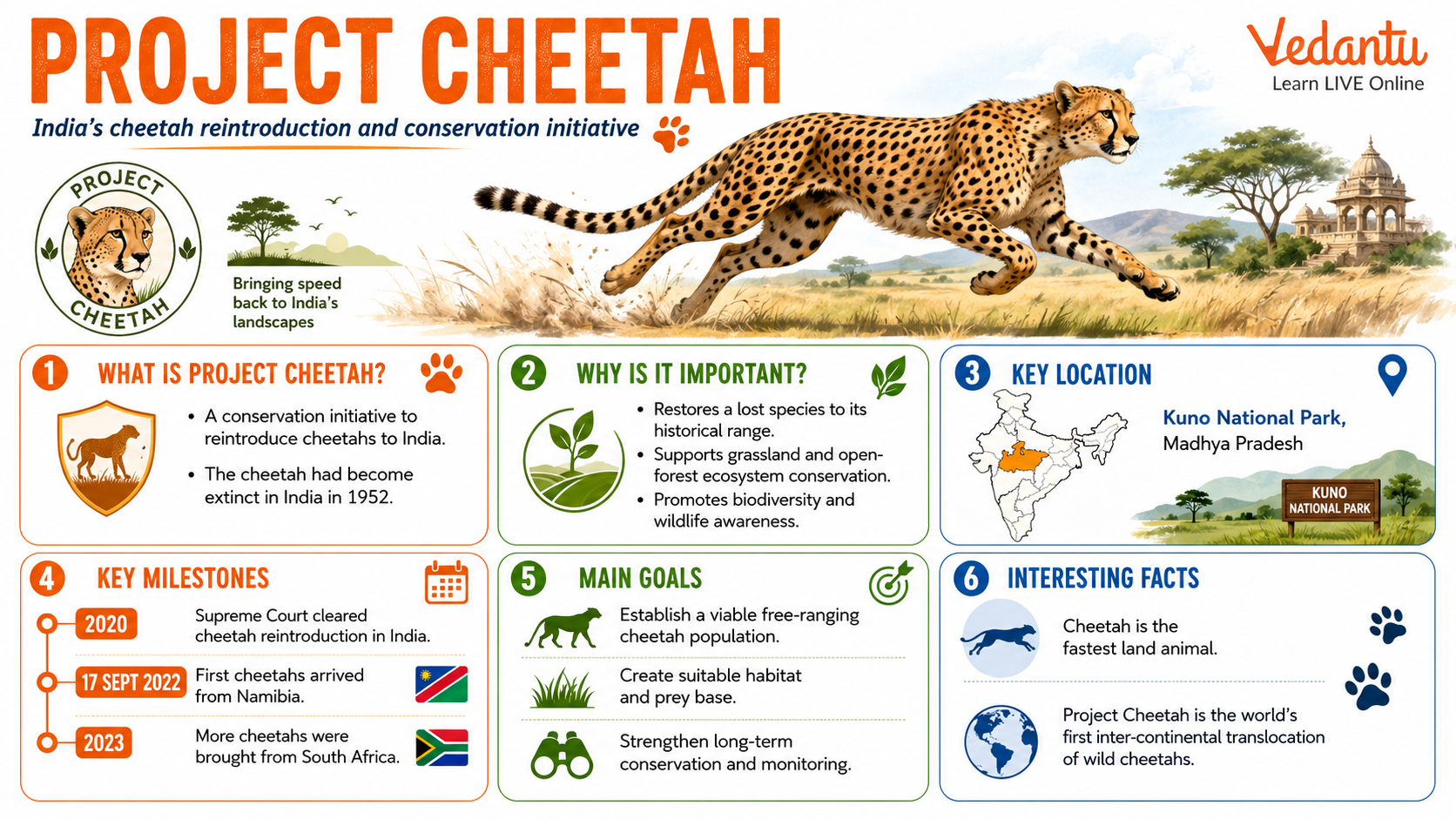
What is Project Cheetah?
Project Cheetah is a national wildlife conservation program that focuses on the reintroduction of African cheetahs into selected habitats in India. The Asiatic cheetah became extinct in India in 1952 due to hunting, habitat loss, and decline in prey base. To restore the species, India signed agreements with countries like Namibia and South Africa to translocate cheetahs to Indian reserves.
The first batch of cheetahs was released in Kuno National Park in Madhya Pradesh in September 2022. The project is implemented by the Ministry of Environment, Forest and Climate Change in collaboration with wildlife experts and international conservation organizations.
Objectives of Project Cheetah
- Reintroduce cheetahs to restore ecological balance in grassland and forest ecosystems.
- Enhance biodiversity and revive degraded grasslands.
- Increase prey population such as deer and antelope species.
- Promote wildlife tourism and generate livelihood opportunities for local communities.
- Establish India as a leader in global wildlife conservation efforts.
Why Did Cheetahs Become Extinct in India?
The cheetah once roamed widely across India, especially in open forests and grasslands. However, several factors led to its extinction:
- Excessive hunting by rulers during the Mughal and British periods.
- Habitat destruction due to agriculture and urban expansion.
- Decline in prey base such as blackbuck and chinkara.
- Lack of conservation awareness during early 20th century.
Key Features of Project Cheetah
Important Facts About Project Cheetah
| Parameter | Details | Significance |
|---|---|---|
| Launch Year | 2022 | First intercontinental big cat translocation |
| Initial Location | Kuno National Park, Madhya Pradesh | Selected for suitable habitat and prey availability |
| Source Countries | Namibia and South Africa | African cheetahs reintroduced to India |
The table highlights essential details about Project Cheetah, including its launch year, location, and international collaboration. These facts are frequently asked in competitive examinations and interviews.
Selection of Kuno National Park
Kuno National Park in Madhya Pradesh was selected after extensive scientific evaluation. The park offers suitable climatic conditions, adequate prey base, and sufficient space for cheetah movement. It was previously prepared for the Asiatic lion relocation project, which helped in improving habitat quality.
Reasons for Selection
- Large protected area with low human disturbance.
- Presence of prey species like chital, sambar, and nilgai.
- Successful relocation of villages from core area.
- Favorable grassland and open forest ecosystem.
Challenges Faced by Project Cheetah
Despite being a landmark conservation initiative, Project Cheetah faces several challenges:
- Adaptation of African cheetahs to Indian climatic conditions.
- Risk of disease and mortality during translocation.
- Human-wildlife conflict in buffer areas.
- Long-term monitoring and genetic sustainability.
Importance of Project Cheetah
Project Cheetah holds ecological, scientific, and symbolic importance. It helps restore the natural food chain and supports grassland conservation, which is often neglected compared to forest ecosystems. The project also enhances India’s global image in wildlife conservation and demonstrates commitment toward biodiversity protection.
Project Cheetah for Competitive Exams
Project Cheetah is an important topic for UPSC, State PSC, SSC, and other government examinations. Questions may be asked about its objectives, launch year, implementing ministry, location, and international collaboration. Students should also understand its ecological significance and associated challenges.
- Year of launch - 2022
- Extinction year of cheetah in India - 1952
- First release site - Kuno National Park
- Source countries - Namibia and South Africa
Conclusion
Project Cheetah is a historic wildlife conservation initiative aimed at restoring the cheetah population in India after seven decades of extinction. By reintroducing the fastest land animal into Indian grasslands, the project seeks to revive ecological balance, improve biodiversity, and strengthen conservation awareness. Its success will depend on scientific monitoring, habitat management, and community participation. Understanding Project Cheetah is essential for students and aspirants preparing for competitive examinations as well as for anyone interested in environmental conservation.
FAQs on Project Cheetah and the Return of Cheetahs to India
1. What is Project Cheetah?
Project Cheetah is India’s ambitious wildlife conservation program aimed at reintroducing cheetahs into the country after their extinction in 1952.
• Launched in 2022 by the Government of India
• Implemented by the Ministry of Environment, Forest and Climate Change (MoEFCC)
• First release site: Kuno National Park, Madhya Pradesh
• Focuses on restoring ecological balance and grassland ecosystems
• Often searched as: cheetah reintroduction in India, African cheetah in India, wildlife conservation project
2. Why were cheetahs extinct in India?
Cheetahs became extinct in India due to excessive hunting and habitat loss during the 19th and early 20th centuries.
• Declared extinct in 1952
• Overhunting by royalty and British officials
• Loss of grassland habitats
• Decline in prey population
• Also searched as: why cheetah disappeared from India, extinction of Asiatic cheetah
3. From which country were cheetahs brought to India under Project Cheetah?
Under Project Cheetah, cheetahs were translocated mainly from Namibia and South Africa to India.
• First batch arrived from Namibia in September 2022
• Additional cheetahs brought from South Africa in 2023
• Species introduced: African Cheetah (Acinonyx jubatus)
• Related queries: African vs Asiatic cheetah, cheetah relocation program
4. Why was Kuno National Park selected for Project Cheetah?
Kuno National Park in Madhya Pradesh was chosen due to its suitable habitat and prey base for cheetahs.
• Large grassland and forest ecosystem
• Adequate prey such as deer and antelope
• Low human population after village relocation
• Previously prepared for Asiatic lion relocation
• Also searched as: why Kuno selected for cheetah, cheetah habitat in India
5. What are the main objectives of Project Cheetah?
The primary objective of Project Cheetah is to restore India’s lost biodiversity and grassland ecosystems.
• Reintroduce cheetahs to India after extinction
• Maintain ecological balance
• Promote wildlife tourism and conservation awareness
• Strengthen India’s global conservation efforts
• Related terms: biodiversity conservation, ecosystem restoration, wildlife management
6. What is the difference between Asiatic and African cheetahs?
The Asiatic cheetah is critically endangered and found only in Iran, while the African cheetah is more widespread in Africa.
• Asiatic cheetah: Critically Endangered, very small population
• African cheetah: Larger population in Namibia, South Africa
• Slight genetic and physical differences
• India introduced African cheetahs under Project Cheetah
• Common searches: Asiatic vs African cheetah, cheetah species difference
7. Who launched Project Cheetah in India?
Project Cheetah was officially launched by Prime Minister Narendra Modi on 17 September 2022.
• Released first cheetahs at Kuno National Park
• Marked 70 years after cheetah extinction in India
• Supported by wildlife experts and international conservation bodies
• Also searched as: cheetah launch date in India, PM Modi cheetah project
8. What challenges does Project Cheetah face?
Project Cheetah faces ecological, climatic, and management challenges in adapting cheetahs to Indian conditions.
• High mortality rates due to health and stress issues
• Climate differences between Africa and India
• Human-wildlife conflict risks
• Need for long-term monitoring and funding
• Related queries: problems in Project Cheetah, cheetah survival rate in India
9. How does Project Cheetah help India’s ecosystem?
Project Cheetah helps restore grassland ecosystems and maintain ecological balance by reintroducing a top predator.
• Controls herbivore population
• Revives neglected grasslands
• Encourages habitat conservation
• Boosts eco-tourism and local economy
• Also searched as: importance of cheetah in ecosystem, ecological role of cheetah
10. Why is Project Cheetah important for competitive exams?
Project Cheetah is important for competitive exams as it is a major current affairs topic related to environment and biodiversity.
• Frequently asked in UPSC, SSC, State PSC, and banking exams
• Covers topics like wildlife conservation and national parks
• Linked to international cooperation and biodiversity policies
• Key terms: endangered species, IUCN status, conservation programs in India
