






Energy Saving Day in India: History, Theme, and Simple Ways to Conserve Power
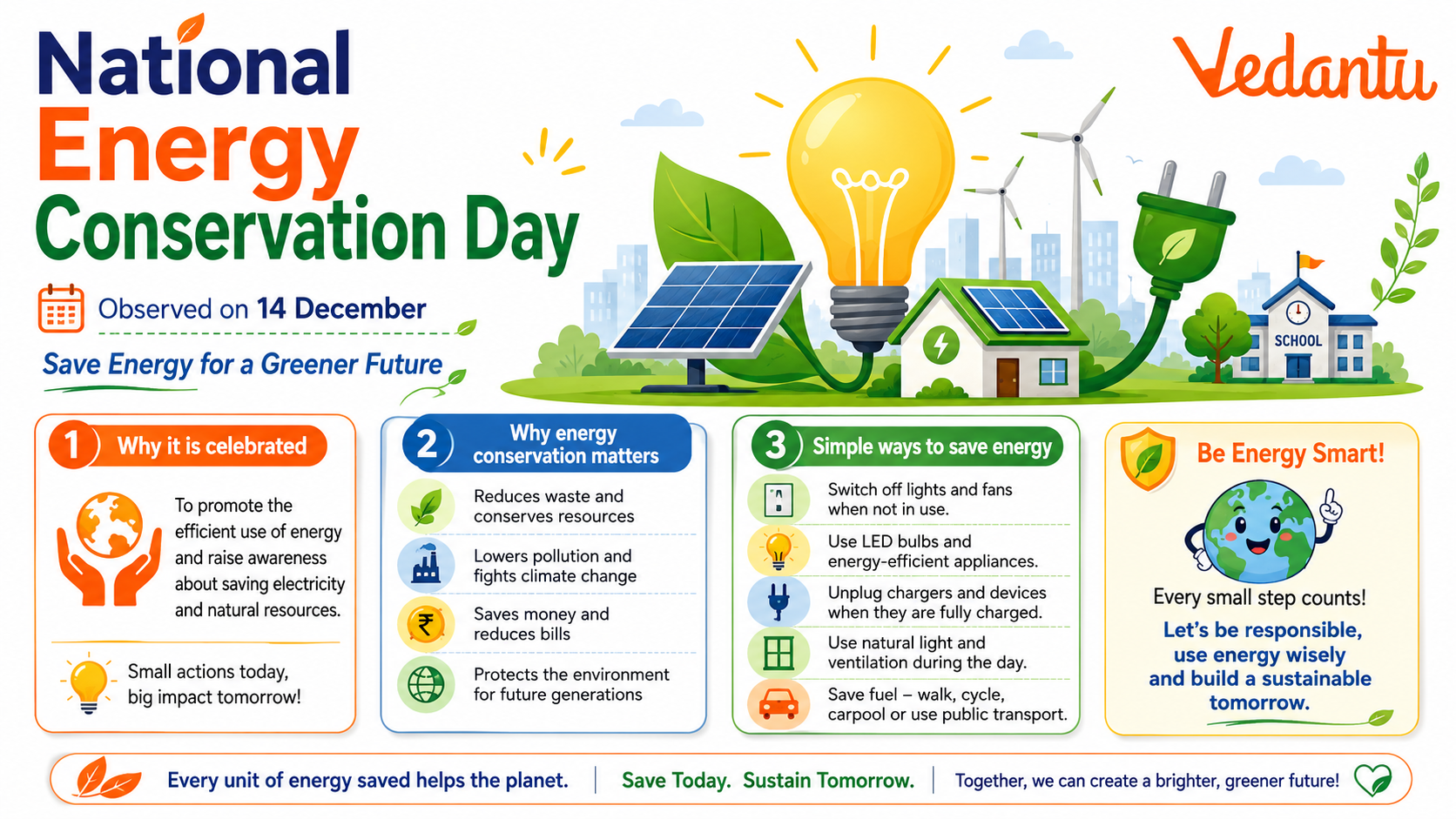
National Energy Conservation Day is observed every year on 14 December in India to promote awareness about the importance of saving energy and using it efficiently. The day highlights the need to reduce energy consumption without affecting productivity and development. It encourages individuals, industries, and institutions to adopt energy-efficient practices to ensure sustainable growth and environmental protection.
What is National Energy Conservation Day?
National Energy Conservation Day is an annual observance organized by the Bureau of Energy Efficiency - BEE under the Ministry of Power, Government of India. The main objective is to create awareness about energy conservation and the efficient use of energy resources. It also recognizes industries and organizations that have significantly contributed to energy efficiency through the National Energy Conservation Awards.
Date and Organizing Authority
Key Facts about National Energy Conservation Day
| Particular | Details | Authority |
|---|---|---|
| Date | 14 December | Bureau of Energy Efficiency |
| Established | 2001 under Energy Conservation Act | Ministry of Power |
The Energy Conservation Act, 2001 led to the formation of the Bureau of Energy Efficiency - BEE. Since then, 14 December has been celebrated to spread awareness about reducing energy wastage and promoting sustainable energy practices.
Objectives of National Energy Conservation Day
- To encourage efficient use of energy in industries, households, and institutions.
- To reduce energy consumption and minimize wastage.
- To promote sustainable development and environmental protection.
- To spread awareness about renewable energy sources and energy-saving technologies.
- To recognize achievements in energy conservation through national awards.
Importance of Energy Conservation
Energy is essential for economic growth, industrial development, transportation, agriculture, and domestic use. However, most conventional sources of energy such as coal, petroleum, and natural gas are non-renewable and contribute to environmental pollution. Conserving energy helps in reducing greenhouse gas emissions, lowering electricity bills, and ensuring energy security for future generations.
- Reduces dependence on fossil fuels.
- Decreases carbon footprint.
- Promotes sustainable and eco-friendly living.
- Supports national energy security.
Energy Conservation Act, 2001
The Energy Conservation Act, 2001 provides a legal framework for energy efficiency in India. It empowers the central government to establish standards for energy consumption and promote energy-saving measures across sectors.
Key Provisions of the Act
- Establishment of the Bureau of Energy Efficiency - BEE.
- Energy efficiency standards for appliances and equipment.
- Mandatory energy audits for designated consumers.
- Promotion of energy labeling programs.
How National Energy Conservation Day is Celebrated
Various activities and programs are organized across the country to promote awareness about energy conservation. Schools, colleges, industries, and government organizations actively participate in these events.
- Organization of seminars and workshops on energy efficiency.
- Distribution of awards for excellence in energy conservation.
- Awareness campaigns through media and social platforms.
- School competitions such as essay writing and poster making.
National Energy Conservation Awards
The National Energy Conservation Awards are presented to industries, institutions, and organizations that have demonstrated outstanding performance in reducing energy consumption. These awards motivate stakeholders to adopt best practices and innovative technologies in energy management.
Ways to Conserve Energy in Daily Life
- Switch off lights and appliances when not in use.
- Use LED bulbs and energy-efficient appliances.
- Promote the use of public transport or carpooling.
- Adopt renewable energy sources like solar panels.
- Maintain electrical equipment regularly to ensure efficiency.
Relevance for Competitive Exams
National Energy Conservation Day is an important topic for General Knowledge and current affairs sections of competitive exams. Questions are often asked about its date, organizing authority, Energy Conservation Act, 2001, and the role of the Bureau of Energy Efficiency. Understanding this topic also helps in environmental studies and sustainable development sections.
Conclusion
National Energy Conservation Day plays a crucial role in promoting awareness about the responsible use of energy resources. By conserving energy, individuals and industries contribute to environmental protection, economic savings, and national development. Observing this day reminds everyone of their responsibility to use energy wisely and adopt sustainable practices for a better future.
FAQs on National Energy Conservation Day: Why It Matters for Students
1. What is National Energy Conservation Day?
National Energy Conservation Day is observed every year on 14th December in India to promote awareness about energy efficiency and conservation. It aims to:
• Encourage the efficient use of energy resources
• Spread awareness about saving electricity and fuel
• Reduce carbon footprint and climate change impact
• Support sustainable development goals
This day highlights the importance of energy savings for a greener and more sustainable future.
2. Why is National Energy Conservation Day celebrated on 14th December?
14th December marks the establishment of the Bureau of Energy Efficiency (BEE) in 2001 under the Energy Conservation Act, 2001. It is celebrated to:
• Promote energy efficiency policies
• Recognize industries and institutions for energy savings
• Spread awareness about reducing energy consumption
This date is significant in India’s energy conservation movement.
3. Who organizes National Energy Conservation Day in India?
The Bureau of Energy Efficiency (BEE), under the Ministry of Power, Government of India, organizes National Energy Conservation Day. Its key responsibilities include:
• Promoting energy-saving programs
• Implementing the Energy Conservation Act
• Awarding National Energy Conservation Awards
BEE plays a vital role in promoting sustainable and efficient energy use across the country.
4. What is the objective of National Energy Conservation Day?
The main objective of National Energy Conservation Day is to encourage the efficient use of energy and reduce wastage. Its goals include:
• Promoting renewable energy sources
• Reducing greenhouse gas emissions
• Creating awareness about energy-saving habits
• Supporting sustainable development
It helps individuals and industries understand the importance of conserving energy for future generations.
5. What are the National Energy Conservation Awards?
National Energy Conservation Awards (NECA) are honors given by the Government of India to recognize excellence in energy efficiency. These awards:
• Reward industries, institutions, and sectors
• Promote best practices in energy management
• Encourage innovation in energy-saving technologies
They motivate organizations to adopt sustainable and eco-friendly energy solutions.
6. What are some simple ways to conserve energy at home?
Energy can be conserved at home by adopting simple and practical measures. These include:
• Switching off lights and appliances when not in use
• Using LED bulbs and energy-efficient appliances
• Installing solar panels
• Reducing excessive use of air conditioners and heaters
• Using natural light and ventilation
These small steps help save electricity, lower bills, and reduce environmental impact.
7. How does energy conservation help the environment?
Energy conservation reduces environmental damage by lowering energy demand and pollution. It helps by:
• Decreasing carbon emissions
• Reducing dependence on fossil fuels
• Minimizing air and water pollution
• Conserving natural resources like coal and petroleum
Thus, conserving energy supports climate action and environmental sustainability.
8. What is the Energy Conservation Act, 2001?
The Energy Conservation Act, 2001 is a law enacted by the Government of India to promote energy efficiency. It provides for:
• Establishment of the Bureau of Energy Efficiency (BEE)
• Standards and labeling for appliances
• Energy audits and conservation measures
• Promotion of efficient energy use
This Act forms the legal foundation for energy conservation initiatives in India.
9. What is the importance of energy efficiency in daily life?
Energy efficiency means using less energy to perform the same task, reducing waste and saving money. Its importance includes:
• Lower electricity bills
• Reduced environmental impact
• Improved energy security
• Sustainable use of natural resources
Energy-efficient practices benefit individuals, society, and the economy.
10. How can students participate in National Energy Conservation Day?
Students can actively participate in National Energy Conservation Day by spreading awareness and practicing energy-saving habits. They can:
• Take part in essay writing, quizzes, and poster competitions
• Promote the use of renewable energy
• Encourage friends and family to save electricity
• Follow eco-friendly practices at school and home
Student participation helps build a responsible and energy-conscious generation.
