






Major multipurpose river valley schemes in India and their key benefits
Multipurpose River Valley Projects in India are large-scale development projects built around rivers to serve multiple objectives such as irrigation, hydroelectric power generation, flood control, drinking water supply, navigation, and regional development. After independence, these projects were considered the "temples of modern India" because they played a crucial role in agricultural growth, industrialization, and economic progress. They are an important topic in General Knowledge, Geography, and competitive examinations due to their economic, environmental, and social significance.
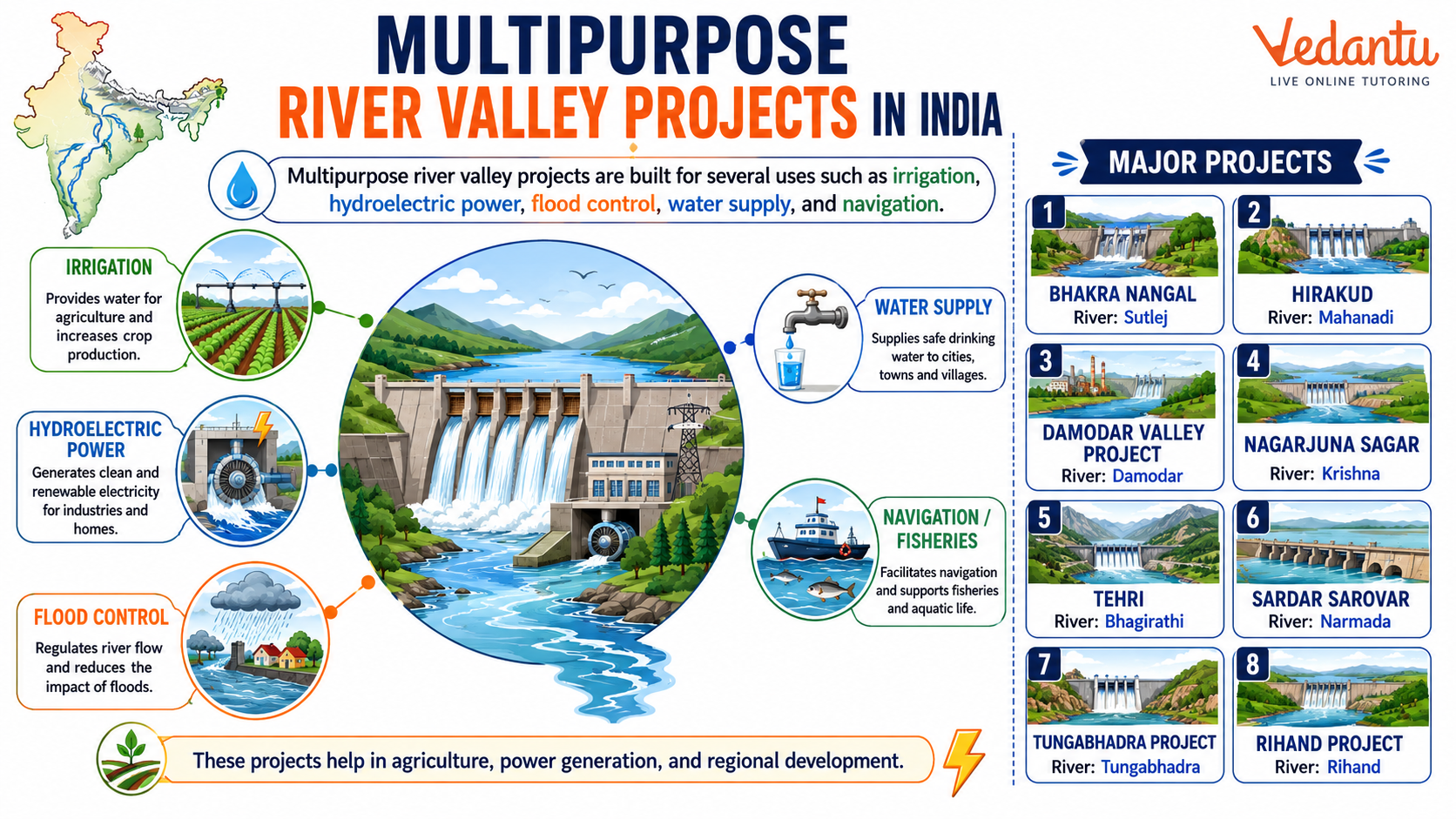
What are Multipurpose River Valley Projects?
A multipurpose river valley project is a large dam and reservoir system constructed across a river to utilize water resources for various purposes. Instead of serving a single function, these projects are designed to achieve multiple benefits simultaneously, improving the overall development of a region.
- Irrigation for agriculture
- Generation of hydroelectric power
- Flood control and water regulation
- Drinking and industrial water supply
- Promotion of inland navigation and fisheries
- Soil conservation and drought mitigation
Major Objectives of River Valley Projects
1. Irrigation Development
India is an agriculture-based country. These projects provide assured irrigation facilities, helping farmers cultivate multiple crops and increase productivity.
2. Hydroelectric Power Generation
Dams generate electricity by using flowing water to rotate turbines. Hydropower is renewable and reduces dependence on fossil fuels.
3. Flood Control
Reservoirs store excess water during heavy rainfall and release it gradually, reducing the risk of floods in downstream areas.
4. Drinking Water Supply
Urban and rural populations benefit from a steady supply of clean water from these reservoirs.
5. Regional Development
These projects promote industrial growth, employment opportunities, fisheries, tourism, and overall economic development.
Major Multipurpose River Valley Projects in India
| Project Name | River | States Benefited |
|---|---|---|
| Bhakra Nangal Project | Sutlej River | Punjab, Haryana, Rajasthan |
| Hirakud Project | Mahanadi River | Odisha |
| Damodar Valley Project | Damodar River | Jharkhand, West Bengal |
| Nagarjuna Sagar Project | Krishna River | Telangana, Andhra Pradesh |
| Sardar Sarovar Project | Narmada River | Gujarat, Madhya Pradesh, Maharashtra, Rajasthan |
These projects are among the largest and most significant river valley initiatives in India. They have transformed agricultural landscapes and boosted power generation capacity.
Advantages of Multipurpose River Valley Projects
- Increase in agricultural production due to assured irrigation
- Generation of clean and renewable hydroelectric power
- Reduction in flood damage
- Improvement in navigation and fisheries
- Promotion of industrial and regional development
Disadvantages and Challenges
- Displacement of local communities and rehabilitation issues
- Environmental degradation and loss of biodiversity
- Siltation reduces storage capacity over time
- Interstate water disputes
- High construction and maintenance costs
Importance for Competitive Exams
Multipurpose River Valley Projects are frequently asked in competitive examinations such as UPSC, SSC, State PSC, Railways, Banking, and various state-level exams. Questions may focus on:
- Matching projects with rivers
- States benefited by specific projects
- Objectives and benefits of dams
- Environmental and social impacts
Conclusion
Multipurpose River Valley Projects in India have played a vital role in shaping the country’s economic and agricultural development. While they offer significant benefits such as irrigation, power generation, and flood control, they also pose environmental and social challenges. A balanced approach that promotes sustainable development and effective rehabilitation policies is essential for maximizing their benefits. Understanding these projects is crucial for students and aspirants preparing for competitive examinations and for anyone interested in India’s infrastructure and development journey.
FAQs on Multipurpose River Valley Projects in India – Meaning, Dams and Advantages
1. What are Multipurpose River Valley Projects in India?
Multipurpose River Valley Projects are large-scale river development projects designed to serve multiple purposes like irrigation, power generation, and flood control.
Key features of Multipurpose River Valley Projects:
• Development of dams, reservoirs, and canals
• Provide irrigation for agriculture
• Generate hydroelectric power
• Control floods and soil erosion
• Supply drinking and industrial water
These projects are often called the ‘Temples of Modern India’, a term given by Jawaharlal Nehru.
2. Why are Multipurpose River Valley Projects important in India?
Multipurpose River Valley Projects are important because they support agriculture, energy production, and economic development in India.
Main importance:
• Boost agricultural productivity through irrigation
• Promote industrial growth with hydroelectric power
• Reduce flood damage
• Ensure water management and conservation
• Support rural development and employment
They play a key role in India’s water resource management and sustainable development.
3. Which are the major Multipurpose River Valley Projects in India?
India has several major multipurpose river valley projects that contribute to irrigation and power generation.
Important projects include:
• Bhakra Nangal Project – River Sutlej
• Damodar Valley Project – River Damodar
• Hirakud Project – River Mahanadi
• Nagarjuna Sagar Project – River Krishna
• Tehri Dam Project – River Bhagirathi
These projects are frequently asked in GK and competitive exams.
4. What are the objectives of Multipurpose River Valley Projects?
The main objective of multipurpose river valley projects is to utilize river water for multiple economic and social benefits.
Primary objectives:
• Irrigation development
• Hydroelectric power generation
• Flood control
• Navigation and fisheries development
• Drinking water supply
These objectives help in balanced regional development and water resource planning.
5. What are the advantages of Multipurpose River Valley Projects?
Multipurpose River Valley Projects offer economic, agricultural, and environmental benefits.
Major advantages:
• Increase in food production
• Production of renewable hydroelectric energy
• Reduction of flood risks
• Development of fisheries and tourism
• Promotion of regional and rural development
They are considered vital for India’s infrastructure growth.
6. What are the disadvantages of Multipurpose River Valley Projects?
Despite their benefits, multipurpose river valley projects also have social and environmental drawbacks.
Main disadvantages:
• Displacement of local communities
• Loss of forests and biodiversity
• Waterlogging and soil salinity
• Inter-state water disputes
• High construction and maintenance costs
These issues are often discussed in topics related to sustainable development and environmental studies.
7. Why did Jawaharlal Nehru call dams the ‘Temples of Modern India’?
Jawaharlal Nehru called dams the ‘Temples of Modern India’ because they symbolized progress and nation-building after independence.
Reasons behind the statement:
• Promoted industrialization and modernization
• Ensured energy security
• Supported agricultural growth
• Represented India’s self-reliance
The statement highlights the importance of multipurpose river valley projects in post-independence India.
8. What is the Damodar Valley Project?
The Damodar Valley Project is India’s first multipurpose river valley project developed on the River Damodar.
Key facts:
• Started in 1948
• Inspired by the Tennessee Valley Authority (USA)
• Controls floods in West Bengal and Jharkhand
• Generates hydroelectric and thermal power
It is a frequently asked topic in General Knowledge and UPSC exams.
9. How do Multipurpose River Valley Projects help in flood control?
Multipurpose river valley projects help control floods by regulating river flow through dams and reservoirs.
Flood control methods:
• Storage of excess rainwater in reservoirs
• Controlled release of water downstream
• Prevention of sudden river overflow
• Reduction in damage to crops and property
This function is crucial in flood-prone regions like the Ganga and Brahmaputra basins.
10. What is the role of hydroelectric power in Multipurpose River Valley Projects?
Hydroelectric power generation is one of the main functions of multipurpose river valley projects in India.
Role of hydroelectric power:
• Produces renewable and clean energy
• Reduces dependence on fossil fuels
• Supports industrial and urban growth
• Provides low-cost electricity for rural areas
Hydropower is a key component of India’s energy resources and sustainable development strategy.
