






How the Mughal Mansab Rank and Jagir System Worked
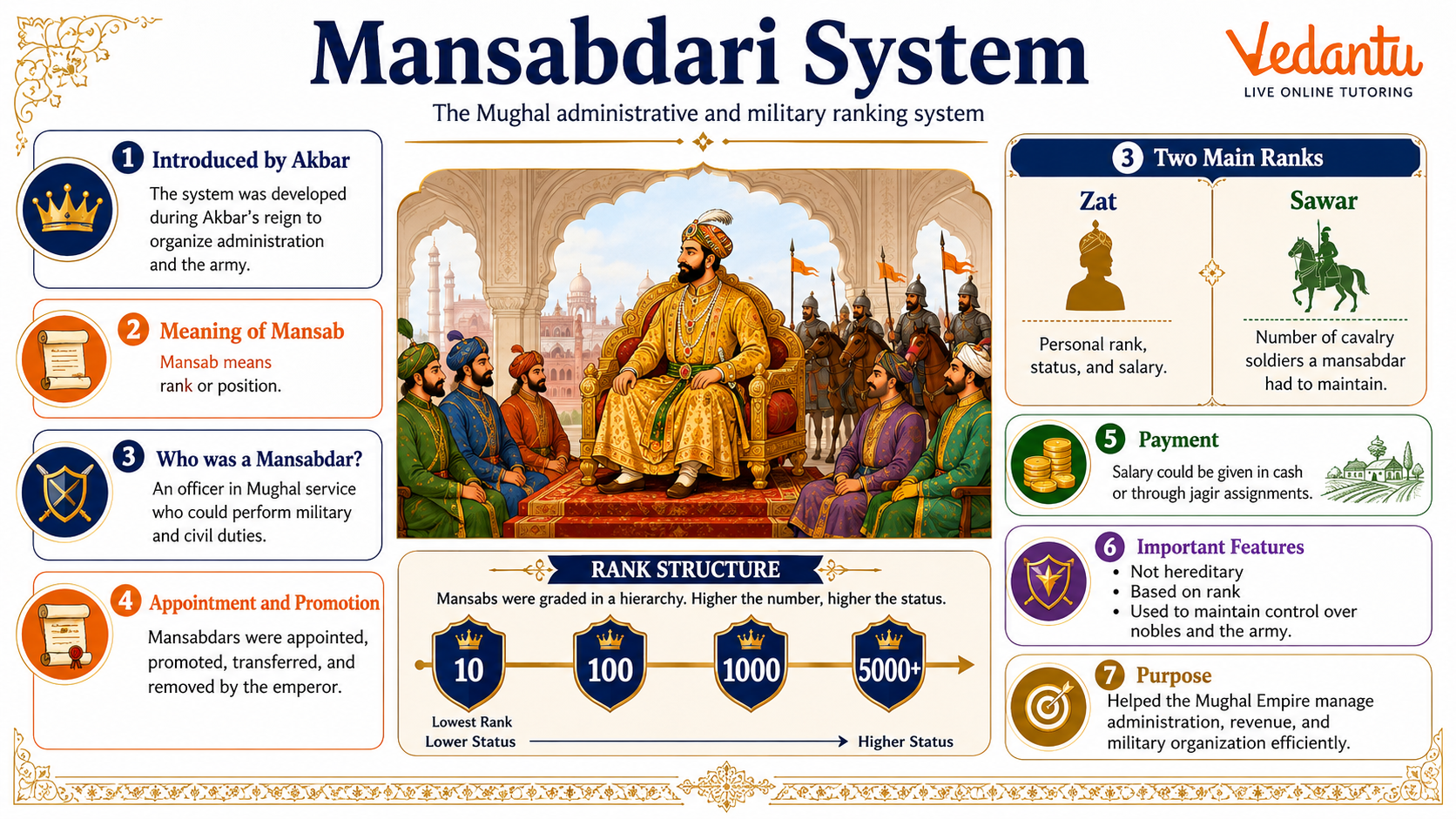
The Mansabdari System was an administrative and military system introduced by Mughal Emperor Akbar in the 16th century. It formed the backbone of the Mughal Empire’s governance and played a crucial role in maintaining law, order, and military strength. The word ‘Mansab’ means rank or position. Under this system, officers known as Mansabdars were assigned ranks that determined their status, salary, and military responsibilities. The Mansabdari System helped in centralizing power, ensuring loyalty among nobles, and strengthening the empire’s administrative structure. It is an important topic in History for school exams and competitive examinations.
Meaning and Origin of Mansabdari System
The term ‘Mansab’ is derived from an Arabic word meaning rank or office. Although elements of the system existed in earlier Islamic kingdoms, Akbar formalized and organized it around 1571 AD. The system was designed to create a unified administrative framework and reduce the influence of hereditary nobles.
- Introduced by Emperor Akbar
- Combined civil and military administration
- Ensured loyalty directly to the emperor
- Prevented concentration of power in one region
Key Features of the Mansabdari System
1. Ranking System
Each Mansabdar was assigned a numerical rank which determined his position in the court and military hierarchy. The rank ranged from 10 to 10,000 during Akbar’s reign. Higher ranks were usually reserved for royal family members.
2. Zat and Sawar
Every Mansab had two components called Zat and Sawar.
- Zat - Indicated the personal rank and salary of the officer.
- Sawar - Indicated the number of cavalry soldiers the Mansabdar had to maintain.
This dual system ensured both administrative ranking and military responsibility.
3. Payment and Jagir System
Mansabdars were paid either in cash or through land assignments known as Jagirs. They collected revenue from these lands but did not own them permanently. Transfers were common to prevent the formation of local power bases.
4. Non Hereditary Nature
The Mansabdari position was not hereditary. It depended entirely on the emperor’s favor and could be promoted, demoted, or removed.
Structure of the Mansabdari System
| Component | Meaning | Function |
|---|---|---|
| Zat | Personal Rank | Determined salary and status |
| Sawar | Cavalry Rank | Number of soldiers to maintain |
| Jagir | Land Assignment | Source of revenue for payment |
The above table highlights the main components that formed the administrative and military backbone of the Mughal Empire under the Mansabdari System.
Objectives of the Mansabdari System
Akbar introduced the system with several clear objectives to strengthen the empire.
- To establish a strong centralized administration
- To maintain a powerful and organized army
- To ensure loyalty of nobles
- To prevent regional rebellions
Advantages of the Mansabdari System
- Created a disciplined and efficient military structure
- Strengthened central authority
- Reduced corruption through regular transfers
- Integrated diverse groups into Mughal administration
Limitations of the Mansabdari System
- Heavy financial burden on the empire
- Corruption in maintaining actual number of soldiers
- Dependence on Jagir revenue created instability
- Gradual weakening during later Mughal rulers
Decline of the Mansabdari System
After Aurangzeb’s reign, the Mughal Empire began to decline. The increasing number of Mansabdars and shortage of Jagirs created financial problems. Corruption and weak central control further weakened the system. Eventually, the system collapsed along with the decline of the Mughal Empire in the 18th century.
Importance of Mansabdari System in History
The Mansabdari System was one of the most innovative administrative reforms in medieval Indian history. It helped Akbar build a vast and stable empire. The system ensured merit based appointments, maintained a strong army, and promoted administrative efficiency. Understanding this system provides insight into the functioning and strength of the Mughal Empire.
Exam Oriented Key Points
- Introduced by Akbar in 1571 AD.
- Mansab means rank or position.
- Two components - Zat and Sawar.
- Payment through cash or Jagir.
- Non hereditary and transferable posts.
The Mansabdari System remains a significant topic in Indian History as it highlights the administrative genius of Akbar and the structured governance of the Mughal Empire.
FAQs on Mansabdari System in Mughal Empire: Structure and Significance
1. What was the Mansabdari System?
The Mansabdari System was a military-administrative system introduced by Emperor Akbar to organize the Mughal nobility and army.
- The term ‘Mansab’ means rank or position.
- It determined a noble’s status, salary, and military responsibilities.
- Each officer (Mansabdar) was assigned a numerical rank.
- It formed the backbone of the Mughal administration and military structure.
This system is frequently asked in UPSC, SSC, and other competitive exams.
2. Who introduced the Mansabdari System in India?
The Mansabdari System was introduced by Akbar in 1571 during the Mughal Empire.
- It was inspired by the Central Asian administrative model.
- Akbar refined and standardized the ranking system.
- Later Mughal rulers like Jahangir and Shah Jahan continued it.
This reform strengthened central authority and imperial control.
3. What do Zat and Sawar mean in the Mansabdari System?
In the Mansabdari System, Zat and Sawar were two important components of a rank.
- Zat indicated the personal rank and salary of the Mansabdar.
- Sawar specified the number of cavalry soldiers he had to maintain.
- Higher Sawar meant greater military responsibility.
These terms are commonly searched under Mughal military administration and Akbar’s reforms.
4. How were Mansabdars paid under the Mansabdari System?
Mansabdars were paid through cash salaries or jagirs (land assignments) under the Mughal system.
- Most were given Jagirs to collect revenue.
- Jagirs were transferable and not hereditary.
- This prevented nobles from becoming too powerful.
The payment method ensured efficient revenue administration and loyalty to the emperor.
5. What was the rank range in the Mansabdari System?
The rank in the Mansabdari System ranged from 10 to 10,000.
- Lower ranks started from 10.
- Princes and top nobles could hold ranks up to 7,000–10,000.
- Higher rank meant higher salary and prestige.
This hierarchical ranking structured the Mughal nobility system effectively.
6. What were the main features of the Mansabdari System?
The Mansabdari System had several key administrative and military features.
- Ranking system based on Zat and Sawar.
- Non-hereditary and transferable posts.
- Payment through Jagirs or cash.
- Direct control of nobles by the emperor.
These features made it a central pillar of Mughal governance.
7. What were the objectives of the Mansabdari System?
The main objective of the Mansabdari System was to strengthen central administration and military efficiency.
- To organize the Mughal army.
- To ensure loyalty of nobles.
- To prevent regional power concentration.
- To maintain systematic revenue collection.
It played a major role in consolidating the Mughal Empire.
8. What were the drawbacks of the Mansabdari System?
Despite its strengths, the Mansabdari System had several weaknesses.
- Corruption in maintaining soldiers.
- Revenue exploitation in Jagirs.
- Financial strain on the empire.
- Decline in efficiency during later Mughal rulers.
These drawbacks contributed to the weakening of the Mughal administrative structure.
9. How did the Mansabdari System impact the Mughal Empire?
The Mansabdari System significantly strengthened the Mughal Empire during its peak.
- Created a disciplined military organization.
- Integrated diverse nobles into one system.
- Ensured centralized control by the emperor.
- Helped expand and maintain territories.
It is considered one of Akbar’s most important administrative reforms.
10. Why is the Mansabdari System important for competitive exams?
The Mansabdari System is important for exams because it is a key topic in Medieval Indian History.
- Frequently asked in UPSC, SSC, State PSC, and CBSE exams.
- Covers concepts like Zat, Sawar, Jagirdari, and Mughal administration.
- Helps understand Akbar’s governance reforms.
Mastering this topic improves preparation for General Knowledge (GK) and history sections.
