






How the Green Muffler Project Reduces Noise Pollution in Cities
Green Muffler Noise Pollution is an eco-friendly technique used to control and reduce noise pollution, especially in industrial and high-traffic areas. Unlike mechanical silencers used in vehicles, a green muffler refers to the use of thick layers of trees and shrubs planted around noisy areas to absorb and block sound waves. This natural method helps reduce environmental noise levels while also improving air quality and enhancing biodiversity. It is widely used around factories, highways, airports, and construction sites to create a healthier and more sustainable environment.
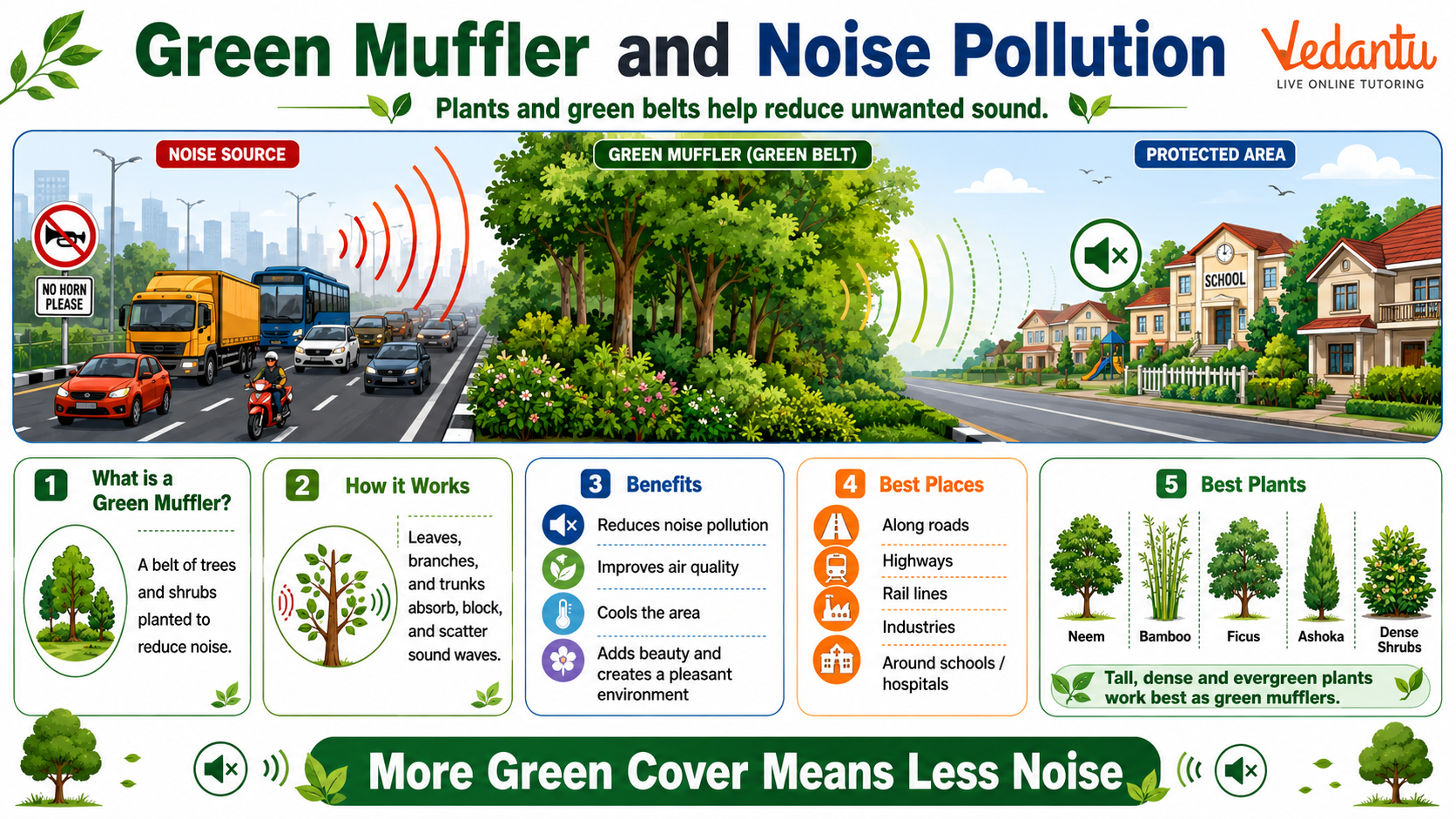
What is Green Muffler?
A green muffler is a belt or barrier of dense vegetation planted around sources of noise to reduce the intensity of sound reaching nearby areas. The trees and plants act as natural sound absorbers and deflectors. This method is cost-effective, environmentally friendly, and long-lasting compared to artificial sound barriers.
Understanding Noise Pollution
Noise pollution refers to excessive or unwanted sound that disturbs human life, wildlife, and the environment. It is mainly caused by urbanization, industrialization, and transportation activities.
Major Sources of Noise Pollution
- Industrial machinery and factory operations
- Road traffic and railway movement
- Airports and aircraft operations
- Construction activities
- Loudspeakers and urban events
How Green Mufflers Reduce Noise
Green mufflers reduce noise through multiple mechanisms. Plants absorb, deflect, and scatter sound waves. Thick foliage, branches, and tree trunks act as physical barriers that reduce the transmission of sound energy.
Mechanism of Noise Reduction
- Sound waves hit the leaves and branches.
- Part of the sound energy is absorbed by plant tissues.
- Remaining sound is scattered in different directions.
- The intensity of noise decreases before reaching residential areas.
Benefits of Green Muffler Technique
- Reduces noise levels naturally
- Improves air quality by absorbing pollutants
- Enhances biodiversity and ecological balance
- Provides aesthetic and green landscape benefits
- Acts as a carbon sink and reduces greenhouse gases
Comparison Between Artificial and Green Mufflers
| Feature | Artificial Muffler | Green Muffler |
|---|---|---|
| Material Used | Metal or synthetic barriers | Trees and shrubs |
| Environmental Impact | No added environmental benefits | Improves environment |
| Cost | High installation cost | Relatively low and sustainable |
The table highlights that green mufflers are not only effective in reducing noise but also provide multiple environmental advantages, making them a sustainable choice for long-term noise management.
Plants Commonly Used in Green Mufflers
Dense and evergreen species are preferred for green mufflers because they provide year-round sound insulation.
- Neem
- Ashoka
- Bamboo
- Peepal
- Eucalyptus
Importance in Environmental Management
Green mufflers play an important role in sustainable urban planning and environmental conservation. They are often mandated around industrial zones as part of pollution control regulations. Apart from reducing sound pollution, they also contribute to climate regulation, soil conservation, and habitat creation for birds and insects.
Conclusion
Green Muffler Noise Pollution control is a simple yet powerful natural method to manage increasing sound levels in urban and industrial areas. By planting dense vegetation around noise sources, societies can reduce harmful effects of noise while gaining environmental benefits. This eco-friendly approach supports sustainable development and improves the overall quality of life.
FAQs on Green Muffler and Noise Pollution Chapter Explanation for Students
1. What is the main theme of "Green Muffler" in relation to noise pollution?
The main theme of "Green Muffler" is that trees act as natural silencers and help control noise pollution in the environment.
• The story highlights the harmful effects of sound pollution in cities.
• It explains how planting trees reduces traffic noise and industrial sounds.
• It promotes environmental awareness and eco-friendly solutions.
• The term "Green Muffler" symbolizes trees as a natural sound absorber.
2. What is noise pollution and how does it affect humans?
Noise pollution is the presence of excessive or harmful sound that disturbs human life and the environment.
• Caused by vehicles, factories, loudspeakers, and construction.
• Leads to hearing loss, stress, anxiety, and sleep disturbance.
• Affects concentration in students and working professionals.
• Considered a major urban environmental problem.
3. Why are trees called "Green Mufflers"?
Trees are called "Green Mufflers" because they naturally reduce and absorb unwanted sound.
• Leaves and branches block and scatter sound waves.
• Tree belts reduce traffic and industrial noise.
• They improve air quality along with reducing sound.
• Act as a sustainable solution to noise and air pollution.
4. How do trees help in controlling noise pollution?
Trees help control noise pollution by acting as natural sound barriers.
• Dense vegetation absorbs high-frequency sounds.
• Green belts reduce noise levels by several decibels (dB).
• Roadside plantations reduce traffic noise impact.
• Promote a calm and healthy urban environment.
5. What are the major causes of noise pollution?
The major causes of noise pollution come from human activities and urban development.
• Motor vehicles like cars, buses, and trucks.
• Industrial machinery and factories.
• Construction activities and drilling.
• Use of loudspeakers and fireworks during events.
• Rapid urbanization and population growth.
6. What message does the lesson "Green Muffler" convey?
The lesson conveys the message that planting trees is an effective way to reduce environmental pollution.
• Encourages tree plantation drives.
• Promotes awareness about noise control measures.
• Highlights the importance of eco-friendly living.
• Inspires students to protect the natural environment.
7. How can noise pollution be reduced in cities?
Noise pollution in cities can be reduced through proper planning and green initiatives.
• Planting more trees and green belts.
• Using soundproof barriers near highways.
• Enforcing noise control laws and decibel limits.
• Promoting public awareness campaigns.
• Encouraging electric vehicles and quieter technology.
8. Why is controlling noise pollution important for students?
Controlling noise pollution is important because excessive noise affects students' health and concentration.
• Disturbs study and learning.
• Causes mental stress and fatigue.
• Reduces academic performance.
• Creates an unhealthy school and home environment.
9. What are the harmful effects of long-term exposure to loud noise?
Long-term exposure to loud noise can seriously damage physical and mental health.
• Permanent hearing impairment.
• Increased blood pressure and heart problems.
• Sleep disorders and irritability.
• Reduced productivity and focus.
• Higher risk of stress-related illnesses.
10. How does "Green Muffler" promote environmental awareness?
"Green Muffler" promotes environmental awareness by teaching the importance of trees in pollution control.
• Emphasizes sustainable development.
• Connects tree plantation with noise reduction.
• Encourages community participation in protecting nature.
• Spreads awareness about noise pollution prevention and eco-friendly solutions.
