






Major Types of Forest-Based Industries and Their Uses
Forest Based Industry refers to industries that use forest resources such as timber, bamboo, resin, gums, and other forest products as raw materials. These industries play a significant role in economic development, employment generation, and rural livelihood support. In India and many other countries, forest based industries are closely linked with environmental sustainability and resource management. Understanding this topic is important for students preparing for competitive exams and for general awareness about natural resource utilization.
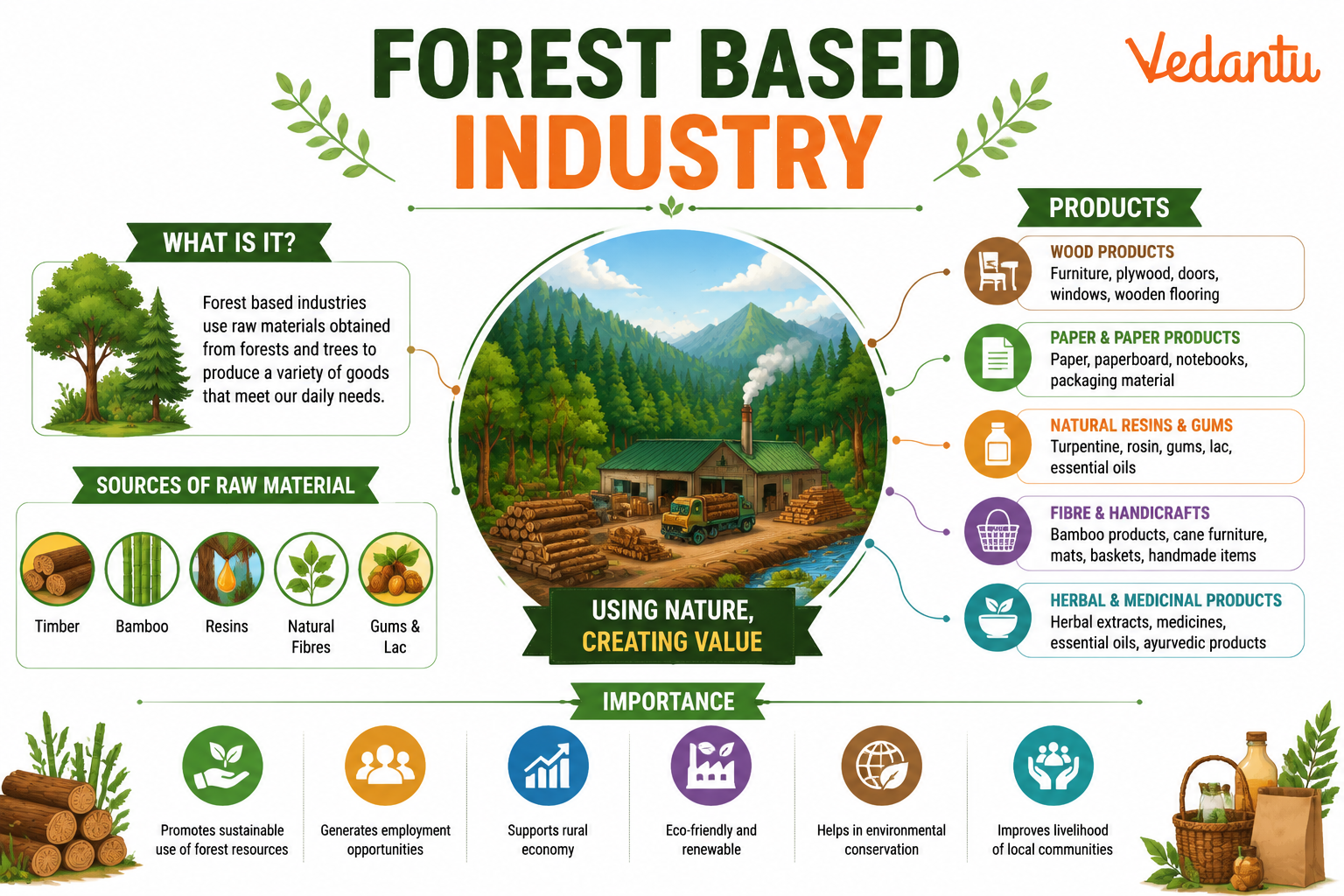
What is Forest Based Industry?
Forest based industries are those industries that depend directly on forest produce for manufacturing goods. The raw materials are obtained from natural forests or plantation forests. These industries range from small scale cottage industries to large scale manufacturing units.
- Use raw materials such as wood, bamboo, cane, lac, resins, and medicinal plants.
- Provide employment in rural and tribal areas.
- Contribute to national income and export earnings.
- Depend on sustainable forest management practices.
Types of Forest Based Industries
1. Timber and Wood Industry
This industry uses wood as the primary raw material to produce furniture, plywood, wooden handicrafts, and construction materials. It is one of the oldest forest based industries.
2. Paper and Pulp Industry
The paper industry uses bamboo, eucalyptus, and other softwoods to manufacture paper, cardboard, and packaging materials. It is highly dependent on a continuous supply of forest resources.
3. Rubber Industry
Natural rubber is obtained from rubber trees grown in plantations. It is used in the production of tyres, footwear, and various industrial goods.
4. Lac and Resin Industry
Lac is a natural resin secreted by insects on trees. It is used to make varnishes, bangles, and decorative items. Resins and gums are also extracted from forest trees for industrial use.
5. Bamboo and Cane Industry
Bamboo and cane are used to manufacture baskets, mats, furniture, and handicrafts. These industries are common in North Eastern India and other forest rich regions.
Major Forest Based Industries and Raw Materials
| Industry | Main Raw Material | Products |
|---|---|---|
| Paper Industry | Bamboo, Eucalyptus | Paper, Cardboard |
| Furniture Industry | Teak, Sal Wood | Tables, Chairs |
| Rubber Industry | Rubber Latex | Tyres, Footwear |
The table above highlights some important forest based industries along with their primary raw materials and finished products. The availability of raw materials near forest regions reduces transportation costs and supports industrial growth.
Importance of Forest Based Industries
Forest based industries contribute significantly to economic and social development. They support sustainable development when managed properly.
- Generate employment opportunities in rural and tribal areas.
- Promote small scale and cottage industries.
- Support export earnings through products like paper, handicrafts, and rubber goods.
- Encourage afforestation and plantation development.
Challenges Faced by Forest Based Industries
Despite their importance, forest based industries face several challenges related to resource availability and environmental concerns.
- Deforestation and depletion of forest resources.
- Strict environmental regulations.
- Rising cost of raw materials.
- Need for sustainable forest management practices.
Sustainable Development and Forest Based Industries
Sustainability is crucial for the long term survival of forest based industries. Governments and organizations promote afforestation, social forestry, and agro forestry to ensure a steady supply of raw materials without harming the environment.
- Adoption of plantation forestry.
- Efficient utilization of raw materials.
- Recycling of paper and wood products.
- Community participation in forest conservation.
Conclusion
Forest Based Industry plays an important role in economic growth, rural development, and employment generation. It depends heavily on natural forest resources, making sustainable management essential. By promoting responsible use of forest produce and encouraging afforestation, these industries can continue to contribute to national development while protecting the environment. A clear understanding of forest based industries helps students and readers appreciate the balance between industrial growth and ecological conservation.
FAQs on Forest-Based Industries: Meaning, Products and Role in Economy
1. What is Forest Based Industry?
The Forest Based Industry refers to industries that use forest resources like timber, bamboo, and resins as raw materials for production.
• It depends on wood, timber, bamboo, pulp, and non-timber forest products (NTFPs).
• Major examples include paper industry, furniture industry, plywood industry, and rubber industry.
• It supports economic development, rural employment, and cottage industries.
• Also known as wood-based industries or forest resource industries.
2. What are the main types of forest based industries?
Forest based industries are mainly divided into timber-based and non-timber-based industries.
• Timber-based industries: Furniture, plywood, paper, construction wood.
• Non-timber forest product (NTFP) industries: Rubber, lac, resin, gum, medicinal plants.
• Cottage industries: Bamboo crafts, basket weaving, handicrafts.
These industries play a key role in forest economy and sustainable development.
3. Why are forest based industries important for the economy?
Forest based industries are important because they contribute to employment generation and national income.
• Provide jobs in rural and tribal areas.
• Supply raw materials for paper, construction, and manufacturing sectors.
• Promote exports of timber, handicrafts, and forest products.
• Support sustainable livelihood and economic growth.
4. What raw materials are used in forest based industries?
Forest based industries use both wood and non-wood forest products as raw materials.
• Timber and hardwood for furniture and construction.
• Bamboo and softwood for paper and pulp industry.
• Resin, gum, lac, rubber for chemical and commercial products.
• Medicinal plants and herbs for pharmaceutical industries.
These materials are collectively known as forest resources.
5. What is the role of the paper industry in forest based industries?
The paper and pulp industry is one of the largest forest based industries in the world.
• Uses bamboo, softwood, and recycled paper as raw materials.
• Produces newspapers, books, packaging materials.
• Contributes significantly to industrial production and exports.
• Encourages social forestry and plantation programs to ensure sustainable supply.
6. How do forest based industries affect the environment?
Forest based industries can impact the environment positively and negatively depending on management practices.
• Deforestation due to excessive logging.
• Loss of biodiversity and wildlife habitat.
• Pollution from paper mills and chemical processing.
• Promotes afforestation, reforestation, and sustainable forestry when properly regulated.
Environmental protection depends on sustainable forest management.
7. What is sustainable forest management?
Sustainable forest management means using forest resources wisely without harming future generations.
• Controlled and scientific logging practices.
• Afforestation and reforestation programs.
• Promotion of Joint Forest Management (JFM).
• Conservation of biodiversity and natural ecosystems.
It ensures long-term growth of forest based industries and environmental balance.
8. What are examples of forest based cottage industries?
Forest based cottage industries are small-scale industries that depend on local forest produce.
• Bamboo and cane handicrafts.
• Basket making and wood carving.
• Production of lac, honey, and herbal products.
• Handmade furniture and decorative items.
These industries support rural livelihoods and traditional skills.
9. What challenges are faced by forest based industries?
Forest based industries face several economic and environmental challenges.
• Shortage of quality raw materials.
• Strict forest conservation laws and regulations.
• Environmental concerns like deforestation and pollution.
• Competition from synthetic and alternative materials.
Overcoming these issues requires sustainable practices and technological advancement.
10. How do forest based industries support rural development?
Forest based industries support rural development by generating income and employment in forest regions.
• Provide jobs to tribal and rural communities.
• Encourage small-scale and cottage industries.
• Improve infrastructure and local economy.
• Promote self-reliance and sustainable livelihood.
They play a vital role in inclusive growth and regional development.
