






How Naga Sadhus and Aghori Babas Differ in Rituals and Daily Life
Naga Sadhu and Aghori Baba are two distinct ascetic groups within Hinduism, often misunderstood due to their unconventional lifestyles and spiritual practices. Both follow the path of renunciation and are devoted to Lord Shiva, yet their philosophies, rituals, and ways of living are significantly different. Understanding the difference between Naga Sadhu and Aghori Baba is important for students, competitive exam aspirants, and general readers interested in Indian culture, religion, and spiritual traditions.
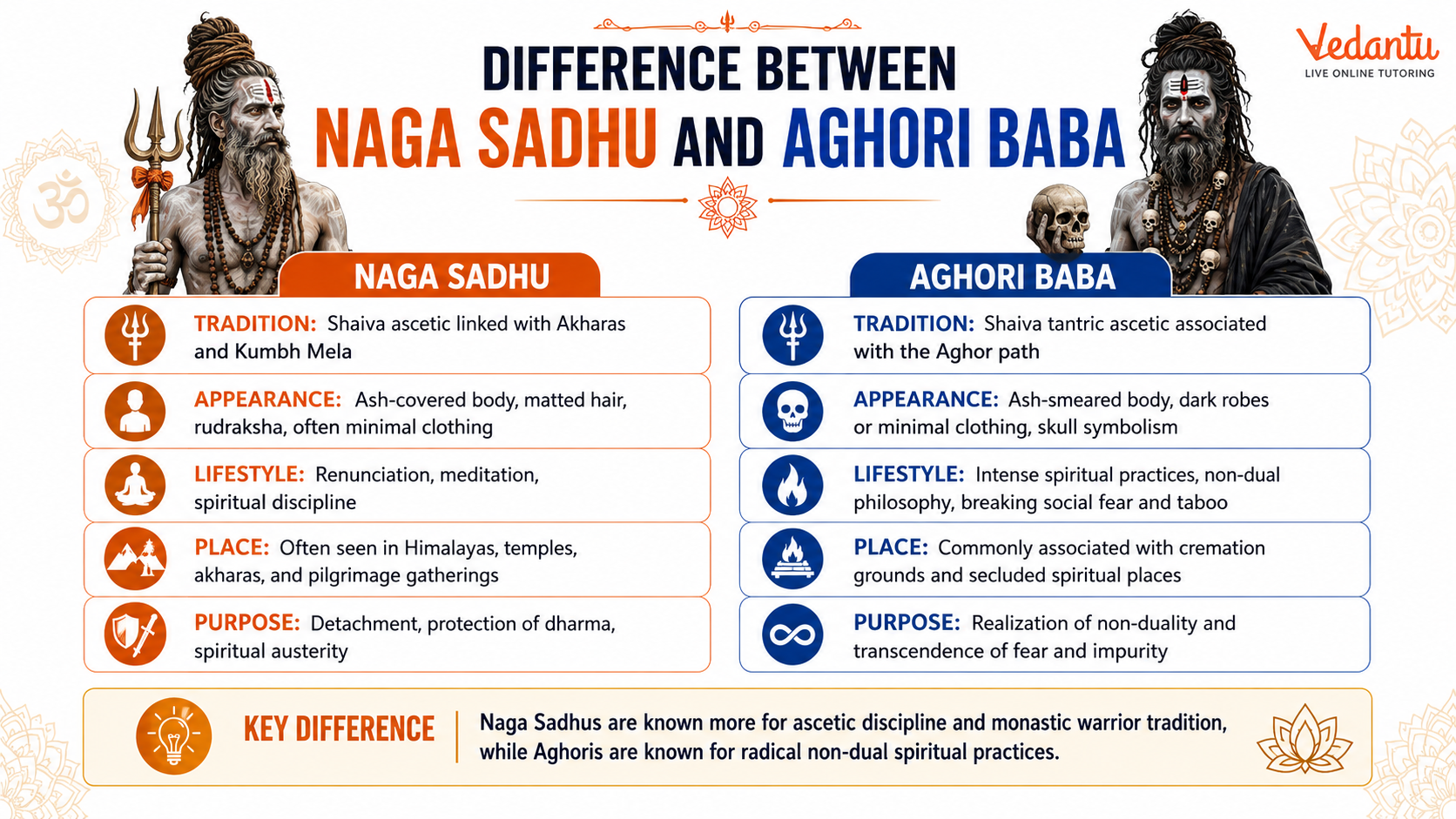
Who is a Naga Sadhu?
Naga Sadhus are ascetic warriors who belong mainly to the Shaivism tradition of Hinduism. They are known for living a life of extreme renunciation, detachment from worldly pleasures, and devotion to Lord Shiva. The word Naga means naked, and many Naga Sadhus remain unclothed as a symbol of complete renunciation of material attachments.
Key Characteristics of Naga Sadhus
- Belong to different Akharas or religious sects.
- Apply ash on their bodies as a symbol of detachment.
- Take part in Kumbh Mela and lead the Shahi Snan procession.
- Historically trained as warrior monks to protect Hindu temples and religion.
- Follow strict celibacy and disciplined spiritual practices.
Who is an Aghori Baba?
Aghori Baba is a follower of the Aghori sect, a branch of Shaivism that practices extreme spiritual rituals to achieve liberation. The word Aghori means free from fear or darkness. Aghoris believe that everything in the universe is sacred and that there is no distinction between pure and impure.
Key Characteristics of Aghori Baba
- Primarily worship Lord Shiva in his fierce form.
- Often perform rituals in cremation grounds.
- Use human skulls and ashes in certain rituals.
- Believe in non-duality and breaking social taboos.
- Practice meditation and tantric rituals.
Difference Between Naga Sadhu and Aghori Baba
| Basis of Comparison | Naga Sadhu | Aghori Baba |
|---|---|---|
| Meaning | Naked ascetic devoted to Shiva | Ascetic free from fear and duality |
| Main Practice | Renunciation and discipline | Tantric and cremation ground rituals |
| Association | Akharas and Kumbh Mela | Independent sect, mostly in Varanasi |
| Lifestyle | Celibate and organized | Breaks social norms and taboos |
| Historical Role | Warrior monks | Spiritual seekers of non-duality |
While both Naga Sadhus and Aghori Babas worship Lord Shiva and follow ascetic lifestyles, their spiritual paths are different. Naga Sadhus focus on discipline, renunciation, and organized monastic life, whereas Aghoris follow extreme tantric practices to transcend worldly distinctions of purity and impurity.
Similarities Between Naga Sadhu and Aghori Baba
- Both are devotees of Lord Shiva.
- Both live ascetic lives away from material comforts.
- Both apply ash on their bodies as a religious symbol.
- Both aim to achieve Moksha or spiritual liberation.
Importance in General Knowledge and Exams
Questions about Naga Sadhus and Aghori Babas are often asked in competitive exams such as UPSC, SSC, State PSC, and other GK-based examinations. These topics are relevant under Indian culture, religion, and society. Understanding their differences helps in accurately answering objective and descriptive questions related to Hindu religious traditions.
Preparation Tips for Exams
- Focus on key differences in lifestyle and rituals.
- Remember their association with Lord Shiva.
- Note the historical role of Naga Sadhus as warrior monks.
- Understand the concept of non-duality followed by Aghoris.
Conclusion
The difference between Naga Sadhu and Aghori Baba lies mainly in their spiritual practices, organizational structure, and approach toward social norms. Naga Sadhus represent disciplined asceticism and historical warrior traditions, while Aghori Babas follow an intense path of tantra and non-duality that challenges conventional beliefs. Both are important parts of India's spiritual heritage and contribute uniquely to the diversity of Hindu religious practices.
FAQs on Difference Between Naga Sadhus and Aghori Babas: Beliefs, Lifestyle, and Practices
1. What is the main difference between Naga Sadhu and Aghori Baba?
The main difference between Naga Sadhus and Aghori Babas lies in their beliefs, rituals, and lifestyle within Hinduism.
• Naga Sadhus are warrior ascetics who follow Shaivism and live disciplined monastic lives.
• Aghori Babas practice the extreme path of Aghor Tantra, focusing on non-duality and breaking social taboos.
• Naga Sadhus are commonly seen during the Kumbh Mela, while Aghoris usually live in cremation grounds.
• Their spiritual practices, appearance, and rituals are significantly different despite both worshipping Lord Shiva.
2. Who are Naga Sadhus?
Naga Sadhus are Hindu warrior ascetics who renounce worldly life to serve and protect Sanatan Dharma.
• They belong to Akhadas (religious sects).
• They are devotees of Lord Shiva.
• They often remain naked or wear minimal clothing, symbolizing renunciation.
• They participate prominently in the Kumbh Mela Shahi Snan.
• They undergo strict spiritual training including meditation, yoga, and celibacy.
3. Who are Aghori Babas?
Aghori Babas are ascetics who follow the Aghor tradition, a radical sect of Shaivism focused on non-dualism.
• They believe everything in the universe is sacred and equal.
• They perform rituals in cremation grounds (Shamshan).
• Some practice symbolic rituals involving ashes and human skulls.
• Their goal is to overcome fear, attachment, and social conditioning.
• They worship fierce forms of Lord Shiva like Bhairava.
4. Why do Naga Sadhus remain naked?
Naga Sadhus remain naked as a symbol of complete renunciation and detachment from material life.
• Nudity represents freedom from worldly possessions.
• It reflects their surrender to nature and God.
• They smear their bodies with sacred ash (Vibhuti).
• It symbolizes victory over shame, ego, and physical desires.
5. Why do Aghori Babas live in cremation grounds?
Aghori Babas live in cremation grounds to meditate on death and practice non-duality.
• They believe life and death are equal aspects of existence.
• Cremation grounds help them overcome fear and attachment.
• It symbolizes the impermanence of the human body.
• Their practices aim at attaining Moksha (liberation) through transcendence.
6. Do Naga Sadhus and Aghori Babas both worship Lord Shiva?
Yes, both Naga Sadhus and Aghori Babas are devotees of Lord Shiva, but their approaches differ.
• Naga Sadhus follow mainstream Shaivism and monastic discipline.
• Aghoris follow the Aghor sect, emphasizing extreme spiritual practices.
• Both see Shiva as the ultimate reality, but their rituals and philosophies vary significantly.
7. What is the role of Naga Sadhus in Kumbh Mela?
Naga Sadhus play a central ceremonial role in the Kumbh Mela festival.
• They lead the first royal bath called Shahi Snan.
• They represent different Akhadas.
• Their procession is marked by spiritual chants and rituals.
• They symbolize protection of Hindu faith and tradition.
8. Are Aghori practices dangerous or misunderstood?
Aghori practices are often misunderstood due to their unconventional and symbolic rituals.
• Media often exaggerates their lifestyle.
• Many rituals are symbolic rather than literal.
• Their philosophy is based on advaita (non-dualism).
• The aim is spiritual enlightenment, not harm or violence.
9. Can anyone become a Naga Sadhu or Aghori Baba?
Becoming a Naga Sadhu or Aghori Baba requires intense dedication, renunciation, and spiritual initiation.
• For Naga Sadhus, initiation happens through recognized Akhadas.
• The process includes years of training and celibacy.
• Aghori initiation is guided by a Guru.
• Both paths require complete detachment from worldly life.
10. What are the similarities between Naga Sadhu and Aghori Baba?
Naga Sadhus and Aghori Babas share similarities as ascetic followers of Lord Shiva.
• Both practice renunciation (Sanyas).
• Both use sacred ash (Bhasma/Vibhuti) in rituals.
• Both seek Moksha and spiritual liberation.
• Both are part of broader Hindu ascetic traditions.
• However, their philosophies, rituals, and social interactions differ greatly.
