






How a biological toilet system works in schools and homes
A Bio Toilet, also known as a biological toilet, is an eco-friendly sanitation system that uses natural processes and microorganisms to decompose human waste. It is designed to reduce environmental pollution, conserve water, and promote sustainable waste management. Bio toilets are widely used in Indian Railways, rural sanitation programs, defense sectors, and remote locations where conventional sewage systems are not available. Understanding bio toilets is important for students, especially in biology and environmental science, as it connects directly to topics like microbial decomposition, waste management, and public health.
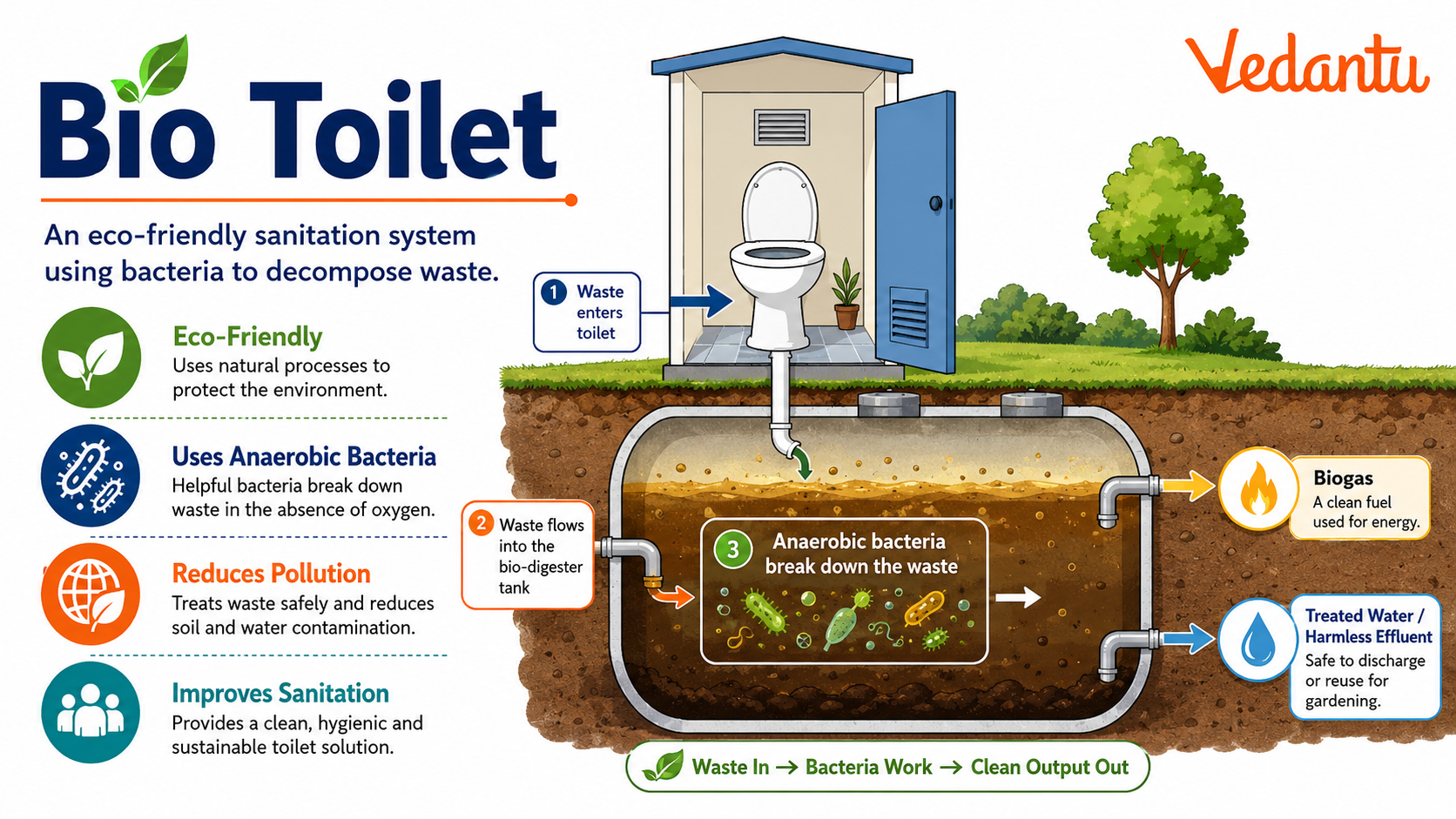
What is a Bio Toilet?
A bio toilet is a toilet system that uses anaerobic bacteria to break down human waste into simpler substances such as water, methane, and carbon dioxide. The waste is treated inside a biodigester tank attached below the toilet. This technology helps in reducing open defecation, preventing water contamination, and maintaining hygiene.
Key Features of Bio Toilet
- Uses anaerobic bacteria for decomposition of waste
- Does not require connection to a sewage system
- Produces odorless and pathogen-free effluent
- Environment friendly and water efficient
- Suitable for rural and remote areas
Working Principle of Bio Toilet
The working of a bio toilet is based on anaerobic digestion. The system consists of a toilet seat connected to a biodigester tank containing anaerobic bacteria. When human waste enters the tank, bacteria break down the organic matter in the absence of oxygen.
Steps in the Process
- Human waste enters the biodigester tank.
- Anaerobic bacteria decompose the organic matter.
- Complex organic compounds are converted into methane, carbon dioxide, and water.
- The treated water flows out as relatively safe effluent.
The methane gas produced can sometimes be released into the atmosphere or used as biogas if properly collected. The remaining effluent is safer and less harmful compared to untreated sewage.
Main Components of a Bio Toilet
Components of Bio Toilet System
| Component | Function | Importance |
|---|---|---|
| Toilet Seat | Receives human waste | Entry point of the system |
| Biodigester Tank | Contains anaerobic bacteria | Breaks down waste biologically |
Apart from these main components, the system may include ventilation pipes, outlet pipes for effluent discharge, and bacterial inoculum to maintain microbial activity.
Advantages of Bio Toilets
- Prevents open defecation and improves sanitation
- Reduces contamination of soil and groundwater
- Low maintenance compared to traditional septic tanks
- Environment friendly and sustainable
- Helps in controlling water borne diseases
Limitations of Bio Toilets
- Requires proper bacterial culture maintenance
- Performance may reduce in extremely cold climates
- Initial installation cost can be high
- Improper use of chemicals may kill beneficial bacteria
Applications of Bio Toilets
Bio toilets are used in various sectors to promote hygiene and environmental protection. They are especially useful in areas where conventional sewage systems are not feasible.
- Indian Railways coaches
- Rural sanitation programs under government schemes
- Defense and high altitude areas
- Temporary camps and disaster relief zones
Importance of Bio Toilets for NEET and Exams
For NEET and other competitive exams, bio toilets are relevant under topics such as microbes in human welfare, waste management, environmental pollution, and sustainable development. Questions may focus on anaerobic digestion, role of bacteria in decomposition, and eco-friendly sanitation systems.
- Understand the role of anaerobic bacteria in waste treatment
- Revise concepts of microbial metabolism
- Link bio toilets with public health and sanitation
- Practice objective questions related to environmental biotechnology
Conclusion
Bio toilets represent a practical application of microbiology in daily life. By using anaerobic bacteria to decompose human waste, they promote sanitation, reduce environmental pollution, and support sustainable development. For students preparing for NEET and other exams, understanding the scientific principle behind bio toilets helps in strengthening concepts related to microbes, ecology, and environmental conservation.
FAQs on Bio Toilet: Meaning, Working and Benefits Explained
1. What is a Bio Toilet?
A Bio Toilet is an eco-friendly sanitation system that uses bacteria to decompose human waste into water and gas.
• It is also known as a bio-digester toilet or bacterial toilet.
• It uses anaerobic bacteria to break down waste.
• Converts waste into methane gas, carbon dioxide, and water.
• Widely used in Indian Railways, rural areas, and defense sectors.
This system helps in improving sanitation, hygiene, and environmental protection.
2. How does a Bio Toilet work?
A Bio Toilet works through anaerobic digestion where bacteria decompose human waste without oxygen.
• Human waste enters the bio-digester tank.
• Anaerobic bacteria break down the waste.
• Solid waste converts into biogas and liquid effluent.
• The treated water is released safely into the environment.
This process reduces foul smell, prevents pollution, and promotes sustainable waste management.
3. Who developed the Bio Toilet technology in India?
Bio Toilet technology in India was developed by DRDO (Defence Research and Development Organisation).
• Developed for soldiers in high-altitude and extreme climates.
• Later adopted by Indian Railways.
• Supports the Swachh Bharat Abhiyan mission.
This innovation improved sanitation infrastructure and reduced open defecation.
4. What are the advantages of a Bio Toilet?
Bio Toilets offer eco-friendly, hygienic, and cost-effective sanitation solutions.
• Reduces water consumption.
• Prevents soil and water pollution.
• Produces useful biogas.
• Minimizes bad odor and manual cleaning.
• Supports sustainable development and rural sanitation.
These benefits make bio-toilets ideal for trains, villages, and remote locations.
5. Where are Bio Toilets commonly used?
Bio Toilets are commonly used in railways, rural areas, and remote locations.
• Installed in Indian Railway coaches.
• Used in villages under Swachh Bharat Mission.
• Installed in army camps and hilly regions.
• Suitable for schools and public places.
Their portability and low maintenance make them suitable for diverse environments.
6. What is the difference between a normal toilet and a Bio Toilet?
The main difference is that a Bio Toilet treats waste using bacteria, while a normal toilet sends waste to a sewage system.
• Normal Toilet: Requires sewage pipelines and treatment plants.
• Bio Toilet: Uses anaerobic bacteria for on-site waste treatment.
• Bio toilets are more eco-friendly and reduce pollution.
• Suitable for areas without proper drainage systems.
This makes bio-toilets a sustainable sanitation alternative.
7. What are the components of a Bio Toilet?
A Bio Toilet consists of a toilet seat, bio-digester tank, bacteria culture, and outlet system.
• Toilet seat/pan for usage.
• Bio-digester tank for waste treatment.
• Anaerobic bacterial inoculum.
• Outlet pipe for treated water discharge.
Each component works together to ensure hygienic and scientific waste disposal.
8. Is Bio Toilet environmentally friendly?
Yes, Bio Toilets are environmentally friendly as they reduce pollution and recycle waste naturally.
• Prevents contamination of water bodies.
• Reduces open defecation.
• Converts waste into harmless by-products.
• Promotes green technology and sustainable sanitation.
They play a key role in environmental conservation and public health improvement.
9. What are the limitations of Bio Toilets?
Bio Toilets have some limitations related to maintenance and bacterial efficiency.
• Requires proper maintenance and monitoring.
• Bacteria may get affected by chemical cleaners.
• Initial installation cost can be high.
• Performance depends on correct usage.
Despite these challenges, they remain a practical sanitation solution.
10. Why are Bio Toilets important for India?
Bio Toilets are important for India to improve sanitation, hygiene, and environmental safety.
• Supports Swachh Bharat Abhiyan.
• Reduces railway track pollution.
• Improves rural sanitation infrastructure.
• Helps in achieving Sustainable Development Goals (SDGs).
They contribute to cleaner cities, healthier citizens, and sustainable waste management.
