






Which Are the Largest National Parks in India by Area and Wildlife?
India is home to a rich diversity of wildlife and natural landscapes, ranging from the Himalayan mountains to tropical rainforests and coastal ecosystems. National parks in India play a crucial role in conserving endangered species, protecting biodiversity, and maintaining ecological balance. Understanding the biggest national parks in India is important for General Knowledge, competitive exams, and environmental awareness. This article provides detailed information about the largest national parks in India based on their area, along with key facts and features.
What is a National Park?
A National Park is a protected area established by the government to conserve wildlife, flora, fauna, and natural habitats. Activities like hunting, grazing, and private land ownership are strictly prohibited in national parks. These parks are managed under the Wildlife Protection Act, 1972.
- Established for biodiversity conservation
- No human activity allowed except tourism and research
- Protected and managed by the government
Biggest National Parks in India by Area
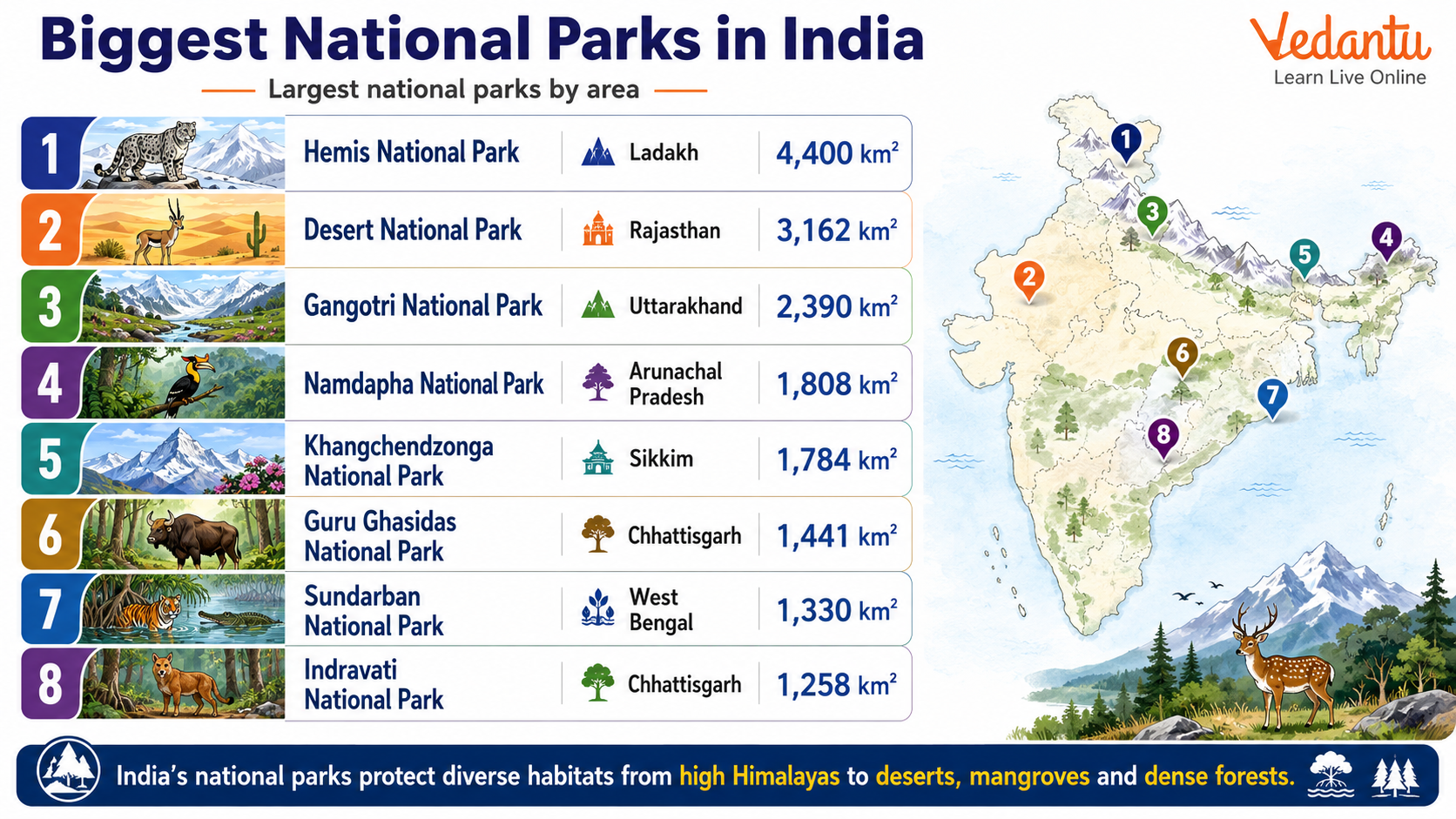
Top Largest National Parks in India
| National Park | State | Area (sq km) |
|---|---|---|
| Hemis National Park | Ladakh | 4400 |
| Desert National Park | Rajasthan | 3162 |
| Gangotri National Park | Uttarakhand | 2390 |
| Namdapha National Park | Arunachal Pradesh | 1985 |
| Khangchendzonga National Park | Sikkim | 1784 |
Hemis National Park in Ladakh is the largest national park in India. It is globally famous for its snow leopard population and cold desert ecosystem. The size of these parks makes them ecologically significant and vital for wildlife conservation.
Details of the Largest National Parks
1. Hemis National Park
Located in Ladakh, Hemis National Park is the largest national park in India. It is known for its high altitude terrain and rare wildlife species.
- Famous for snow leopard conservation
- Located in the eastern Ladakh region
- Cold desert ecosystem
2. Desert National Park
Situated in Rajasthan, this park represents the Thar Desert ecosystem. It is one of the largest national parks in India and supports unique desert wildlife.
- Home to the Great Indian Bustard
- Contains sand dunes and rocky formations
- Important for desert biodiversity
3. Gangotri National Park
Located in Uttarakhand, Gangotri National Park covers a large portion of the Himalayan region. It includes glaciers and high altitude ecosystems.
- Source of River Ganga
- Rich in alpine flora and fauna
- Important for Himalayan biodiversity
4. Namdapha National Park
Namdapha National Park in Arunachal Pradesh is known for its tropical rainforest and high species diversity. It is one of the biodiversity hotspots of India.
- Part of Eastern Himalayas
- Home to four big cat species
- Dense tropical forests
5. Khangchendzonga National Park
Located in Sikkim, this park is a UNESCO World Heritage Site. It includes Mount Khangchendzonga, the third highest peak in the world.
- UNESCO World Heritage Site
- High mountain ecosystem
- Rich cultural and natural heritage
Importance of Large National Parks
Large national parks provide extensive habitats that support diverse wildlife populations. Bigger protected areas reduce human interference and help maintain ecological balance.
- Preserve endangered species
- Maintain biodiversity
- Support climate regulation
- Promote eco tourism
Exam Oriented Key Facts
- Largest National Park in India - Hemis National Park, Ladakh
- Desert National Park is located in Rajasthan
- Namdapha National Park is in Arunachal Pradesh
- Khangchendzonga National Park is a UNESCO World Heritage Site
- Gangotri National Park is located in Uttarakhand
Conclusion
The biggest national parks in India are not only vast in area but also rich in biodiversity and ecological significance. From the cold deserts of Ladakh to the tropical forests of Arunachal Pradesh, these parks represent India's diverse natural heritage. Knowledge about these parks is essential for competitive exams and helps build awareness about environmental conservation. Understanding their location, size, and key features strengthens General Knowledge and supports academic preparation effectively.
FAQs on Biggest National Parks in India: Largest Wildlife Reserves Explained
1. Which is the biggest national park in India?
The largest national park in India is Hemis National Park located in Ladakh.
- Area: 4,400 sq km
- Established in: 1981
- Famous for: Snow Leopard, Himalayan wildlife
- Mountain range: Eastern Ladakh region of the Himalayas
Hemis is also known as the largest national park in South Asia, making it important for GK, UPSC, SSC, and school exams.
2. Which are the top 5 biggest national parks in India?
The top 5 largest national parks in India by area are:
1. Hemis National Park (Ladakh) – 4,400 sq km
2. Desert National Park (Rajasthan) – 3,162 sq km
3. Gangotri National Park (Uttarakhand) – 2,390 sq km
4. Namdapha National Park (Arunachal Pradesh) – 1,985 sq km
5. Khangchendzonga National Park (Sikkim) – 1,784 sq km
These parks are known for their biodiversity, wildlife conservation, and protected ecosystems.
3. Where is Hemis National Park located?
Hemis National Park is located in the Union Territory of Ladakh, India.
- Region: Eastern Ladakh
- Mountain Range: Himalayas
- Nearest city: Leh
- River flowing through park: Indus River
It is famous for high-altitude wildlife and is one of the best places to spot the Snow Leopard in India.
4. Which is the largest national park in South India?
The largest national park in South India is Nagarjunsagar-Srisailam National Park.
- Located in: Andhra Pradesh and Telangana
- Area: Approximately 3,568 sq km
- Part of: Nallamala Hills
- Known for: Bengal Tiger and Tiger Reserve status
It is one of the biggest Tiger Reserves in India under Project Tiger.
5. Why is Hemis National Park famous?
Hemis National Park is famous for its rare and endangered wildlife species.
- Home to the Snow Leopard
- Habitat of Tibetan Wolf, Himalayan Blue Sheep, and Eurasian Brown Bear
- Largest protected area in India
- High-altitude cold desert ecosystem
It is globally recognized for wildlife conservation and biodiversity protection.
6. Which state has the highest number of large national parks in India?
States like Rajasthan, Madhya Pradesh, and Arunachal Pradesh have some of the largest national parks in India.
- Rajasthan: Desert National Park
- Madhya Pradesh: Known as the “Tiger State of India”
- Arunachal Pradesh: Namdapha National Park
These states contribute significantly to India’s forest cover, wildlife reserves, and biodiversity hotspots.
7. What is the difference between a wildlife sanctuary and a national park?
The key difference lies in the level of protection and human activity allowed.
- National Park: Strict protection, no grazing or private activities allowed
- Wildlife Sanctuary: Limited human activities may be permitted
- National Parks are declared under the Wildlife Protection Act, 1972
National parks like Hemis and Jim Corbett have stricter conservation rules.
8. Which is the largest national park in Northeast India?
The largest national park in Northeast India is Namdapha National Park in Arunachal Pradesh.
- Area: 1,985 sq km
- Located in: Changlang district
- Known for: Clouded Leopard and diverse flora
- Recognized as a biodiversity hotspot
It is one of the richest parks in terms of plant and animal species diversity.
9. How many national parks are there in India?
India currently has over 100 national parks dedicated to wildlife conservation.
- Governed under: Wildlife Protection Act, 1972
- Aim: Protect endangered species and ecosystems
- Includes famous parks like Kaziranga, Jim Corbett, Ranthambore
These parks play a crucial role in maintaining India’s ecological balance and biodiversity.
10. Which national park in India is a UNESCO World Heritage Site and among the largest?
Khangchendzonga National Park in Sikkim is both a UNESCO World Heritage Site and one of the largest national parks in India.
- Area: 1,784 sq km
- Declared UNESCO site in: 2016
- Protects: Mount Khangchendzonga, India’s highest peak
- Known for: Cultural and natural heritage value
It combines glaciers, alpine meadows, rare wildlife, and sacred landscapes.
