






Why National Panchayati Raj Day is Celebrated on 24 April in India
National Panchayati Raj Day is observed every year on 24 April in India to mark the constitutional recognition of Panchayati Raj Institutions through the 73rd Constitutional Amendment Act, 1992. This day highlights the importance of grassroots democracy and local self-governance in rural India. It reminds citizens of the crucial role played by Gram Panchayats in promoting development, transparency, and participatory governance at the village level. The day is significant for students, competitive exam aspirants, and anyone interested in understanding India’s democratic structure.
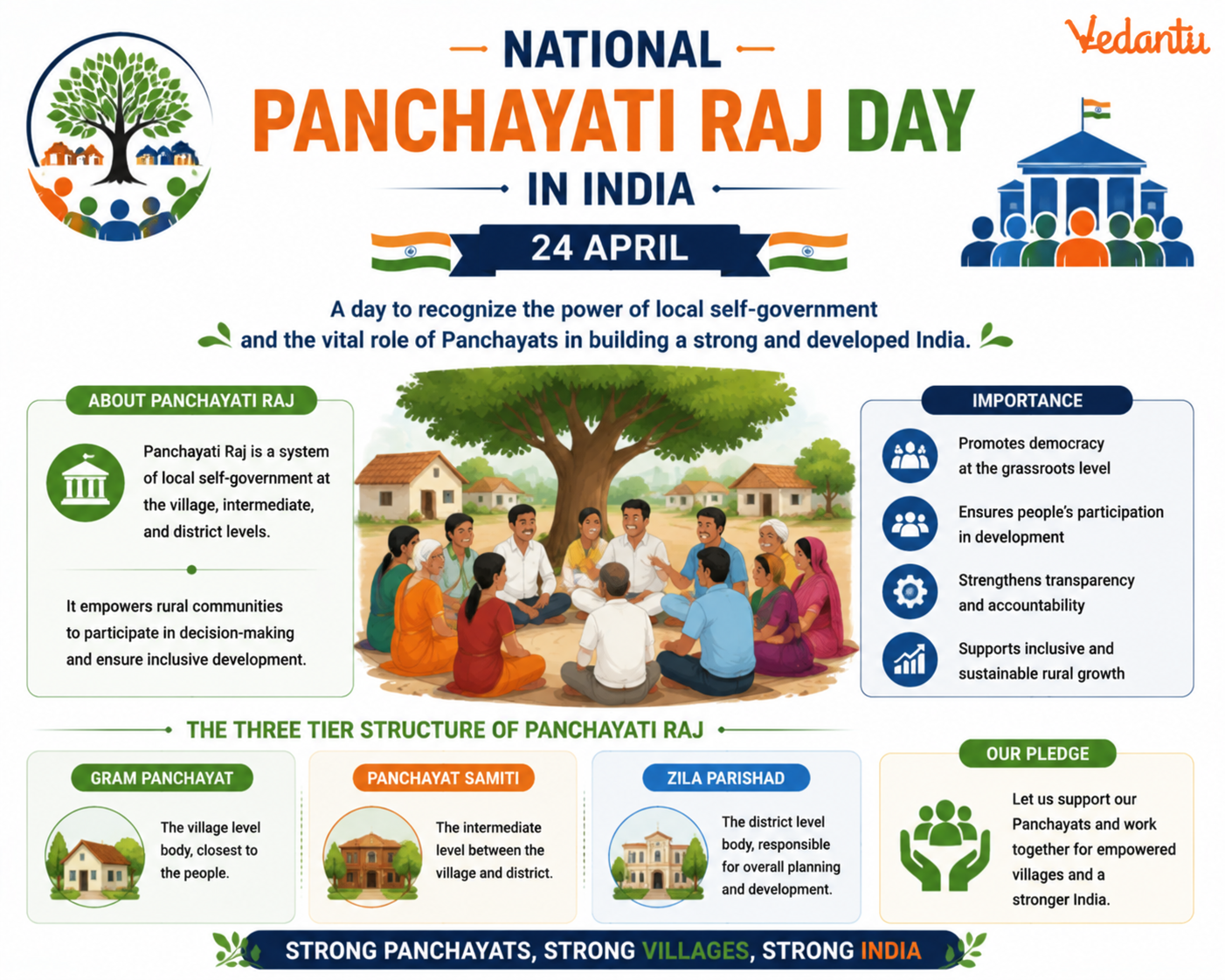
What is Panchayati Raj?
Panchayati Raj is a system of rural local self-government in India. The term Panchayati Raj means rule by five individuals, referring to the traditional village council called Panchayat. It aims to decentralize power and give local communities authority to manage their own affairs, including development planning and implementation of government schemes.
- It promotes democratic participation at the grassroots level.
- It ensures local decision-making for rural development.
- It strengthens accountability and transparency in governance.
- It encourages involvement of women and marginalized communities.
Why is 24 April Celebrated as National Panchayati Raj Day?
National Panchayati Raj Day is celebrated on 24 April because the 73rd Constitutional Amendment Act came into force on 24 April 1993. This amendment gave constitutional status to Panchayati Raj Institutions and made them a permanent feature of India’s democratic system.
Key Highlights of the 73rd Constitutional Amendment Act
- Constitutional status to Panchayati Raj Institutions.
- Three-tier system of Panchayati Raj.
- Regular elections every five years.
- Reservation for Scheduled Castes, Scheduled Tribes, and women.
- Establishment of State Finance Commission.
- Addition of the Eleventh Schedule with 29 subjects.
Three-Tier Structure of Panchayati Raj
| Level | Area Covered | Institution |
|---|---|---|
| Village Level | Village | Gram Panchayat |
| Intermediate Level | Block or Taluka | Panchayat Samiti |
| District Level | District | Zila Parishad |
This three-tier system ensures that governance and development planning take place at village, block, and district levels. It helps in effective implementation of welfare schemes and promotes decentralization of power.
Objectives of National Panchayati Raj Day
The main aim of celebrating National Panchayati Raj Day is to recognize and strengthen the role of Panchayati Raj Institutions in rural governance. It also spreads awareness about local self-government among citizens.
- Promote democratic decentralization.
- Encourage active participation of villagers in decision-making.
- Recognize best performing Panchayats.
- Strengthen transparency and accountability.
- Support rural development initiatives.
Importance of Panchayati Raj in Rural Development
Panchayati Raj Institutions play a key role in implementing government schemes related to health, education, sanitation, agriculture, and infrastructure. They ensure that development programs reach the grassroots level effectively.
Major Functions
- Preparation of local development plans.
- Implementation of rural employment schemes.
- Maintenance of public utilities like roads and water supply.
- Promotion of primary education and healthcare.
- Social welfare and poverty alleviation programs.
Role of Women in Panchayati Raj
The 73rd Constitutional Amendment provides reservation of not less than one-third seats for women in Panchayati Raj Institutions. Many states have increased this reservation to 50 percent. This step has empowered women politically and socially in rural India.
- Increased participation of women in governance.
- Improved focus on education, health, and sanitation.
- Enhanced leadership opportunities for rural women.
Celebration of National Panchayati Raj Day
On this day, the Ministry of Panchayati Raj organizes national level events where awards are given to outstanding Panchayats for their performance. Conferences and seminars are conducted to discuss reforms, innovations, and best practices in local governance.
Key Facts for Competitive Exams
- Date of celebration - 24 April every year.
- Based on - 73rd Constitutional Amendment Act, 1992.
- Came into force - 24 April 1993.
- Added Part IX to the Constitution.
- Eleventh Schedule contains 29 subjects.
Conclusion
National Panchayati Raj Day in India is an important occasion that celebrates grassroots democracy and decentralized governance. By empowering local bodies, the Panchayati Raj system ensures active citizen participation and effective rural development. Understanding this topic is essential for General Knowledge and competitive examinations, as it forms a vital part of India’s political and administrative structure.
FAQs on 24 April National Panchayati Raj Day in India – History, Meaning and Importance
1. What is National Panchayati Raj Day in India?
National Panchayati Raj Day is observed every year on 24 April to celebrate the establishment of the Panchayati Raj System in India.
• It marks the implementation of the 73rd Constitutional Amendment Act, 1992.
• The day recognizes the importance of local self-government in rural India.
• It promotes grassroots democracy and decentralized governance.
• It is significant for students preparing for GK, UPSC, SSC, and state exams.
2. Why is 24 April celebrated as National Panchayati Raj Day?
The date 24 April is celebrated because the 73rd Constitutional Amendment Act came into force on this day in 1993.
• It gave constitutional status to the Panchayati Raj Institutions (PRIs).
• It ensured democratic decentralization in rural governance.
• It strengthened village-level administration through elected bodies.
• It is often asked in People Also Ask (PAA) queries related to Indian polity.
3. What is the 73rd Constitutional Amendment Act?
The 73rd Constitutional Amendment Act, 1992 provided constitutional recognition to the Panchayati Raj System in India.
• Added Part IX to the Indian Constitution.
• Introduced the Eleventh Schedule with 29 subjects.
• Mandated regular elections every 5 years.
• Provided reservation for SCs, STs, and women in local bodies.
4. What is the Panchayati Raj System in India?
The Panchayati Raj System is a three-tier system of rural local self-government in India.
• Gram Panchayat – Village level.
• Panchayat Samiti – Block level.
• Zila Parishad – District level.
• It promotes democratic decentralization and rural development.
5. Who introduced the Panchayati Raj System in India?
The Panchayati Raj System was first introduced in India on 2 October 1959 in Nagaur, Rajasthan.
• It was based on the recommendations of the Balwant Rai Mehta Committee (1957).
• The committee recommended a three-tier structure.
• It aimed to strengthen community development programs.
• This topic is important for Indian Polity and GK exams.
6. What is the significance of National Panchayati Raj Day?
National Panchayati Raj Day highlights the importance of grassroots democracy and rural empowerment.
• Encourages citizen participation in governance.
• Strengthens local governance institutions.
• Promotes transparency and accountability.
• Supports rural development and inclusive growth.
7. What are the main objectives of the Panchayati Raj System?
The main objective of the Panchayati Raj System is to ensure democratic decentralization at the village level.
• Transfer power to local authorities.
• Promote rural development and welfare schemes.
• Ensure participation of women and marginalized groups.
• Improve implementation of government policies at the grassroots level.
8. What are the key features of the 73rd Amendment Act?
The 73rd Amendment Act introduced several key features to strengthen Panchayati Raj Institutions.
• Constitutional status to PRIs.
• Five-year tenure and compulsory elections.
• Reservation for women (at least 1/3 seats).
• Establishment of State Election Commission.
• Formation of State Finance Commission.
9. How is National Panchayati Raj Day celebrated in India?
National Panchayati Raj Day is celebrated with official events recognizing rural governance initiatives.
• The Prime Minister addresses Panchayati Raj representatives.
• Awards are given to best-performing Gram Panchayats.
• Awareness programs on rural development are conducted.
• Discussions on strengthening local self-government are held.
10. Why is National Panchayati Raj Day important for competitive exams?
National Panchayati Raj Day is important for competitive exams because it is linked to Indian Polity and current affairs.
• Frequently asked in UPSC, SSC, Banking, and State PCS exams.
• Covers topics like the 73rd Constitutional Amendment.
• Related to questions on local self-government and rural administration.
• Important for static GK and current affairs preparation.
