






What Is the Meaning and Theme of the 21-Gun Salute Ceremony in the Chapter?
The 21 Gun Salute Honour is one of the highest ceremonial marks of respect given to a head of state or dignitary. It is a traditional military honor that involves firing 21 artillery shots in succession to show national respect and prestige. The practice is widely followed across the world and holds special importance in countries like India, the United States, and the United Kingdom. The 21 Gun Salute is not a sign of war but a symbol of peace, dignity, and international protocol.
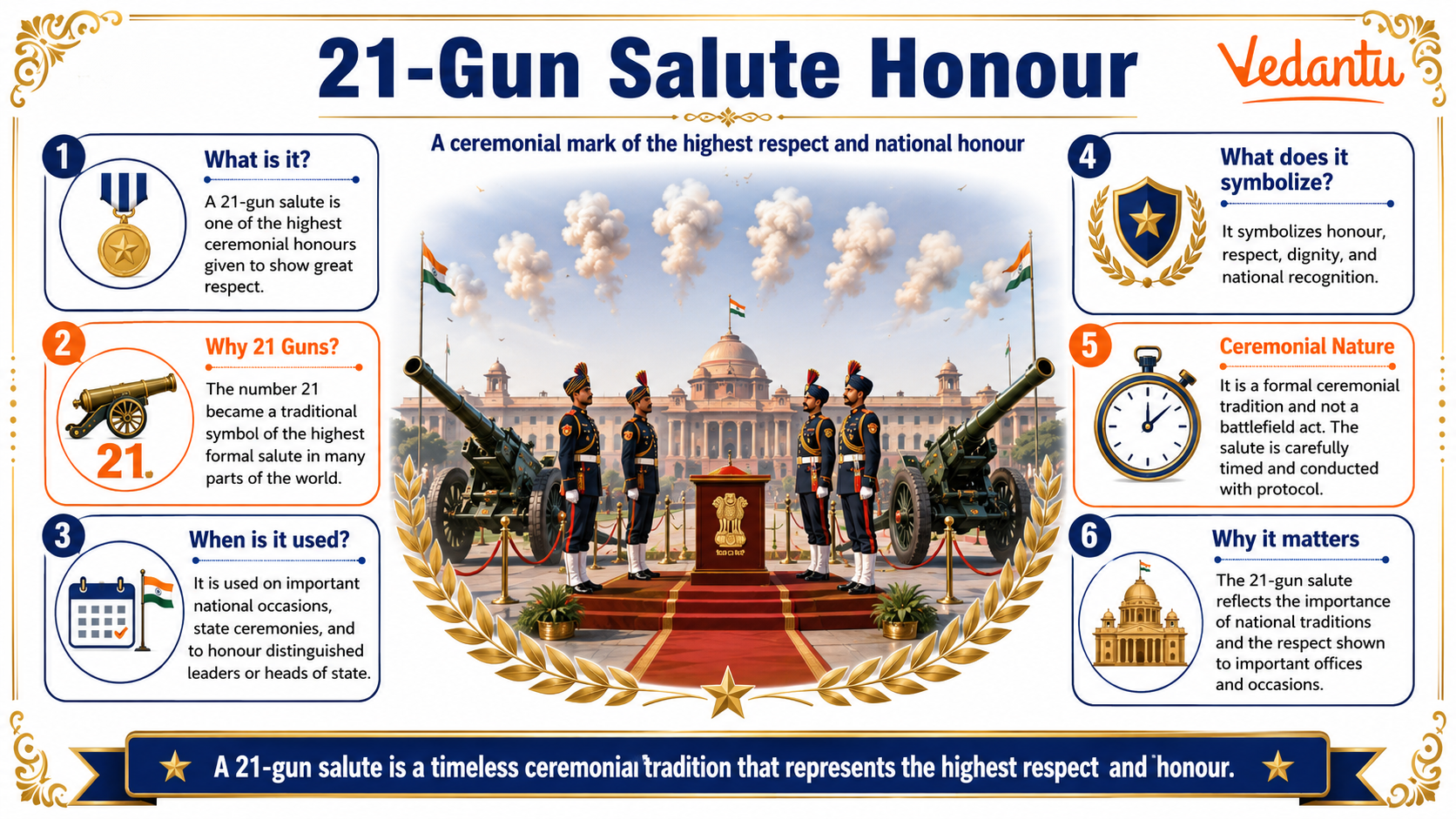
What is the 21 Gun Salute?
The 21 Gun Salute is a ceremonial tradition in which 21 rounds are fired from cannons or artillery guns to honor a distinguished national or international leader. It is typically given to Presidents, Heads of State, and visiting foreign dignitaries. The number 21 represents the highest national honor in military ceremonial traditions.
- It is performed on special national occasions.
- It honors Presidents, Kings, Queens, and Heads of State.
- It symbolizes respect, peace, and diplomatic recognition.
History and Origin of the 21 Gun Salute
The tradition dates back to the 14th century when naval ships fired cannons to demonstrate that their weapons were unloaded and they came in peace. Since cannons were usually limited in number, firing all of them showed peaceful intentions. Over time, 21 became the standard number of shots for the highest honor. Britain formally adopted 21 guns as the official royal salute in the 18th century, and other nations followed the practice.
Why 21 Guns?
The number 21 became standard due to British naval tradition. Warships typically carried seven guns and fired three rounds from each gun, totaling 21 shots. Later, this number was universally accepted as the highest ceremonial salute.
21 Gun Salute in India
In India, the 21 Gun Salute is given to the President of India, who is the Supreme Commander of the Armed Forces. It is also presented to visiting Heads of State during official ceremonies at Rashtrapati Bhavan. The salute is fired by ceremonial artillery units of the Indian Army.
- Given on Republic Day and Independence Day ceremonies.
- Presented during swearing-in ceremonies of the President.
- Offered to visiting foreign Presidents and Monarchs.
Comparison of Gun Salutes
| Number of Guns | Occasion | Person Honored |
|---|---|---|
| 21 Guns | Highest National Honor | President or Head of State |
| 19 Guns | Special State Occasion | High-ranking Officials |
The number of guns fired depends on the rank and position of the individual being honored. The 21 Gun Salute remains the highest level of ceremonial respect in most countries.
Procedure of the 21 Gun Salute
The ceremony is conducted with strict military discipline and protocol. The artillery unit positions the guns at a designated ceremonial ground. The guns are fired at fixed intervals, usually every few seconds, until all 21 rounds are completed.
- The dignitary arrives at the ceremonial venue.
- The national anthem is played.
- Artillery guns fire 21 rounds at fixed intervals.
- The ceremony concludes with military honors.
Significance of the 21 Gun Salute
The 21 Gun Salute is more than a military ritual. It represents sovereignty, unity, and national pride. It also strengthens diplomatic relations when extended to foreign leaders. The ceremony showcases discipline and tradition within the armed forces.
- Symbol of supreme national honor.
- Demonstrates peaceful intentions.
- Reflects military heritage and discipline.
Important Facts for General Knowledge
- The 21 Gun Salute is the highest military honor in ceremonial protocol.
- It originated from naval traditions of the 14th century.
- In India, it is given to the President and visiting Heads of State.
- The salute symbolizes peace, respect, and diplomatic goodwill.
Conclusion
The 21 Gun Salute Honour is a prestigious ceremonial tradition that reflects the highest level of respect accorded to national leaders and distinguished guests. Rooted in centuries-old naval customs, it has evolved into a globally recognized symbol of sovereignty and dignity. Understanding this tradition is important for students preparing for competitive exams and general knowledge assessments, as it highlights both historical significance and modern diplomatic protocol.
FAQs on 21-Gun Salute Honour: Complete Chapter Guide for Students
1. What is a 21 Gun Salute and why is it given?
The 21 Gun Salute is the highest ceremonial military honour given to show respect to important dignitaries and national leaders.
• It is a traditional military salute performed by firing 21 cannon shots.
• It is given to the President of India, visiting Heads of State, and during significant national events.
• It symbolizes honour, respect, and national pride.
This ceremonial tribute is widely searched under terms like highest military honour, state honour ceremony, and national salute tradition.
2. What is the origin of the 21 Gun Salute tradition?
The tradition of the 21 Gun Salute originated from ancient naval customs in Europe.
• Warships fired guns to show they carried no hostile intent.
• The number 21 became the international standard in the 18th century.
• It was later adopted by many countries, including India.
This topic is often associated with searches like history of 21 gun salute, military traditions, and origin of ceremonial honours.
3. Who receives a 21 Gun Salute in India?
In India, the 21 Gun Salute is reserved for the highest constitutional authorities and foreign dignitaries.
• The President of India
• Visiting Heads of State
• During Republic Day and major national ceremonies
This honour reflects the dignity of the office and is linked with terms such as state protocol in India, national ceremonial honour, and official military salute.
4. What is the significance of the number 21 in a gun salute?
The number 21 represents the highest level of ceremonial respect in military tradition.
• It became the global standard for the highest honour.
• Odd numbers were traditionally considered more auspicious.
• It symbolizes supreme respect and recognition.
This is commonly searched under why 21 gun salute, importance of 21 cannons, and meaning of military salute.
5. How is the 21 Gun Salute performed during national ceremonies?
The 21 Gun Salute ceremony is performed with precision and strict military protocol.
• Cannons are fired at fixed intervals.
• The ceremony is conducted by trained Indian Armed Forces personnel.
• It usually accompanies the National Anthem or official guard of honour.
People often search this under Republic Day gun salute, military parade honour, and Indian Army ceremonial practice.
6. What is the theme of the chapter '21 Gun Salute Honour'?
The chapter '21 Gun Salute Honour' highlights the importance of respect, patriotism, and national pride.
• It explains the meaning behind ceremonial honours.
• It teaches students about discipline and dignity.
• It connects military traditions with national values.
This chapter is relevant for students preparing for General Knowledge (GK) exams and learning about Indian civic traditions.
7. What is the difference between a gun salute and a gunshot tribute?
A gun salute is a ceremonial honour, while a gunshot tribute may be part of military funeral traditions.
• A 21 Gun Salute honours heads of state.
• A three-volley salute is often used in military funerals.
• Both reflect respect but differ in purpose and protocol.
Searches related to this include types of military salutes, funeral honours, and ceremonial firing traditions.
8. When is the 21 Gun Salute given on Republic Day in India?
On Republic Day (26 January), the 21 Gun Salute is given during the flag hoisting ceremony.
• It coincides with the unfurling of the National Flag.
• It honours the President of India.
• It marks the adoption of the Indian Constitution (1950).
This event is commonly searched as Republic Day ceremony, 26 January gun salute, and Indian national celebrations.
9. Is the 21 Gun Salute practiced in other countries?
Yes, the 21 Gun Salute is an internationally recognized military honour practiced worldwide.
• Countries like the USA, UK, and France follow this tradition.
• It is used to welcome foreign dignitaries.
• It represents global diplomatic respect.
It is often searched under international military traditions, state honours worldwide, and global ceremonial salute.
10. Why is learning about the 21 Gun Salute important for students?
Learning about the 21 Gun Salute Honour helps students understand national traditions and civic values.
• It builds awareness of Indian Constitution and protocol.
• It enhances preparation for GK exams and competitive exams.
• It promotes patriotism and respect for national symbols.
This topic is relevant in searches like important GK questions, Indian national symbols, and military honours in India.
