






How Big Was Titanosaur? Size, Diet, Habitat, and Fossil Discoveries
Titanosaur was one of the largest dinosaurs ever to walk on Earth. These massive plant-eating dinosaurs lived millions of years ago and are famous for their enormous size and long necks. Titanosaur fossils have been found on many continents, making them one of the most widespread dinosaur groups. Learning about Titanosaur facts helps us understand prehistoric life, giant land animals, and how Earth looked during the age of dinosaurs.
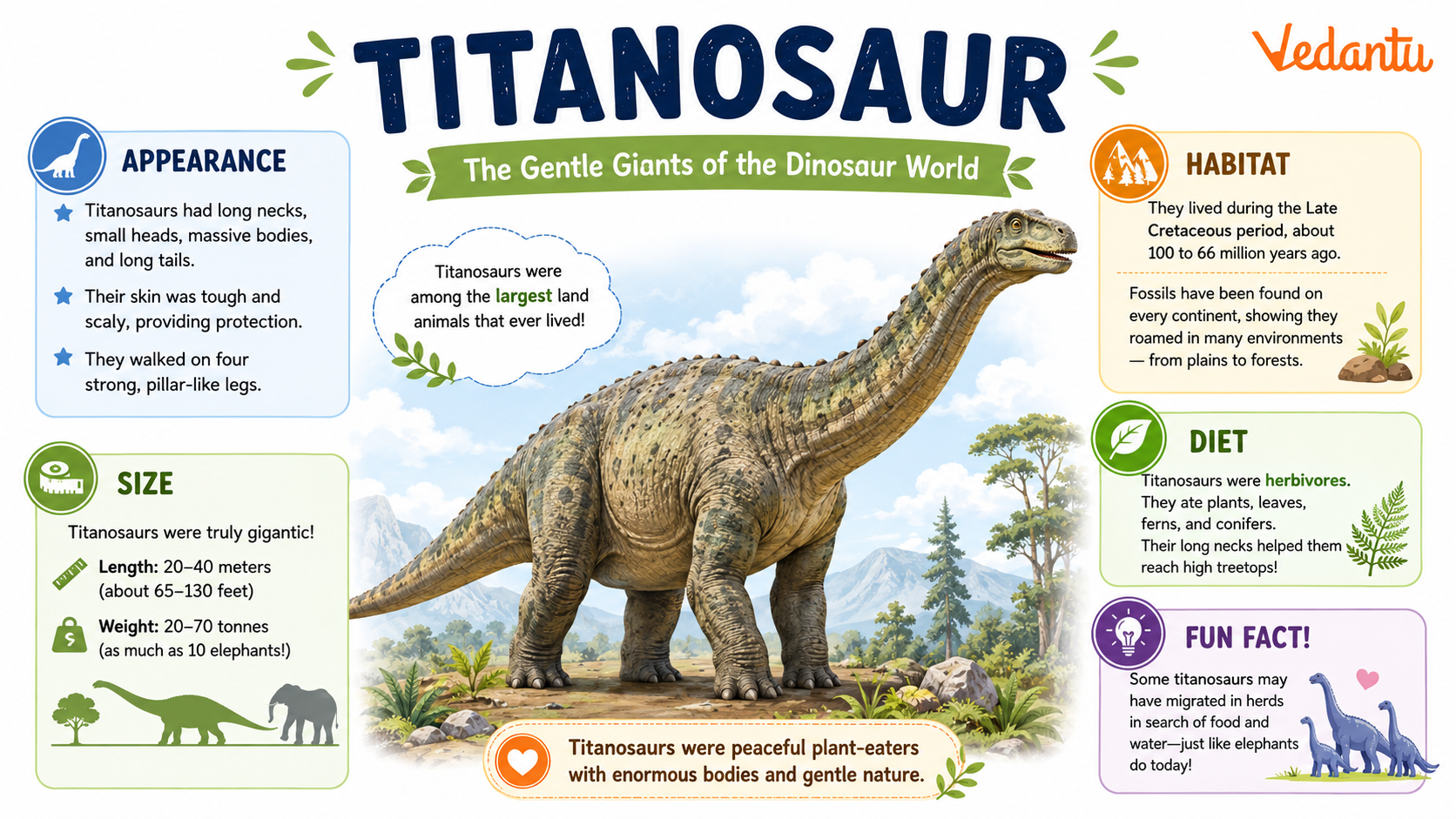
Quick Facts About Titanosaur
| Feature | Details |
|---|---|
| Common Name | Titanosaur |
| Animal Group | Dinosaur (Sauropod) |
| Period | Late Cretaceous (about 145–66 million years ago) |
| Diet | Herbivore (plant-eater) |
| Length | Up to 30–40 metres (varied by species) |
| Weight | Up to 70 tonnes or more |
| Habitat | Forests, floodplains, and open lands |
| Found In | South America, Africa, Asia, Europe, and more |
| Extinction | About 66 million years ago |
Appearance and Physical Characteristics
- Very long neck used to reach tall trees and plants.
- Long tail that helped in balance.
- Small head compared to its huge body.
- Thick, strong legs like tree trunks.
- Some species had bony armour plates under their skin.
Titanosaur Habitat and Distribution
The Titanosaur habitat included warm regions with plenty of vegetation. During the Cretaceous period, the continents were arranged differently, which allowed these dinosaurs to spread widely.
- Lived in forests and open plains.
- Preferred areas near rivers and floodplains.
- Found on almost every continent.
- Thrived in warm, tropical climates.
Diet and Feeding Habits
- Herbivore – ate only plants.
- Used its long neck to reach high vegetation.
- Swallowed food without chewing much.
- May have used stones (gastroliths) in its stomach to grind food.
As large plant-eaters, Titanosaurs played an important role in shaping prehistoric ecosystems.
Behaviour and Lifestyle
Titanosaur Life Cycle
- Egg Stage: Titanosaurs laid eggs in nests on land.
- Hatchling: Baby Titanosaurs were much smaller and more vulnerable.
- Juvenile: Grew rapidly by eating large amounts of plants.
- Adult: Became enormous and less likely to be attacked by predators.
What Makes Titanosaur Special?
Importance and Role in Nature
- Helped control plant growth.
- Spread plant seeds through movement and digestion.
- Provided food for large predators.
- Shaped landscapes by trampling vegetation.
Amazing Titanosaur Facts
Interesting Facts About Titanosaur
- The name “Titanosaur” means “titan lizard.”
- They shared Earth with famous dinosaurs like Tyrannosaurus rex.
- Different species varied greatly in size.
- Scientists continue discovering new Titanosaur fossils.
Fun Facts for Kids
FAQs on Titanosaur Dinosaur: Size, Facts, and Ancient World
1. What is a Titanosaur?
A Titanosaur was a giant, long‑necked plant‑eating dinosaur that lived millions of years ago during the Late Cretaceous period.
- Belonged to the group called sauropods
- Had a very long neck and tail
- Walked on four thick, pillar‑like legs
- Known as one of the largest dinosaurs ever discovered
- Lived about 145 to 66 million years ago
2. How big was a Titanosaur?
The Titanosaur was one of the biggest land animals in Earth’s history.
- Could grow up to 100 feet (30 meters) long
- Weighed as much as 70 tons or more
- Had a neck as long as a school bus
- Some species like Argentinosaurus were even larger
3. What did Titanosaurs eat?
Titanosaurs were herbivores, which means they only ate plants.
- Ate leaves from tall trees
- Swallowed plants without chewing much
- Used small, peg‑like teeth to strip leaves
- May have swallowed stones called gastroliths to help digest food
4. Where did Titanosaurs live?
Titanosaurs lived on many continents around the world during the age of dinosaurs.
- Fossils found in South America
- Also discovered in Africa, Asia, Europe, and Australia
- Lived in forests, floodplains, and warm climates
- Thrived during the Late Cretaceous Period
5. When did Titanosaurs go extinct?
Titanosaurs went extinct about 66 million years ago at the end of the Cretaceous period.
- Disappeared during the mass extinction event
- Likely caused by a large asteroid impact
- Climate changes affected plants and ecosystems
- All non‑flying dinosaurs became extinct
6. Was Titanosaur the biggest dinosaur ever?
Some Titanosaurs were among the biggest dinosaurs ever discovered, but scientists still debate which was the absolute largest.
- Species like Argentinosaurus and Patagotitan were enormous
- Estimated to be over 100 feet long
- Weighed more than many modern whales
- Fossil evidence is still being studied
7. How did Titanosaurs protect themselves?
Titanosaurs protected themselves mainly with their massive size and strong bodies.
- Their huge size scared away predators
- Some had small bony plates called osteoderms in their skin
- Lived in groups for extra safety
- Used powerful tails to defend themselves
8. How do scientists know about Titanosaurs?
Scientists learn about Titanosaurs by studying fossils found in rocks around the world.
- Discovered fossilized bones and teeth
- Found large fossilized Titanosaur eggs
- Reconstructed skeletons in museums
- Used modern technology to estimate size and weight
9. Did Titanosaurs lay eggs?
Yes, Titanosaurs laid eggs like other dinosaurs and reptiles.
- Nests with many round eggs have been discovered
- Eggs were buried in sand or soil
- Baby Titanosaurs hatched from eggs
- Fossil nesting sites found in Argentina and India
10. What makes Titanosaurs special?
Titanosaurs are special because they were some of the largest animals ever to walk on land.
- Included many different species
- Had extremely long necks and tails
- Lived on multiple continents
- Left behind important fossil evidence about the Age of Dinosaurs
