






Skink Facts, Habitat, Diet, and Types Explained
Skinks are smooth-scaled lizards that move quickly through grass, sand, and forests. Found in many parts of the world, they are known for their shiny bodies and long tails. Some even look like tiny snakes because their legs are very small! Learning about skink facts helps us understand how these reptiles survive, hunt, and protect themselves in different environments.
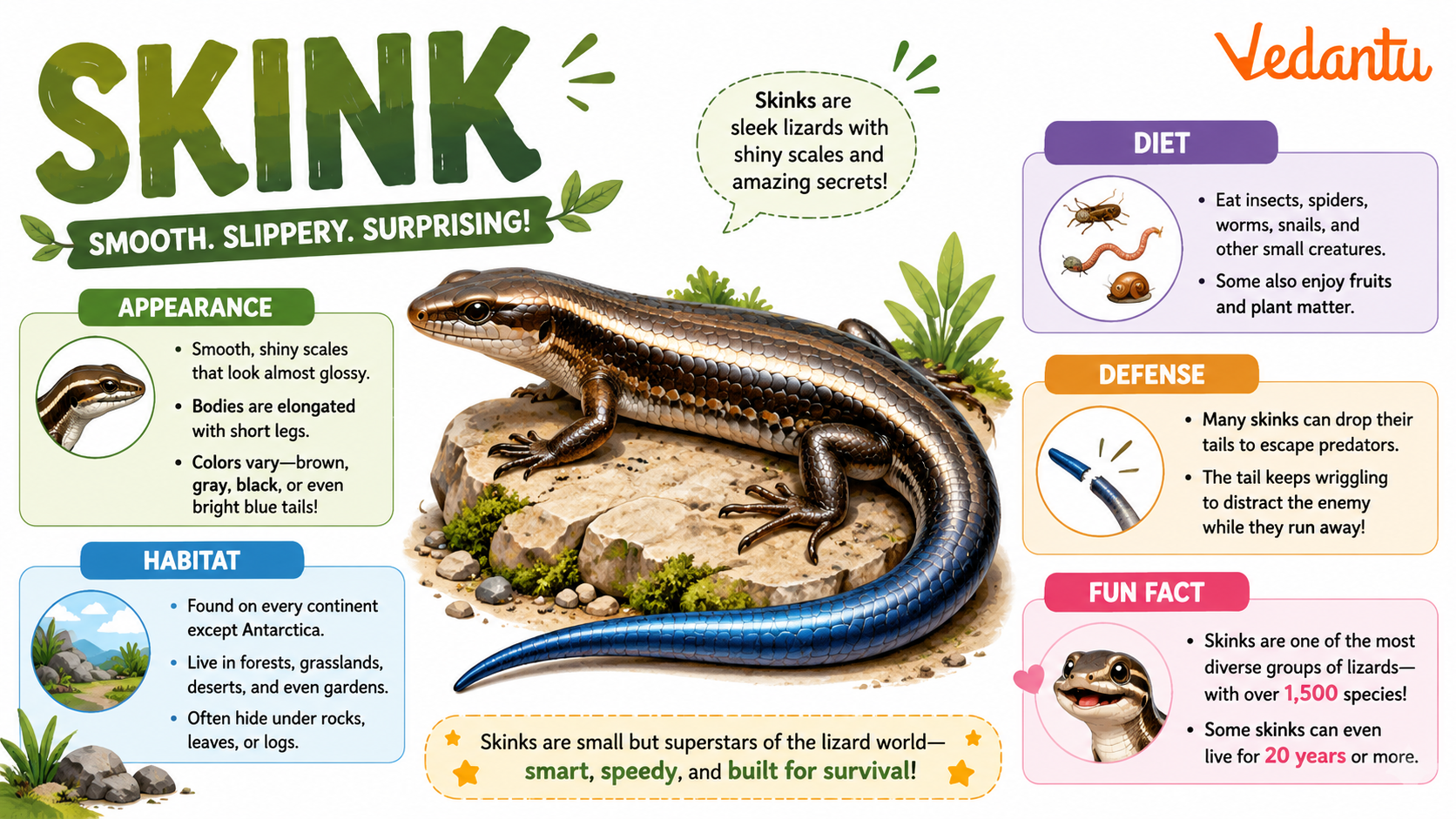
Quick Facts About Skink
| Feature | Details |
|---|---|
| Common Name | Skink |
| Animal Group | Reptile |
| Scientific Family | Scincidae |
| Size | 7 cm to 60 cm (varies by species) |
| Diet | Insects, worms, fruits, small animals |
| Habitat | Forests, deserts, grasslands, gardens |
| Lifespan | 5–10 years (average) |
| Conservation Status | Most species: Least Concern |
Appearance and Physical Characteristics
- Smooth, shiny scales that look polished.
- Long cylindrical body.
- Short legs (some species have tiny legs or no visible legs).
- Long tail, often longer than the body.
- Colours include brown, grey, black, striped, or even bright blue tails.
Skink Habitat and Distribution
- Found on every continent except Antarctica.
- Live in forests, deserts, mountains, and grasslands.
- Some species prefer sandy areas and burrow underground.
- Others live under rocks, logs, or leaf litter.
- Many skinks are also found in gardens and parks.
Skink Diet and Feeding Habits
- Most skinks are insectivores (eat insects).
- Common food: beetles, ants, spiders, worms, and termites.
- Some larger species eat small lizards or fruits.
- They use their quick tongue and sharp eyesight to catch prey.
Skinks help control insect populations and are also food for birds, snakes, and mammals.
Behaviour and Lifestyle
- Mostly active during the day (diurnal).
- Fast runners and excellent burrowers.
- Usually solitary animals.
- Hide quickly when they sense danger.
- Bask in the sun to warm their bodies.
Skink Life Cycle
- Egg Stage: Many skinks lay eggs in soil or under rocks.
- Live Birth: Some species give birth to live young.
- Hatchlings: Baby skinks look like tiny adults.
- Growth: They shed their skin as they grow.
- Adult: Reach maturity in 1–3 years.
What Makes Skinks Special?
Can regrow a lost tail over time.
Smooth scales reduce friction while moving.
Some species move like snakes due to tiny legs.
Over 1,500 species worldwide.
Importance of Skinks in Nature
Eat harmful insects in farms and gardens.
Important prey for birds and snakes.
Help maintain insect population balance.
Studied for regeneration abilities.
Amazing Skink Facts
- Some skinks have bright blue tails when young.
- They can blink because they have movable eyelids.
- Some species live in trees, while others stay underground.
- The Solomon Islands skink is one of the largest species.
- Skinks use smell to find food.
- They shed their skin in one piece.
Fun Facts for Kids
FAQs on Skink: A Complete Guide to These Smooth‑Scaled Lizards
1. What is a skink?
A skink is a small to medium-sized lizard known for its smooth, shiny scales and long body.
- Skinks belong to the lizard family Scincidae.
- They have short legs or sometimes almost no legs.
- Many skinks look like snakes but have eyelids and ear openings.
- They are found in warm regions around the world.
2. Where do skinks live?
Skinks live in warm habitats across many parts of the world.
- They are common in Australia, Africa, Asia, and the Americas.
- They live in forests, deserts, grasslands, and gardens.
- Some skinks burrow underground or hide under rocks and logs.
- They prefer sunny areas because they are cold-blooded reptiles.
3. What do skinks eat?
Skinks are usually insect-eaters that help control pests.
- They eat insects like beetles, crickets, and ants.
- Some larger skinks eat small animals, fruits, or plants.
- Baby skinks eat tiny bugs.
- They use quick movements to catch their prey.
4. Are skinks dangerous to humans?
Most skinks are harmless and not dangerous to humans.
- They are non-venomous lizards.
- Skinks may bite if frightened, but it rarely hurts.
- They usually run away instead of attacking.
- They are helpful because they eat garden pests.
5. How are skinks different from snakes?
Skinks are lizards that may look like snakes but have key differences.
- Skinks have eyelids; snakes do not.
- Skinks have visible ear openings.
- Most skinks have small legs.
- Snakes have long, legless bodies without external ears.
6. Do skinks lay eggs or give birth?
Skinks can either lay eggs or give live birth depending on the species.
- Many skinks lay eggs in soil or under logs.
- Some species give live birth to baby skinks.
- Baby skinks are independent soon after birth.
- Parental care is rare in most species.
7. Why do skinks lose their tails?
Skinks can drop their tails to escape predators.
- This defense is called autotomy.
- The detached tail wiggles to distract predators.
- The skink quickly runs away to safety.
- Most skinks can regrow a new tail over time.
8. How big do skinks grow?
Skinks vary in size from very small to quite large.
- Small skinks may be only 3 inches (7 cm) long.
- The largest species, like the Solomon Islands skink, can grow up to 30 inches (76 cm).
- Most common garden skinks are small and slim.
- Size depends on the species and habitat.
9. What are the special features of a skink?
Skinks have unique body features that help them survive.
- Smooth, shiny scales reduce friction when burrowing.
- Strong bodies help them dig and hide.
- Some species have bright blue tongues or tails.
- They have excellent senses to detect predators.
10. Can skinks be kept as pets?
Some skinks can be kept as pets with proper care.
- The Blue-tongued skink is a popular pet species.
- They need a warm terrarium with heat and light.
- Pet skinks eat insects, vegetables, and special reptile food.
- Always check local laws before keeping exotic reptiles.
