






African Wild Dog Habitat, Diet, Behavior, and Conservation Facts
The African Wild Dog is one of the most fascinating predators of the African savannas. Known for its teamwork, speed, and colourful coat, this animal is very different from domestic dogs. African Wild Dog facts reveal that they live in close family groups and work together to hunt with great success. Sadly, they are among the most endangered carnivores in Africa. Let’s explore their characteristics, habitat, diet, life cycle, and importance in nature.
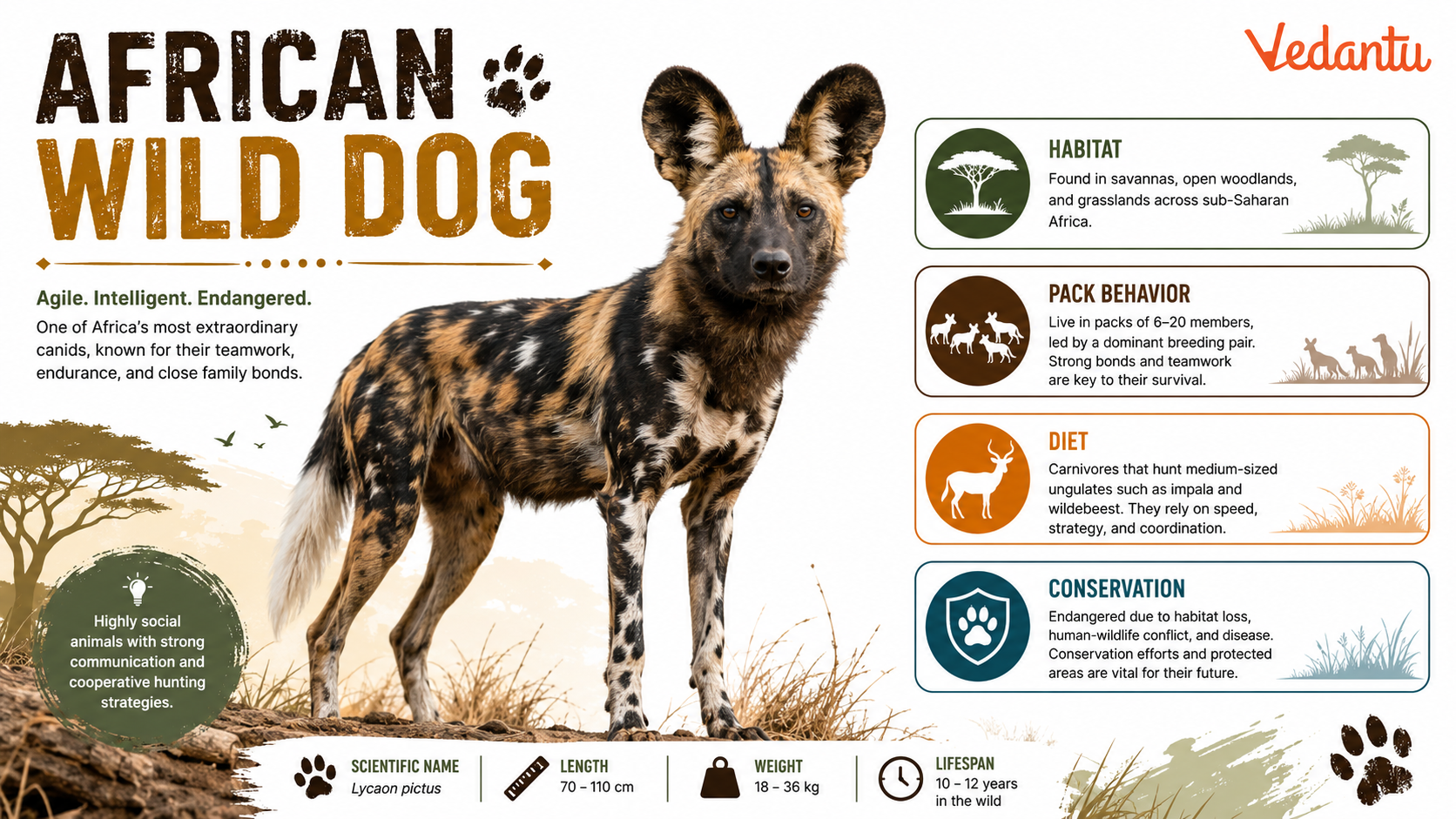
Quick Facts About African Wild Dog
| Feature | Details |
|---|---|
| Common Name | African Wild Dog |
| Scientific Name | Lycaon pictus |
| Animal Group | Mammal |
| Size | 75–110 cm long (excluding tail) |
| Weight | 18–36 kg |
| Lifespan | 10–12 years (in the wild) |
| Habitat | Savannas, grasslands, open woodlands |
| Diet | Carnivore (antelope, gazelles, small mammals) |
| Conservation Status | Endangered |
| Found In | Sub-Saharan Africa |
Appearance and Physical Characteristics
- Slender body with long legs built for speed and stamina.
- Large, rounded ears that help them hear distant sounds.
- Short fur with unique patches of black, brown, white, and yellow.
- Each dog has a different coat pattern, like a fingerprint.
- Unlike domestic dogs, they have only four toes on each foot.
African Wild Dog Habitat and Distribution
- Live mainly in sub-Saharan Africa.
- Prefer open savannas and grasslands where they can run freely.
- Also found in light forests and open woodlands.
- Avoid dense forests and deserts.
- Need large territories because packs travel long distances to hunt.
The African Wild Dog habitat is shrinking due to human settlements, farming, and roads. This is one reason why their population is decreasing.
Diet and Feeding Habits
Carnivore – eats only meat.
Antelopes, gazelles, impalas, and small mammals.
Hunt in packs using teamwork and strategy.
One of the highest hunting success rates among predators.
African Wild Dog diet mainly includes medium-sized antelopes. They chase their prey over long distances until it becomes tired. Their teamwork makes them very effective hunters.
Behaviour and Lifestyle
- Highly social animals that live in packs of 6–20 members.
- Each pack has a dominant breeding pair.
- Communicate using chirps, squeaks, and high-pitched calls.
- Care deeply for injured or weak pack members.
- Usually active during early morning and late afternoon.
Their strong social bonds make them different from many other predators. Cooperation is the key to their survival.
African Wild Dog Life Cycle
- Birth: Female gives birth to 6–16 pups in a safe den.
- Puppy Stage: Pups stay in the den for several weeks and are fed by adult pack members.
- Growing Up: Young dogs learn hunting skills by observing adults.
- Adult Stage: Become skilled hunters and may form new packs.
The African Wild Dog life cycle shows strong family support, as the entire pack helps raise the young ones.
What Makes African Wild Dogs Special?
Importance and Role in Nature
- Control herbivore populations like antelopes.
- Maintain balance in the ecosystem.
- Prevent overgrazing of grasslands.
- Support biodiversity in African savannas.
Amazing Facts About African Wild Dog
Fun Facts for Kids
- Each African Wild Dog looks different from the others.
- They are more closely related to wolves than to domestic dogs.
- Pups are born completely helpless and depend on the pack.
- The whole pack shares food with the babies.
- They use teamwork like a sports team!
FAQs on African Wild Dog: Africa’s Endangered Pack Hunter
1. What is an African Wild Dog?
The African Wild Dog is a rare, highly social carnivore that lives and hunts in packs across Africa.
- Also called the African painted dog or painted wolf
- Scientific name: Lycaon pictus
- Known for its colorful, patchy fur pattern
- Native to sub-Saharan Africa
- One of Africa’s most endangered predators
2. Why are African Wild Dogs called painted dogs?
African Wild Dogs are called painted dogs because their fur looks like colorful paint splashes.
- Each dog has a unique coat pattern
- Fur colors include brown, black, white, and yellow
- Their patterns help with camouflage in grasslands
- The name highlights their beautiful and rare appearance
3. Where do African Wild Dogs live?
African Wild Dogs live mainly in open plains and savannas of sub-Saharan Africa.
- Found in countries like Botswana, Tanzania, Zimbabwe, and South Africa
- Prefer savannas, grasslands, and open woodlands
- Avoid dense forests and deserts
- Need large areas for hunting and roaming
4. What do African Wild Dogs eat?
African Wild Dogs are carnivores that hunt medium-sized animals for food.
- Main prey includes antelopes, gazelles, and impalas
- They hunt in coordinated packs
- Known for a very high hunting success rate
- Sometimes eat small mammals and birds
5. How do African Wild Dogs hunt?
African Wild Dogs hunt by working together as a team using speed and cooperation.
- They communicate with sounds and body signals
- Chase prey over long distances
- Can run up to 44 miles per hour (70 km/h)
- Share food with injured or young pack members
6. Are African Wild Dogs endangered?
Yes, African Wild Dogs are classified as endangered due to habitat loss and human conflict.
- Fewer than 7,000 remain in the wild
- Threatened by habitat destruction
- Affected by diseases like rabies
- Often come into conflict with farmers
7. How big are African Wild Dogs?
African Wild Dogs are medium-sized predators with long legs and large round ears.
- Weigh between 40–79 pounds (18–36 kg)
- Body length about 30–43 inches
- Have only four toes on each foot
- Large ears help them hear and stay cool
8. How long do African Wild Dogs live?
African Wild Dogs usually live up to 10 years in the wild.
- Average lifespan is 10–12 years
- Life expectancy is shorter due to predators and disease
- May live slightly longer in protected areas
- Pups face the highest survival risks
9. How do African Wild Dogs communicate?
African Wild Dogs communicate using sounds, body language, and facial expressions.
- Make high-pitched twittering calls
- Use body posture to show dominance or play
- Communicate before and during hunts
- Strong communication keeps the pack united
10. How can we help protect African Wild Dogs?
We can help protect African Wild Dogs by supporting conservation and protecting their habitats.
- Support wildlife conservation programs
- Protect African savanna ecosystems
- Reduce human-wildlife conflict
- Raise awareness about endangered species
