








What Makes NEET 2027 Sample Papers Essential for Exam Readiness?
For NEET 2027 aspirants, mastering how to use sample papers effectively for NEET preparation can transform your study routine from passive reading to active problem-solving. Sample papers not only simulate the actual exam environment but also help you pinpoint weak areas and improve your time management. Using them strategically, rather than randomly, can be the difference between an average score and a top NEET rank.
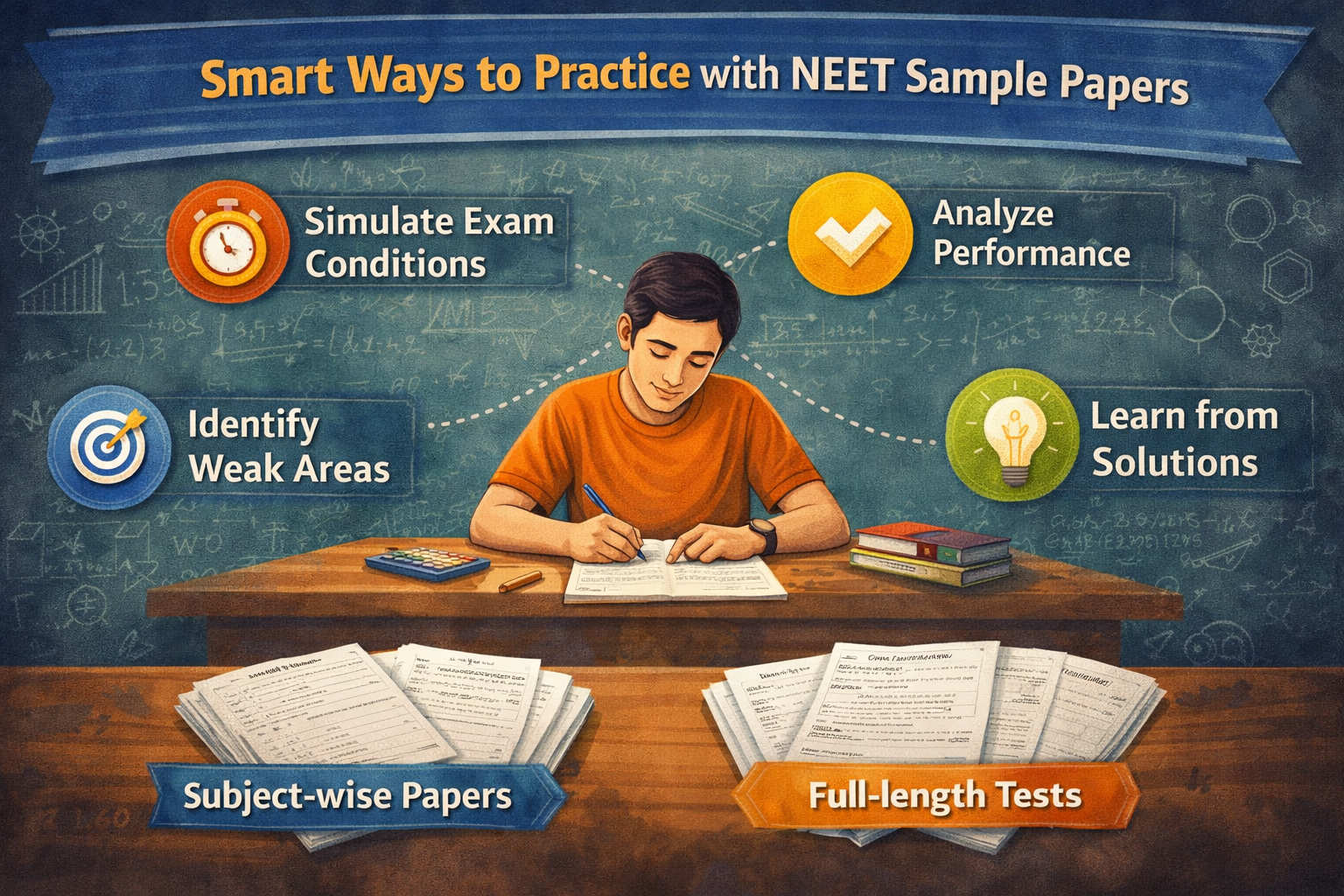
Why Sample Papers Are Crucial for NEET 2027
Sample papers are more than just collections of questions—they mirror the NEET exam pattern, difficulty, and distribution of topics. Practicing with them helps you:
Understand how questions are structured and distributed across subjects.
Identify important chapters and recurring concepts.
Familiarize yourself with the pace and pressure of the real exam.
Develop effective strategies for question selection and time allotment.
Boost your confidence and reduce exam-day anxiety.
How to Use Sample Papers Effectively for NEET Preparation
To get the maximum benefit from sample papers, it’s important to approach them with a plan and treat each practice attempt seriously. Here’s a practical strategy tailored for NEET 2027:
1. Simulate the Exam Environment
Whenever you solve a sample paper, create an environment that mimics the actual NEET exam. Sit at your study table, keep only the allowed stationery, and set a timer for three hours. This helps you adjust to the discipline, pressure, and time constraints you’ll face on the real exam day.
2. Use Sample Papers as Milestones
Don’t wait until just before the exam to start practicing sample papers. Integrate them at key points in your preparation journey—at the end of each major topic, after weekly or monthly study sessions, and especially during your final revision phase. This approach helps to assess both retention and conceptual clarity.
3. Analyse Your Performance After Each Attempt
Simply attempting a sample paper isn’t enough. Spend quality time reviewing your answers. Highlight questions you got wrong, and understand whether the mistake was due to lack of concept, misreading the question, or poor time management. Make notes of recurring errors and use them to guide your revision.
Integrating Sample Papers into Your Revision Plan
For optimal results, use a mix of sample papers and full-length mock tests as part of your revision. Here’s how you can blend them into your timetable:
Start early by solving chapter-wise and subject-wise sample papers after completing each section.
Transition to full-length sample papers as your syllabus nears completion.
In the last two months, aim for 2–3 full sample papers each week.
Use sample papers intensively during your final revision month for real-time self-assessment and improvement.
To develop a revision-focused approach, you can also explore How To Revise For NEET UG Exam In One Month to structure your studies effectively.
Mistakes to Avoid When Solving Sample Papers
Skipping the analysis of mistakes and moving straight to the next paper.
Ignoring time limits during practice sessions.
Relying only on sample papers and neglecting NCERT/books or theory revision.
Using sample papers only at the very end, missing out on their diagnostic benefit throughout your preparation.
Over-attempting papers without adequate revision between tests.
Balancing practice with structured study sessions and timely revision is the key. For more detailed planning, check out effective NEET preparation timetable tips designed for 2027 aspirants.
Tracking Progress and Adjusting Strategies
Keep a simple record of your sample paper scores, time taken, and types of mistakes. This makes it easier to spot patterns and plan targeted improvement. If you see that certain topics consistently lower your score, revisit those concepts and adjust your timetable. Incremental improvements over multiple papers will significantly raise your overall performance.
You can also review additional NEET preparation tips to sharpen your practice and revision cycles as you approach NEET 2027.
When to Start and How Often to Practise
Begin attempting sample papers as soon as you complete any section of your syllabus. For Class 11 and 12 students, integrating sample paper practice every 2–3 weeks keeps you in touch with exam patterns while solidifying new learning. As NEET 2027 nears, increase the frequency—aim for one paper every 2–3 days during the final 2 months, adjusting based on your strengths, weaknesses, and comfort with the exam format.
Making sample papers a core part of your NEET 2027 preparation will not only improve your exam temperament but also highlight areas that need more attention. By practising regularly, analysing your mistakes, and refining your approach, you’ll walk into the exam hall prepared and confident. Remember, consistent, smart use of sample papers bridges the gap between study and real exam success—make them your best revision tool for NEET 2027.
FAQs on Smart Ways to Practice with NEET Sample Papers for 2027
1. What are sample papers and how do they help in NEET preparation?
Sample papers are practice question sets designed to simulate the actual NEET exam pattern, helping students become familiar with question types and exam format.
2. Why is solving sample papers important for NEET aspirants?
Solving sample papers is crucial because it improves time management, boosts confidence, and identifies areas that need revision.
3. How can I use sample papers effectively during NEET preparation?
To use sample papers effectively, set a timer, attempt the paper in exam-like conditions, and review your answers thoroughly to learn from mistakes.
4. When should I start practicing NEET sample papers?
You should begin practicing NEET sample papers after completing the major parts of the syllabus to test your understanding and readiness.
5. How often should I solve sample papers while preparing for NEET?
It is recommended to solve sample papers regularly, such as once or twice a week, and increase the frequency closer to the exam.
6. What mistakes should I avoid while attempting NEET sample papers?
Common mistakes to avoid include not analyzing incorrect answers, ignoring time limits, and skipping questions without attempting them.
7. Can solving sample papers help improve my NEET exam scores?
Yes, regularly practicing with sample papers can help you identify weak topics and enhance your exam strategy, leading to improved NEET scores.
8. Do NEET sample papers reflect the latest exam pattern and syllabus?
Most updated sample papers are designed to match the latest NEET exam pattern and syllabus as per recent guidelines.
9. How should I analyze my performance after solving a NEET sample paper?
After solving a sample paper, check your answers, identify recurring mistakes, and revise topics where you lost marks.
10. How can Vedantu's NEET sample papers support my preparation?
Vedantu offers expert-curated NEET sample papers that align with the latest syllabus, providing targeted practice and detailed solutions for effective preparation.
