








Understanding Gene Interaction with Examples and Ratios
Gene interaction is the phenomenon in which two or more genes influence each other’s expression while controlling a single trait. Because of this interaction, the usual Mendelian phenotypic ratios get modified and new inheritance ratios are produced.
Also Check: Mendelian Inheritance
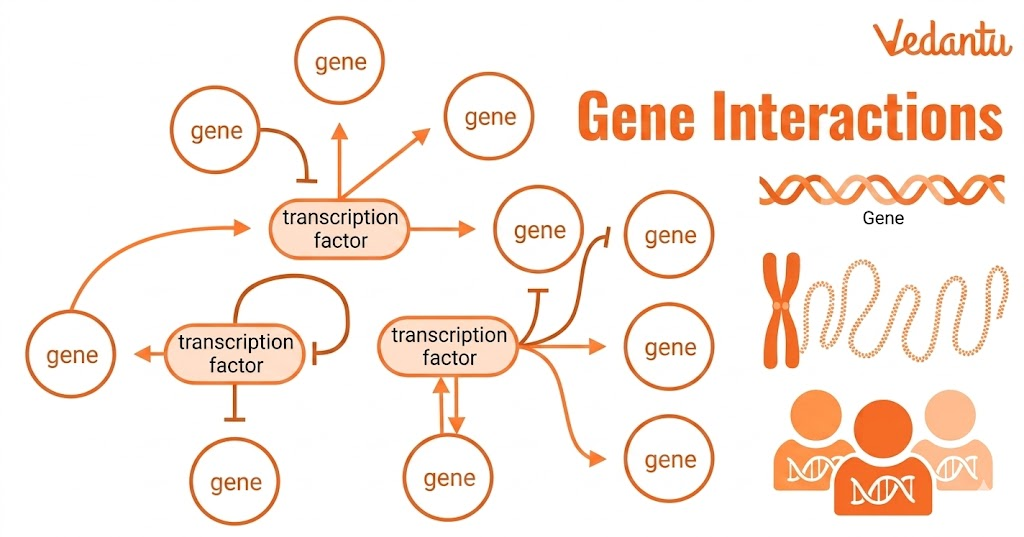
It is one of the most important topics in inheritance because it explains why many traits do not follow the simple Mendelian ratios exactly. As a result, the normal Mendelian dihybrid ratio of 9:3:3:1 may get modified into new phenotypic ratios such as 9:7, 9:3:4, 12:3:1, 13:3, or 15:1.
This topic helps students understand why inheritance is often more complex than the one gene-one trait idea. It also explains how several genes can cooperate, intensify, inhibit, or mask one another to produce a final phenotype.
Why Gene Interaction is Important?
Gene interaction is important because it explains many real-life inheritance patterns that cannot be fully understood through simple dominant and recessive relationships alone. It helps explain:
why many traits do not follow a 3:1 or 9:3:3:1 ratio
why one gene can hide the effect of another
why two genes may be required together to produce a trait
why the same gene behaves differently depending on the presence of another gene
Types of Gene Interaction
The major types of gene interaction are divided into two broad categories:
1. Allelic or Non-Epistatic Gene Interaction
2. Non-Allelic or Epistatic Gene Interaction
This is the first and most basic classification students must remember.
Allelic or Non-Epistatic Gene Interaction
This type of interaction occurs between the alleles of the same gene. Since the interaction is within one gene locus, it is also called intra-allelic interaction. It is non-epistatic because it does not involve different non-allelic genes.
The major forms of allelic gene interaction include:
1. Incomplete Dominance
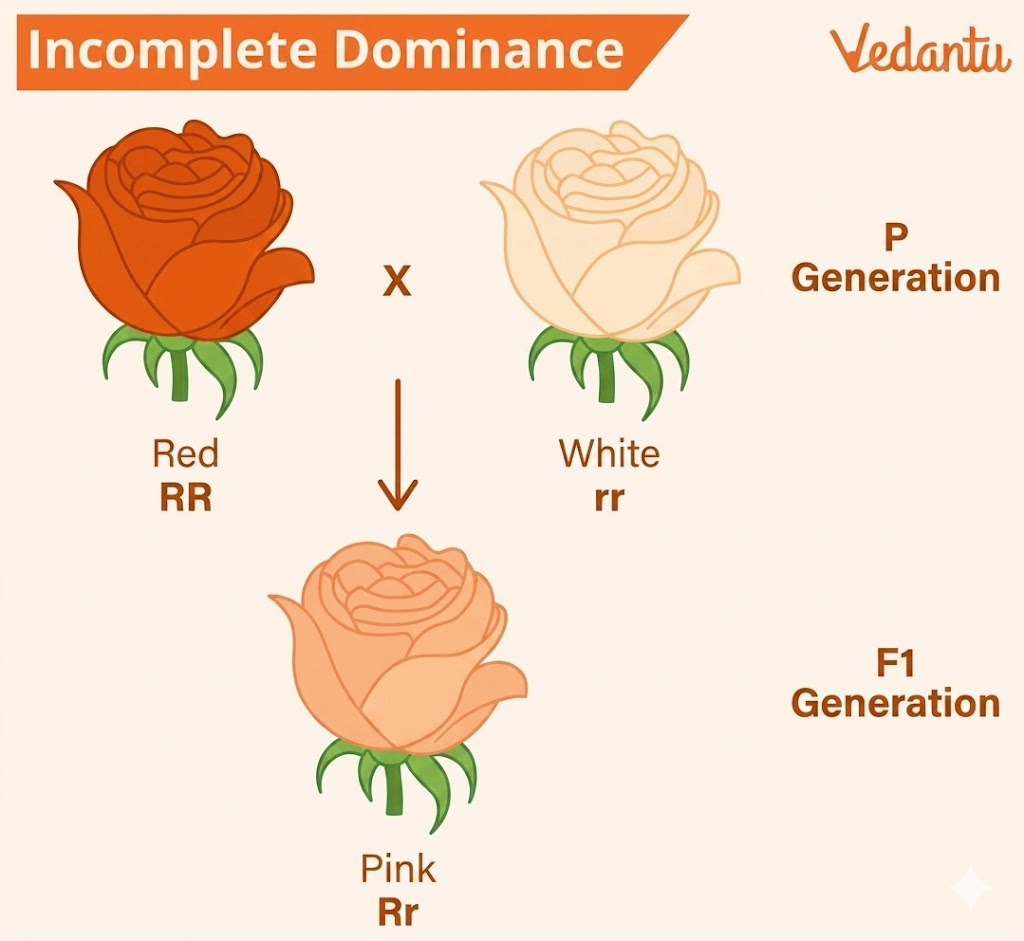
In incomplete dominance, one allele is not able to completely suppress the other. As a result, the heterozygote shows an intermediate phenotype between the two parents.
A classic example is flower colour in snapdragon or Mirabilis jalapa:
red × white gives pink in F1
F2 shows 1 red : 2 pink : 1 white
So the ratio becomes 1:2:1 instead of 3:1.
2. Codominance
In codominance, both alleles express equally in the heterozygote. There is no blending. Instead, both traits are seen together.
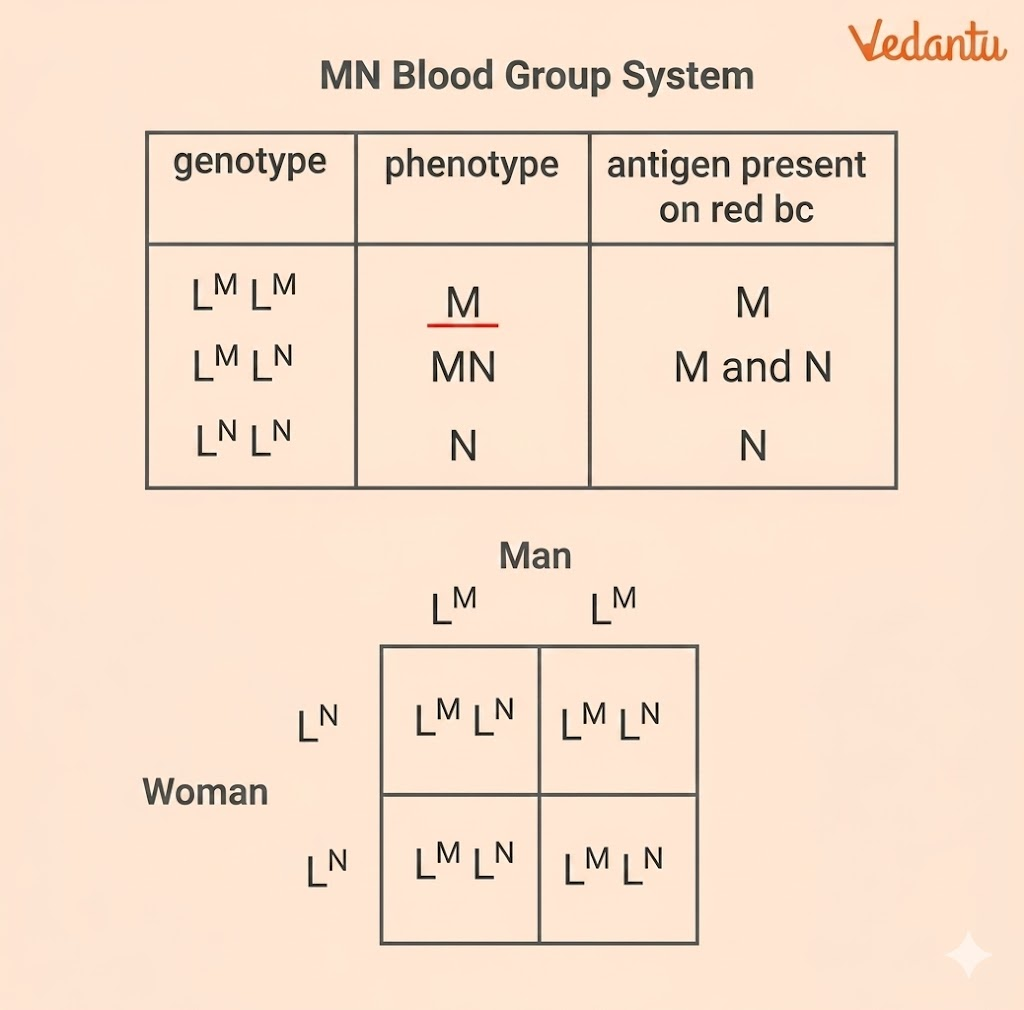
A common example is the MN blood group in humans:
MM × NN gives MN
F2 ratio = 1 M : 2 MN : 1 N
Here, both alleles are visible in the hybrid.
3. Overdominance
In overdominance, the heterozygote may show a stronger or more extreme phenotype than either parent. The heterozygous condition becomes more pronounced than both homozygotes.
4. Lethal Factor
Some genes are lethal when present in a certain condition, often in homozygous form. These genes can affect phenotypic ratios because organisms with the lethal genotype do not survive.
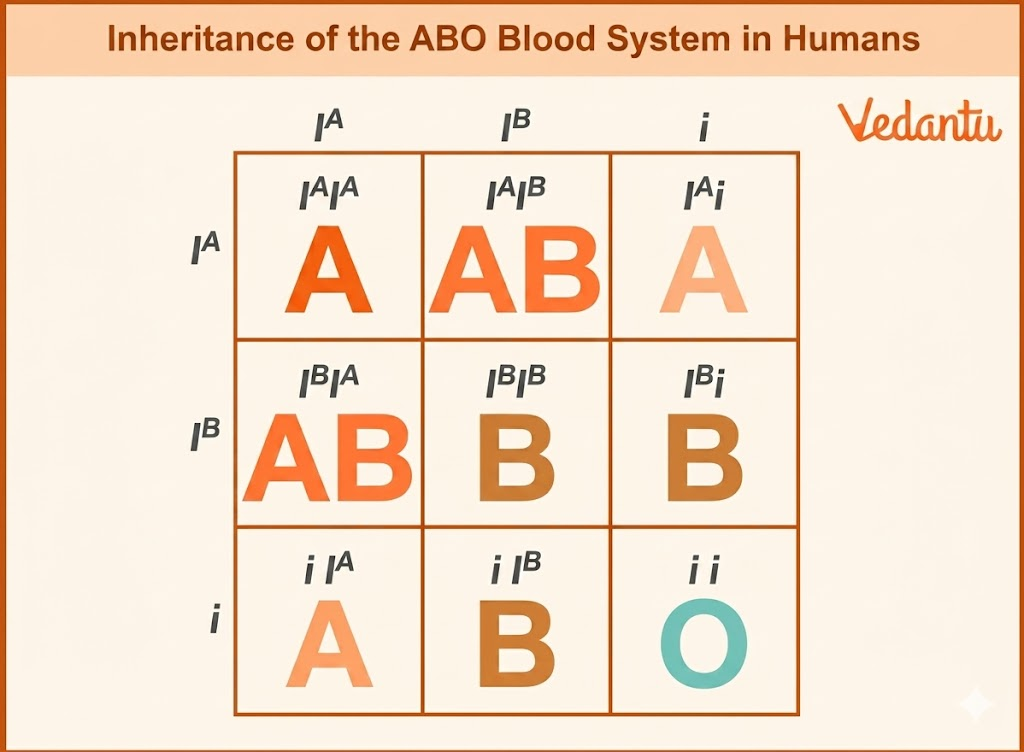
5. Multiple Alleles
Sometimes more than two alleles may exist for a gene in the population, even though only two occur in a diploid individual. The ABO blood group is the best example of multiple alleles.
Non-Allelic or Epistatic Gene Interaction
This type of interaction takes place between two or more different genes, usually located on the same or different chromosomes. It is also called inter-allelic or epistatic gene interaction. In this case, one gene may modify, suppress, or help the expression of another gene while both control a single trait.
Simple Interaction
In simple interaction, two non-allelic gene pairs affect the same character. Each dominant allele gives a different phenotype when present independently, but when both dominant alleles occur together, they produce a new phenotype. If both dominant alleles are absent, a fourth phenotype appears.
This is the basic form of two-gene interaction and follows the normal 9:3:3:1 ratio.
Though this ratio is Mendelian, it provides a base for understanding more complex modified ratios.
Complementary Gene Interaction
Complementary gene interaction is one of the most important and most asked gene interaction types in exams. In this case, two dominant genes are both required together to produce a particular phenotype. When either one is absent in dominant form, the same alternative phenotype appears.
This changes the normal dihybrid ratio from 9:3:3:1 to 9:7.
Definition of Complementary Gene Interaction
In complementary gene interaction, two genes complement each other, and their dominant alleles must be present together for a distinct phenotype to appear. Neither of the dominant genes can produce that phenotype alone.
Complementary Gene Interaction Ratio
The gene interaction ratio for complementary genes is:
9 : 7
Complementary Gene Interaction Example
A classic gene interaction example is flower colour in sweet pea. When both dominant genes are present together, colour is produced. If one or both dominant genes are absent, the flower remains white.
So:
A_B_ = coloured
A_bb, aaB_, aabb = white
This gives the phenotypic ratio:
9 coloured : 7 white
Supplementary Gene Interaction
Supplementary gene interaction is another important modified ratio. In this type, one dominant gene can produce a phenotype on its own, but the presence of another dominant gene modifies or supplements that effect.
Definition of Supplementary Gene Interaction
In supplementary gene interaction, the dominant allele of one gene produces the basic phenotype, while the dominant allele of another gene does not show an independent effect but modifies the first gene’s phenotype when both occur together.
Supplementary Gene Interaction Ratio
The modified gene interaction ratio in this case is:
9 : 3 : 4
Supplementary Gene Interaction Example
A famous gene interaction example is coat colour in mice:
dominant C allows colour
dominant A modifies coat into agouti
cc gives albino regardless of A
The phenotypic classes are:
9 Agouti
3 Coloured
4 Albino
So the final ratio becomes:
9 : 3 : 4
Epistasis
Epistasis is the condition in which one gene suppresses or masks the expression of another non-allelic gene. The gene that suppresses the other is called the epistatic gene, while the gene whose expression is hidden is called the hypostatic gene.
Classification of Epistasis Gene Interaction
The main classes under epistatic interaction are:
supplementary gene interaction
complementary gene interaction
inhibitory gene interaction
duplicate gene interaction
masking gene interaction
polymeric gene interaction
Each of these produces a characteristic modified ratio.
Inhibitory Gene Interaction
In inhibitory gene interaction, a particular gene in recessive condition inhibits the expression of another gene. The normal dihybrid ratio changes to 13:3.
Inhibitory Gene Interaction Ratio
13 : 3
Key Idea
The homozygous recessive condition at one locus prevents the usual expression of the phenotype controlled by the other gene.
This interaction is called inhibitory because the effect of one gene prevents another from showing its normal outcome.
Duplicate Gene Interaction
In duplicate gene interaction, the dominant allele of either of the two genes can produce the same phenotype. There is no additional cumulative effect when both dominant alleles are present together.
Duplicate Gene Interaction Ratio
15 : 1
Duplicate Gene Interaction Example
A classic example is found in shepherd’s purse, where the seed capsule shape is triangular if at least one dominant allele is present in either gene pair. Only the double recessive condition produces the ovoid shape.
So:
A_B_, A_bb, aaB_ = triangular
aabb = ovoid
This gives the ratio:
15 : 1
Masking Gene Interaction
In masking gene interaction, the dominant allele of one gene masks the expression of another gene. This is a form of dominant epistasis. The epistatic gene prevents the second gene from expressing normally.
Masking Gene Interaction Ratio
The correct modified ratio is:
12 : 3 : 1
This ratio is often directly asked in exams.
Key Idea
A dominant allele at one locus suppresses the visible effect of another gene. Only when the epistatic locus is recessive can the other gene show its expression properly.
Polymeric Gene Interaction
In polymeric gene interaction, two dominant genes work together to intensify a phenotype or create a stronger effect. Each dominant allele alone can produce a phenotype, but together they produce a more pronounced expression.
This interaction helps explain the additive effect of genes and shows that neither dominant gene is simply overpowering the other.
Gene Interaction Ratio
The term gene interaction ratio refers to the modified phenotypic ratio produced when two or more genes interact to control one trait. These ratios differ from the classic Mendelian ratio because gene interaction changes expression.
Important ratios to remember for NEET are:
9:3:3:1 – simple interaction
9:7 – complementary gene interaction
9:3:4 – supplementary gene interaction
13:3 – inhibitory gene interaction
15:1 – duplicate gene interaction
12:3:1 – masking gene interaction
These ratios are among the highest-yield facts from this chapter.
Gene Interaction Example
Some of the most important gene interaction example cases are:
1. Sweet Pea Flower Colour
Used for complementary gene interaction
Ratio = 9:7
2. Coat Colour in Mice
Used for supplementary gene interaction
Ratio = 9:3:4
3. Shepherd’s Purse Seed Capsule Shape
Used for duplicate gene interaction
Ratio = 15:1
These examples help in identifying the interaction type quickly in MCQs.
Biological Significance of Gene Interaction
The biological importance of gene interaction is very high because it shows that gene expression is not always independent. Many traits are the result of combined action of multiple genes, not just one gene acting alone.
Major Significance
1. Explains Complex Traits
Most traits in living organisms are controlled by more than one gene. Gene interaction explains such multi-gene inheritance.
2. Explains Modified Ratios
It helps us understand why many crosses do not follow expected Mendelian patterns.
3. Connects Genotype with Phenotype
Gene interaction improves our understanding of how phenotype is produced from different genetic combinations.
4. Helps Explain Missing Heritability
The idea of “missing heritability” refers to the fact that some inherited traits do not have clearly identified single genetic causes. Genetic interaction may explain part of this gap.
5. Shows That Genes Do Not Always Act Independently
This is one of the most important takeaways. The expression of one gene may depend on the presence or absence of another gene.
This broader concept is sometimes described under the factor hypothesis or the idea that one character may be determined by several genes rather than one gene-one trait.
FAQs on Gene Interaction Explained: Types, Ratios, Examples and Epistasis
1. How many types of gene interaction are there?
There are two main types of gene interaction:
Allelic (Intragenic) interaction – occurs between alleles of the same gene
Non-allelic (Intergenic) interaction – occurs between different genes
2. Who proposed the gene interaction?
Bateson and Punnett proposed the concept of gene interaction through the factor hypothesis, which explains that some traits are controlled by two or more genes working together.
3. What is the gene by interaction process?
Gene interaction is the process where one gene affects or changes the expression of another gene. This usually happens between different gene loci and is commonly known as epistasis.
4. What is another name for a gene interaction?
Another name for gene interaction is epistasis, especially when one gene masks or modifies the effect of another gene.
5. What are examples of gene interaction in humans?
One example in humans is the interaction between the NAT2 gene and smoking, which increases the risk of bladder cancer. This shows how genes can interact with each other or with environmental factors.
6. How to study gene-gene interaction?
Gene-gene interaction is studied using methods like:
Statistical models (logistic regression)
Special software tools like Quanto
Genetic studies such as case-control or family-based studies
7. What is the 9 3 3 1 gene interaction?
The 9:3:3:1 ratio is the normal Mendelian dihybrid ratio.
In gene interaction, this ratio can change. For example, in complementary gene interaction, it becomes 9:7 because both dominant genes must be present together to show the trait.
