




Stepwise Answers & Exam Tips for NCERT Class 5 Hindi Chapter 12
बातचीत के लिए
प्रश्न 1.
नीचे दिए गए चित्र को देखिए और इसमें दिखाए गए पानी के स्रोत का नाम बताइए –
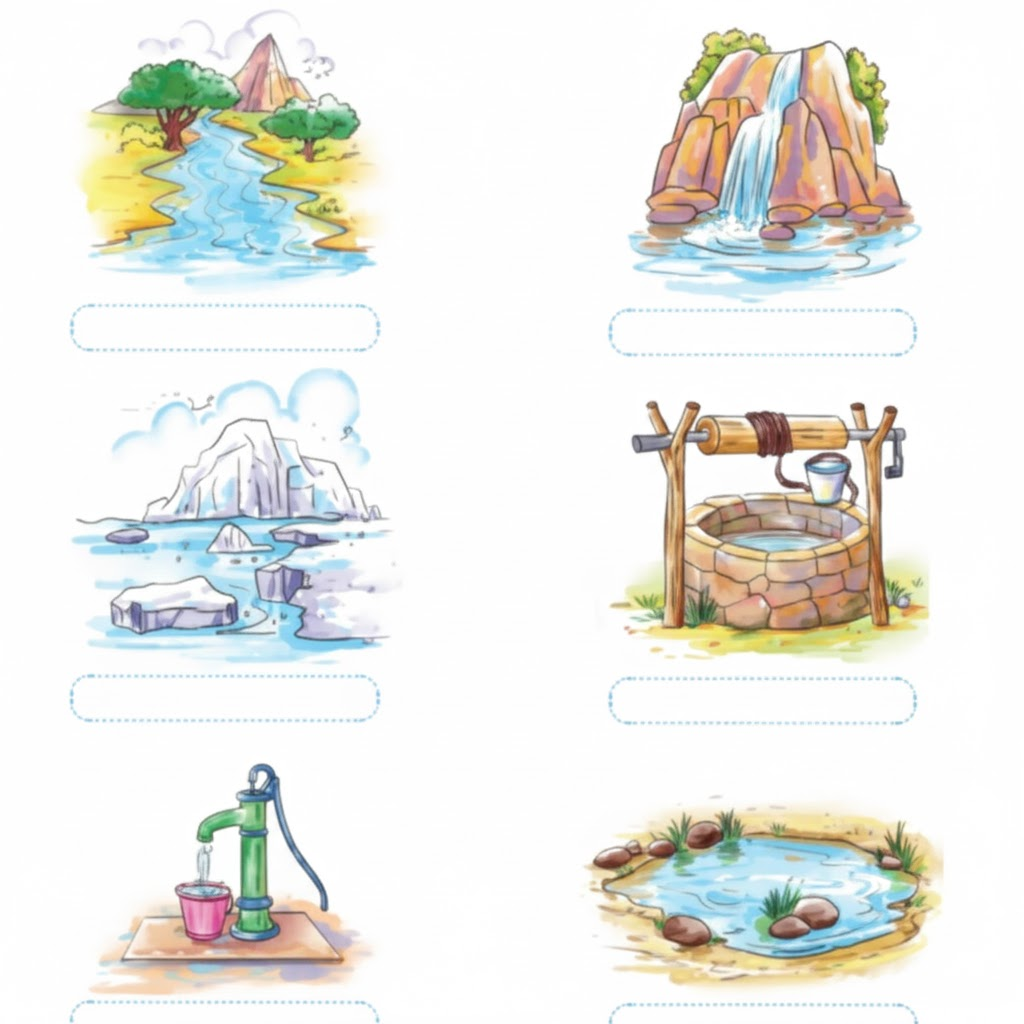
उत्तर:
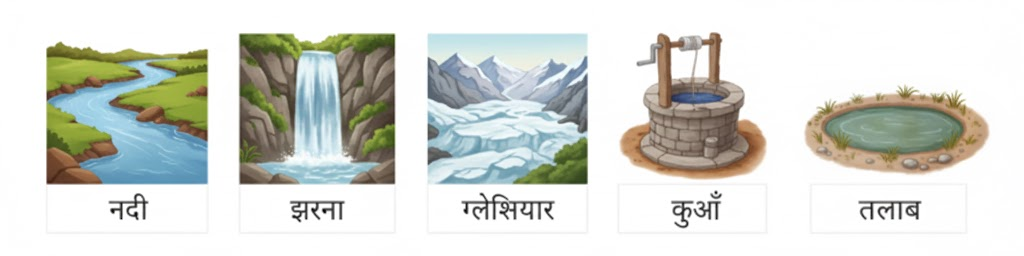
प्रश्न 2.
आपके निवास स्थान के आस-पास कौन-सी नदी /नदियाँ बहती है/हैं?
उत्तर: विद्यार्थी अपने शिक्षक या माता-पिता से अपने राज्य अथवा शहर से होकर बहने वाली नदियों के नाम पूछकर लिख सकते हैं।
प्रश्न 3.
आपके घर में पानी कहाँ से आता है ?
उत्तर: हमारे घर तक पानी जल बोर्ड की आपूर्ति के माध्यम से पहुँचता है। यह पानी नदियों, झीलों या ट्यूबवेल से लिया जाता है और फिर पाइपलाइनों के ज़रिए घरों में पहुँचाया जाता है।
प्रश्न 4.
आप नदियों के जल को प्रदूषित होने से किस प्रकार बचा सकते हैं? इस बारे में कक्षा में चर्चा कीजिए ।
उत्तर: नदियों को प्रदूषण से सुरक्षित रखने के लिए निम्न उपाय अपनाए जा सकते हैं—
पूजा के बाद फूल, कपड़े या मूर्तियों को नदी में प्रवाहित करने के बजाय निर्धारित स्थानों पर ही रखना चाहिए।
कारखानों से निकलने वाला गंदा पानी और कचरा नदियों में छोड़ने से रोकना चाहिए।
लोगों को नदियों की स्वच्छता के महत्व के प्रति जागरूक करना चाहिए।
पाठ से
प्रश्न 1.
निम्नलिखित प्रश्नों के सही उत्तर पर जल की बूँद का चित्र 💧 बनाइए । एक से अधिक विकल्प भी सही हो सकते हैं-
(क) “मेरा जन्म हिमालय की गोद में हुआ था ।” इस वाक्य में ‘मेरा’ शब्द किसके लिए आया है?
i. गोमुख
ii. गंगा नदी
iii. पर्वत
iv. नगर
उत्तर:
ii. गंगा नदी 💧
(ख) “लेकिन मुझे अब इस बात की प्रसन्नता है कि इस ओर लोगों का ध्यान गया है।” यहाँ किस ओर ध्यान जाने की बात कही गई है?
(i) गंगा में प्रदूषण की ओर
(ii) गंगा के चमकीले रंग की ओर
(iii) गंगा जल की पवित्रता की ओर
(iv) गंगा की धाराओं की ओर
उत्तर:
(i) गंगा में प्रदूषण की ओर 💧
(ग) जल प्रदूषण किन कारणों से होता है?
(i) कारखानों और नगरों द्वारा नदियों में डाले जाने वाले अपशिष्ट से
(ii) कारखानों के धुएँ से
(iii) नदी तथा तालाब में स्नान करने से
(iv) तेज आवाज में भोंपू बजाने से
उत्तर:
(i) कारखानों और नगरों द्वारा नदियों में डाले जाने वाले अपशिष्ट से 💧
(ii) कारखानों के धुएँ से 💧
(घ) “यहाँ यमुना से मेरा संगम होता है।” इस वाक्य में ‘संगम’ शब्द का भाव है-
(i) एक से अधिक नदियों का आपस में मिलना
(ii) विपरीत दिशा की ओर बहना
(iii) दो धाराओं में बँट जाना
(iv) दो धाराओं का मिलकर बहना
उत्तर:
(i) एक से अधिक नदियों का आपस में मिलना 💧
(iii) दो धाराओं में बँट जाना 💧
प्रश्न 2.
नीचे दिए गए प्रश्नों के उत्तर अपनी लेखन पुस्तिका में लिखिए-
(क) गंगा नदी के किनारे बसे कुछ नगरों के नाम लिखिए ।
उत्तर: ऋषिकेश, हरिद्वार, कानपुर, प्रयागराज, वाराणसी, पटना, भागलपुर और कोलकाता जैसे अनेक शहर गंगा नदी के तट पर स्थित हैं।
(ख) गंगा के तट पर बसे औद्योगिक नगरों से गंगा को क्या हानि हुई है?
उत्तर: गंगा नदी के किनारे स्थित औद्योगिक नगरों के कारण वह प्रदूषित हो गई है, क्योंकि कारखानों से निकलने वाला दूषित जल सीधे गंगा में प्रवाहित किया जाता है। इसके परिणामस्वरूप गंगा का स्वच्छ और उज्ज्वल रंग मटमैला हो गया है।
(ग) कुंभ का मेला कब-कब और कहाँ-कहाँ लगता है?
उत्तर: कुंभ मेला प्रत्येक बारह वर्षों में हरिद्वार और प्रयागराज में आयोजित किया जाता है। इसके अलावा उज्जैन और नासिक में भी बारह-बारह वर्ष के अंतराल पर कुंभ मेले का आयोजन होता है।
घ) गंगोत्री से निकलते समय मेरा चाँदी जैसा चमकीला रूप रहता है। किंतु मुझे दुख कि काशी पहुँचते-पहुँचते मेरा चमकीला रंग मटमैला हो जाता है।”
उपर्युक्त वाक्य से संबंधित निम्नलिखित प्रश्नों के उत्तर लिखिए-
यहाँ पर चाँदी जैसे चमकीले रूप से क्या तात्पर्य है?
काशी पहुँचते-पहुँचते गंगा का चमकीला रंग मटमैला क्यों हो जाता है?
उत्तर:
प्रस्तुत वाक्य में “चाँदी जैसे चमकीले” शब्दों से गंगा के निर्मल और स्वच्छ जल का संकेत मिलता है। साफ़ गंगा का जल चाँदी की तरह उजला और चमकदार दिखाई देता है।
काशी तक पहुँचने से पहले गंगा नदी के मार्ग में कई औद्योगिक नगर पड़ते हैं। इन नगरों के कारखानों से निकलने वाला दूषित जल जब नदी में मिलाया जाता है, तो उसका स्वाभाविक चमकदार रंग धुंधला और मटमैला हो जाता है।
प्रश्न 3.
पाठ के आधार पर सही कथन के आगे (✓) का और गलत कथन के आगे (✗) का चिह्न लगाइए-
(क) गंगा के किनारे कई तीर्थ स्थान हैं।
(ख) गंगा का जन्म अरावली की गोद में हुआ है।
(ग) कारखानों का गंदा पानी गंगा के जल को दूषित कर रहा है।
घ गंगा का एक नाम भागीरथी है।
(ङ) पश्चिम बंगाल में गंगा की तीन धाराएँ हो जाती हैं।
उत्तर:
(क) गंगा के किनारे कई तीर्थ स्थान हैं। (✓)
(ख) गंगा का जन्म अरावली की गोद में हुआ है। (✗)
(ग) कारखानों का गंदा पानी गंगा के जल को दूषित कर रहा है। (✓)
घ गंगा का एक नाम भागीरथी है। (✓)
(ङ) पश्चिम बंगाल में गंगा की तीन धाराएँ हो जाती हैं। (✗)
मिलान कीजिए
• स्तंभ ‘क’ और स्तंभ ‘ख’ का आपस में मिलान कीजिए-
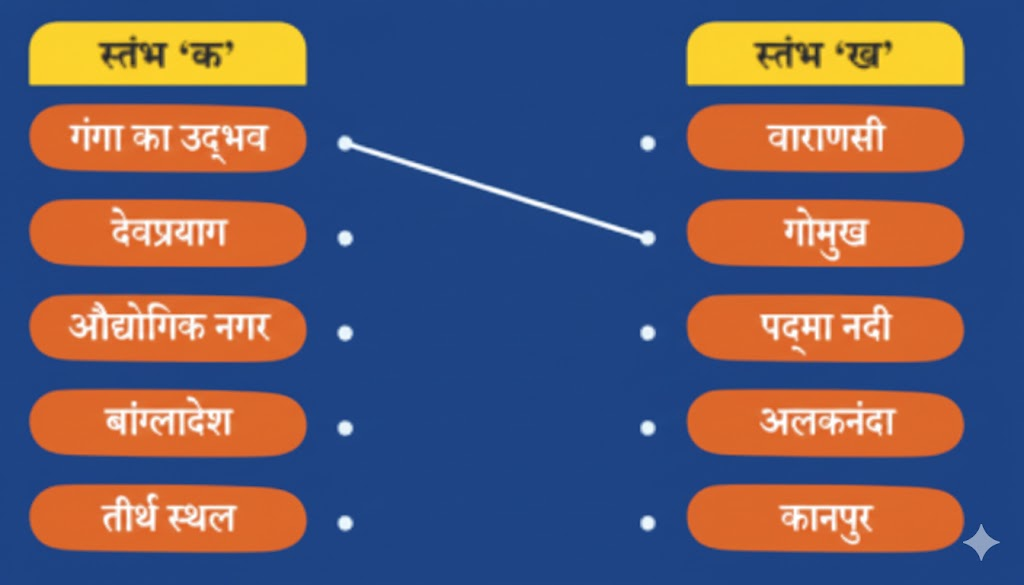
उत्तर:
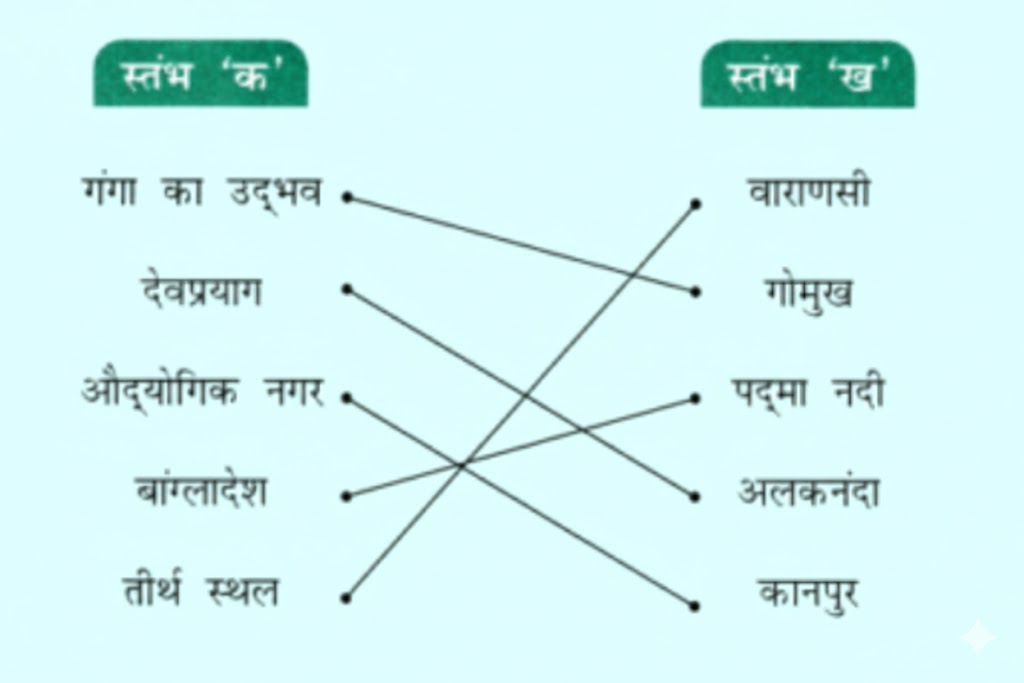
भाषा की बात
प्रश्न 1.
इस वाक्य को पढ़िए-
“यहाँ यमुना से मेरा संगम होता है।”
इस वाक्य में ‘होता’ शब्द ‘होना’ क्रिया का रूप है।
निम्नलिखित वाक्यों में ‘होना’ क्रिया के विभिन्न रूपों का प्रयोग करते हुए रिक्त स्थानों की पूर्ति कीजिए-
(क) आप जब भी आते हैं, मुझे बहुत प्रसन्नता ……….. है।
(ख) कुंभ के मेले में लाखों लोग सम्मिलित ………..।
(ग) आपके माता-पिता आपकी प्रतीक्षा कर रहे ………..।
(घ) पहाड़ों का मौसम बड़ा सुहावना ……….. है।
(ङ) यह काम कल ही ……….. था परंतु किसी कारण से नहीं ……….. पाया।
उत्तर:
(क) आप जब भी आते हैं, मुझे बहुत प्रसन्नता होती है।
(ख) कुंभ के मेले में लाखों लोग सम्मिलित हुए।
(ग) आपके माता-पिता आपकी प्रतीक्षा कर रहे होंगे।
(घ) पहाड़ों का मौसम बड़ा सुहावना होता है।
(ङ) यह काम कल ही होना था परंतु किसी कारण से नहीं हो पाया।
प्रश्न 2.
पाठ में ‘हिमालय’ शब्द ‘हिम’ और ‘आलय’ शब्दों से मिलकर बना है। इसी प्रकार नीचे लिखे शब्दों को मिलाकर नया शब्द बनाइए-
उत्तर:
प्रश्न 3.
नीचे गंगा नदी के दृश्य में कुछ शब्द लिखे गए हैं। इन शब्दों का प्रयोग करते हुए एक अनुच्छेद लिखिए-
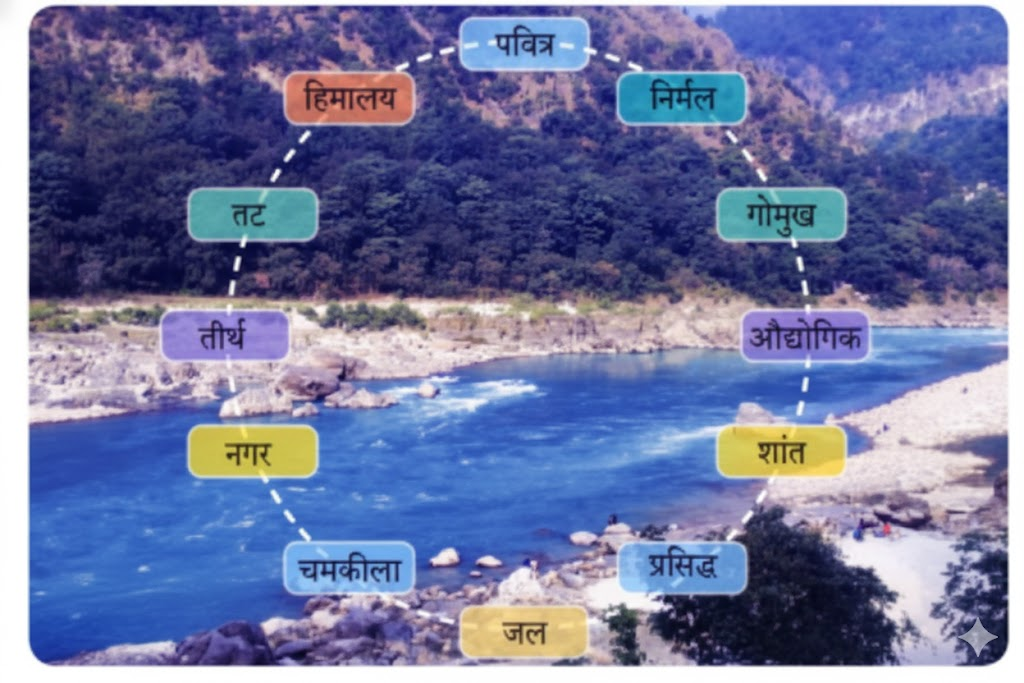
उत्तर:
गंगा नदी भारत की अत्यंत पावन नदियों में से एक है, जिसका उद्गम हिमालय में स्थित गोमुख से होता है। यह नदी उत्तर भारत के अनेक राज्यों से होकर प्रवाहित होती है और कई प्रमुख तीर्थ स्थलों को आपस में जोड़ती है। गंगा का स्वच्छ और उज्ज्वल जल लोगों को अपनी ओर आकर्षित करता है।
इसके किनारे बसे हरिद्वार, वाराणसी और प्रयागराज जैसे प्रसिद्ध नगर धार्मिक तथा सांस्कृतिक दृष्टि से विशेष महत्व रखते हैं और यहाँ का वातावरण अत्यंत शांत और पवित्र होता है। गंगा का जल कृषि कार्यों और उद्योगों में भी उपयोगी है, क्योंकि इससे सिंचाई और औद्योगिक जरूरतें पूरी होती हैं। गंगा केवल एक जलधारा नहीं, बल्कि भारतीयों की आस्था और विश्वास का प्रतीक है। इसके जल को लोग अमृत तुल्य मानते हैं। इसलिए गंगा की रक्षा और स्वच्छता बनाए रखना हम सभी का दायित्व है।
प्रश्न 4.
“मैं काम कर रहा हूँ।” “मेरे कर में लेखनी है । ”
यहाँ पहले वाक्य में ‘कर’ शब्द का प्रयोग क्रिया के रूप में हुआ है तथा दूसरे वाक्य में ‘कर’ शब्द का अर्थ ‘हाथ’ है। ‘कर’ का एक अन्य अर्थ ‘टैक्स’ भी होता है। इस प्रकार आपने देखा कि अलग-अलग वाक्यों में प्रयोग के कारण एक ही शब्द के भिन्न-भिन्न अर्थ हो सकते हैं।
अब आप भी अपनी पाठ्यपुस्तक और अन्य स्त्रोतों से एसे शब्दों की एक सूची तैयार कीजिए और उनका वाक्यों में प्रयोग कीजिए ।
उत्तर:
उत्तर –
एक दिशा – राधा का घर उत्तर दिशा की ओर स्थित है।
जवाब – मुझे इस प्रश्न का सही उत्तर अभी तक नहीं मिल पाया है।
पत्र –
पत्ता – पेड़ से पत्ते झरते जा रहे हैं।
चिट्ठी – आज मुझे पिता जी की लिखी हुई चिट्ठी प्राप्त हुई।
कनक –
गेहूँ – भंडार कक्ष में कनक भरकर रखा गया है।
सोना – यह आभूषण शुद्ध कनक से निर्मित है।
इसी प्रकार विद्यार्थी अन्य शब्दों का प्रयोग करते हुए अपने-अपने वाक्य स्वयं बनाने का प्रयास कर सकते हैं।
समझ और अनुभव
प्रश्न 1.
गंगा नदी के साथ तीर्थ स्थलों के जुड़ने के क्या कारण हो सकते हैं?
उत्तर:
गंगा नदी को भारत की सबसे पावन नदियों में गिना जाता है। मान्यता है कि राजा भगीरथ के कठोर तप के फलस्वरूप गंगा का अवतरण पृथ्वी पर हुआ। इसी कारण इसकी पवित्रता से अनेक धार्मिक और तीर्थ स्थल जुड़े हुए हैं।
प्रश्न 2.
यदि नदियाँ दिन-प्रतिदिन प्रदूषित होती रहेंगी तो हम पर क्या प्रभाव पड़ेगा?
उत्तर: यदि नदियाँ लगातार प्रदूषित होती जाएँगी, तो इसका हमारे स्वास्थ्य और पर्यावरणीय संतुलन पर गंभीर नकारात्मक प्रभाव पड़ेगा। नदियों में रहने वाले जीव-जंतु समाप्त हो सकते हैं और खेती भी प्रभावित होगी। इसके अलावा, दूषित जल का सेवन करने या उससे स्नान करने से हैजा, अतिसार, टायफाइड जैसी कई गंभीर बीमारियाँ फैल सकती हैं।
प्रश्न 3.
पाठ में ‘कानपुर’ को भारत का प्रसिद्ध औद्योगिक नगर कहा गया है। यहाँ ‘औद्योगिक नगर’ से क्या आशय है?
उत्तर: औद्योगिक नगर ऐसे स्थान होते हैं जहाँ अनेक कारखाने और उद्योग स्थापित होते हैं। इन जगहों पर काम की तलाश में लोग दूर-दराज़ क्षेत्रों से आते हैं। यहाँ मशीनें, वस्त्र, वाहन, विद्युत उपकरण तथा कई अन्य वस्तुओं का निर्माण किया जाता है। भारत में मुंबई, चेन्नई, कोलकाता, दिल्ली, कानपुर और जमशेदपुर जैसे शहर औद्योगिक नगरों के रूप में प्रसिद्ध हैं, क्योंकि यहाँ बड़े-बड़े उद्योग मौजूद हैं। रोज़गार के अवसरों के कारण बड़ी संख्या में लोग इन शहरों में आते हैं। हालांकि, इन औद्योगिक नगरों में धुएँ, दूषित जल और अत्यधिक शोर जैसी प्रदूषण संबंधी समस्याएँ भी देखने को मिलती हैं।
कलाकारी
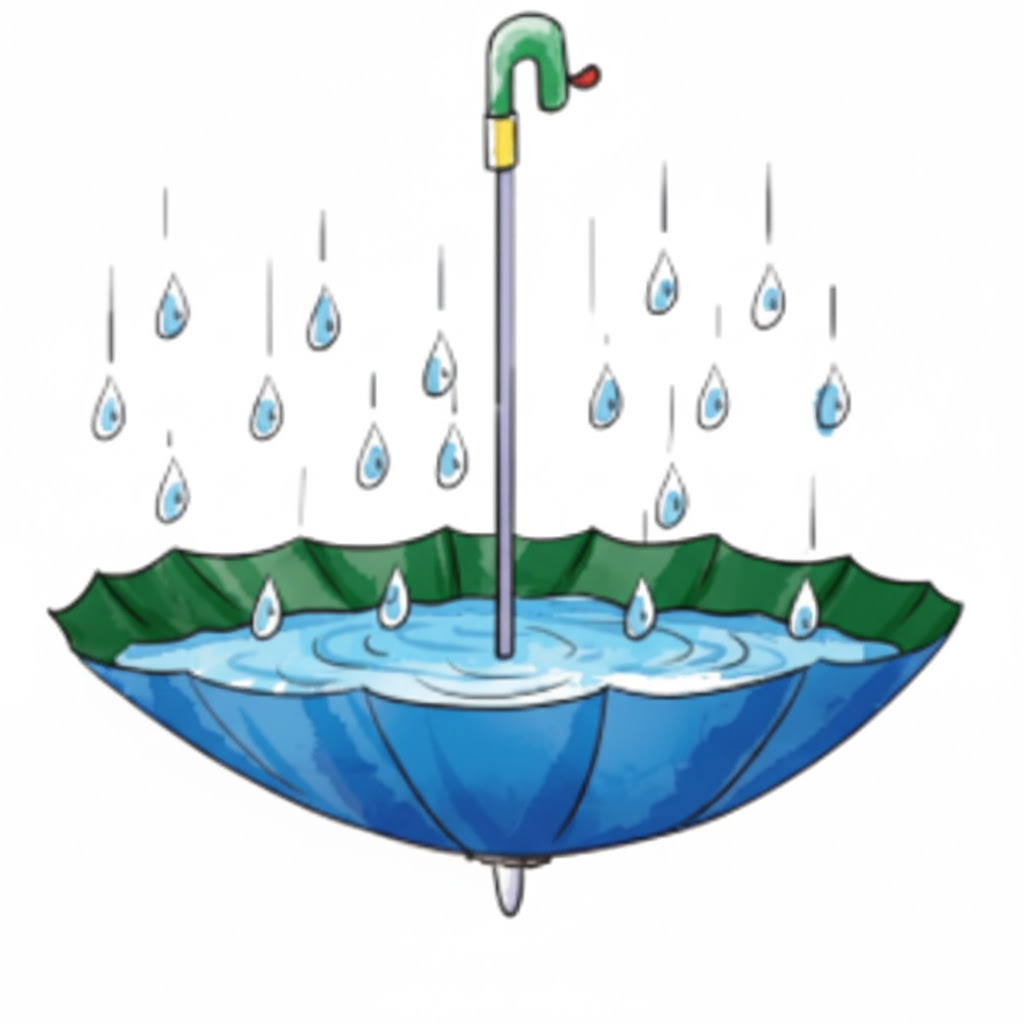
नीचे ‘जल संरक्षण’ विषय पर एक चित्र दिया गया है। आप भी दिए गए स्थान पर कोई चित्र बनाकर जल संरक्षण का एक उपाय सुझाइए-
उत्तर:
दिए गए सुझावों को ध्यान में रखते हुए विद्यार्थी स्वयं चित्र तैयार कर सकते हैं।
जल संरक्षण के उपाय इस प्रकार हैं—
काम पूरा होने के बाद नल को ठीक से बंद करना।
पानी का फालतू और बेवजह उपयोग न करना।
वर्षा के जल को संग्रहित करना।
जल को प्रदूषित होने से बचाने में सहयोग करना।
गंगा से बातचीत
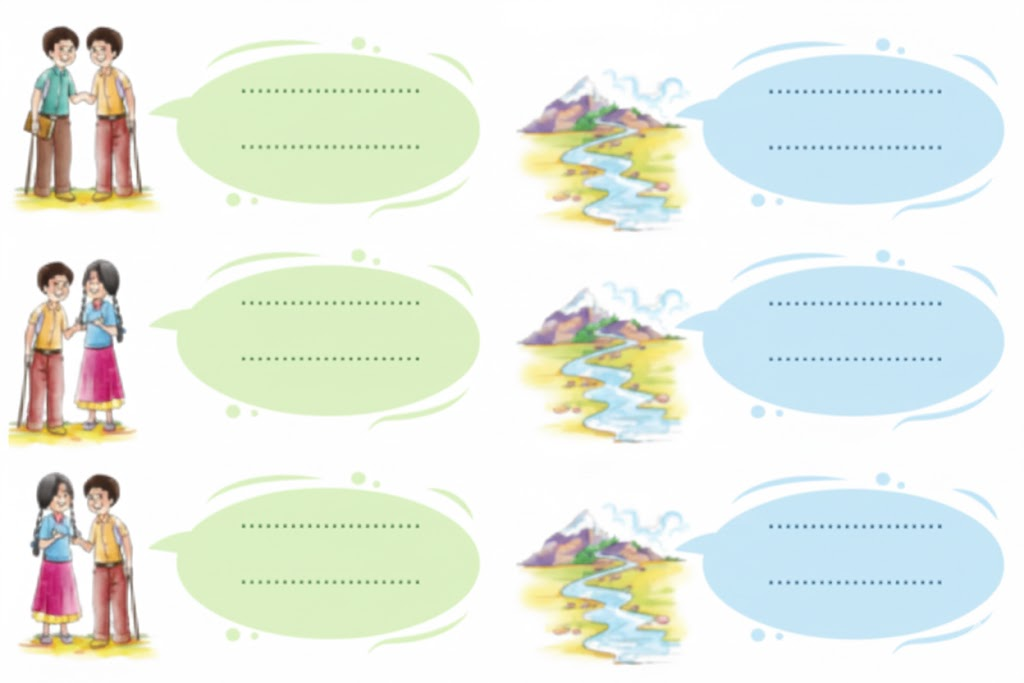
• गंगा अपने चमकीले रंग को मटमैला होते देखकर दुखी है। यदि आपको कभी गंगा नदी से बात करने का अवसर मिले तो आपकी क्या बातचीत होगी?
उत्तर:
मैं – प्रणाम गंगा मैया! आप इतनी उदास क्यों दिखाई दे रही हैं?
गंगा – पुत्र, क्या तुम्हें दिखाई नहीं देता? मेरा जो जल कभी स्वच्छ और चमकदार था, वह अब गंदा और मटमैला होता जा रहा है।
मैं – हाँ मैया, आपने बिल्कुल सही कहा। लोग प्लास्टिक, कूड़ा-कचरा और दूषित पानी बहाकर आपको अशुद्ध कर रहे हैं।
गंगा – हाँ बेटा, यही तो मेरी पीड़ा है।
मैं – गंगा मैया, मैंने पढ़ा है कि आपके जल को प्रदूषित करने से मनुष्य बीमार पड़ सकता है। क्या यह सत्य है?
गंगा – हाँ, यह पूरी तरह सच है। जल के बिना मानव जीवन की कल्पना भी नहीं की जा सकती।
गंगा – फिर भी लोग इस विषय पर गंभीरता से क्यों नहीं सोचते?
मैं – मैया, हमने निश्चय किया है कि इस रविवार सभी मित्र मिलकर आपके तट की सफ़ाई करेंगे।
गंगा – क्या सचमुच तुम लोग ऐसा करोगे?
मैं – हाँ मैया, हम न तो कचरा फैलाएँगे और न ही दूसरों को ऐसा करने देंगे। हम सबको जागरूक करेंगे और सफ़ाई अभियान चलाएँगे।
गंगा – तब तो मुझे आशा है। जब बच्चे जागरूक होते हैं, तो बड़े भी अवश्य सुधरते हैं। धन्यवाद पुत्र!
मैं – धन्यवाद गंगा मैया! हम सब मिलकर आपको फिर से स्वच्छ और पवित्र बनाएँगे।
पुस्तकालय एवं अन्य स्रोत
प्रश्न 1.
विद्यालय के पुस्तकालय, अभिभावकों तथा अन्य स्रोतों से गंगा की सहायक नदियों के बारे में पता लगाइए। साथ ही यह भी पता कीजिए कि उनका उद्गम स्थान कौन-सा है और उनके किनारे कौन-कौन से प्रसिद्ध नगर स्थित हैं।
उत्तर:
प्रश्न 2.
नदियों को साफ करने के लिए भारत सरकार द्वारा चलाई जा रही योजनाओं के बारे में पता कीजिए । इसके लिए आप पुस्तकालय, शिक्षकों-अभिभावकों एवं अन्य स्रोतों की सहायता ले सकते हैं।
उत्तर:
नदियों की स्वच्छता और संरक्षण के उद्देश्य से शुरू की गई प्रमुख योजनाएँ इस प्रकार हैं—
नमामि गंगे कार्यक्रम
यमुना एक्शन प्लान
जल शक्ति अभियान
गंगा एक्शन प्लान
राष्ट्रीय नदी संरक्षण कार्यक्रम
अमृत योजना
आपकी अभिव्यक्ति

• दिए गए चित्र को ध्यानपूर्वक देखिए और इस पर आधारित कोई अनुच्छेद, कहानी अथवा कविता अपने शब्दों में लिखिए-
…………………………………
…………………………………
…………………………………
…………………………………
…………………………………
…………………………………
जंगल देता प्राण हमें,
उत्तर:
हरियाली से सजा हुआ,
यह जंगल का संसार है।
पक्षियों के मधुर गीतों में,
छिपा प्रकृति का उपहार है।
पेड़, पहाड़, बहते झरने,
हर दृश्य एक कहानी कहे।
हिरण, हाथी, बाघ और भालू,
अपनी पहचान साथ रहे।
जंगल से ही जीवन चलता,
मिलती वायु, जल और छाया।
यदि इसकी रक्षा हम करें,
तो सुखमय होगी जीवन काया।
प्रतिदिन कटते वृक्ष यहाँ,
अब रुकना बेहद ज़रूरी है।
जंगल ही जीवन का आधार है,
यह सच्चाई सबको समझनी है।
गंगा की कहानी: एनसीईआरटी समाधान और परीक्षा में उपयोगिता
कक्षा 5 हिंदी के गंगा की कहानी अध्याय में छात्रों को गंगा नदी की यात्रा, उसका धार्मिक, सांस्कृतिक और भौगोलिक महत्त्व जानने को मिलता है। एनसीईआरटी समाधान 2025-26 से आप सटीक उत्तर और मुख्य बिंदु आसानी से समझ सकते हैं।
अध्याय में पूछे गए प्रश्न, जैसे गंगा के किनारे बसे नगर या जल प्रदूषण के कारण, परीक्षा में बार-बार पूछे जाते हैं। सभी Ncert Solutions Class 5 Hindi Veena Chapter 12 अभ्यास करने से तैयारी मजबूत होगी।
याद रखें कि हर एनसीईआरटी एक्सरसाइज हल करते समय पाठ से उदाहरण और तथ्य जरूर जोड़ें। छोटे-छोटे नोट्स बनाएं और NCERT Solutions 2025-26 बार-बार दोहराएँ — इससे अच्छे अंक पाना आसान हो जाएगा।
FAQs on NCERT Solutions For Class 5 Hindi Veena Chapter 12 Ganga Ki Kahani (2025-26)
1. What is included in NCERT Solutions for Class 5 Hindi Chapter 12 ‘Ganga Ki Kahani’?
NCERT Solutions for Class 5 Hindi Chapter 12 ‘Ganga Ki Kahani’ provide comprehensive, stepwise answers to all textbook questions, helping students understand the chapter in detail.
Key features include:
- Chapter summary and main points.
- Solved examples for all exercise and intext questions.
- Important definitions and thematic discussions.
- Exam-oriented answer structuring for CBSE 2025–26.
- Free PDF download for easy offline revision.
2. How does this chapter ‘Ganga Ki Kahani’ help students understand key CBSE concepts?
‘Ganga Ki Kahani’ introduces students to environmental awareness, historical significance, and cultural aspects of the Ganga through stories and exercises.
Students learn to:
- Identify the importance of rivers in India.
- Understand moral and ethical lessons related to nature.
- Practice Hindi comprehension, vocabulary, and expression.
- Apply knowledge in exam-style questions as per CBSE curriculum.
3. Why is reviewing stepwise solutions important for exam confidence?
Reviewing stepwise solutions helps Class 5 students build confidence and improves accuracy in exams.
Benefits include:
- Understanding how marks are awarded for each step as per CBSE marking scheme.
- Learning proper answer structure for full marks.
- Avoiding common mistakes by following clear sequences.
- Easy recall during revision through systematic notes.
4. How should I structure long answers for full marks in Hindi Class 5?
To score full marks in long answers for Class 5 Hindi, use clear structure and CBSE guidelines.
Follow this format:
- Start with a strong introduction mentioning the chapter or topic.
- Write main points in sequence with supporting details.
- Use bullet points or short paragraphs for clarity.
- Conclude with a summary statement or lesson learned.
- Include key keywords, definitions, and examples from the chapter.
5. Are diagrams or definitions compulsory in answers for Hindi Chapter 12?
While not always compulsory, including neat diagrams or well-written definitions in your answers can help you earn extra marks and improve clarity.
Tips:
- Label diagrams accurately if asked in the question.
- Use textbook definitions for keywords when required.
- Keep illustrations simple and relevant to the question.
6. Which questions are most likely to be asked from Class 5 Hindi Chapter 12 in school exams?
The most likely questions from ‘Ganga Ki Kahani’ cover important events, environmental messages, and character-based comprehension.
Common question types:
- Short answer factual questions from chapter summary.
- Meaning of important Hindi words used in the chapter.
- Long answer explaining the message or importance of the Ganga river.
- Fill in the blanks and match the column with chapter details.
- Diagram/map labelling if mentioned in exercises.
7. Where can I download the free PDF of NCERT Solutions for Class 5 Hindi Chapter 12?
You can download the free PDF of NCERT Solutions for Class 5 Hindi Chapter 12 ‘Ganga Ki Kahani’ from educational platforms that follow the latest CBSE syllabus.
Advantages of PDF download:
- Offline study and revision anytime.
- Easy access to stepwise solutions and key notes.
- Printable format for exam practice.
8. How to revise ‘Ganga Ki Kahani’ chapter quickly before exams?
Quick revision for ‘Ganga Ki Kahani’ is best done through concise notes and repeated practice of important questions.
Revision tips:
- Read the summary and key points of the chapter.
- Practice all solved and unsolved textbook questions.
- Memorise important definitions, dates, and places.
- Attempt diagrams/maps if included in your syllabus.
9. Do examiners award partial marks for correct steps even if the final answer is wrong?
Yes, CBSE examiners usually award partial marks for correct steps even if the final answer is incorrect.
How to maximise your marks:
- Write all intermediate steps clearly in your answer sheet.
- Use correct terminology and logical reasoning as per NCERT guidelines.
- Attempt every part of the question, even if unsure about the final answer.
10. Is referring to textbook page numbers helpful during revision of Class 5 Hindi Chapter 12?
Referring to textbook page numbers can be very useful for targeted revision:
Benefits:
- Find specific definitions or examples quickly.
- Cross-check answers with textbook language and sequence.
- Stay organised and save time during last-minute preparation.
