








How to Use Count and Write Worksheets with Examples
I am sure you might have many chocolates kept in your fridge but what if I give you a few more? Suppose you have 5 chocolates in your fridge and I give you 5 more. Can you tell me how many chocolates you will have? Do you know how to count? Do you know why counting is necessary? If you know how to count, you can keep a track of your chocolates, your toys, your books, and your other belongings.
Below are some count and write worksheets with the help of which you can count and write the numbers.
Count and Write the Number Worksheets
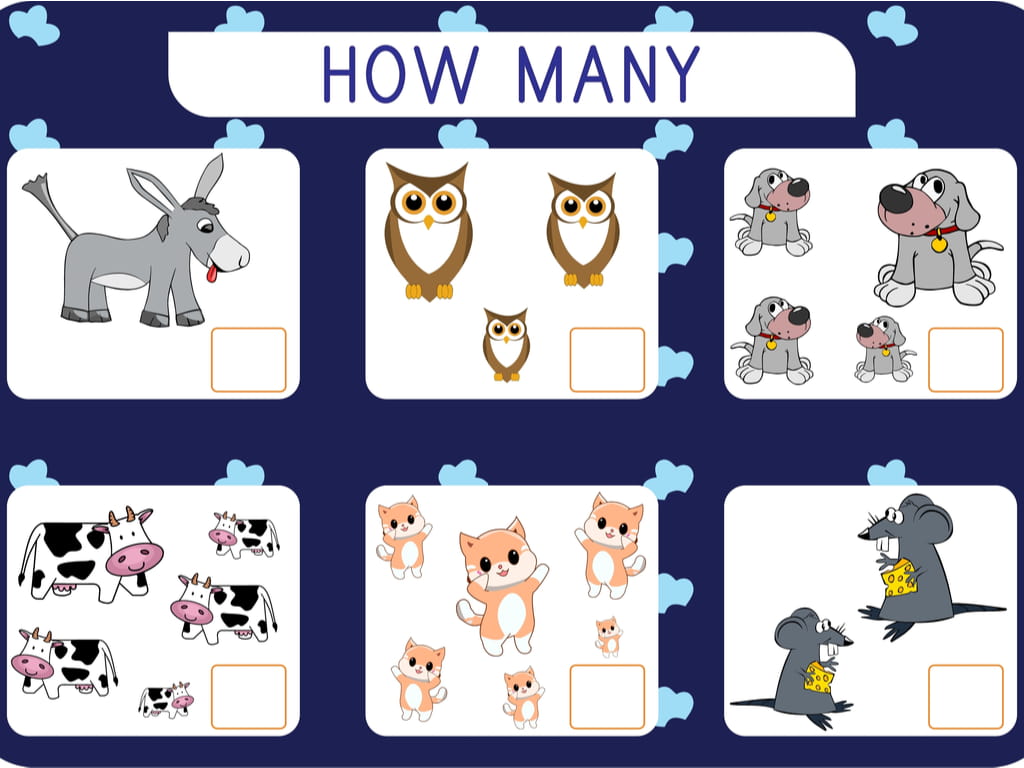
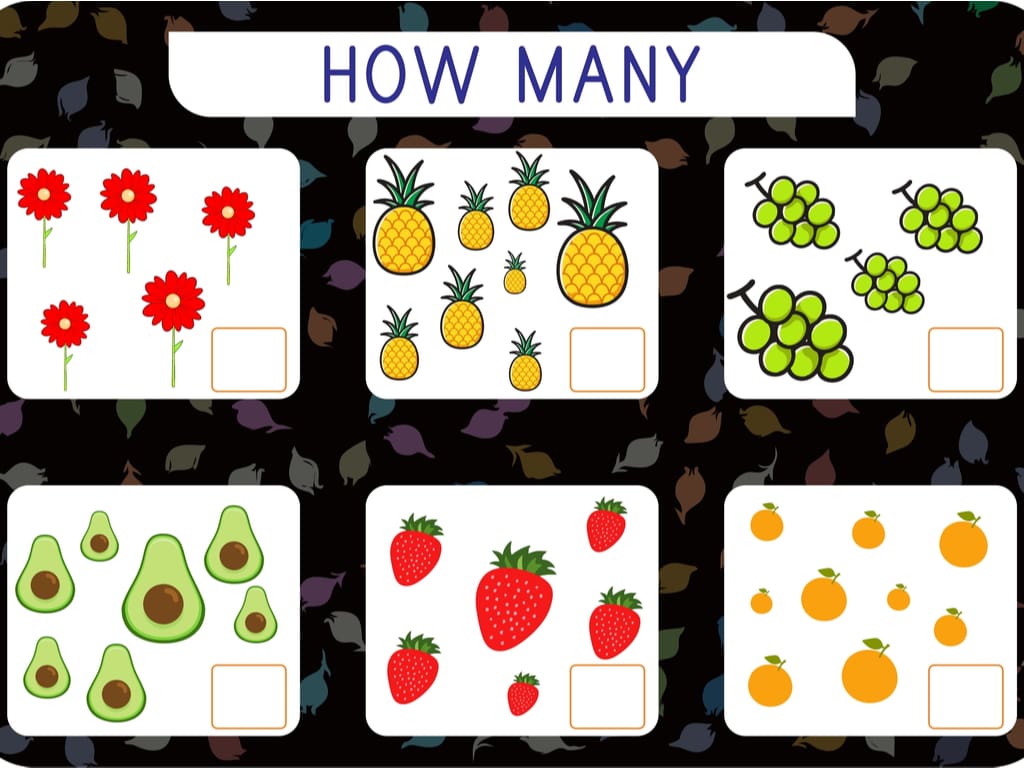
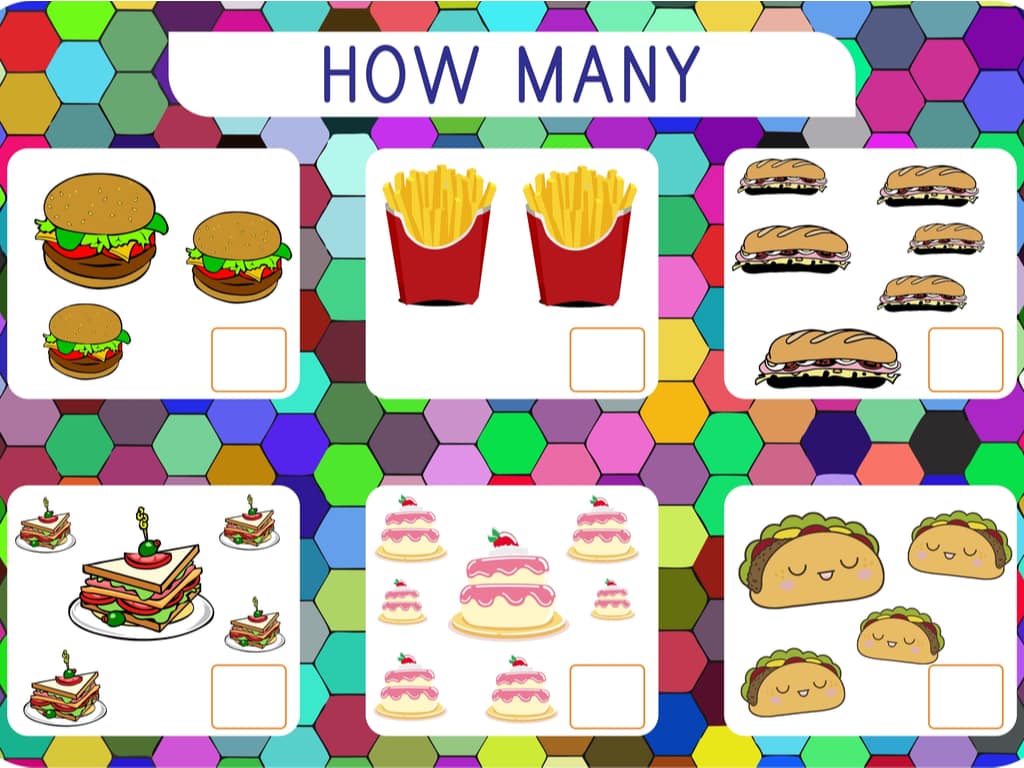
In this worksheet, you have to count the object and write the number in the box. Let’s start.
A.
B.
C.
D.
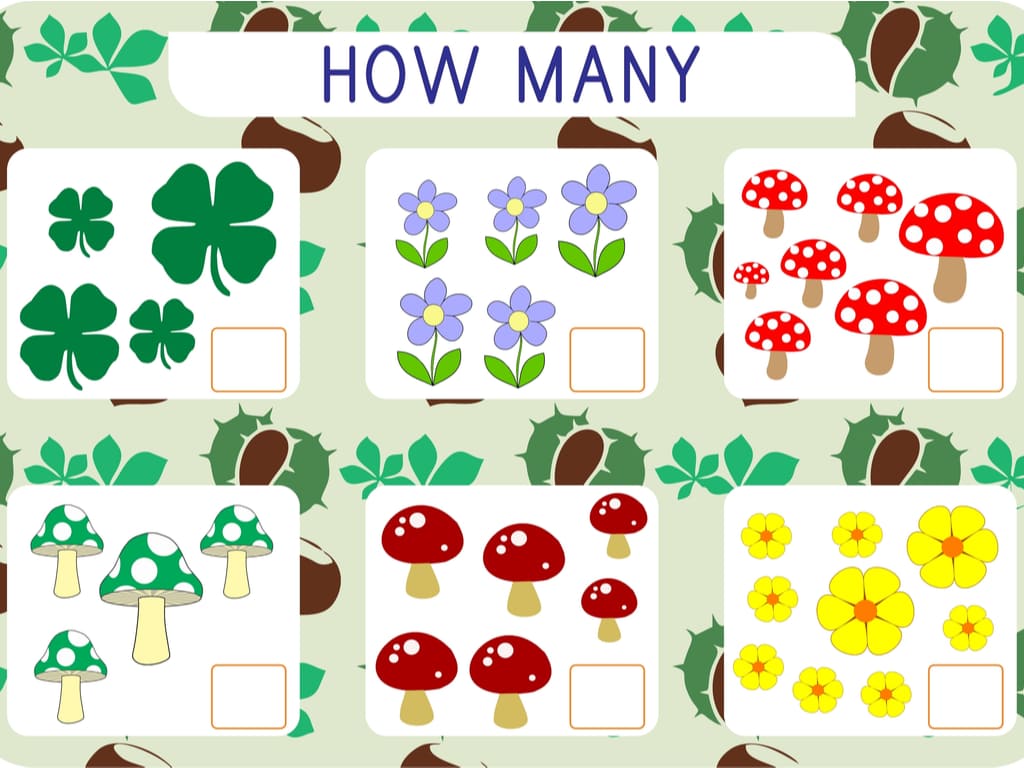
Now that you have finished the count and write worksheet, let us check if all your answers are correct or not. Let us have a look at the answers.
That was so much fun, isn’t it? So, let’s engage ourselves a little more and do another worksheet and this time, we will count and match the chocolates.
Counting Kindergarten Math Worksheets: Match the Following
You have already done the “count the object and write the number” worksheet. So, here is another fun activity for you. Now, you have to count and match the numbers.


Taadda!!! It’s time to check your answers. Let’s have a look.
Wow! You have done a wonderful job. Keep it up. Now, that you have become a champion, here are a few words for your parents.
Importance of Counting Maths Worksheet for Nursery
Count and write worksheets are very important for children for various reasons. Some of the benefits of solving count and write the number exercises are as follows.
Counting is important because the meaning associated with it serves as the foundation for all other number ideas.
These ideas create the foundation for children to eventually learn how numbers are related to one another in a variety of ways.
Counting to solve numerical problems shows to children that counting can be applied to a variety of contexts. This allows children to see counting as more than a physical procedure.
Counting to combine and separate groupings of objects enhances children's grasp of addition and subtraction procedures. Children learn that when groups are combined, the count increases, whereas when groups are separated, the count decreases.
It enables the use of numbers to describe and compare sets.
Tips for Parents to Enhance Children’s Counting Skills
Counting can be taught to the students anytime anywhere. Here are a few tips on how you can make them count numbers and enhance their skills.
Make them count steps while walking.
Buy them a colourful abacus.
They can count the number of birthday candles.
Make them count the number of their toys and arrange them in various groups.
They can be encouraged to play hopscotch.
They can learn the dance steps by counting.
They can be given a piggy bank and they can count the coins collected in their piggy bank.
So here we have gone through counting kindergarten math worksheets. We also have gone through a few tips for the parents on how they can enhance their children’s counting skills. We also learned about the various benefits of learning to count numbers.
FAQs on Count And Write Worksheets for Early Math Skills
1. What are Count and Write worksheets?
Count and Write worksheets are maths practice sheets where students count objects and write the correct number to match the quantity. These worksheets help children develop early number skills and one-to-one correspondence.
- Count the given objects (e.g., apples, stars, shapes).
- Write the total number in the box provided.
- Strengthen number recognition and writing skills.
They are commonly used in kindergarten and preschool maths learning.
2. How do you solve a Count and Write worksheet?
To solve a Count and Write worksheet, count each object carefully and write the total number correctly. Follow these simple steps:
- Look at the group of objects.
- Count them one by one using one-to-one correspondence.
- Write the final number in the answer space.
For example, if there are 7 balloons, the correct answer to write is 7.
3. Why are Count and Write worksheets important in early maths?
Count and Write worksheets are important because they build number sense and basic counting skills in young learners. They help children:
- Understand the relationship between numbers and quantities.
- Practice writing numerals correctly.
- Develop concentration and observation skills.
These foundational skills are essential for addition, subtraction, and other primary maths concepts.
4. What skills do children develop through Count and Write activities?
Children develop counting accuracy, number recognition, and fine motor skills through Count and Write activities. These worksheets support:
- One-to-one correspondence.
- Understanding numbers from 1 to 10 (and beyond).
- Improved handwriting of numerals.
They also prepare learners for early arithmetic operations.
5. What is one-to-one correspondence in Count and Write worksheets?
One-to-one correspondence means matching each object with one number while counting. In Count and Write worksheets:
- Each object is counted once.
- Each object gets one number tag.
- The last number counted represents the total quantity.
For example, counting 5 stars means touching each star once and ending at 5.
6. How can I help my child improve counting skills using worksheets?
You can improve counting skills by practicing regularly with structured Count and Write worksheets and guided support. Try these tips:
- Encourage slow and careful counting.
- Use fingers or point to each object.
- Review mistakes and recount together.
Consistent practice helps children confidently count numbers up to 10, 20, or higher.
7. What is an example of a Count and Write problem?
An example of a Count and Write problem is counting objects and writing the total number correctly. For instance:
- There are 4 cats in the picture.
- Count: 1, 2, 3, 4.
- Write the answer: 4.
This simple activity reinforces both counting and number writing skills.
8. What are common mistakes in Count and Write worksheets?
Common mistakes in Count and Write worksheets include skipping objects or counting the same object twice. Typical errors are:
- Counting too fast and missing items.
- Miswriting numbers (e.g., writing 3 instead of 8).
- Not following one-to-one correspondence.
Careful counting and checking the final number can prevent these mistakes.
9. At what age should children start Count and Write worksheets?
Children usually start Count and Write worksheets between ages 3 to 5 years, depending on their readiness. At this stage, they:
- Begin recognizing numbers.
- Learn to count objects up to 5 or 10.
- Practice writing simple numerals.
These worksheets are commonly used in preschool and kindergarten maths programs.
10. How do Count and Write worksheets prepare students for addition?
Count and Write worksheets prepare students for addition by strengthening their understanding of quantities and totals. When children can accurately count objects:
- They understand that numbers represent amounts.
- They can combine two groups and count the total.
- They build confidence for simple addition like 3 + 2 = 5.
This counting foundation makes learning basic arithmetic much easier.
