




Which of the following distance-time graphs represent one-dimension uniform motion?
A) 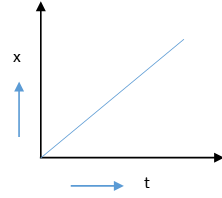
B) 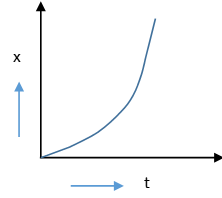
C)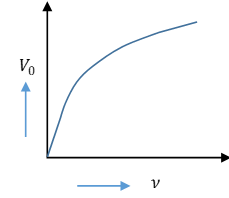
D) 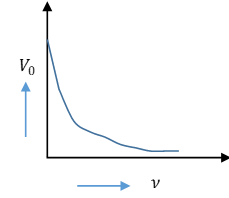
Answer
 Verified
264.3k+ views
Hint: If an object goes in a straight line, that object covers the distance which can be represented by the distance time graph. Uniform motion represents a constant change in displacement per second. Distance time graph for uniform motion is a straight line, that is, equal distance is covered by the equal units of time.
Complete step by step answer:
> Option A is correct. This is because it represents the graph where change in displacement per second is constant. Therefore, velocity is constant and hence it performs uniform motion.
> Option B is incorrect. This is because change in displacement per unit time is not constant.
> Option C is incorrect. This is because there is change in velocity per unit time, so motion is not uniform. It is non uniform motion.
> Option D is incorrect. This is because change in velocity is given, so there is no point to discuss uniform motion. Change in velocity means motion is non uniform.
Distance time graph for uniform motion in one dimension means equal distance is travelled by equal interval of time, that is velocity is constant and hence the acceleration becomes zero.
Therefore, Option A is the correct answer.
Note: Change in displacement per unit time should be constant for a body to undergo uniform motion. The area under the speed and time curve represents the total distance travelled.
Complete step by step answer:
> Option A is correct. This is because it represents the graph where change in displacement per second is constant. Therefore, velocity is constant and hence it performs uniform motion.
> Option B is incorrect. This is because change in displacement per unit time is not constant.
> Option C is incorrect. This is because there is change in velocity per unit time, so motion is not uniform. It is non uniform motion.
> Option D is incorrect. This is because change in velocity is given, so there is no point to discuss uniform motion. Change in velocity means motion is non uniform.
Distance time graph for uniform motion in one dimension means equal distance is travelled by equal interval of time, that is velocity is constant and hence the acceleration becomes zero.
Therefore, Option A is the correct answer.
Note: Change in displacement per unit time should be constant for a body to undergo uniform motion. The area under the speed and time curve represents the total distance travelled.
Recently Updated Pages
JEE Main Mock Test 2025-26: Principles Related To Practical

JEE Main 2025-26 Experimental Skills Mock Test – Free Practice
JEE Main 2025-26 Electronic Devices Mock Test: Free Practice Online
JEE Main 2025-26 Mock Tests: Free Practice Papers & Solutions
JEE Main 2025-26: Magnetic Effects of Current & Magnetism Mock Test
JEE Main Statistics and Probability Mock Test 2025-26
Trending doubts
JEE Main 2026: Exam Dates, Session 2 Updates, City Slip, Admit Card & Latest News
JEE Main Participating Colleges 2026 - A Complete List of Top Colleges
Hybridisation in Chemistry – Concept, Types & Applications
Understanding the Electric Field of a Uniformly Charged Ring
Derivation of Equation of Trajectory Explained for Students
How to Convert a Galvanometer into an Ammeter or Voltmeter
Other Pages
JEE Advanced 2026 Notification Out with Exam Date, Registration (Extended), Syllabus and More
JEE Advanced Percentile vs Marks 2026: JEE Main Cutoff, AIR & IIT Admission Guide
CBSE Notes Class 11 Physics Chapter 1 - Units And Measurements - 2025-26
NCERT Solutions For Class 11 Physics Chapter 1 Units And Measurements - 2025-26
Important Questions For Class 11 Physics Chapter 1 Units and Measurement - 2025-26
JEE Advanced Weightage Chapter Wise 2026 for Physics, Chemistry, and Mathematics