




What is DDT among the following?
(A) An organic fertiliser
(B) A fertiliser
(C) Biodegradable pollutant
(D) Non-biodegradable pollutant
Answer
 Verified
273.9k+ views
Hint: DDT is readily adsorbed by the soil. DDT was banned in 1972 due to environmental concerns. DDT is present in plastic bags, polythene, silver foils.
Complete step by step solution:
- DDT is a short form of the chemical compound, Dichlorodiphenyltrichloroethane.
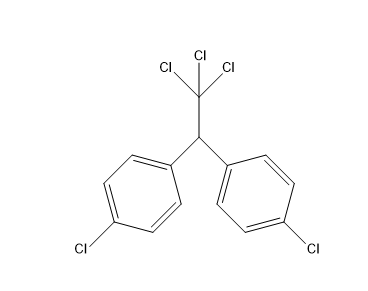
- DDT is a tasteless, colourless, almost odourless crystalline chemical compound.
- It was first synthesized by OthmarZeidler and its insecticidal action was found by Paul Muller.
- It was used as a method of control for malaria and typhus during World War II. It was effective in reducing malaria morbidity and mortality among civilians and troops.
- It was later banned due to its devastating impact on the environment.
- DDT is a persistent non-biodegradable organic pollutant that has a half-life of 22 days-30 years in soil and up to 150 years in aquatic environment.
-Hence, the answer is option (D) non-biodegradable pollutant.
Additional Information:
- The soil readily absorbs DDT which is a sink.
- DDT is harmful to a wide variety of living organisms, including marine organisms and various species of fish.
- DDT is considered by most to be a human carcinogen. But, DDT does not cause any human health effects in low environmental doses.
- DDT accumulation in birds causes egg shell thinning, which may pose a threat to the survival of the organism. This has the potential to even cause extinction in some bird species.
Note: - DDT is non-biodegradable. It is magnified through the food chain.The apex predators will hence have the highest concentration of chemicals compared to the other animals in that environment.
Complete step by step solution:
- DDT is a short form of the chemical compound, Dichlorodiphenyltrichloroethane.
- DDT is a tasteless, colourless, almost odourless crystalline chemical compound.
- It was first synthesized by OthmarZeidler and its insecticidal action was found by Paul Muller.
- It was used as a method of control for malaria and typhus during World War II. It was effective in reducing malaria morbidity and mortality among civilians and troops.
- It was later banned due to its devastating impact on the environment.
- DDT is a persistent non-biodegradable organic pollutant that has a half-life of 22 days-30 years in soil and up to 150 years in aquatic environment.
-Hence, the answer is option (D) non-biodegradable pollutant.
Additional Information:
- The soil readily absorbs DDT which is a sink.
- DDT is harmful to a wide variety of living organisms, including marine organisms and various species of fish.
- DDT is considered by most to be a human carcinogen. But, DDT does not cause any human health effects in low environmental doses.
- DDT accumulation in birds causes egg shell thinning, which may pose a threat to the survival of the organism. This has the potential to even cause extinction in some bird species.
Note: - DDT is non-biodegradable. It is magnified through the food chain.The apex predators will hence have the highest concentration of chemicals compared to the other animals in that environment.
Recently Updated Pages
Wheatstone Bridge – Principle, Formula, Diagram & Applications

Classification of Drugs in Chemistry: Types, Examples & Exam Guide
Mass vs Weight: Key Differences Explained for Students
Area vs Volume: Key Differences Explained for Students
Mutually Exclusive vs Independent Events: Key Differences Explained
Circuit Switching vs Packet Switching: Key Differences Explained
Trending doubts
JEE Main Marks vs Percentile 2026: Predict Your Score Easily
JEE Main Cutoff 2026: Category-wise Qualifying Percentile
JEE Main 2026: Exam Dates, Session 2 Updates, City Slip, Admit Card & Latest News
JEE Main Marks vs Rank 2026: Expected Rank for 300 to 0 Marks
NIT Cutoff 2026: Tier-Wise Opening and Closing Ranks for B.Tech. Admission
JoSAA 2026 Mock Seat Allotment Round 2 OUT JUNE 10: Check Choice Filling Deadline and Counselling Dates
Other Pages
Valentine Week 2026 Complete List, Dates, Quotes, Wishes & Celebration Guide
Navratri 2026: Day-to-Day Navratri Colours Guide with Correct Dates, Devi Names, and Significance
UP Board 10th Result 2026 OUT: Check Result, Pass Percentage, Toppers and Marksheet Download Steps
Father’s Day 2026: Date, Celebrations, Gifts Ideas and Quotes
Chaitra Navratri 2026 Calendar Dates, Ghatsthapana Shuabh Muhurat Timings, Rituals, and Significance
Important Days in February with Dates and Significance