




Among the following compounds most basic amino acid is :
A. Lysine
B. Asparagine
C. Serine
D. Histidine
Answer
 Verified
283.8k+ views
Hint: Amino acids are organic compounds containing amine and carboxyl functional groups along with a side chain specific to each amino acid. So amino acid is made up of Carbon, hydrogen, oxygen, nitrogen and other elements are found in side chains of some amino acids. Side chain of amino acid resembles ammonia which is a base.
Complete step by step solution:
> There are three amino acids that have basic side chains at neutral \[pH\] . These are arginine, histidine, lysine. Their side chains contain nitrogen. Lysine is used in the biosynthesis of proteins, It contains an $\alpha - $ amino group , $\alpha - $ carboxylic acid group, and a side chain lysyl. Lysyl is a basic charged aliphatic amino acid. It has two amine groups.
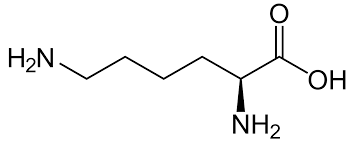 Lysine
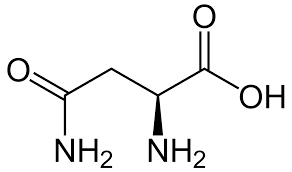 Asparagine
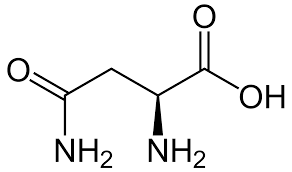 Serine
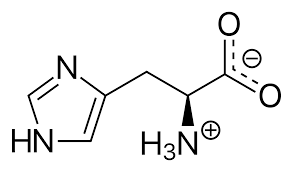 Histidine
> Asparagine is an $\alpha $- amino acid that is also used in biosynthesis of proteins. A side chain of carboxamide distributes it as a polar aliphatic amino acid. Serine contains an alcohol and is functionally important in many proteins. It is useful for metabolism of fat, fatty acid and cell membranes and a healthy immune system. Histidine is an alpha-amino acid with an imidazole functional group. So as it contains the most basic nitrogen atom, it is the most basic amino acid. Hence option D is correct.
Note: We know that amino acids are known as ‘building blocks’ of proteins. It assists in the growth of muscles, connective tissues, tissue strength and maintains healthy skin. It has healing and repair capabilities in our body. Here histidine is most basic among all the given options because it contains imidazole.
Complete step by step solution:
> There are three amino acids that have basic side chains at neutral \[pH\] . These are arginine, histidine, lysine. Their side chains contain nitrogen. Lysine is used in the biosynthesis of proteins, It contains an $\alpha - $ amino group , $\alpha - $ carboxylic acid group, and a side chain lysyl. Lysyl is a basic charged aliphatic amino acid. It has two amine groups.
Lysine Asparagine Serine Histidine> Asparagine is an $\alpha $- amino acid that is also used in biosynthesis of proteins. A side chain of carboxamide distributes it as a polar aliphatic amino acid. Serine contains an alcohol and is functionally important in many proteins. It is useful for metabolism of fat, fatty acid and cell membranes and a healthy immune system. Histidine is an alpha-amino acid with an imidazole functional group. So as it contains the most basic nitrogen atom, it is the most basic amino acid. Hence option D is correct.
Note: We know that amino acids are known as ‘building blocks’ of proteins. It assists in the growth of muscles, connective tissues, tissue strength and maintains healthy skin. It has healing and repair capabilities in our body. Here histidine is most basic among all the given options because it contains imidazole.
Recently Updated Pages
JEE Main Mock Test 2025-26: Principles Related To Practical

JEE Main 2025 Organic Compounds Containing Oxygen Mock Test
JEE Main 2025-26 Organic Compounds Containing Oxygen Mock Test
JEE Main 2025-26 Mock Test: Purification & Characterisation of Organic Compounds
JEE Main 2025-26 Mock Test: Principles Related To Practical
JEE Main Mock Test 2025-26: Free Practice & Solutions
Trending doubts
JEE Main 2026: Exam Dates, Session 2 Updates, City Slip, Admit Card & Latest News
Understanding the Electric Field of a Uniformly Charged Ring
Understanding Atomic Structure for Beginners
Derivation of Equation of Trajectory Explained for Students
Electron Gain Enthalpy and Electron Affinity Explained
How to Convert a Galvanometer into an Ammeter or Voltmeter
Other Pages
JEE Advanced Percentile vs Marks 2026: JEE Main Cutoff, AIR & IIT Admission Guide
NCERT Solutions For Class 12 Chemistry Chapter 2 Electrochemistry - 2026-27
NCERT Solutions For Class 12 Chemistry Chapter 1 Solutions - 2026-27 Free PDF Download (Sign-in Required)
NCERT Solutions For Class 12 Chemistry Chapter 3 Chemical Kinetics - 2026-27
CBSE Notes Class 12 Chemistry Chapter 1 - Solutions - 2026-27
NCERT Solutions For Class 12 Chemistry Chapter 6 Haloalkanes And Haloarenes - 2026-27 PDF Download (Login Required)