






Why World Red Cross Day Is Celebrated and Its Global Impact
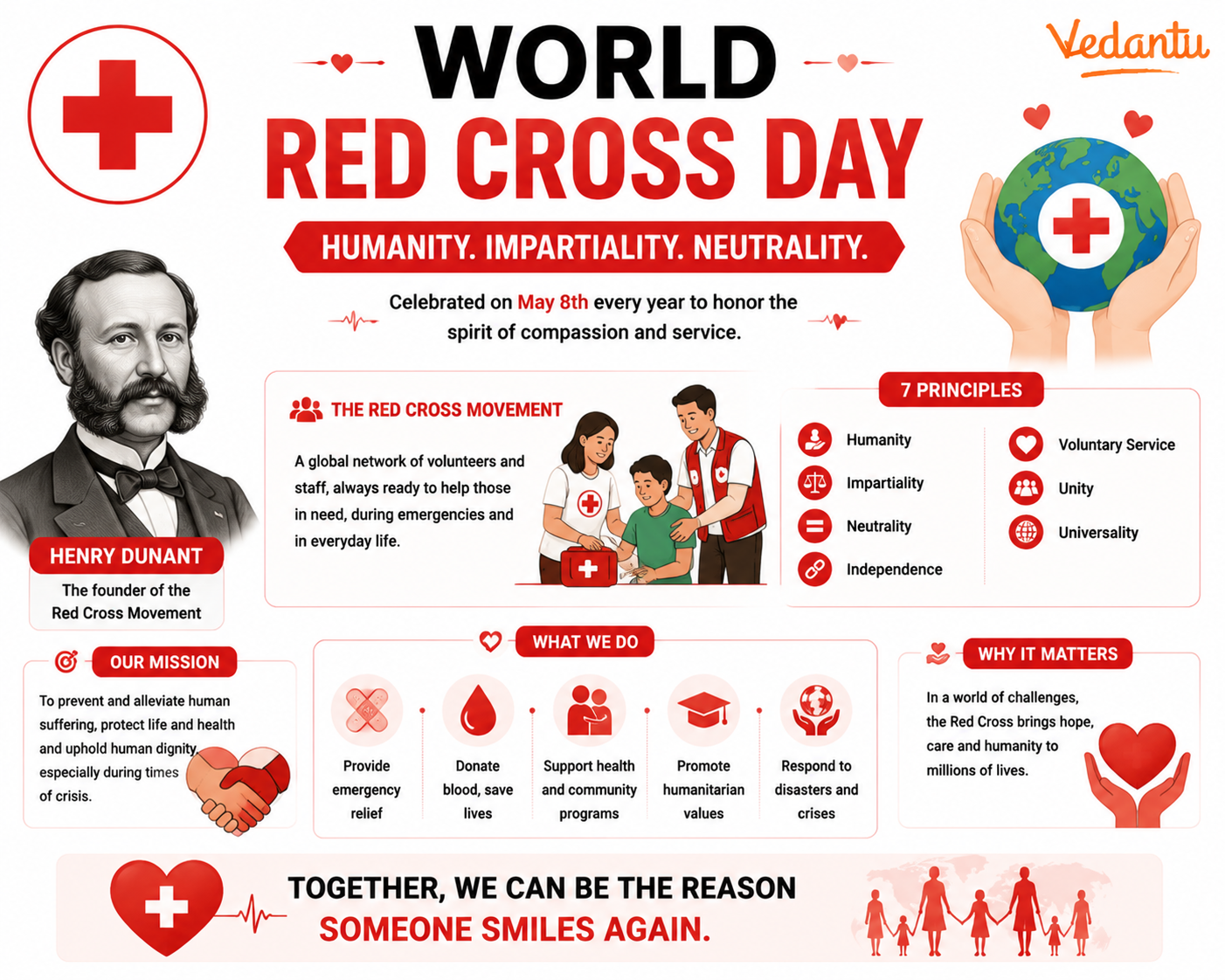
World Red Cross Day is observed every year on 8 May to honor the humanitarian efforts of the International Red Cross and Red Crescent Movement. The day marks the birth anniversary of Henry Dunant, the founder of the International Committee of the Red Cross and the first Nobel Peace Prize winner. World Red Cross Day highlights the importance of humanitarian values, voluntary service, and global solidarity in times of crisis such as wars, natural disasters, and health emergencies.
History of World Red Cross Day
The idea of celebrating World Red Cross Day originated after World War I to recognize the humanitarian work of the Red Cross societies across the world. The official celebration began in 1948. The date 8 May was chosen to commemorate the birth anniversary of Henry Dunant, born in 1828 in Switzerland. His experience during the Battle of Solferino in 1859 led to the formation of the Red Cross Movement.
Henry Dunant and the Formation
Henry Dunant witnessed the suffering of wounded soldiers without medical assistance during the Battle of Solferino. He organized local villagers to help the injured without discrimination. His efforts inspired the establishment of the International Committee of the Red Cross in 1863 and the adoption of the Geneva Conventions.
Objective of World Red Cross Day
The main objective of World Red Cross Day is to spread awareness about humanitarian principles and encourage voluntary service. It also recognizes the efforts of millions of volunteers who provide medical care, disaster relief, and emergency support worldwide.
- Promote humanitarian values and compassion
- Encourage voluntary blood donation
- Support disaster preparedness and relief activities
- Raise awareness about health and emergency response services
Principles of the Red Cross and Red Crescent Movement
The Red Cross and Red Crescent Movement operates on seven fundamental principles that guide its humanitarian mission across the globe.
Seven Fundamental Principles
| Principle | Meaning | Purpose |
|---|---|---|
| Humanity | Prevent and alleviate suffering | Protect life and dignity |
| Impartiality | No discrimination | Help based on need only |
| Neutrality | No sides in conflicts | Maintain trust of all |
Other principles include Independence, Voluntary Service, Unity, and Universality. Together, these principles ensure that the organization works effectively and ethically in all regions of the world.
Theme of World Red Cross Day
Every year, World Red Cross Day is celebrated with a specific theme that focuses on current global challenges. Themes often highlight issues such as climate change, health crises, community resilience, and the importance of volunteers. The theme helps guide awareness campaigns and outreach activities.
Significance of World Red Cross Day
World Red Cross Day plays a vital role in recognizing humanitarian services and inspiring people to contribute to society. It emphasizes global unity and compassion in times of emergencies.
- Acknowledges the dedication of Red Cross volunteers
- Encourages youth participation in social service
- Promotes peace and cooperation among nations
- Strengthens disaster response systems globally
Role of the Indian Red Cross Society
The Indian Red Cross Society was established in 1920 under an Act of Parliament. It works in areas such as disaster management, blood banking, health care, and community welfare. The President of India serves as its President, and it operates through state and district branches.
Key Activities in India
- Blood donation camps
- First aid training programs
- Disaster relief operations
- Health and sanitation awareness drives
Important Facts About World Red Cross Day
- Observed annually on 8 May
- Celebrates the birth anniversary of Henry Dunant
- International Committee of the Red Cross was founded in 1863
- The Red Cross emblem symbolizes protection and neutrality
- The Red Crescent is used in many Islamic countries
Conclusion
World Red Cross Day is a reminder of the power of humanity, compassion, and voluntary service. It honors the dedication of millions of volunteers who work tirelessly to reduce suffering and save lives. By spreading awareness and encouraging participation, this day strengthens the global humanitarian network and promotes peace and unity across nations.
FAQs on World Red Cross Day – Importance and Observance Guide
1. What is World Red Cross Day and why is it celebrated?
World Red Cross Day is observed every year on 8 May to honor the humanitarian efforts of the International Red Cross and Red Crescent Movement. It commemorates the birth anniversary of Henry Dunant, the founder of the Red Cross.
• Celebrates humanitarian service and volunteer work
• Promotes values of humanity, neutrality, and impartiality
• Raises awareness about disaster relief and emergency response
• Recognizes Red Cross volunteers worldwide
2. When is World Red Cross Day observed?
World Red Cross Day is observed annually on 8th May, the birth anniversary of Henry Dunant, who founded the Red Cross Movement.
• First celebrated in 1948
• Observed globally by Red Cross and Red Crescent societies
• Highlights humanitarian aid and global relief efforts
3. Who was Henry Dunant?
Henry Dunant was a Swiss humanitarian and the founder of the International Committee of the Red Cross (ICRC). He was the first recipient of the Nobel Peace Prize in 1901.
• Born on 8 May 1828 in Switzerland
• Inspired by the Battle of Solferino (1859)
• Advocated for care of wounded soldiers
• Promoted international humanitarian law
4. What is the main objective of the Red Cross Movement?
The main objective of the Red Cross Movement is to prevent and alleviate human suffering during emergencies without discrimination.
• Provides disaster relief and medical assistance
• Supports victims of war and natural disasters
• Promotes health, safety, and community welfare
• Upholds humanitarian principles and human dignity
5. What are the seven fundamental principles of the Red Cross?
The Red Cross follows seven fundamental principles that guide its humanitarian work worldwide.
• Humanity
• Impartiality
• Neutrality
• Independence
• Voluntary Service
• Unity
• Universality
These principles ensure fairness, equality, and global cooperation in relief operations.
6. What is the symbol of the Red Cross and what does it represent?
The symbol of the Red Cross is a red cross on a white background, representing protection and medical neutrality during conflicts.
• Inspired by the Swiss flag (colors reversed)
• Used to identify medical services in war zones
• Other symbols include the Red Crescent and Red Crystal
• Recognized under international humanitarian law
7. What activities are conducted on World Red Cross Day?
Various awareness and humanitarian activities are organized on World Red Cross Day to promote global solidarity.
• Blood donation camps
• First-aid training sessions
• Disaster preparedness programs
• Community service and volunteer recognition events
• Awareness campaigns about health and emergency response
8. What is the International Committee of the Red Cross (ICRC)?
The International Committee of the Red Cross (ICRC) is an independent humanitarian organization that protects victims of armed conflict and violence.
• Founded in 1863 in Geneva, Switzerland
• Ensures compliance with Geneva Conventions
• Provides aid to prisoners of war and civilians
• Operates in conflict zones worldwide
9. Why is World Red Cross Day important for students and competitive exams?
World Red Cross Day is important for students as it is a frequently asked topic in General Knowledge (GK) and competitive exams.
• Relevant for UPSC, SSC, Banking, and State PSC exams
• Important dates and founders are commonly asked
• Enhances awareness about global humanitarian organizations
• Promotes values of social responsibility and service
10. What is the difference between the Red Cross and Red Crescent?
The Red Cross and Red Crescent are part of the same humanitarian movement but use different emblems based on cultural contexts.
• Red Cross is widely used in Western countries
• Red Crescent is mainly used in Islamic countries
• Both follow the same seven fundamental principles
• Together form the International Red Cross and Red Crescent Movement
