






How Is Television Rating Point (TRP) Calculated and Why Is It Important?
TRP stands for Television Rating Point. It is a metric used to measure the popularity of television programs and channels. TRP indicates how many people are watching a particular show at a specific time. It plays an important role in determining advertising rates and understanding audience preferences. In simple terms, higher TRP means more viewers and greater popularity of a television program.
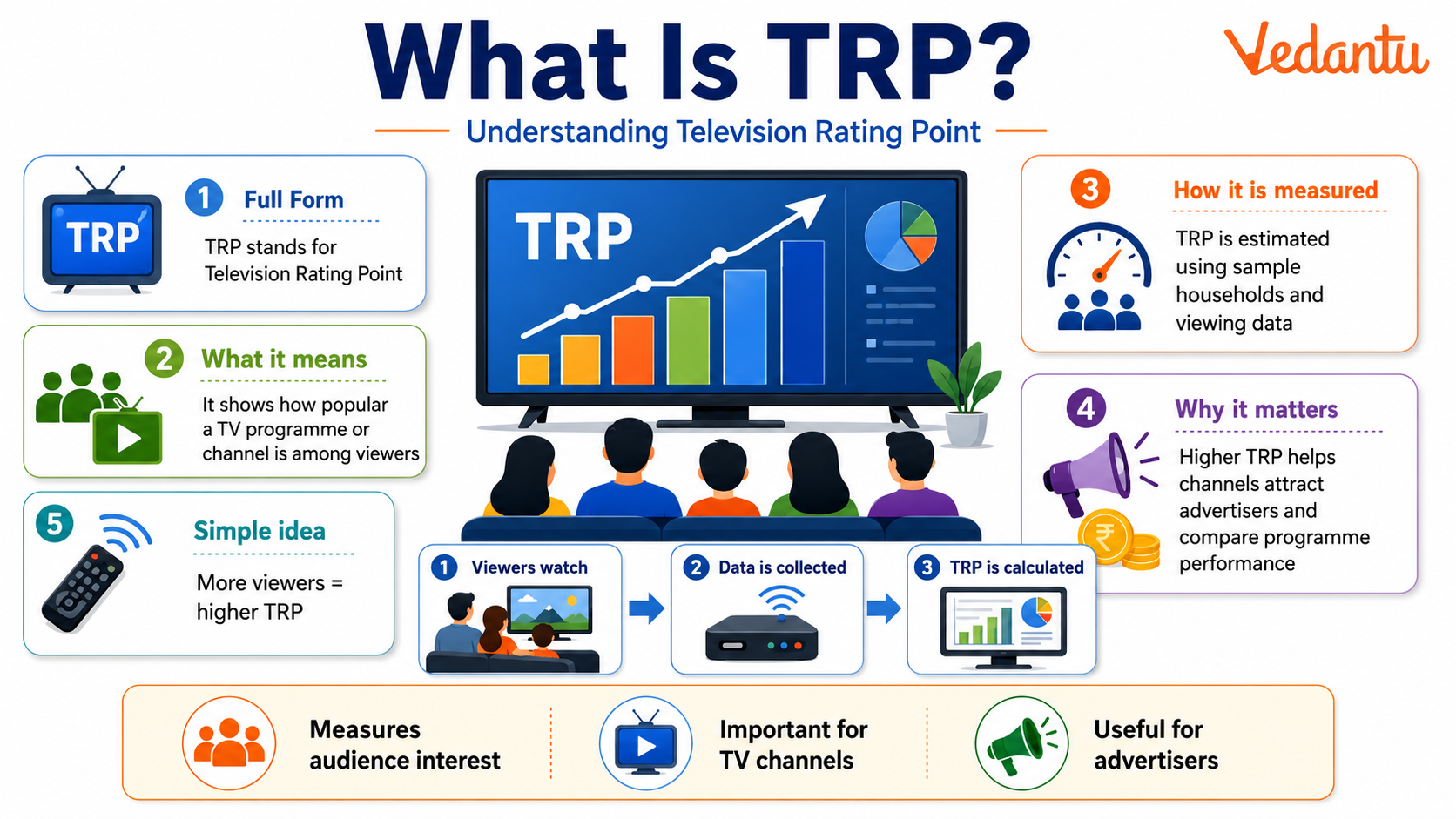
What Is TRP?
Television Rating Point or TRP is a tool used to calculate the viewership of television channels and their programs. It helps broadcasters, advertisers, and production houses understand which shows are being watched the most. TRP is expressed in numbers, and a higher number reflects a larger audience.
TRP is important because television advertising rates depend largely on these ratings. Programs with higher TRP can attract more advertisers and generate more revenue.
Full Form of TRP
- T - Television
- R - Rating
- P - Point
How TRP Is Measured
TRP is measured using special devices called People Meters. These devices are installed in selected households to record what channels or programs are being watched. The data collected is then analyzed to estimate the total viewership.
Steps Involved in Measuring TRP
- Selection of sample households across different regions.
- Installation of People Meters in these homes.
- Recording of viewing data automatically.
- Collection and analysis of data by rating agencies.
- Publication of TRP ratings for channels and programs.
Importance of TRP
- Helps advertisers decide where to place advertisements.
- Determines advertising rates for television programs.
- Assists channels in improving content based on audience preferences.
- Provides competition among television channels.
Agencies That Measure TRP
In different countries, various agencies are responsible for calculating TRP. In India, the Broadcast Audience Research Council - BARC measures television ratings. These agencies use scientific sampling techniques to ensure accurate and reliable data collection.
Key Facts About TRP
| Aspect | Details | Purpose |
|---|---|---|
| Full Form | Television Rating Point | Measures TV viewership |
| Measured By | Rating Agencies like BARC | Collect and analyze data |
| Main Tool | People Meter | Records watching patterns |
The table above summarizes the essential components of TRP including its full form, the agencies involved, and the tools used for measurement.
Advantages and Limitations of TRP
Advantages
- Provides measurable data about audience size.
- Helps improve program quality.
- Encourages healthy competition among channels.
Limitations
- Based on sample households, not the entire population.
- Possibility of manipulation or inaccurate reporting.
- Does not fully capture online streaming viewership.
Conclusion
TRP or Television Rating Point is an essential measurement system used in the television industry to evaluate the popularity of programs. It influences advertising revenue, program production, and content strategy. Although it has some limitations, TRP remains a vital indicator of audience engagement in traditional television broadcasting. Understanding TRP helps students and general readers gain insight into how the media industry functions and how viewership data impacts decision making.
FAQs on What Is TRP in Television and Media?
1. What is TRP?
TRP (Television Rating Point) is a metric used to measure the popularity and viewership of television programs. It indicates how many people are watching a particular show or channel at a given time.
Key points about TRP:
• Full form: Television Rating Point
• Measures audience size and engagement
• Helps compare the popularity of TV shows
• Used by advertisers and broadcasters for decision-making
TRP is also referred to as TV ratings, broadcast ratings, or audience measurement in media studies.
2. How is TRP calculated?
TRP is calculated using data collected from selected households equipped with special devices called People Meters. These devices record the channels and programs watched.
TRP calculation process:
• People Meters are installed in sample homes
• Viewing habits are recorded automatically
• Data is analyzed to estimate total viewership
• Ratings are released weekly or monthly
In India, agencies like BARC (Broadcast Audience Research Council) handle TRP measurement.
3. Why is TRP important?
TRP is important because it determines the popularity and commercial success of a television program. Higher TRP means more viewers and higher advertising revenue.
Importance of TRP:
• Decides advertisement rates
• Helps channels improve content
• Influences show continuation or cancellation
• Reflects audience preferences
Thus, TRP plays a crucial role in the media industry and broadcast business.
4. What does a high TRP mean?
A high TRP means that a television show or channel has a large number of viewers. It indicates strong audience engagement and popularity.
Effects of high TRP:
• Increased advertising revenue
• Better sponsorship deals
• Strong market reputation
• Competitive advantage over other shows
Programs with high TRP are often called top-rated shows or most-watched programs.
5. What is BARC and what is its role in TRP?
BARC (Broadcast Audience Research Council) is the organization responsible for measuring and publishing TRP ratings in India.
Role of BARC:
• Installs People Meters in sample households
• Collects and analyzes TV viewership data
• Releases weekly TRP reports
• Ensures transparency in audience measurement
BARC plays a key role in maintaining credibility in the Indian television industry.
6. How does TRP affect advertisers?
TRP directly affects advertisers because it determines where and when they place their advertisements. Higher TRP shows attract more advertisers.
Impact on advertisers:
• Higher TRP = Higher ad cost
• Better audience reach
• Targeted marketing opportunities
• Improved brand visibility
Advertisers prefer programs with strong TV ratings and consistent audience engagement.
7. Can TRP ratings be manipulated?
Yes, TRP ratings can sometimes be manipulated, which is known as a TRP scam or rating fraud. This happens when viewership data is intentionally influenced.
Common manipulation methods:
• Bribing households with People Meters
• Artificially increasing channel watch time
• Data tampering
Such practices harm the credibility of audience measurement systems and the broadcast industry.
8. What is the difference between TRP and GRP?
TRP (Television Rating Point) measures the viewership of a single program, while GRP (Gross Rating Point) measures the overall impact of an advertising campaign.
Key differences:
• TRP: Focuses on individual TV shows
• GRP: Focuses on total advertisement reach
• TRP measures popularity
• GRP measures marketing effectiveness
Both are important metrics in media planning and advertising strategy.
9. Is TRP used only for television?
Traditionally, TRP is used for television audience measurement, but similar rating systems exist for digital platforms.
Related rating systems:
• TV TRP for broadcast channels
• Digital view counts and analytics for OTT platforms
• Online engagement metrics for streaming services
With the growth of OTT platforms and digital media, audience measurement methods are evolving beyond traditional TRP.
10. How often are TRP ratings released?
TRP ratings are usually released weekly, though detailed reports may also be published monthly or quarterly.
Release pattern:
• Weekly TRP charts for TV shows
• Monthly summaries for performance analysis
• Special reports during major events or festivals
These regular updates help broadcasters track viewership trends and adjust their content strategy accordingly.
