






Which Are the Highest Waterfalls in India Ranked by Height?
India is home to some of the most breathtaking waterfalls in the world, many of which are located in the Western Ghats and the Himalayan regions. These waterfalls are not only natural attractions but also important geographical landmarks frequently asked about in competitive exams and General Knowledge sections. The Top 10 Highest Waterfalls in India are known for their impressive height, scenic beauty, and seasonal water flow. Understanding their location, height, and key features helps students strengthen their knowledge of Indian geography.
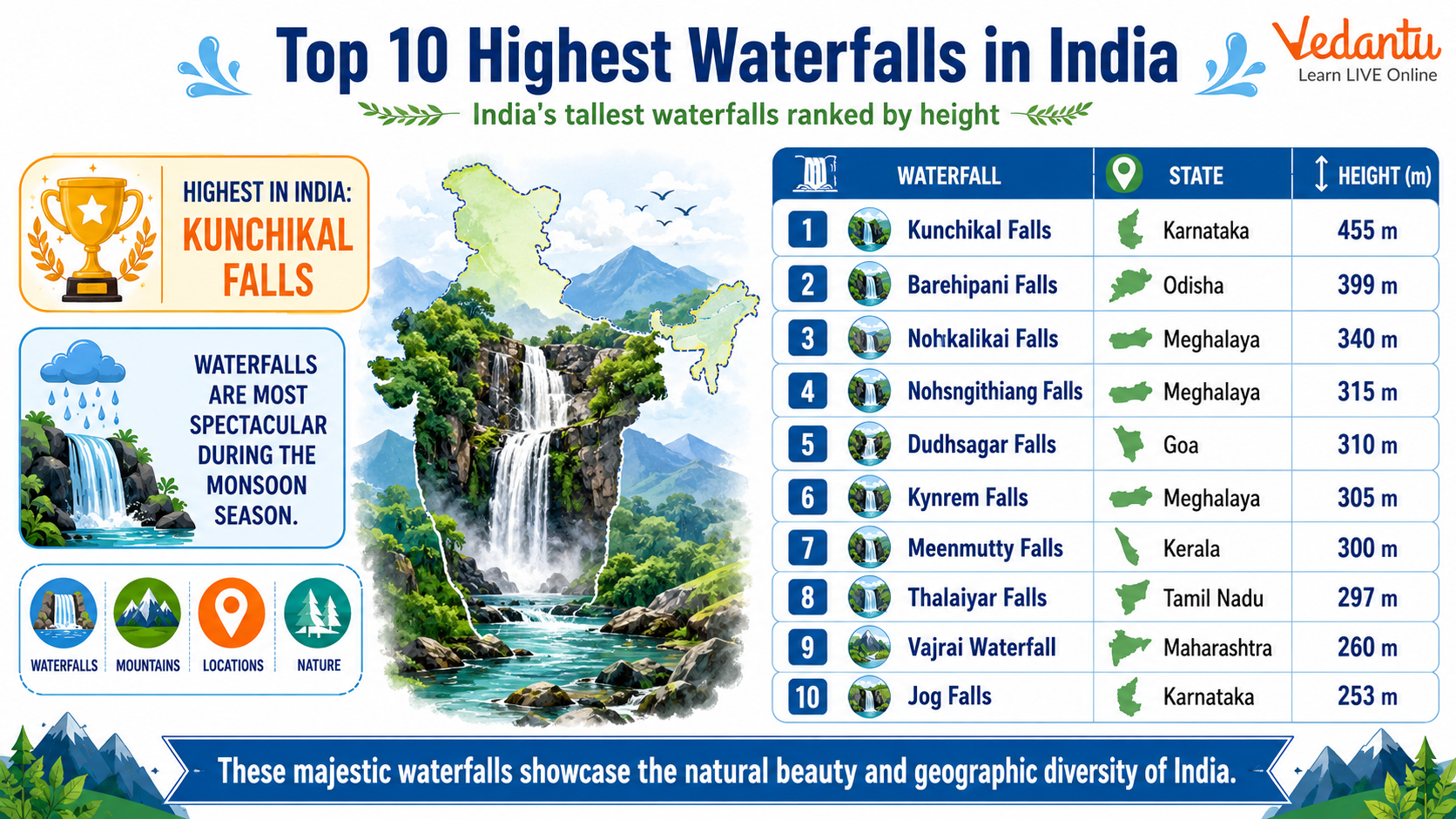
Top 10 Highest Waterfalls in India
List of Top 10 Highest Waterfalls in India
| Waterfall | Height | Location |
|---|---|---|
| Kunchikal Falls | 455 m | Karnataka |
| Barehipani Falls | 399 m | Odisha |
| Nohkalikai Falls | 340 m | Meghalaya |
| Nohsngithiang Falls | 315 m | Meghalaya |
| Dudhsagar Falls | 310 m | Goa |
| Kynrem Falls | 305 m | Meghalaya |
| Meenmutty Falls | 300 m | Kerala |
| Thalaiyar Falls | 297 m | Tamil Nadu |
| Barkana Falls | 259 m | Karnataka |
| Jog Falls | 253 m | Karnataka |
These waterfalls are measured based on their total height from the top to the bottom. Most of them are multi tiered waterfalls and are seasonal, flowing with full force during the monsoon season.
State Wise Distribution
The majority of the highest waterfalls in India are located in regions with heavy rainfall and mountainous terrain.
- Karnataka - Home to Kunchikal Falls, Barkana Falls, and Jog Falls.
- Meghalaya - Known for Nohkalikai Falls, Nohsngithiang Falls, and Kynrem Falls.
- Odisha - Barehipani Falls located in Simlipal National Park.
- Goa - Dudhsagar Falls on the Mandovi River.
- Kerala - Meenmutty Falls in Wayanad district.
- Tamil Nadu - Thalaiyar Falls in the Palani Hills.
Key Features of the Highest Waterfalls
1. Kunchikal Falls
Located in Shimoga district of Karnataka, Kunchikal Falls is the highest waterfall in India with a height of 455 meters. It is formed by the Varahi River and is largely dependent on monsoon rainfall.
2. Nohkalikai Falls
Situated near Cherrapunji in Meghalaya, it is the tallest plunge waterfall in India. It drops from a height of 340 meters and is famous for its turquoise pool at the base.
3. Dudhsagar Falls
Dudhsagar Falls on the Mandovi River forms a spectacular four tiered waterfall. The name means sea of milk because the falling water appears milky white during peak flow.
4. Jog Falls
Jog Falls on the Sharavathi River is one of the most famous waterfalls in India. It is divided into four distinct segments known as Raja, Rani, Roarer, and Rocket.
Geographical Importance
Most of the highest waterfalls in India are found in the Western Ghats and the Meghalaya Plateau. These regions receive heavy rainfall due to the southwest monsoon, which contributes to the formation of perennial and seasonal waterfalls. The steep slopes and rocky cliffs help create vertical drops, resulting in high waterfalls.
Best Time to Visit
The ideal time to witness these waterfalls in full flow is during and just after the monsoon season, typically from July to October. During summer, the water flow may reduce significantly, especially in seasonal waterfalls.
Importance for Competitive Exams
Questions related to the highest waterfalls in India are commonly asked in:
- SSC and Railway examinations
- State PSC exams
- UPSC prelims and other civil services exams
- School level GK tests and quizzes
Quick Revision Points
- Kunchikal Falls in Karnataka is the highest waterfall in India at 455 meters.
- Meghalaya has three waterfalls among the top 10 highest.
- Dudhsagar Falls is located on the Goa Karnataka border.
- Most high waterfalls are located in high rainfall and mountainous regions.
Conclusion
The Top 10 Highest Waterfalls in India showcase the country’s diverse geographical features and natural beauty. From the Western Ghats to the hills of Meghalaya, these waterfalls highlight the impact of rainfall, river systems, and terrain on landforms. For students and competitive exam aspirants, remembering their heights, locations, and key characteristics is essential for scoring well in General Knowledge and Geography sections.
FAQs on Top 10 Tallest Waterfalls in India with Heights and Locations
1. What are the top 10 highest waterfalls in India?
The top 10 highest waterfalls in India are ranked based on their total height and scenic significance.
- Kunchikal Falls – 455 m (Karnataka)
- Barehipani Falls – 399 m (Odisha)
- Nohkalikai Falls – 340 m (Meghalaya)
- Nohsngithiang Falls – 315 m (Meghalaya)
- Dudhsagar Falls – 310 m (Goa)
- Kynrem Falls – 305 m (Meghalaya)
- Meenmutty Falls – 300 m (Kerala)
- Thalaiyar Falls – 297 m (Tamil Nadu)
- Barkana Falls – 259 m (Karnataka)
- Jog Falls – 253 m (Karnataka)
These waterfalls are important for GK exams, tourism awareness, and geography studies.
2. Which is the highest waterfall in India?
Kunchikal Falls is the highest waterfall in India with a height of 455 meters.
- Located in Karnataka
- Formed by the Varahi River
- Situated in the Western Ghats
It is a key topic in Indian geography GK questions and competitive exams like SSC, UPSC, and state PSC.
3. In which state is Nohkalikai Falls located?
Nohkalikai Falls is located in the state of Meghalaya.
- Height: 340 meters
- Near Cherrapunji (Sohra)
- One of the tallest plunge waterfalls in India
It is famous for its scenic beauty and is frequently asked in People Also Ask (PAA) queries related to Indian waterfalls.
4. Which Indian state has the most highest waterfalls?
Meghalaya has the highest concentration of tall waterfalls in India.
- Nohkalikai Falls
- Nohsngithiang Falls
- Kynrem Falls
Due to heavy rainfall and hilly terrain, Meghalaya is known as the "Abode of Clouds" and is a hotspot for waterfall tourism and geography GK.
5. What is the height of Dudhsagar Falls?
Dudhsagar Falls has a height of approximately 310 meters.
- Located on the Goa–Karnataka border
- Formed by the Mandovi River
- One of India’s tallest four-tiered waterfalls
It is a popular tourist destination and a common question in Indian GK and state-wise waterfall lists.
6. Where is Jog Falls located?
Jog Falls is located in Karnataka on the Sharavathi River.
- Height: 253 meters
- Also known as Gersoppa Falls
- One of the highest plunge waterfalls in India
Jog Falls is frequently mentioned in People Also Search For queries related to famous waterfalls in South India.
7. Which waterfall is known as the highest plunge waterfall in India?
Nohkalikai Falls is considered the highest plunge waterfall in India.
- Height: 340 meters
- Located in Meghalaya
- Water falls vertically without touching the rocks
A plunge waterfall means water drops directly downward, making it a key term in physical geography and GK exams.
8. What is the second highest waterfall in India?
Barehipani Falls is the second highest waterfall in India with a height of 399 meters.
- Located in Odisha
- Situated in Simlipal National Park
- A two-tiered waterfall
It is an important topic in state-wise GK questions and Indian natural landmarks.
9. Which waterfall is located in Tamil Nadu among the top 10 highest in India?
Thalaiyar Falls is the tallest waterfall in Tamil Nadu among the top 10 highest in India.
- Height: 297 meters
- Also called Rat Tail Falls
- Located in the Dindigul district
It is significant for South India geography and frequently appears in competitive exam GK.
10. Why are the highest waterfalls in India important for GK and competitive exams?
The highest waterfalls in India are important for GK because they are frequently asked in competitive exams and quizzes.
- Questions on state location and height
- Topics in Indian physical geography
- Included in exams like UPSC, SSC, Railways, and State PSC
Understanding these waterfalls helps students prepare for People Also Ask (PAA) queries and improve their general awareness of India’s natural features.
