



When Is Onam 2026? Thiruvonam Date and Festival Days
Onam is the major harvest festival of Kerala and one of India’s most widely recognised cultural celebrations. For readers searching for onam 2026, the main festival day is generally observed on Thiruvonam, which falls in the Malayalam month of Chingam, and the wider celebration extends across several days with rituals, food, dance, and community gatherings.
This festival matters because it brings together ideas of gratitude, prosperity, homecoming, and shared cultural identity. Onam is most strongly associated with Kerala, but it is also celebrated by Malayali communities across India and around the world through pookalam, Onasadya, boat races, traditional dress, and festive visits with family and friends.
Onam 2026 Date
In 2026, the most searched detail is the Onam festival 2026 date. The central day of the festival is Thiruvonam, which is the principal day of observance during the multi-day Onam period. Since Onam follows the Malayalam calendar and the Thiruvonam star in Chingam, the exact civil-calendar dates are best read as part of a festival sequence rather than as a one-day event alone.
| Festival detail | What it means | 2026 note |
|---|---|---|
| Onam | Kerala’s major harvest and cultural festival | Observed in the month of Chingam |
| Thiruvonam | Main and most significant day of Onam | Principal day people usually refer to as the Onam date |
| Festival span | Multi-day observance with pre- and post-festival customs | Celebrations continue beyond a single date |
What Is Onam?
Onam is a harvest festival of Kerala celebrated as a time of abundance, cultural pride, and social togetherness. In popular custom and traditional belief, it is also linked to the annual homecoming of King Mahabali, whose memory remains central to the spirit of the festival.
The celebration combines seasonal meaning with community life. Homes, schools, temples, and public spaces may be decorated, while families gather for festive meals and cultural events that reflect Kerala’s heritage.
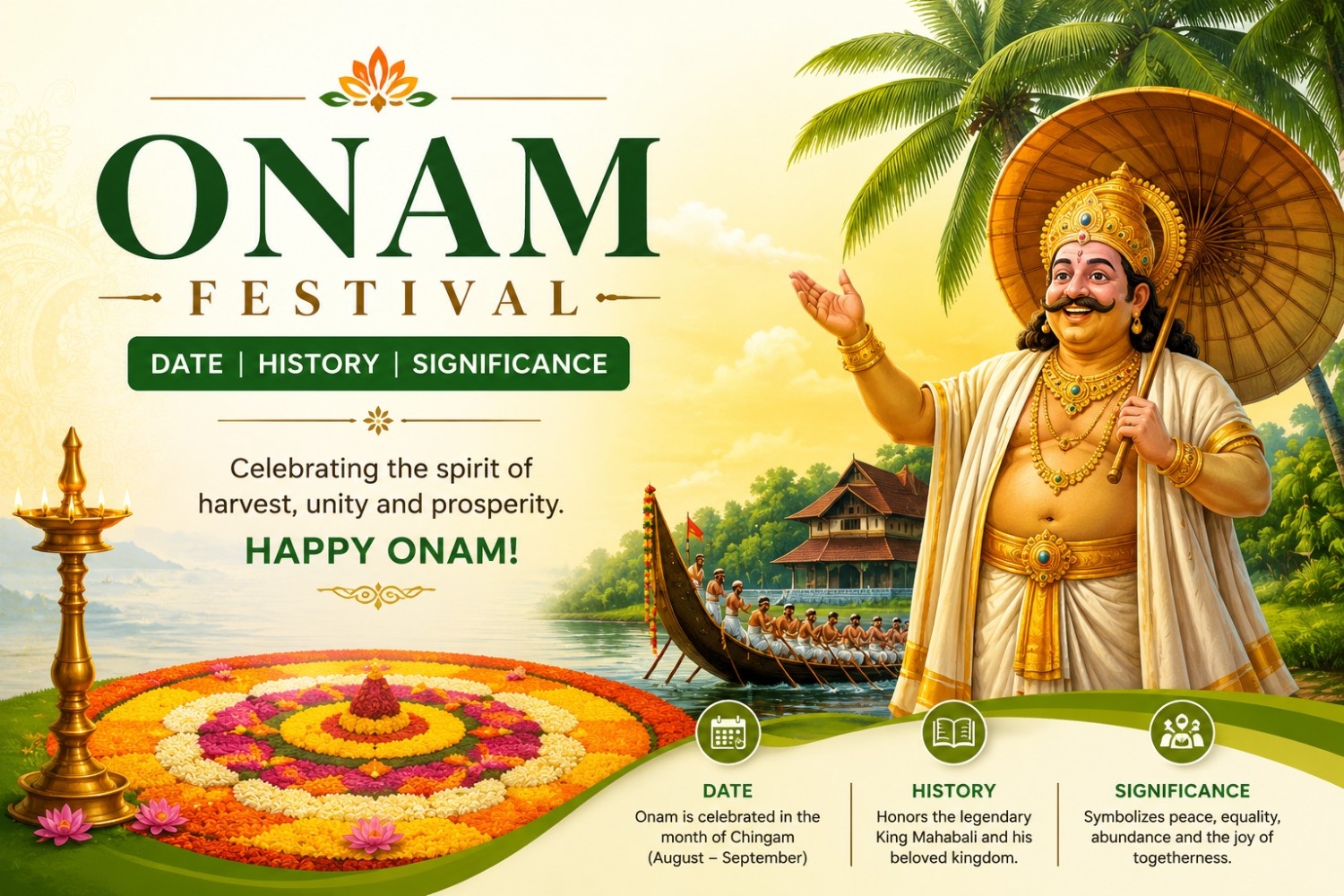
Onam Festival History
The Onam festival history is understood through both agrarian tradition and sacred narrative. As a seasonal celebration, Onam is linked to the harvest cycle and the importance of gratitude for prosperity. As a cultural and religious tradition, it is closely associated with the legend of Mahabali and Lord Vamana.
According to traditional belief, Mahabali was a generous and beloved king whose reign symbolised fairness and well-being. The story further connects Onam with Lord Vamana, an avatar of Vishnu, and explains why Mahabali is believed to visit his people once a year. This narrative is best described as a traditional religious and cultural story, not as documented political history.
Traditional Narrative in Brief
The story commonly associated with Onam includes these key ideas.
- Mahabali is remembered as an ideal ruler in Kerala’s cultural memory.
- Lord Vamana appears in the traditional narrative connected with Mahabali.
- Onam symbolises Mahabali’s annual return to see his people.
- The festival therefore expresses welcome, joy, and remembrance.
Significance of Onam
The significance of Onam lies in its layered meaning. It is a harvest celebration, a marker of Kerala’s cultural identity, and a festival of family reunion and community participation. It also reflects the values of equality, hospitality, abundance, and gratitude.
Its importance can be understood in several ways.
- Seasonal meaning: It marks the harvest season and appreciation for prosperity.
- Cultural meaning: It showcases Kerala’s language, food, dress, music, and performing traditions.
- Social meaning: It brings families, neighbours, and communities together.
- Emotional meaning: It is associated with homecoming, belonging, and shared memory.
- Educational meaning: It helps students learn about regional heritage and Indian diversity.
Why Is Onam Celebrated?
A simple answer to why is Onam celebrated is that it honours both the harvest season and the traditional belief that King Mahabali visits his people during this time. This is why the festival blends thanksgiving, festive hospitality, and remembrance of a much-loved ruler in Kerala’s cultural tradition.
Onam Festival in Kerala
The Onam festival in Kerala is known for its rich visual and culinary traditions. Celebrations may take place in homes, schools, temples, local communities, and public venues, with some customs being widely shared and others varying by locality.
Common customs associated with Onam include the following.
- Pookalam: Floral carpets made at entrances and courtyards as a festive decoration.
- Onasadya: A traditional festive meal served on a banana leaf.
- Vallam Kali: Snake boat races that are strongly associated with Kerala’s festive season.
- Folk dances: Community dance forms such as Kaikottikali are part of cultural celebrations.
- Temple visits: Many families include worship and visits to places of devotion.
- Onakkodi: Wearing new clothes as part of festive custom.
- Community gatherings: Shared meals, performances, and reunions that reflect social harmony.
Main Days of the Onam Celebration
Onam is not limited to one day. The celebration is usually understood as a sequence that begins with Atham, builds through the following days, reaches its high point on Thiruvonam, and continues with post-Onam observances in some places.
| Day or phase | Role in the festival |
|---|---|
| Atham | Marks the beginning of the Onam period |
| Days leading to Thiruvonam | Preparations grow through decorations, shopping, gatherings, and festive customs |
| Thiruvonam | Main day and emotional centre of the festival |
| Post-Onam days | Observed in some settings as the festive mood continues |
Symbols and Traditions Associated with Onam
Several cultural symbols help explain the festival’s meaning.
- Mahabali: Symbol of just rule, generosity, and remembered prosperity in tradition.
- Pookalam: A sign of welcome, beauty, and festive preparation.
- Onasadya: Represents abundance and collective celebration.
- Onakkodi: Reflects the custom of wearing new clothes during the festival.
- Kaikottikali and Vallam Kali: Show the artistic and public festive spirit of Kerala.
Onam Food, Greetings, and Cultural Expression
Food is one of the most recognisable parts of Onam. The Onasadya is a traditional feast served on a banana leaf and remembered as a central family and community experience during the festival. Along with food, songs, dance, dress, and hospitality shape the emotional character of the celebration.
Simple festive wishes often used for educational or cultural settings include these.
- Happy Onam to you and your family.
- Wishing you peace, prosperity, and joy this Onam.
- Hindi: Onam ki hardik shubhkamnayein.
- Malayalam: Onashamsakal.
- Tamil: Iniya Onam Nalvazhthukkal.
- Kannada: Onam habbada shubhashayagalu.
Student-Friendly Ways to Learn About Onam
Students can explore the festival through safe, low-cost, and educational activities.
- Create a small paper or flower-based pookalam design as an art activity.
- Write a short note on the story of King Mahabali and label it as a traditional narrative.
- Prepare a classroom chart on festivals of Kerala.
- Discuss the harvest meaning of Onam and compare it with other Indian harvest festivals.
- Learn a few Onam greetings in different Indian languages.
- Make a simple poster on Onasadya, pookalam, and Vallam Kali.
- Read more cultural festival articles on the Vedantu blog and compare them with Baisakhi, Vishu, and Tamil New Year.
Conclusion: Onam remains one of the most meaningful cultural festivals of Kerala because it joins harvest gratitude, shared celebration, and the traditional memory of King Mahabali. For anyone looking up onam 2026, the most important point is that Thiruvonam is the main day, while the full festival is experienced across several days of customs and community life. Its enduring appeal lies in its message of prosperity, unity, welcome, and cultural continuity.
FAQs on Onam 2026: Kerala’s Harvest Festival and Traditions
1. When is Onam in 2026?
Thiruvonam, the main day of Onam 2026, falls on Wednesday, 26 August 2026. The traditional ten-day celebration begins with Atham and concludes its principal observances on Thiruvonam. As festival dates follow the Malayalam calendar, local observance timings may vary.
2. What is Onam?
Onam is Kerala’s major harvest and cultural festival, celebrated during the Malayalam month of Chingam. It represents prosperity, gratitude, unity and the traditional homecoming of King Mahabali. Pookalam, Onasadya, traditional dances, new clothes and community gatherings are important parts of the festival.
3. Why is Onam celebrated?
Onam is celebrated to welcome King Mahabali and express gratitude for the harvest season. According to traditional belief, Mahabali returns once every year to visit his people. The festival therefore symbolises homecoming, prosperity, equality, generosity and shared happiness.
4. Who was King Mahabali in the story of Onam?
King Mahabali was a generous and widely loved ruler in the traditional story associated with Onam. His reign is remembered as a period of equality, justice and prosperity. The narrative connects him with Lord Vamana, an avatar of Vishnu, and states that Mahabali was granted permission to visit his people once every year.
5. How many days is Onam celebrated?
Onam is traditionally celebrated over ten days, beginning with Atham and reaching its high point on Thiruvonam.
- Atham: Marks the beginning of the festival period.
- Uthradam: The day before Thiruvonam, associated with final preparations.
- Thiruvonam: The principal and most important day.
- Avittam and Chathayam: Post-Onam observances continue in some communities.
6. What are the main traditions of Onam?
The main Onam traditions celebrate Kerala’s food, art, faith and community life.
- Pookalam: Creating decorative floral carpets.
- Onasadya: Sharing a traditional feast served on a banana leaf.
- Onakkodi: Wearing or gifting new clothes.
- Vallam Kali: Holding traditional snake boat races.
- Kaikottikali: Performing a traditional group dance.
- Family gatherings: Visiting relatives and exchanging Onam greetings.
7. What is a pookalam during Onam?
A pookalam is a decorative floral design created during Onam. It is usually arranged on the floor near the entrance of a home using colourful flower petals. Families may add new patterns and flowers throughout the festival, making the pookalam a symbol of welcome, happiness and festive preparation.
8. What is Onasadya?
Onasadya is the traditional vegetarian feast served during Onam, especially on Thiruvonam. It is generally served on a banana leaf and may include rice, sambar, avial, olan, thoran, pickles, pappadam and payasam. The meal represents abundance, hospitality and community celebration, although the dishes may vary among families and regions.
9. What is Vallam Kali and how is it connected with Onam?
Vallam Kali is Kerala’s traditional boat-racing event associated with the Onam season. Teams of rowers race long boats, including the famous chundan vallams or snake boats, while maintaining a coordinated rhythm. These races reflect teamwork, local heritage and the public festive spirit of Kerala.
10. Is Onam celebrated only in Kerala?
Onam is most closely associated with Kerala, but it is not celebrated only within the state. Malayali communities across India and around the world observe the festival through pookalam, Onasadya, traditional dress, cultural performances and family gatherings. Its themes of gratitude, unity and prosperity give the festival broad cultural appeal.



