






Major Temples Built in the Chola Period with History and Key Facts
The temples built during the Chola period represent one of the finest achievements of Indian temple architecture. The Chola dynasty, which ruled South India from the 9th to the 13th century CE, is especially known for constructing magnificent stone temples dedicated primarily to Lord Shiva. These temples are famous for their towering vimanas, intricate sculptures, bronze idols, and advanced architectural planning. The Chola temples not only served as religious centers but also functioned as hubs of culture, art, administration, and education. Many of these temples are now UNESCO World Heritage Sites and remain important pilgrimage destinations.
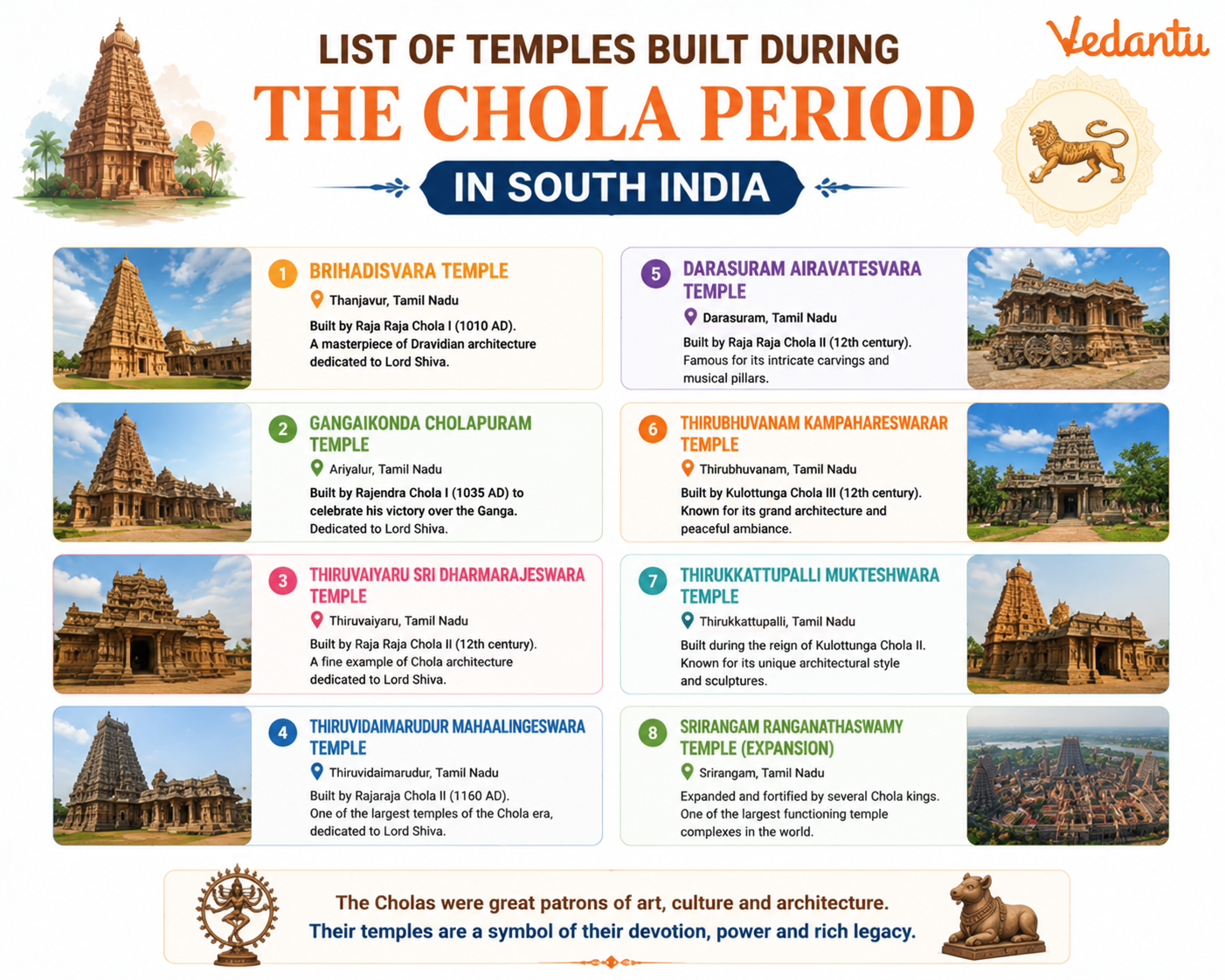
Overview of Chola Temple Architecture
Chola temples were built in the Dravidian style of architecture. Unlike earlier brick structures, the Cholas constructed massive temples using granite, which symbolized strength and permanence. The temples were usually dedicated to Shiva, although some were built for Vishnu and other deities.
Key Architectural Features
- Tall pyramidal vimana built above the sanctum.
- Spacious mandapas or pillared halls for devotees.
- Intricate stone carvings and detailed sculptures.
- Large temple complexes with surrounding walls and gateways.
- Bronze idols created using the lost wax technique.
Major Temples Built During the Chola Period
| Temple Name | Location | Built By |
|---|---|---|
| Brihadeeswara Temple | Thanjavur, Tamil Nadu | Rajaraja Chola I |
| Gangaikonda Cholapuram Temple | Gangaikonda Cholapuram, Tamil Nadu | Rajendra Chola I |
| Airavatesvara Temple | Darasuram, Tamil Nadu | Rajaraja Chola II |
| Kampaheswarar Temple | Thirubuvanam, Tamil Nadu | Kulottunga Chola III |
| Nageswaraswamy Temple | Kumbakonam, Tamil Nadu | Aditya Chola I |
The Brihadeeswara Temple, Gangaikonda Cholapuram Temple, and Airavatesvara Temple are collectively known as the Great Living Chola Temples and are recognized as UNESCO World Heritage Sites. These temples demonstrate the peak of Chola architectural and artistic excellence.
Important Temples in Detail
1. Brihadeeswara Temple
Built in 1010 CE by Rajaraja Chola I, the Brihadeeswara Temple in Thanjavur is one of the largest temples in India. The temple is dedicated to Lord Shiva and features a massive vimana that rises over 60 meters. The temple complex includes beautiful frescoes, inscriptions, and a giant Nandi statue carved from a single stone.
2. Gangaikonda Cholapuram Temple
Constructed by Rajendra Chola I to commemorate his victory over the Ganga region, this temple reflects architectural similarities to the Brihadeeswara Temple but with more refined sculptures. It symbolizes the expansion of the Chola Empire.
3. Airavatesvara Temple
Built by Rajaraja Chola II in the 12th century CE, the Airavatesvara Temple is known for its detailed carvings and musical steps that produce different sounds when tapped. It is dedicated to Lord Shiva and showcases artistic innovation.
Cultural and Historical Significance
The temples built during the Chola period were not just places of worship. They played a vital role in society and governance.
- Temples acted as centers of education and learning.
- They supported classical dance forms such as Bharatanatyam.
- Temples managed land grants and economic activities.
- Inscriptions on temple walls provide valuable historical records.
Why Chola Temples Are Important for General Knowledge
The temples of the Chola period are frequently asked in competitive exams and school level examinations. Questions may relate to their builders, architectural style, UNESCO status, and historical importance. Understanding these temples helps students connect art, culture, and political history of medieval India.
Preparation Tips for Students
- Remember the names of major temples and their builders.
- Focus on architectural features of Dravidian style.
- Revise UNESCO World Heritage temples separately.
- Understand the cultural and administrative role of temples.
Conclusion
The list of temples built during the Chola period reflects the dynasty's devotion, architectural brilliance, and cultural richness. From the majestic Brihadeeswara Temple to the elegant Airavatesvara Temple, these structures stand as timeless symbols of South Indian heritage. Their historical, artistic, and religious importance makes them an essential topic for general knowledge and competitive examinations.
FAQs on List of Temples Built During the Chola Period in South India
1. What are the most famous temples built during the Chola Period?
The most famous temples built during the Chola Period are architectural masterpieces of Dravidian temple architecture in South India. Key examples include:
• Brihadeeswarar Temple, Thanjavur (built by Rajaraja Chola I, 1010 CE)
• Gangaikonda Cholapuram Temple (built by Rajendra Chola I)
• Airavatesvara Temple, Darasuram (built by Rajaraja Chola II)
These temples are also known as the Great Living Chola Temples and are UNESCO World Heritage Sites.
2. Who built the Brihadeeswarar Temple?
The Brihadeeswarar Temple was built by Rajaraja Chola I in 1010 CE. Key highlights include:
• Located in Thanjavur, Tamil Nadu
• Dedicated to Lord Shiva
• Famous for its massive vimana (tower) over 60 meters high
• A prime example of Chola architecture and temple engineering
It reflects the political power and artistic excellence of the Chola dynasty.
3. What is the Great Living Chola Temples group?
The Great Living Chola Temples are a UNESCO-listed group of temples built during the Chola Empire. They include:
• Brihadeeswarar Temple, Thanjavur
• Gangaikonda Cholapuram Temple
• Airavatesvara Temple, Darasuram
These temples represent the peak of Dravidian architecture, intricate sculptures, bronze casting, and Shaivite traditions in medieval South India.
4. Which temple was built by Rajendra Chola I?
The Gangaikonda Cholapuram Temple was built by Rajendra Chola I to commemorate his victory over northern India. Important features include:
• Dedicated to Lord Shiva
• Located in Tamil Nadu
• Known for its massive Shiva Lingam
• Fine carvings and grand architectural layout
It symbolizes the military achievements and imperial expansion of the Chola dynasty.
5. What are the main features of Chola temple architecture?
The main features of Chola temple architecture reflect the maturity of Dravidian style temples. Key characteristics include:
• Tall vimana (temple tower)
• Spacious mandapas (pillared halls)
• Intricate stone carvings and sculptures
• Bronze idols like the famous Nataraja
• Massive temple complexes with gateways (gopurams)
These features highlight the artistic brilliance of the medieval South Indian temple tradition.
6. Which temple was built by Rajaraja Chola II?
The Airavatesvara Temple at Darasuram was built by Rajaraja Chola II in the 12th century. Notable aspects include:
• Dedicated to Lord Shiva
• Known for its detailed stone carvings
• Features a chariot-shaped mandapa
• Part of the Great Living Chola Temples
This temple showcases the later phase of Chola architectural excellence.
7. Why were temples important during the Chola Period?
Temples during the Chola Period were not just religious centers but also social and economic hubs. Their importance included:
• Centers of Shaivism and Vaishnavism
• Promotion of art, dance, and music (e.g., Bharatanatyam)
• Land grants and revenue administration
• Storage of wealth and inscriptions
Thus, Chola temples played a key role in governance, culture, and religion in medieval India.
8. Which Chola temple is dedicated to Lord Shiva?
Most major Chola temples were dedicated to Lord Shiva. Important examples include:
• Brihadeeswarar Temple
• Gangaikonda Cholapuram Temple
• Airavatesvara Temple
These temples reflect the dominance of Shaivism under the Chola rulers and their devotion to Shiva worship.
9. Where are the Chola temples located?
The majority of Chola temples are located in present-day Tamil Nadu, South India. Major temple towns include:
• Thanjavur
• Gangaikonda Cholapuram
• Darasuram
• Chidambaram
These regions were part of the powerful Chola Empire between the 9th and 13th centuries CE.
10. What makes Chola temples unique in Indian history?
Chola temples are unique due to their monumental scale, engineering precision, and artistic excellence in Indian temple architecture. Their uniqueness lies in:
• Massive granite construction
• Advanced architectural planning
• Detailed inscriptions about administration
• World-famous Chola bronze sculptures
They represent the golden age of the Chola dynasty and remain key landmarks in medieval Indian history and art.
