






How Many National Parks Are There in India State-Wise?
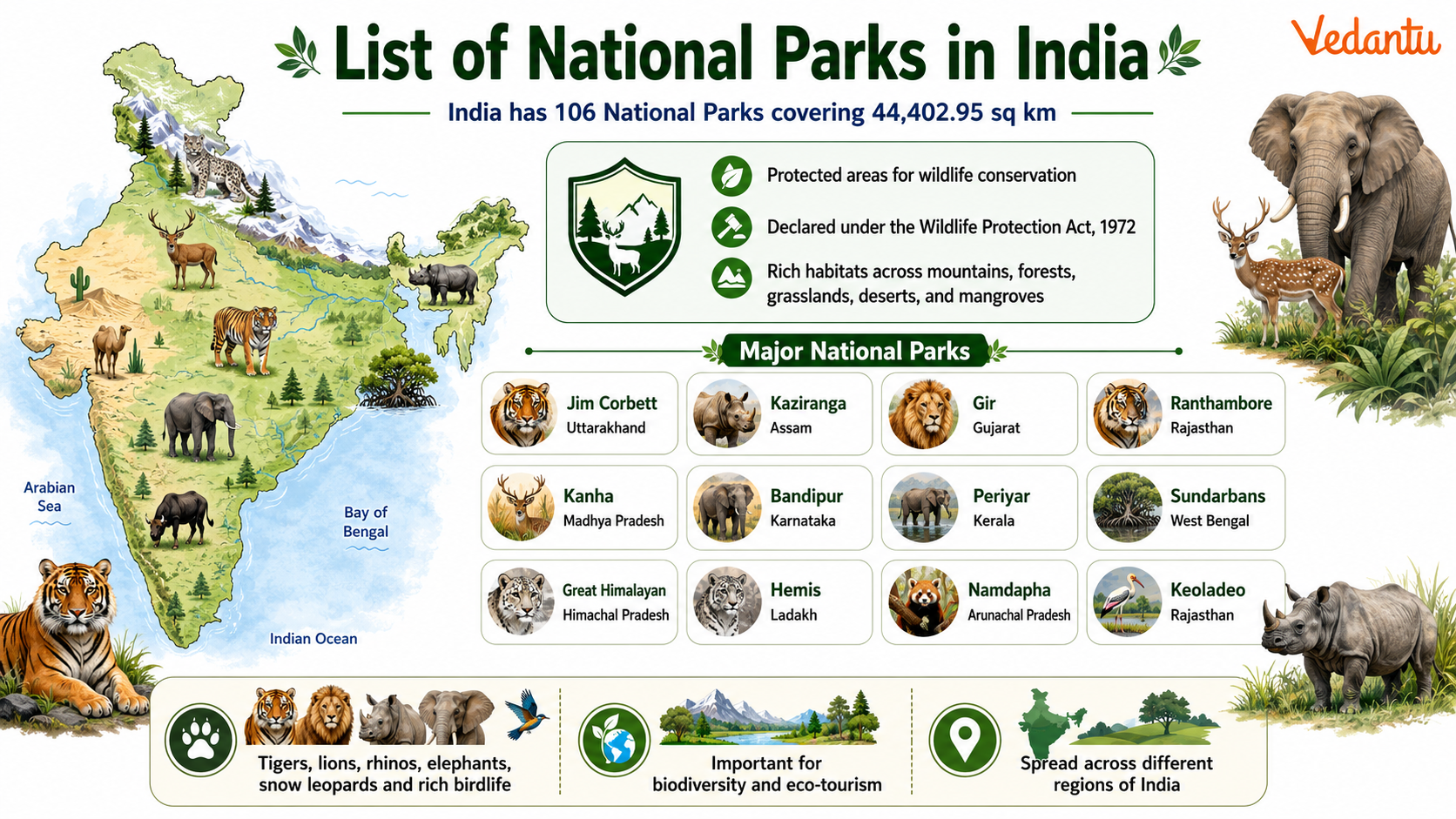
National Parks in India are protected areas established by the government to conserve wildlife, biodiversity, and natural habitats. These parks play a vital role in preserving endangered species, maintaining ecological balance, and promoting eco-tourism. India, being one of the world’s 17 mega-diverse countries, has a rich variety of flora and fauna spread across its national parks. The topic "List of National Parks in India" is important for students, competitive exam aspirants, and general knowledge learners as it is frequently asked in exams like UPSC, SSC, State PSC, Railways, and other government examinations.
What is a National Park?
A National Park is a protected area declared by the Government of India under the Wildlife Protection Act, 1972. In these areas, wildlife and natural resources are strictly conserved. Human activities such as grazing, hunting, and private land ownership are not permitted.
Key Features of National Parks
- Declared by State Governments under the Wildlife Protection Act, 1972
- Strict protection of flora, fauna, and landscapes
- No human activities like grazing or cultivation allowed
- Promote conservation, research, and eco-tourism
Total Number of National Parks in India
As of recent data, India has more than 100 National Parks spread across different states and union territories. These parks cover approximately 5 percent of the total geographical area of the country. Madhya Pradesh has the highest number of national parks in India.
List of Major National Parks in India
| National Park | State | Famous For |
|---|---|---|
| Jim Corbett National Park | Uttarakhand | Bengal Tiger |
| Kaziranga National Park | Assam | One Horned Rhinoceros |
| Ranthambore National Park | Rajasthan | Tiger Reserve |
| Gir National Park | Gujarat | Asiatic Lion |
| Sundarbans National Park | West Bengal | Mangrove Forest and Royal Bengal Tiger |
| Kanha National Park | Madhya Pradesh | Barasingha |
| Bandipur National Park | Karnataka | Elephants and Tigers |
| Periyar National Park | Kerala | Elephants and Scenic Lake |
The above table highlights some of the most important national parks frequently asked in competitive examinations. Each park is known for protecting specific endangered species and unique ecosystems.
State Wise Importance
Different states in India are known for their unique wildlife heritage. Understanding state wise distribution helps in better exam preparation.
- Madhya Pradesh - Known as the Tiger State of India
- Assam - Famous for Kaziranga and Manas National Parks
- Rajasthan - Known for Ranthambore and Desert National Park
- Gujarat - Only home of Asiatic Lions in Gir
- Uttarakhand - First national park of India, Jim Corbett
First and Largest National Parks in India
First National Park in India
Jim Corbett National Park, established in 1936 as Hailey National Park, is the first national park in India. It is located in Uttarakhand and is a major tiger reserve under Project Tiger.
Largest National Park in India
Hemis National Park in Ladakh is the largest national park in India in terms of area. It is known for the rare Snow Leopard and high-altitude wildlife.
Why National Parks Are Important
National Parks are essential for maintaining ecological balance and protecting endangered species. They also support scientific research, environmental education, and sustainable tourism.
- Conservation of endangered species
- Protection of natural habitats
- Promotion of eco-tourism and local employment
- Environmental awareness and research opportunities
Preparation Tips for Competitive Exams
Questions related to National Parks in India are commonly asked in static GK and environment sections. Students should focus on location, famous species, and special facts.
- Memorize important parks and their states
- Learn which species each park is famous for
- Remember the first, largest, and smallest national parks
- Revise through maps for better geographical understanding
Conclusion
The List of National Parks in India is an important topic in General Knowledge and environmental studies. These parks not only preserve India’s rich biodiversity but also reflect the country’s commitment to wildlife conservation. For students and competitive exam aspirants, having a clear understanding of major national parks, their locations, and their unique features is essential for scoring well in examinations and building strong environmental awareness.
FAQs on List of India's National Parks with Key Details
1. How many national parks are there in India in 2026?
India has 106 national parks as of 2026, covering diverse ecosystems and wildlife habitats across the country. These parks are protected under the Wildlife Protection Act, 1972.
• Spread across 28 states and union territories
• Cover approximately 44,000+ sq km area
• Conserve endangered species like Bengal Tiger, Asiatic Lion, and One-horned Rhinoceros
• Important for biodiversity conservation and eco-tourism in India
2. Which is the largest national park in India?
Hemis National Park in Ladakh is the largest national park in India. It covers an area of about 4,400 sq km in the eastern Ladakh region.
• Located in Union Territory of Ladakh
• Famous for the Snow Leopard
• Lies in the Himalayan cold desert ecosystem
• Established in 1981
3. Which is the smallest national park in India?
South Button Island National Park in the Andaman and Nicobar Islands is the smallest national park in India.
• Covers around 0.03 sq km
• Part of the Rani Jhansi Marine National Park
• Known for coral reefs and marine biodiversity
• Important for marine conservation in India
4. Which state has the highest number of national parks in India?
Madhya Pradesh has the highest number of national parks in India, making it known as the "Tiger State of India".
• Home to 12+ national parks
• Famous parks: Kanha, Bandhavgarh, Pench, Satpura
• Important for Project Tiger and wildlife tourism
5. What is the first national park of India?
Jim Corbett National Park is the first national park of India, established in 1936 as Hailey National Park.
• Located in Uttarakhand
• Renamed after hunter-turned-conservationist Jim Corbett
• First park under Project Tiger (1973)
• Famous for Bengal tigers and rich biodiversity
6. What is the difference between a national park and a wildlife sanctuary?
A national park provides stricter protection compared to a wildlife sanctuary under Indian wildlife laws.
• National Park: No human activity like grazing or private ownership allowed
• Wildlife Sanctuary: Limited human activities may be permitted
• National parks focus on complete ecosystem protection
• Both are protected under the Wildlife Protection Act, 1972
7. Which national park is famous for one-horned rhinoceros in India?
Kaziranga National Park in Assam is famous for the Great Indian One-Horned Rhinoceros.
• Declared a UNESCO World Heritage Site
• Located in Assam
• Also home to tigers, elephants, and wild buffalo
• Important for rhino conservation in India
8. Which national park is known as the Gir National Park?
Gir National Park in Gujarat is the only natural habitat of the Asiatic Lion in the world.
• Located in Gujarat
• Established in 1965
• Protects endangered Asiatic lions
• Major wildlife tourism destination in western India
9. Why are national parks important in India?
National parks in India are important for conserving biodiversity and endangered species.
• Protect wildlife like tigers, elephants, lions, and rhinos
• Preserve forests, wetlands, and Himalayan ecosystems
• Promote eco-tourism and environmental awareness
• Help maintain ecological balance and natural heritage
10. Which national parks are famous for tigers in India?
Several national parks in India are famous tiger reserves under Project Tiger.
• Ranthambore National Park (Rajasthan)
• Bandhavgarh National Park (Madhya Pradesh)
• Sundarbans National Park (West Bengal)
• Kanha National Park (Madhya Pradesh)
These parks play a key role in conserving the Bengal Tiger population in India.
