






List of Traditional Folk Art Paintings in India State Wise
India has a rich and diverse tradition of folk paintings that reflect the culture, beliefs, rituals, and daily lives of its people. Folk paintings of India are deeply rooted in local traditions and are often created by rural artists using natural colors and handmade tools. These paintings are not just decorative art forms but also carry religious, social, and historical significance. For students and competitive exam aspirants, understanding the list of folk paintings of India is important for General Knowledge, art and culture sections, and various entrance examinations.
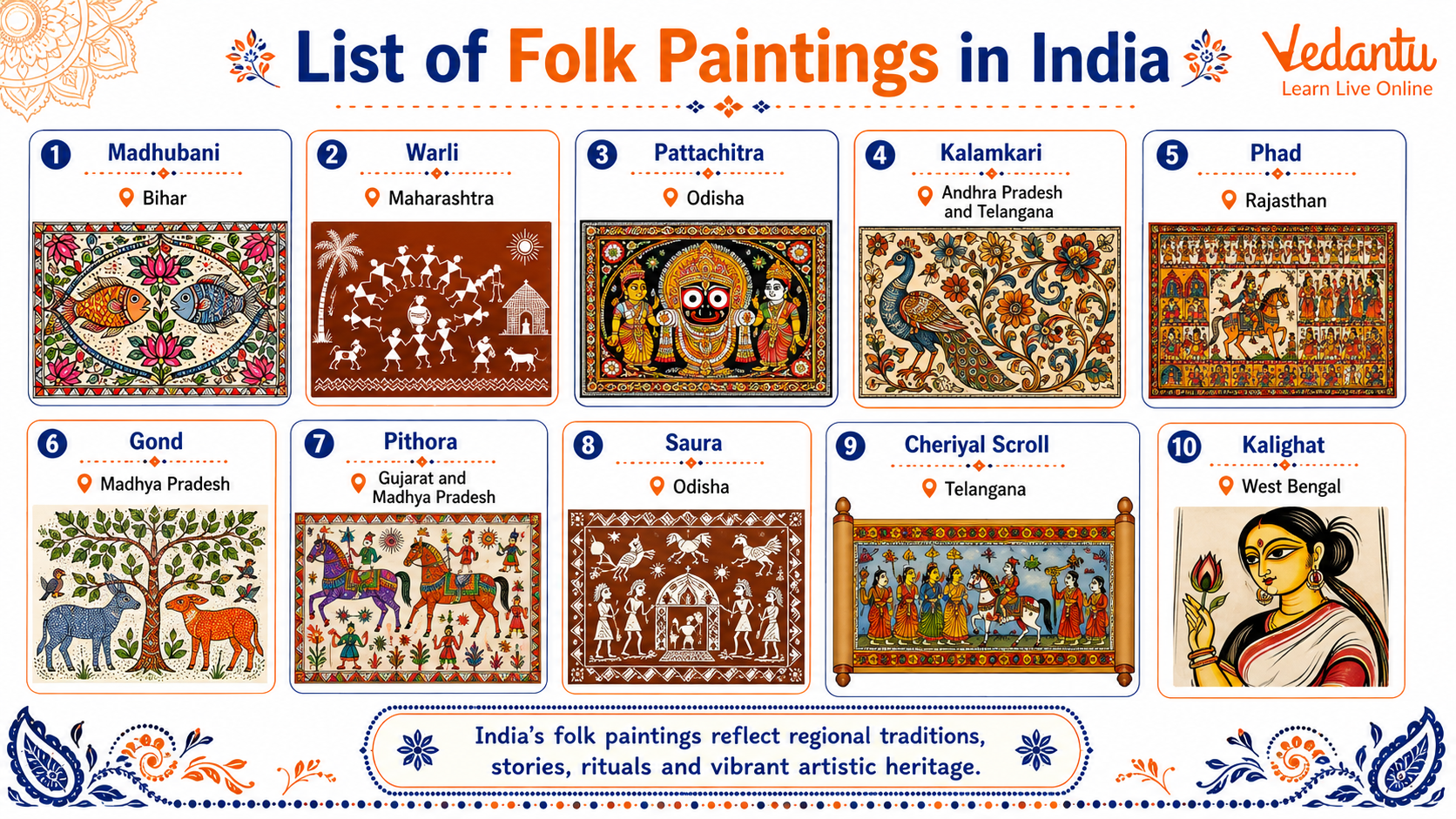
What Are Folk Paintings?
Folk paintings are traditional art forms developed by local communities and passed down through generations. They are usually created during festivals, religious ceremonies, weddings, and other social events. Unlike classical paintings, folk paintings are more community oriented and reflect regional identity.
- Made using natural colors derived from plants, minerals, and soil
- Depict themes from mythology, folklore, and daily life
- Often created on walls, cloth, paper, and canvas
- Represent the traditions of specific regions or tribes
List of Major Folk Paintings of India
Major Folk Paintings and Their States
| Folk Painting | State or Region | Main Themes |
|---|---|---|
| Madhubani Painting | Bihar | Hindu mythology, nature, festivals |
| Warli Painting | Maharashtra | Tribal life, farming, rituals |
| Pattachitra | Odisha and West Bengal | Stories of Lord Jagannath and Krishna |
| Phad Painting | Rajasthan | Folk deities and heroic tales |
| Kalamkari | Andhra Pradesh and Telangana | Epics like Ramayana and Mahabharata |
| Gond Painting | Madhya Pradesh | Nature, animals, tribal legends |
| Kalighat Painting | West Bengal | Mythological and social themes |
| Cheriyal Scroll Painting | Telangana | Local folklore and epics |
| Pithora Painting | Gujarat and Madhya Pradesh | Ritualistic tribal art |
The above list highlights some of the most important folk paintings of India. Each painting style reflects the culture, beliefs, and lifestyle of the region where it originated.
Brief Description of Important Folk Paintings
Madhubani Painting
Madhubani painting, also known as Mithila art, originated in Bihar. It is characterized by intricate patterns, bright colors, and double line borders. Common themes include Hindu gods and goddesses, weddings, and nature. Natural dyes and pigments are traditionally used.
Warli Painting
Warli painting is a tribal art form from Maharashtra. It uses simple geometric shapes like circles, triangles, and squares to depict daily life activities such as farming, dancing, and hunting. The paintings are usually done in white on mud walls.
Pattachitra
Pattachitra is a traditional scroll painting from Odisha and parts of West Bengal. It is known for its detailed lines, mythological narratives, and vibrant colors. The word Pattachitra means cloth picture.
Phad Painting
Phad painting is a scroll painting tradition from Rajasthan. It narrates stories of local deities such as Pabuji and Devnarayan. These paintings are traditionally used by priest singers during performances.
Gond Painting
Gond painting is practiced by the Gond tribe of Madhya Pradesh. It features detailed patterns, dots, and lines to create images of animals, birds, and trees. It reflects a deep connection with nature.
Common Features of Indian Folk Paintings
- Use of natural and eco friendly colors
- Strong religious and cultural themes
- Regional variations in style and technique
- Simple tools such as brushes made from twigs and cloth
- Symbolic representation of gods, animals, and nature
Importance of Folk Paintings in Indian Culture
Folk paintings play an important role in preserving India’s cultural heritage. They serve as a visual record of traditions, rituals, and beliefs. These art forms also provide livelihood opportunities to rural artisans and promote cultural tourism. In recent years, many folk painting styles have gained international recognition and are being promoted through exhibitions and government initiatives.
Preparation Tips for Competitive Exams
Questions related to folk paintings of India are frequently asked in General Knowledge sections of exams. To prepare effectively, focus on the name of the painting, its state of origin, and its main themes.
- Memorize the painting and its corresponding state
- Understand key features and themes of each art form
- Revise through tables and short notes for quick recall
- Practice previous year questions related to art and culture
Conclusion
The list of folk paintings of India reflects the immense cultural diversity of the country. From Madhubani in Bihar to Warli in Maharashtra and Pattachitra in Odisha, each art form represents the unique identity of its region. Understanding these paintings not only enhances General Knowledge but also deepens appreciation for India’s artistic heritage. For students and aspirants, a clear grasp of these folk art forms can be highly beneficial in examinations and interviews.
FAQs on List of Folk Paintings in India with States and Features
1. What are the major folk paintings of India?
The major folk paintings of India are traditional art forms created by rural communities and passed down through generations.
• Madhubani Painting – Bihar
• Warli Painting – Maharashtra
• Pattachitra – Odisha & West Bengal
• Kalighat Painting – West Bengal
• Phad Painting – Rajasthan
• Kalamkari – Andhra Pradesh & Telangana
• Gond Painting – Madhya Pradesh
• Tanjore Painting – Tamil Nadu
These traditional Indian paintings are important for GK, competitive exams, and art history studies.
2. What is Madhubani painting and where did it originate?
Madhubani painting is a famous folk art of Bihar known for its vibrant colors and mythological themes.
• Originated in the Mithila region of Bihar
• Uses natural dyes and handmade colors
• Themes include Ramayana, Mahabharata, Hindu gods
• Traditionally painted by women on walls and floors
It is also called Mithila Art and is frequently asked in GK and UPSC exams.
3. Why is Warli painting famous?
Warli painting is famous for its simple geometric patterns and tribal lifestyle depiction.
• Origin: Maharashtra
• Uses white pigment on mud walls
• Basic shapes: circle, triangle, square
• Themes: farming, dancing, hunting, festivals
This tribal art form represents the culture of the Warli tribe and is a key topic in Indian folk art lists.
4. What is Pattachitra painting?
Pattachitra is a traditional scroll painting known for intricate details and mythological narratives.
• Origin: Odisha and West Bengal
• “Patta” means cloth, “Chitra” means picture
• Depicts stories of Lord Jagannath, Krishna, and Vishnu
• Uses natural colors and fine brushwork
It is one of the oldest Indian folk paintings and important for art GK questions.
5. What is the difference between folk painting and classical painting in India?
Folk paintings are community-based traditional arts, while classical paintings follow formal artistic rules and royal patronage.
• Folk Art: Rural origin, simple style, cultural themes
• Classical Art: Court-based, refined techniques, detailed realism
• Examples of Folk: Madhubani, Warli, Gond
• Examples of Classical: Mughal, Rajput, Tanjore
This difference is commonly asked in exams under Indian art and culture topics.
6. What is Gond painting known for?
Gond painting is known for its detailed patterns and depiction of nature and animals.
• Origin: Madhya Pradesh
• Created by the Gond tribe
• Features dots and lines forming vibrant images
• Themes: forests, wildlife, folklore
It is a significant tribal art form in the list of Indian folk paintings.
7. What materials are used in traditional folk paintings of India?
Traditional Indian folk paintings use natural and locally available materials.
• Natural dyes from plants and minerals
• Cow dung-coated walls
• Handmade paper and cloth
• Bamboo sticks and brushes
These eco-friendly materials reflect India's rural artistic traditions and cultural heritage.
8. What is Phad painting and which state is it associated with?
Phad painting is a religious scroll painting associated with Rajasthan.
• Origin: Rajasthan
• Depicts stories of Pabuji and Devnarayan
• Painted on long cloth scrolls
• Used by traditional storytellers called Bhopas
It is an important example of narrative folk art in India.
9. What is Kalamkari art and why is it important?
Kalamkari is a hand-painted or block-printed textile art known for mythological storytelling.
• Origin: Andhra Pradesh and Telangana
• “Kalam” means pen, “Kari” means craftsmanship
• Uses natural dyes
• Themes from Hindu epics and Persian motifs
It is widely recognized in Indian art and culture GK sections.
10. Why are folk paintings of India important for competitive exams?
Folk paintings of India are important for competitive exams because they are part of Indian art and culture syllabus.
• Asked in UPSC, SSC, State PSC, Railways
• Questions on origin state and unique features
• Important for static GK and cultural heritage topics
• Linked with tribal art and traditional crafts
Understanding the list of Indian folk paintings helps in scoring well in General Knowledge sections.
