






Corbett Tiger Reserve Safari Zones and Best Time to Visit
Jim Corbett National Park is the oldest national park in India and one of the most famous wildlife destinations in the country. Located in the Nainital district of Uttarakhand, it is widely known for its rich biodiversity and successful conservation of the Bengal tiger. Established in 1936, the park plays a crucial role in wildlife protection under Project Tiger. It attracts nature lovers, wildlife photographers, researchers, and tourists from across the world. The park is named after the legendary hunter and conservationist Jim Corbett, who played a key role in establishing this protected area.
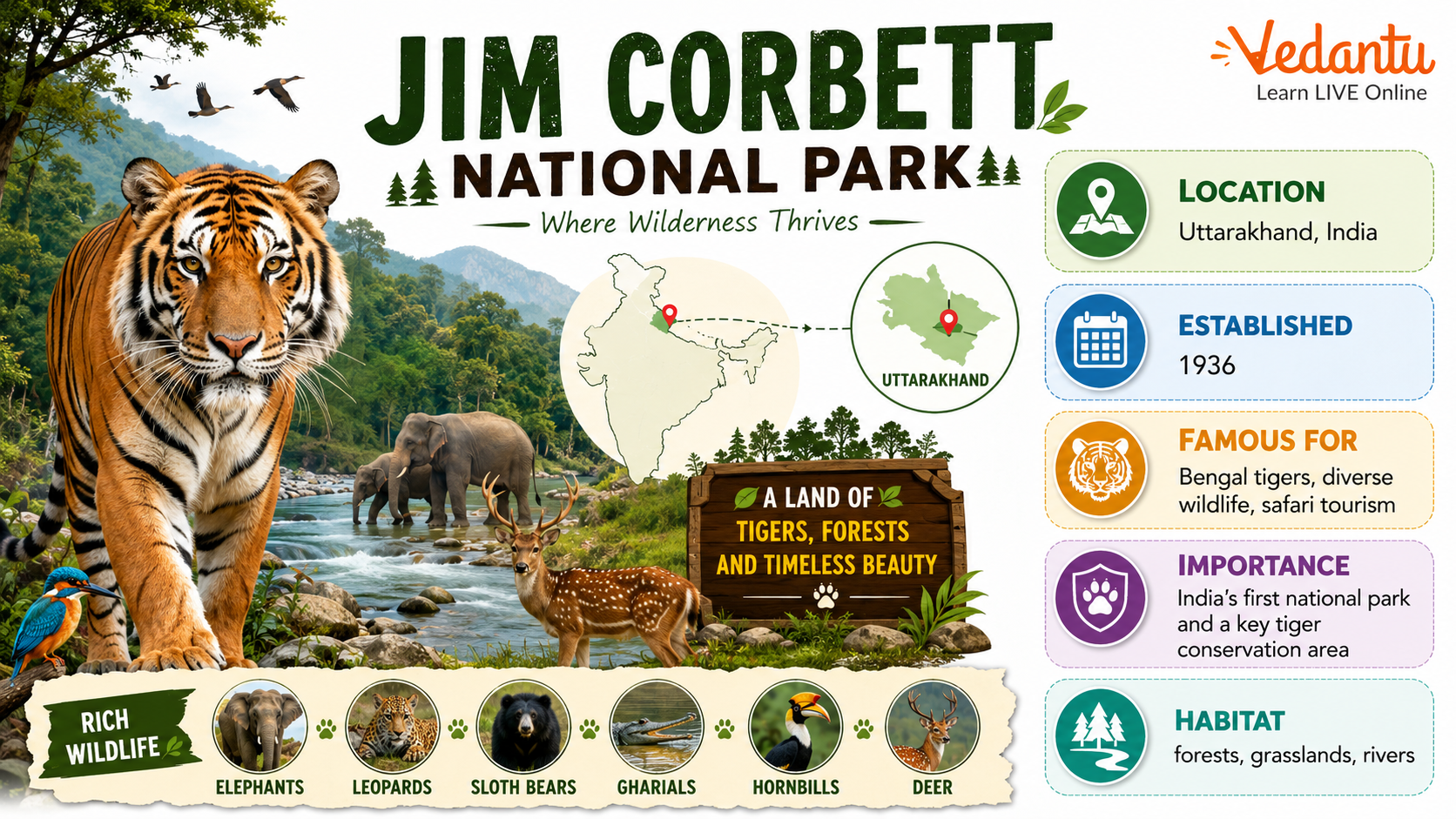
Overview of Jim Corbett National Park
Jim Corbett National Park covers a vast area of forests, grasslands, rivers, and hills. It forms a part of the larger Corbett Tiger Reserve and is known for its scenic landscapes and diverse ecosystem. The park supports a wide variety of flora and fauna, making it one of the most important ecological zones in northern India.
Key Facts about Jim Corbett National Park
| Feature | Details | Remarks |
|---|---|---|
| Established | 1936 | Oldest National Park in India |
| Location | Uttarakhand | Nainital and Pauri Garhwal districts |
| Area | About 520 sq km | Core area of Tiger Reserve |
| River | Ramganga River | Main water source |
| Famous For | Bengal Tiger | Project Tiger reserve |
The park was initially named Hailey National Park and later renamed in honor of Jim Corbett. It became the first park to come under Project Tiger in 1973.
History of Jim Corbett National Park
Jim Corbett National Park was established in 1936 as Hailey National Park. It was created to protect the endangered Bengal tiger and other wildlife species. After India gained independence, the park was renamed Ramganga National Park and later changed to Jim Corbett National Park in 1957 to honor the famous hunter turned conservationist, Jim Corbett.
In 1973, the park became the first reserve under Project Tiger, a major wildlife conservation initiative launched by the Government of India to protect the declining tiger population.
Geographical Features
The park is located in the foothills of the Himalayas and features diverse landscapes. It includes hills, riverine belts, marshy depressions, grasslands, and large lakes. The Ramganga River flows through the park and supports a variety of aquatic life.
- Altitude ranges from 385 meters to 1100 meters.
- Dominated by Sal forests.
- Contains grasslands locally known as Chaurs.
- Home to the Ramganga reservoir.
Flora and Fauna
Flora
The vegetation of Jim Corbett National Park mainly consists of moist deciduous forests. Sal trees dominate the forest landscape, along with Sheesham, Khair, and Bamboo.
Fauna
The park is famous for its rich wildlife diversity. It supports a large population of mammals, birds, reptiles, and fish.
- Bengal Tiger
- Asian Elephant
- Leopard
- Deer species such as Chital and Sambar
- More than 600 species of birds
- Gharial and Mugger crocodile
Tourism and Safari Zones
Jim Corbett National Park is divided into several tourism zones to manage visitor flow and protect wildlife habitats. Each zone offers a unique experience.
- Dhikala Zone - Known for grasslands and high chances of tiger sightings.
- Bijrani Zone - Popular for day safaris.
- Jhirna Zone - Open throughout the year.
- Dhela Zone - Rich in biodiversity.
The best time to visit the park is from November to June. The park remains partially closed during the monsoon season due to heavy rainfall.
Importance of Jim Corbett National Park
Jim Corbett National Park plays a vital role in wildlife conservation in India. It has been instrumental in increasing the tiger population through effective protection and habitat management. The park also contributes to ecological balance, environmental awareness, and eco tourism.
- First park under Project Tiger.
- Promotes biodiversity conservation.
- Supports research and wildlife studies.
- Boosts local economy through tourism.
Jim Corbett and His Contribution
Jim Corbett was a British hunter, tracker, and naturalist who later became a strong supporter of wildlife conservation. He helped in the creation of the park and raised awareness about protecting tigers and forests. His efforts laid the foundation for wildlife conservation in India.
Conclusion
Jim Corbett National Park is a landmark in the history of wildlife conservation in India. As the oldest national park and the first tiger reserve under Project Tiger, it holds immense ecological and historical significance. With its diverse wildlife, scenic landscapes, and conservation success stories, the park remains a symbol of India’s commitment to protecting its natural heritage. Understanding its importance helps students and general readers appreciate the value of biodiversity and environmental protection.
FAQs on Jim Corbett National Park: Wildlife, History and Importance
1. What is Jim Corbett National Park famous for?
The Jim Corbett National Park is famous for being India’s first national park and for its rich population of Bengal tigers.
• Established in 1936 as Hailey National Park
• Located in Uttarakhand
• Known for Project Tiger (launched in 1973)
• Home to diverse wildlife like elephants, leopards, deer, and over 600 bird species
It is one of the most popular wildlife tourism destinations and a key tiger reserve in India.
2. Where is Jim Corbett National Park located?
Jim Corbett National Park is located in the Nainital district of Uttarakhand, India.
• Situated in the foothills of the Himalayas
• Spread across Nainital and Pauri Garhwal districts
• Nearest town: Ramnagar
The park lies along the banks of the Ramganga River, making it rich in biodiversity and scenic landscapes.
3. When was Jim Corbett National Park established?
Jim Corbett National Park was established in 1936, making it the oldest national park in India.
• Originally named Hailey National Park
• Renamed in honor of Jim Corbett in 1957
• First park under Project Tiger (1973)
It marks the beginning of organized wildlife conservation in India.
4. Who was Jim Corbett?
Jim Corbett was a British-Indian hunter, conservationist, and author known for protecting wildlife.
• Full name: Edward James Corbett
• Famous for hunting man-eating tigers and leopards
• Later became a strong supporter of wildlife conservation
• Author of the book “Man-Eaters of Kumaon”
The national park was renamed in his honor for his contribution to conservation awareness.
5. What animals are found in Jim Corbett National Park?
Jim Corbett National Park is home to a wide variety of wildlife species.
• Bengal Tiger (major attraction)
• Asian Elephant
• Leopards, deer, wild boars
• Crocodiles and gharials
• Over 600 species of birds
The park is a biodiversity hotspot and an important tiger reserve in India.
6. What is Project Tiger and its link to Jim Corbett National Park?
Project Tiger is a wildlife conservation initiative launched to protect the Bengal tiger.
• Started in 1973 by the Government of India
• Jim Corbett became the first tiger reserve under this project
• Aims to increase tiger population and conserve habitats
Today, the park plays a vital role in tiger conservation and ecological balance.
7. What is the best time to visit Jim Corbett National Park?
The best time to visit Jim Corbett National Park is from November to June.
• Winter (Nov–Feb): Pleasant weather and bird watching
• Summer (Mar–June): Higher chances of tiger sightings
• Monsoon (July–Oct): Some zones remain closed
Tourists prefer summer for wildlife safari and tiger spotting.
8. How many zones are there in Jim Corbett National Park?
Jim Corbett National Park has several tourism zones for safari and wildlife viewing.
• Dhikala Zone (most famous)
• Bijrani Zone
• Jhirna Zone
• Dhela Zone
• Durga Devi Zone
Each zone offers different landscapes, wildlife experiences, and safari options.
9. Why is Jim Corbett National Park important for conservation?
Jim Corbett National Park is important as it pioneered wildlife conservation in India.
• First national park of India
• Key reserve under Project Tiger
• Protects endangered species like the Bengal tiger and gharial
• Maintains ecological balance in the Himalayan region
It serves as a model for wildlife protection and eco-tourism in India.
10. What is the geographical area of Jim Corbett National Park?
Jim Corbett National Park covers an area of approximately 520 square kilometers.
• Core area: Around 520 sq km
• Part of the larger Corbett Tiger Reserve (over 1,200 sq km)
• Features hills, grasslands, rivers, and dense forests
Its diverse terrain supports rich flora and fauna, making it one of India’s top wildlife sanctuaries.
