






Key Differences Between the Golden Crescent and Golden Triangle Regions
The Golden Crescent and Golden Triangle are two major illegal opium-producing regions of the world. These areas are significant in General Knowledge because they are often discussed in geography, international relations, drug trafficking, security studies, and current affairs. Both regions are known for large-scale opium cultivation, which is used to produce heroin and other narcotic substances. Understanding their location, characteristics, and global impact is important for students preparing for competitive exams and for general awareness.
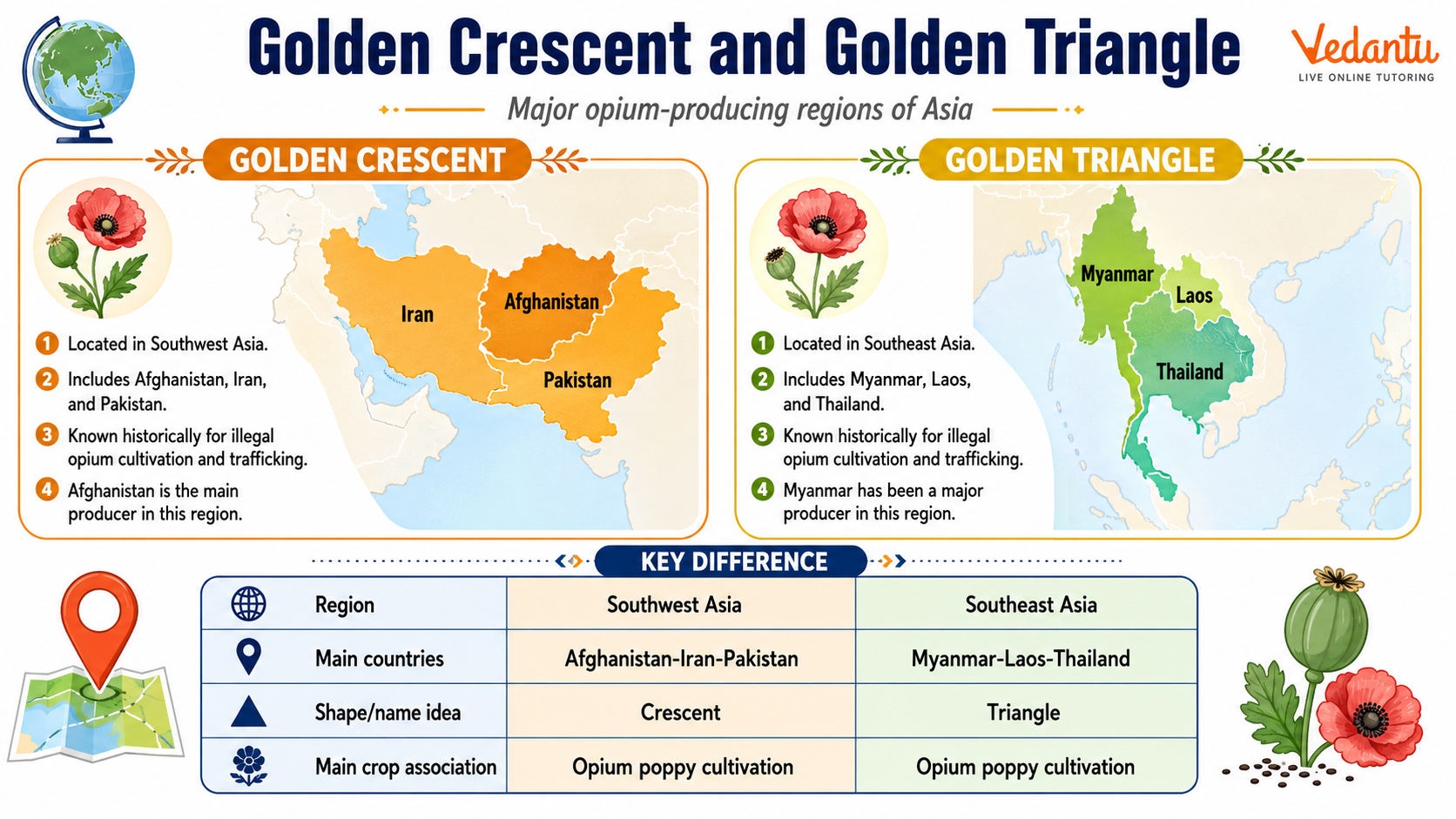
What is the Golden Crescent?
The Golden Crescent is one of the largest opium-producing regions in the world. It is located in Southwest Asia and includes three main countries. This region has been historically associated with large-scale poppy cultivation and illegal drug trade.
Countries Included in the Golden Crescent
- Afghanistan
- Iran
- Pakistan
Key Features of the Golden Crescent
- Afghanistan is the world's largest producer of opium.
- The region has mountainous terrain, which makes monitoring and control difficult.
- Political instability and conflict have supported illegal cultivation.
- Opium from this region is mainly trafficked to Europe and parts of Asia.
What is the Golden Triangle?
The Golden Triangle is another major opium-producing region in the world. It is located in Southeast Asia and has historically been known for opium cultivation and heroin production. Though its global share has declined compared to the Golden Crescent, it still plays an important role in the illegal drug trade.
Countries Included in the Golden Triangle
- Myanmar
- Laos
- Thailand
Key Features of the Golden Triangle
- Located near the Mekong River region.
- Mountainous and forested terrain supports hidden cultivation.
- Historically a major supplier of heroin to global markets.
- In recent years, synthetic drug production has increased in the region.
Comparison Between Golden Crescent and Golden Triangle
| Feature | Golden Crescent | Golden Triangle |
|---|---|---|
| Location | Southwest Asia | Southeast Asia |
| Countries | Afghanistan, Iran, Pakistan | Myanmar, Laos, Thailand |
| Main Drug | Opium and Heroin | Opium, Heroin, Synthetic Drugs |
| Global Contribution | Largest producer globally | Second major region |
The Golden Crescent currently contributes a larger share of global opium production compared to the Golden Triangle. However, both regions remain significant in international drug trafficking networks and global security discussions.
Why Are These Regions Important in General Knowledge?
The Golden Crescent and Golden Triangle are frequently mentioned in exams and current affairs due to their impact on global politics, economy, and security. Questions are often asked in geography, international relations, and defense studies.
- They are major sources of illegal narcotics worldwide.
- Drug trafficking affects international relations and border security.
- They influence regional conflicts and terrorism financing.
- Frequently asked in UPSC, SSC, state PSC, and other competitive exams.
Impact on Global Security and Economy
Illegal opium production in these regions has wide-ranging consequences. The drug trade generates billions of dollars annually and is often linked to organized crime and militant groups. This affects not only the producing countries but also transit and consumer nations.
- Increase in drug addiction and public health crises.
- Growth of illegal money networks and smuggling routes.
- Challenges to law enforcement and border control agencies.
- Negative impact on socio-economic development in affected regions.
Quick Revision Points
- Golden Crescent - Afghanistan, Iran, Pakistan - Southwest Asia.
- Golden Triangle - Myanmar, Laos, Thailand - Southeast Asia.
- Both are major global opium-producing regions.
- Important for geography and current affairs exams.
- Associated with illegal drug trade and global security issues.
Conclusion
The Golden Crescent and Golden Triangle are two critical regions in the global narcotics landscape. Their geographical location, political conditions, and economic challenges have contributed to large-scale opium cultivation. For students and exam aspirants, understanding these regions is essential for mastering topics related to geography, international relations, and security issues. A clear comparison of both regions helps in quick revision and better retention for competitive examinations.
FAQs on Golden Crescent and Golden Triangle: Key Drug Trafficking Regions Explained
1. What is the Golden Crescent?
The Golden Crescent is a major illegal drug-producing region in Asia known for large-scale opium cultivation.
• It includes Afghanistan, Iran, and Pakistan.
• It is one of the world’s largest producers of opium and heroin.
• Afghanistan is the leading opium producer globally.
• The region is associated with drug trafficking, smuggling routes, and organized crime.
• Frequently asked in GK and competitive exams under topics like international drug trade and illicit narcotics production.
2. What is the Golden Triangle?
The Golden Triangle is a well-known opium-producing area in Southeast Asia.
• It includes Myanmar, Laos, and Thailand.
• Located near the confluence of the Mekong and Ruak rivers.
• Historically one of the largest producers of opium and heroin.
• Known for drug trafficking networks and cross-border smuggling.
• Commonly searched alongside terms like narcotics trade and illegal drug production regions.
3. Why are they called the Golden Crescent and Golden Triangle?
They are named after their geographical shapes and the high profits (‘gold’) earned from opium trade.
• The Golden Crescent forms a crescent shape across Southwest Asia.
• The Golden Triangle forms a triangular border region in Southeast Asia.
• “Golden” refers to the immense profits from opium cultivation and heroin trade.
• These names are widely used in geography and current affairs topics.
4. Which countries are part of the Golden Crescent?
The Golden Crescent consists of three main countries in Southwest Asia.
• Afghanistan – Largest global producer of opium.
• Iran – Major transit route for heroin trafficking.
• Pakistan – Important smuggling and processing route.
• These countries are frequently mentioned in discussions about global narcotics trade and drug control policies.
5. Which countries are included in the Golden Triangle?
The Golden Triangle includes three Southeast Asian nations.
• Myanmar – The largest opium producer in the region.
• Laos – Known for poppy cultivation in mountainous areas.
• Thailand – Previously a producer, now active in anti-drug campaigns.
• This region is important in studies of drug trafficking routes and border security.
6. What is the difference between the Golden Crescent and the Golden Triangle?
The main difference lies in their geographical location and regional influence in the drug trade.
• Golden Crescent – Located in Southwest Asia (Afghanistan, Iran, Pakistan).
• Golden Triangle – Located in Southeast Asia (Myanmar, Laos, Thailand).
• The Crescent currently produces more global opium than the Triangle.
• Both are linked to heroin production, smuggling networks, and international crime.
7. Why are the Golden Crescent and Golden Triangle important in world geography?
These regions are important due to their impact on global drug supply and international security.
• Major sources of illegal opium and heroin.
• Influence global drug trafficking routes across Asia, Europe, and America.
• Connected to issues like terrorism funding, organized crime, and border conflicts.
• Frequently covered in current affairs, UPSC, SSC, and other competitive exams.
8. Which region produces more opium today – Golden Crescent or Golden Triangle?
Today, the Golden Crescent, especially Afghanistan, produces more opium than the Golden Triangle.
• Afghanistan dominates global opium production.
• The Golden Triangle has reduced output compared to past decades.
• Production levels fluctuate due to government policies and international monitoring.
• This question is common in GK under global narcotics production statistics.
9. What problems are associated with the Golden Crescent and Golden Triangle?
Both regions face serious social, economic, and political challenges due to drug production.
• Growth of illegal drug trade and smuggling.
• Rise in organized crime and corruption.
• Funding of terrorist groups and insurgencies.
• Public health crises related to drug addiction and substance abuse.
• Major concern for international law enforcement agencies.
10. How do governments and international organizations control drug production in these regions?
Governments and global agencies use strict policies and monitoring to reduce illegal opium production.
• Implementation of anti-narcotics laws and border security measures.
• Support from the United Nations Office on Drugs and Crime (UNODC).
• Promotion of alternative livelihood programs for farmers.
• International cooperation to disrupt drug trafficking networks.
• Regular surveillance and eradication of poppy cultivation.
