






Revenue Reforms, Market Control and Administrative System in the Khilji Period
The Economic Policy and Administration under the Khilji Dynasty played a crucial role in strengthening the Delhi Sultanate during the late 13th and early 14th centuries. The most prominent ruler of this dynasty, Alauddin Khilji, introduced bold and systematic reforms to control prices, regulate markets, increase state revenue, and maintain a strong military. His economic measures were primarily aimed at consolidating political power, preventing rebellions, and ensuring efficient governance. These reforms are considered some of the earliest examples of state-controlled economic regulation in medieval India.
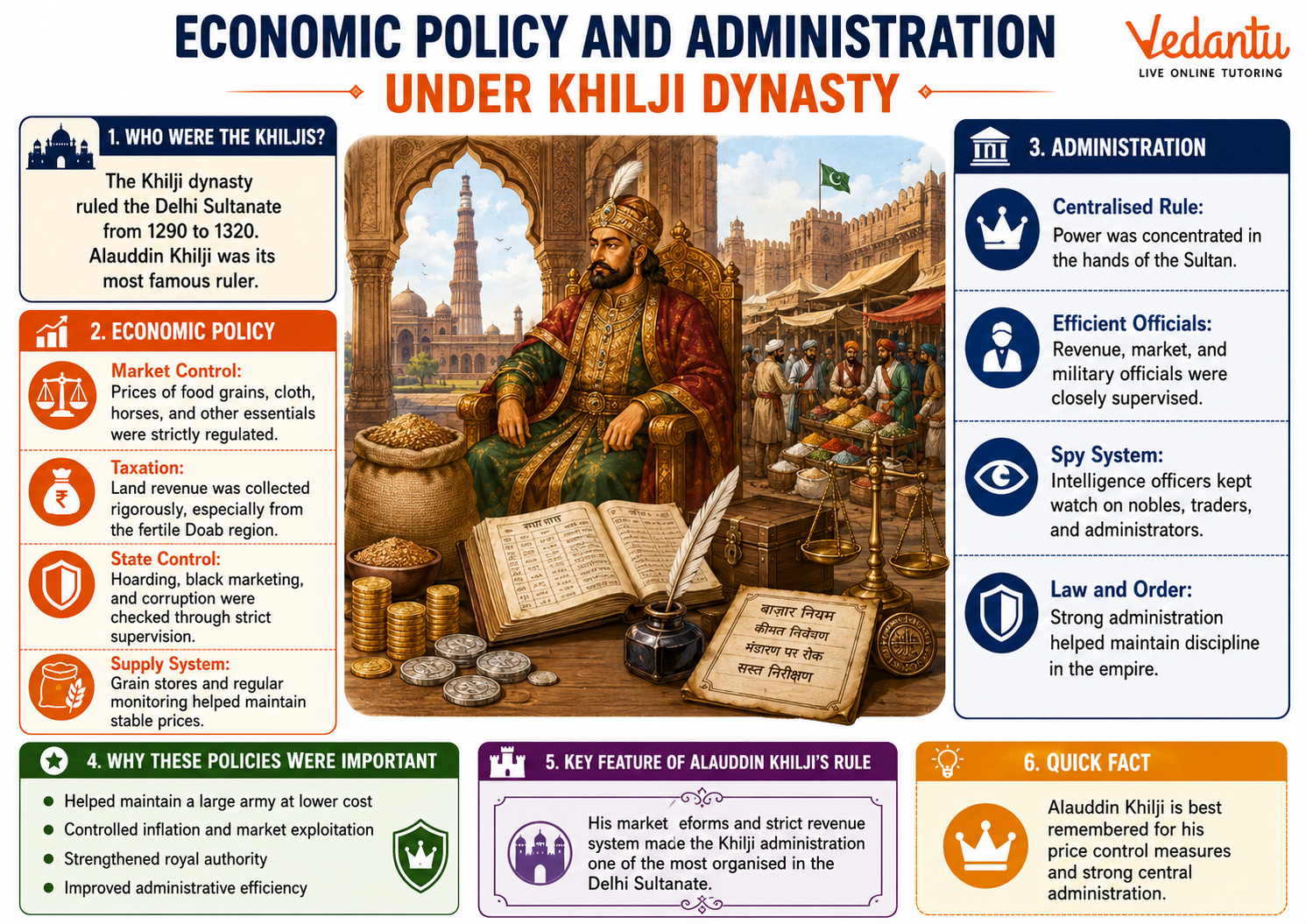
Overview of the Khilji Dynasty
The Khilji Dynasty ruled the Delhi Sultanate from 1290 to 1320 CE. It was the second ruling dynasty of the Delhi Sultanate. Jalaluddin Khilji founded the dynasty, but Alauddin Khilji is best known for his administrative and economic reforms.
- Founder - Jalaluddin Khilji
- Most powerful ruler - Alauddin Khilji
- Period of rule - 1290 CE to 1320 CE
- Capital - Delhi
Objectives of Economic Reforms
Alauddin Khilji introduced economic reforms with clear political and military objectives. His policies were not merely financial but were linked to strengthening the Sultanate against internal and external threats.
- To maintain a large standing army
- To control inflation and reduce prices of essential goods
- To prevent hoarding and black marketing
- To reduce the power of nobles and local chiefs
- To increase state revenue through efficient tax collection
Land Revenue Policy
The land revenue system formed the backbone of the Khilji economy. Alauddin Khilji introduced strict revenue measures, especially in the fertile region of the Doab between the Ganga and Yamuna rivers.
Key Features of Land Revenue System
- Land revenue was fixed at 50 percent of the produce
- Measurement of land was introduced for proper assessment
- Revenue was collected directly by the state
- Elimination of intermediaries like zamindars in some areas
- Additional taxes such as house tax and grazing tax were imposed
These measures increased the income of the state and reduced the financial independence of rural chiefs and nobles.
Market Control Policy
Alauddin Khilji is widely known for his strict market control system. This policy aimed to provide goods at low prices so that soldiers could be paid lower salaries without reducing their standard of living.
Main Features of Market Reforms
- Fixation of prices for essential commodities
- Separate markets for grains, cloth, horses, and slaves
- Appointment of market officers called Shahna-i-Mandi
- Strict punishment for hoarding and overcharging
- Maintenance of buffer stocks to prevent scarcity
Major Markets under Alauddin Khilji
| Market Type | Goods Sold | Supervising Officer |
|---|---|---|
| Grain Market | Wheat, rice, pulses | Shahna-i-Mandi |
| Cloth Market | Textiles and garments | Market Controller |
| Horse Market | Horses and cattle | Special Inspectors |
The market system ensured stable prices and prevented economic exploitation. However, it required strict surveillance and administrative efficiency.
Military and Economic Link
The economic reforms were closely linked to military needs. Alauddin Khilji maintained a large standing army to defend against Mongol invasions and expand his empire.
- Low market prices reduced the need for high salaries
- Cash payment system was followed for soldiers
- Dagh system - branding of horses to prevent fraud
- Chehra system - descriptive roll of soldiers
Administrative Machinery
Efficient administration was essential for implementing economic reforms. Alauddin appointed capable officials and established strict supervision mechanisms.
Important Officials
- Diwan-i-Riyasat - Head of commerce department
- Shahna-i-Mandi - Market supervisor
- Muhtasib - Officer to ensure public morality and regulation
- Revenue collectors for tax assessment
Impact of Economic Policies
The economic reforms of the Khilji period had both positive and negative consequences. While they strengthened the state, they also placed heavy burdens on peasants and traders.
Positive Impacts
- Increased state revenue
- Controlled inflation
- Strengthened military power
- Reduced corruption in markets
Limitations
- Heavy taxation burden on peasants
- Strict punishments created fear
- Policies depended heavily on Alauddin personal authority
- Most reforms declined after his death
Conclusion
The Economic Policy and Administration under the Khilji Dynasty, particularly under Alauddin Khilji, marked a significant phase in medieval Indian history. His reforms in land revenue, market control, and military finance demonstrated strong centralized governance and administrative innovation. Although many measures were harsh and temporary, they effectively strengthened the Delhi Sultanate during his reign. For students and competitive exam aspirants, understanding these reforms is essential to analyze the political and economic structure of medieval India.
FAQs on Economic Policy And Administration Under Khilji Dynasty: Revenue, Market Reforms and Governance System
1. What were the main features of economic policy under the Khilji Dynasty?
The economic policy under the Khilji Dynasty focused on price control, market regulation, and revenue reforms to strengthen the Delhi Sultanate. Key features included:
• Introduction of a strict price control system under Alauddin Khilji
• Establishment of regulated markets called mandis
• Appointment of officials like Shahna-i-Mandi to supervise markets
• Heavy taxation on agricultural produce (up to 50%)
• Confiscation of excess land revenue from nobles
These reforms aimed to maintain a large army and control inflation, making Khilji’s economic administration unique in medieval Indian history.
2. Why did Alauddin Khilji introduce price control measures?
Alauddin Khilji introduced price control measures to maintain a strong army at low cost and prevent economic instability. The main reasons were:
• To supply goods to soldiers at affordable rates
• To prevent hoarding and black marketing
• To curb the power of wealthy nobles and traders
• To stabilize the economy of the Delhi Sultanate
This policy helped in maintaining political control and ensuring military efficiency during Mongol invasions.
3. What was the role of the Diwan-i-Riyasat in Khilji administration?
The Diwan-i-Riyasat was the department responsible for implementing economic regulations during Alauddin Khilji’s rule. Its major functions included:
• Supervising market control regulations
• Fixing prices of essential commodities
• Monitoring traders and merchants
• Preventing hoarding and corruption
This department played a central role in enforcing the Sultan’s strict economic reforms.
4. How did land revenue reforms function under the Khilji Dynasty?
The land revenue reforms under the Khiljis aimed to increase state income and reduce the power of intermediaries. Important aspects included:
• Direct collection of revenue by the state
• Assessment of land and measurement of produce
• Imposition of 50% tax on agricultural output
• Elimination of privileges of village chiefs (Khuts and Muqaddams)
These reforms strengthened central administration and ensured financial stability.
5. What were the different types of markets established by Alauddin Khilji?
Alauddin Khilji established separate regulated markets to control trade and prices effectively. These included:
• Grain market (Mandi)
• Market for cloth and daily necessities
• Market for horses, slaves, and cattle
• Luxury goods market
Each market was strictly supervised to enforce price control policy and prevent exploitation.
6. How did Khilji’s economic policies affect traders and merchants?
The economic reforms under the Khilji Dynasty imposed strict regulations on traders and merchants. Effects included:
• Mandatory registration of merchants
• Fixed profit margins
• Severe punishments for violation of rules
• Ban on hoarding and black marketing
While these policies reduced trader autonomy, they ensured market stability and consumer protection.
7. What administrative officials were responsible for enforcing economic reforms?
Several key officials enforced Khilji economic administration and market regulations. These included:
• Shahna-i-Mandi – Market superintendent
• Diwan-i-Riyasat – Head of economic department
• Muhtasib – Inspector of moral and market conduct
• Intelligence officers for reporting violations
This administrative machinery ensured strict implementation of policies.
8. How did economic reforms help Alauddin Khilji maintain a strong army?
Alauddin Khilji’s economic reforms supported a large standing army by reducing expenses and controlling inflation. Key benefits were:
• Low prices of essential goods for soldiers
• Increased state revenue through taxation
• Prevention of wealth accumulation by nobles
• Stable supply of horses and military equipment
These measures strengthened the military power of the Delhi Sultanate.
9. What were the long-term impacts of Khilji economic policies?
The long-term impact of Khilji economic policies was mixed in medieval Indian history. Major outcomes included:
• Strengthened central authority
• Temporary price stability
• Increased state control over agriculture and trade
• Policies weakened after Alauddin’s death
Though effective during his reign, many reforms did not survive in later administrations.
10. Why are Khilji economic reforms important for competitive exams?
The economic policy and administration under the Khilji Dynasty is important for UPSC, SSC, and other competitive exams because it highlights medieval governance and market control systems. Key exam-relevant points include:
• Price control system of Alauddin Khilji
• Role of Diwan-i-Riyasat
• Land revenue reforms and taxation
• Market regulations and administrative structure
Understanding these reforms helps in answering questions on the Delhi Sultanate economy and medieval Indian administration.
