






What Is the Origin of Chocolate and the Story Behind Chocolate Day Celebration?
Chocolate Day is celebrated as part of Valentine Week and holds special significance for chocolate lovers across the world. The history of chocolate dates back thousands of years to ancient civilizations in Central and South America. Over time, chocolate evolved from a bitter ceremonial drink into one of the most popular sweet treats globally. Understanding the history of chocolate helps us appreciate its cultural, economic, and social importance in human civilization.
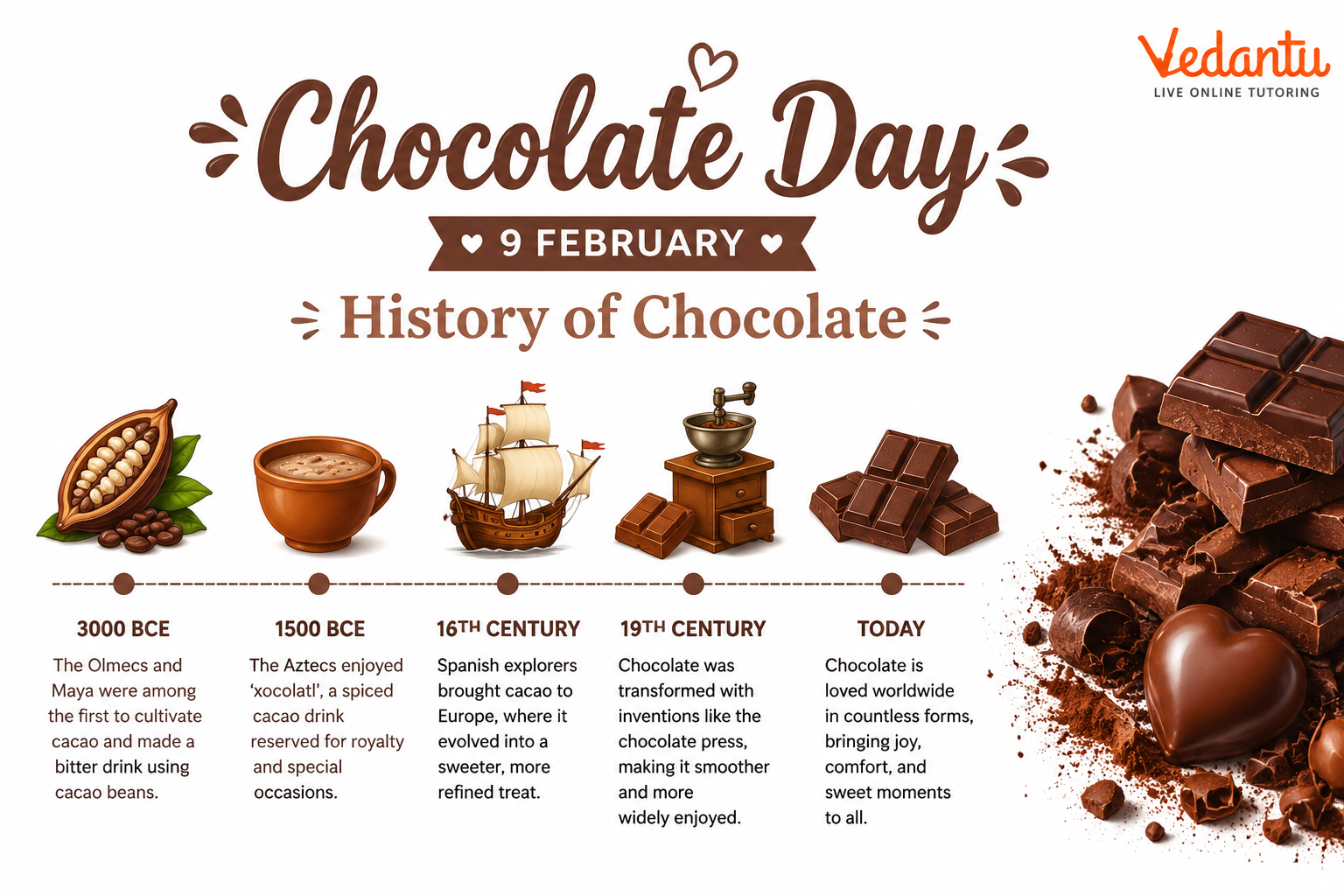
What is Chocolate Day?
Chocolate Day is celebrated every year on February 9 during Valentine Week. On this day, people exchange chocolates as a symbol of love, affection, and friendship. While the celebration is modern, the story of chocolate itself goes back to ancient times and carries deep historical roots.
- Celebrated on February 9
- Part of Valentine Week celebrations
- Symbolizes love, sweetness, and bonding
- Popular among youth and couples
Origin of Chocolate
Chocolate originates from the cacao tree, scientifically known as Theobroma cacao. The word Theobroma means food of the gods in Greek. The earliest known use of cacao dates back to around 1500 BCE by the Olmec civilization in present day Mexico.
Ancient Civilizations and Chocolate
The Mayans and Aztecs valued cacao highly. They prepared a bitter drink called xocolatl made from roasted cacao beans, water, and spices. It was used in religious ceremonies and was considered a sacred drink.
- Olmecs first cultivated cacao
- Mayans used chocolate in rituals
- Aztecs used cacao beans as currency
- Chocolate was originally consumed as a drink
Introduction of Chocolate to Europe
Chocolate was introduced to Europe in the 16th century after Spanish explorers, including Hernan Cortes, brought cacao beans from the Americas. Initially, it was consumed as a bitter beverage. Later, sugar and milk were added to make it sweeter and more appealing.
- Brought to Spain in the 1500s
- Popular among European royalty
- Sweetened with sugar and flavored with vanilla
- Spread to other European countries
Development of Modern Chocolate
The transformation of chocolate into solid form began in the 19th century. In 1828, Coenraad Johannes van Houten invented a cocoa press that separated cocoa butter from cocoa solids. This innovation made chocolate smoother and easier to mold.
- 1828 - Cocoa press invented
- 1847 - First solid chocolate bar created in England
- 1875 - Milk chocolate developed by Daniel Peter in Switzerland
- 20th century - Mass production of chocolates worldwide
Timeline of Chocolate History
| Period | Event | Significance |
|---|---|---|
| 1500 BCE | Olmecs used cacao | First known cultivation |
| 16th Century | Chocolate reached Europe | Spread beyond Americas |
| 19th Century | Solid chocolate developed | Beginning of modern chocolate industry |
The timeline shows how chocolate evolved from a sacred drink in ancient civilizations to a globally consumed confectionery product. Each stage contributed to the chocolate industry we see today.
Types of Chocolate
Over time, different types of chocolate have been developed based on ingredients and processing methods. Each type has unique taste and texture characteristics.
- Dark Chocolate - Contains high cocoa content and less sugar
- Milk Chocolate - Contains milk powder and sugar for a creamy taste
- White Chocolate - Made from cocoa butter, sugar, and milk without cocoa solids
- Unsweetened Chocolate - Pure chocolate liquor used in baking
Importance of Chocolate Day
Chocolate Day is not just about gifting sweets. It reflects the emotional value attached to chocolate. Chocolates are often associated with happiness and celebration. Scientific studies also suggest that chocolate can improve mood due to the presence of compounds like serotonin and endorphins.
- Strengthens relationships
- Symbol of affection and care
- Boosts mood and reduces stress
- Encourages sharing and celebration
Conclusion
The history of chocolate is rich and fascinating, beginning from ancient Mesoamerican civilizations to modern global industries. Chocolate Day celebrates not only the sweetness of relationships but also the long journey of chocolate through centuries. From a sacred bitter drink to a beloved confectionery item, chocolate continues to hold a special place in human culture and tradition.
FAQs on Chocolate Day History: How Chocolate Began and Why We Celebrate
1. What is Chocolate Day and why is it celebrated?
Chocolate Day is a special day dedicated to expressing love and affection by gifting chocolates, and it is celebrated every year on February 9 during Valentine’s Week.
• It symbolizes sweetness, happiness, and bonding in relationships.
• People exchange chocolates with friends, family, and partners.
• It highlights the cultural importance of chocolate as a gift in modern celebrations.
2. What is the history of chocolate?
The history of chocolate dates back over 3,000 years to ancient Mesoamerican civilizations.
• The Maya and Aztecs prepared a bitter drink called xocolatl from cacao beans.
• Chocolate was introduced to Europe in the 16th century by Spanish explorers.
• It later evolved into the sweet solid chocolate we enjoy today.
3. Who discovered chocolate?
Chocolate was first used by the Maya civilization around 1900 BCE in Central America.
• The Aztecs valued cacao as currency and for royal drinks.
• Spanish explorer Hernán Cortés brought cacao to Europe in the 1500s.
• Europeans added sugar and milk, transforming its taste.
4. How is chocolate made from cacao beans?
Chocolate is made by processing cacao beans into cocoa products and mixing them with sugar and milk.
• Harvesting and fermenting cacao pods.
• Roasting and grinding beans into cocoa mass.
• Adding sugar, milk, and cocoa butter.
• Molding into bars or other chocolate products.
5. What are the different types of chocolate?
There are several main types of chocolate based on ingredients and cocoa content.
• Dark chocolate – High cocoa content, less sugar.
• Milk chocolate – Contains milk solids and is sweeter.
• White chocolate – Made from cocoa butter, sugar, and milk (no cocoa solids).
• Ruby chocolate – A newer pink variety with fruity flavor.
6. Why was chocolate important to the Aztecs and Mayans?
For the Aztecs and Mayans, chocolate was a sacred and valuable commodity.
• Used in religious ceremonies and royal feasts.
• Believed to be a gift from the god Quetzalcoatl.
• Cacao beans were used as currency.
• Consumed as a bitter ceremonial drink.
7. When did chocolate become popular in Europe?
Chocolate became popular in Europe during the 17th century after being introduced by Spanish traders.
• Initially consumed as a luxury drink by royalty.
• Chocolate houses opened in England and France.
• The invention of solid chocolate in the 19th century increased its popularity.
8. What are the health benefits of chocolate?
Dark chocolate offers several health benefits when consumed in moderation.
• Rich in antioxidants and flavonoids.
• May improve heart health.
• Helps boost mood by releasing endorphins.
• Provides minerals like iron and magnesium.
9. Why is chocolate associated with love and romance?
Chocolate is linked with love because it stimulates feelings of happiness and pleasure.
• Contains compounds that release serotonin and dopamine.
• Considered a symbol of sweetness and affection.
• Widely exchanged during Valentine’s Day and Chocolate Day.
10. Which countries are the largest producers of chocolate and cacao?
The largest cacao-producing countries are mainly in West Africa.
• Ivory Coast – World’s largest producer of cacao.
• Ghana – Second-largest producer.
• Indonesia and Ecuador – Major global suppliers.
• Countries like Switzerland and Belgium are famous for chocolate manufacturing.
