






Key Features of Chalcolithic Period Society, Tools, and Settlements
The Chalcolithic Culture refers to the phase of human civilization when people started using copper along with stone tools. The term Chalcolithic is derived from two Greek words - "khalkos" meaning copper and "lithos" meaning stone. This period is also known as the Copper-Stone Age and marks a transitional stage between the Neolithic Age and the Bronze Age. In the Indian subcontinent, Chalcolithic cultures developed in different regions after the decline of the Indus Valley Civilization and played an important role in shaping early rural settlements, agriculture, pottery, and metallurgy.
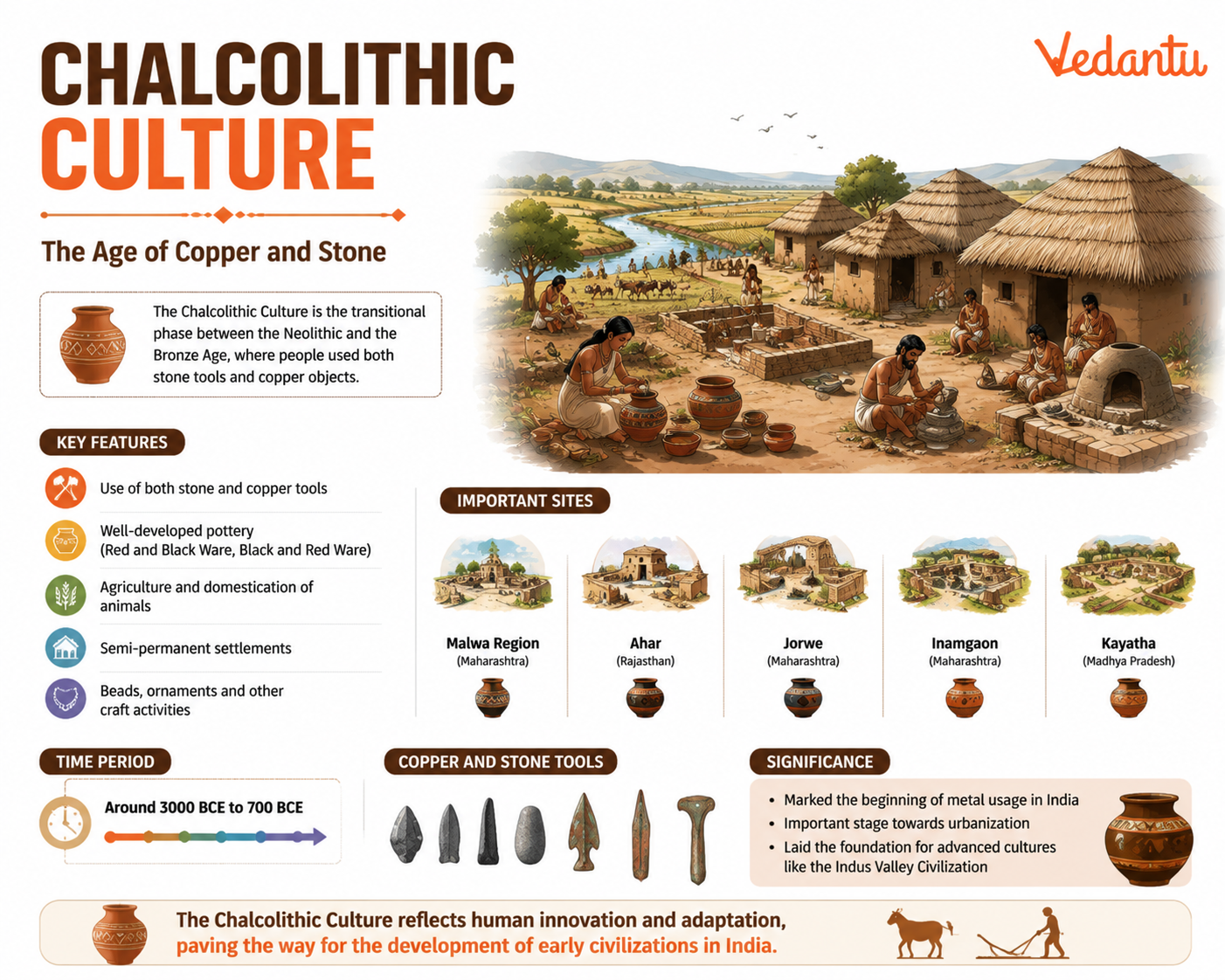
Time Period and Geographical Spread
In India, the Chalcolithic period roughly ranged from 3000 BCE to 700 BCE, varying regionally. Different Chalcolithic cultures flourished in western, central, and southern India. These cultures were mainly rural and agrarian, unlike the urban Harappan civilization.
- Western India - Ahar and Kayatha cultures
- Maharashtra - Jorwe culture
- Madhya Pradesh - Malwa culture
- Eastern India - Pandu Rajar Dhibi
- South India - Savalda and related cultures
Major Chalcolithic Cultures in India
| Culture | Region | Important Sites |
|---|---|---|
| Ahar | Rajasthan | Ahar, Gilund |
| Malwa | Madhya Pradesh | Navdatoli, Maheshwar |
| Jorwe | Maharashtra | Jorwe, Daimabad |
These cultures had distinct pottery styles, settlement patterns, and burial practices, but they shared common features such as the use of copper tools and agricultural economy.
Features of Chalcolithic Culture
1. Settlement Pattern
Most Chalcolithic settlements were located near rivers and fertile plains. Houses were usually made of mud bricks or wattle and daub. Some settlements were fortified, indicating the need for protection.
2. Economy
The economy was primarily agrarian. People cultivated crops and domesticated animals for food and other purposes.
- Major crops - wheat, barley, rice, lentils
- Domesticated animals - cattle, sheep, goat, pig
- Fishing and hunting were supplementary activities
3. Tools and Technology
People used both stone and copper tools. Copper axes, chisels, fish hooks, and bangles have been discovered. However, stone tools continued to be widely used because copper was expensive and less available.
4. Pottery
Chalcolithic pottery was well made and often painted. Black and red ware pottery was common. Designs included geometric patterns and natural motifs.
5. Burial Practices
Burial practices varied across regions. In some cultures, bodies were buried in urns. Grave goods such as pottery and ornaments were often placed with the dead, suggesting belief in life after death.
Social and Religious Life
The society was mostly rural and community based. There is evidence of social differentiation from the size of houses and burial goods. Terracotta figurines, especially of mother goddesses, indicate fertility worship. Some sites show evidence of ritual practices and fire altars.
Difference Between Neolithic and Chalcolithic Culture
| Feature | Neolithic Age | Chalcolithic Age |
|---|---|---|
| Tools | Stone tools only | Stone and copper tools |
| Settlements | Small villages | Developed rural settlements |
The Chalcolithic period shows technological advancement due to the introduction of metal tools, which improved agricultural productivity and craftsmanship.
Decline of Chalcolithic Cultures
Several Chalcolithic settlements declined due to environmental changes, climate shifts, decline in trade, and resource depletion. In some regions, these cultures gradually merged into Iron Age societies.
Importance of Chalcolithic Culture
The Chalcolithic Culture represents an important transitional phase in human history. It reflects the gradual shift from stone based technology to metal use. The period laid the foundation for later developments in agriculture, trade, social organization, and metallurgy. Understanding this culture helps students trace the evolution of early Indian civilizations and the development of rural life after the Indus Valley Civilization.
Exam Oriented Key Points
- Chalcolithic means Copper-Stone Age.
- Time period in India - approximately 3000 BCE to 700 BCE.
- Important cultures - Ahar, Malwa, Jorwe.
- Black and red ware pottery was common.
- Economy based on agriculture and animal husbandry.
The Chalcolithic Culture remains a crucial topic in General Knowledge and competitive exams as it bridges the gap between the Neolithic Age and the Bronze Age. A clear understanding of its features, regional cultures, and contributions helps build a strong foundation in ancient Indian history.
FAQs on Chalcolithic Culture and the Rise of Copper-Stone Communities
1. What is Chalcolithic Culture?
The Chalcolithic Culture refers to the transitional period between the Neolithic (Stone Age) and the Bronze Age when copper was first used along with stone tools.
• Derived from Greek words ‘chalcos’ (copper) and ‘lithos’ (stone)
• Also known as the Copper Age
• Marked by the beginning of metal use in human history
• Followed the Neolithic Age and preceded the Bronze Age
• Important for early settlements, agriculture, and pottery
2. When did the Chalcolithic Age begin in India?
The Chalcolithic Age in India began around 2000 BCE and lasted until about 700 BCE in different regions.
• Time period varied regionally
• Contemporary with the later phase of the Indus Valley Civilization
• Major regional cultures developed during this time
• Important for understanding early Indian prehistory
3. What were the main features of Chalcolithic Culture?
The main features of Chalcolithic Culture include the use of copper tools, settled life, and painted pottery.
• Use of copper and stone tools
• Practice of agriculture and animal domestication
• Development of village settlements
• Distinctive painted pottery (Black-on-Red Ware)
• Burial practices and belief in life after death
4. What were the major Chalcolithic sites in India?
Several important Chalcolithic sites in India reveal early Copper Age settlements.
• Ahar (Rajasthan)
• Kayatha (Madhya Pradesh)
• Navdatoli (Madhya Pradesh)
• Jorwe (Maharashtra)
• Inamgaon (Maharashtra)
These sites help in understanding early rural settlements and metallurgy.
5. What type of tools were used during the Chalcolithic period?
During the Chalcolithic period, people used both copper and stone tools for daily activities.
• Copper axes, chisels, fish hooks
• Stone blades and microliths
• Bone tools for hunting and farming
• Tools mainly used for agriculture, hunting, and crafts
6. What was the economic life of Chalcolithic people?
The economy of Chalcolithic people was primarily based on agriculture and animal husbandry.
• Cultivation of wheat, barley, rice, and pulses
• Domestication of cattle, sheep, and goats
• Practice of trade and exchange
• Development of early craft production and metallurgy
7. What kind of pottery was common in the Chalcolithic Age?
The most common pottery of the Chalcolithic Age was painted and well-baked earthenware.
• Black-on-Red Ware pottery
• Geometric and animal designs
• Handmade and wheel-made pottery
• Used for storage, cooking, and rituals
8. How were Chalcolithic settlements structured?
Chalcolithic settlements were organized rural villages with simple housing structures.
• Houses made of mud, wattle and daub
• Rectangular or circular huts
• Storage pits for grains
• Located near rivers for water supply and farming
9. What were the burial practices in Chalcolithic Culture?
Burial practices in Chalcolithic Culture indicate belief in an afterlife.
• Dead buried in north-south direction
• Pot burials for children
• Grave goods like pottery and tools placed with bodies
• Suggests early religious beliefs and rituals
10. How is the Chalcolithic Age different from the Neolithic and Bronze Age?
The Chalcolithic Age is a transitional phase between the Neolithic and Bronze Age marked by the first use of copper.
• Neolithic Age: Only stone tools, farming begins
• Chalcolithic Age: Copper + stone tools used together
• Bronze Age: Use of bronze (copper + tin), advanced urbanization
• Important bridge in the development of early civilizations and metallurgy
