






Why the BRICS Leaders Meeting Matters for Emerging Economies
The BRICS Summit is an annual meeting of the leaders of the BRICS countries, a group of major emerging economies consisting of Brazil, Russia, India, China, and South Africa. The summit serves as a platform for cooperation in economic development, political coordination, trade, security, and global governance reforms. Over the years, the BRICS Summit has gained global significance as it represents a large share of the world’s population, GDP, and natural resources. It focuses on promoting multipolarity, sustainable development, and strengthening the voice of developing nations in international institutions.
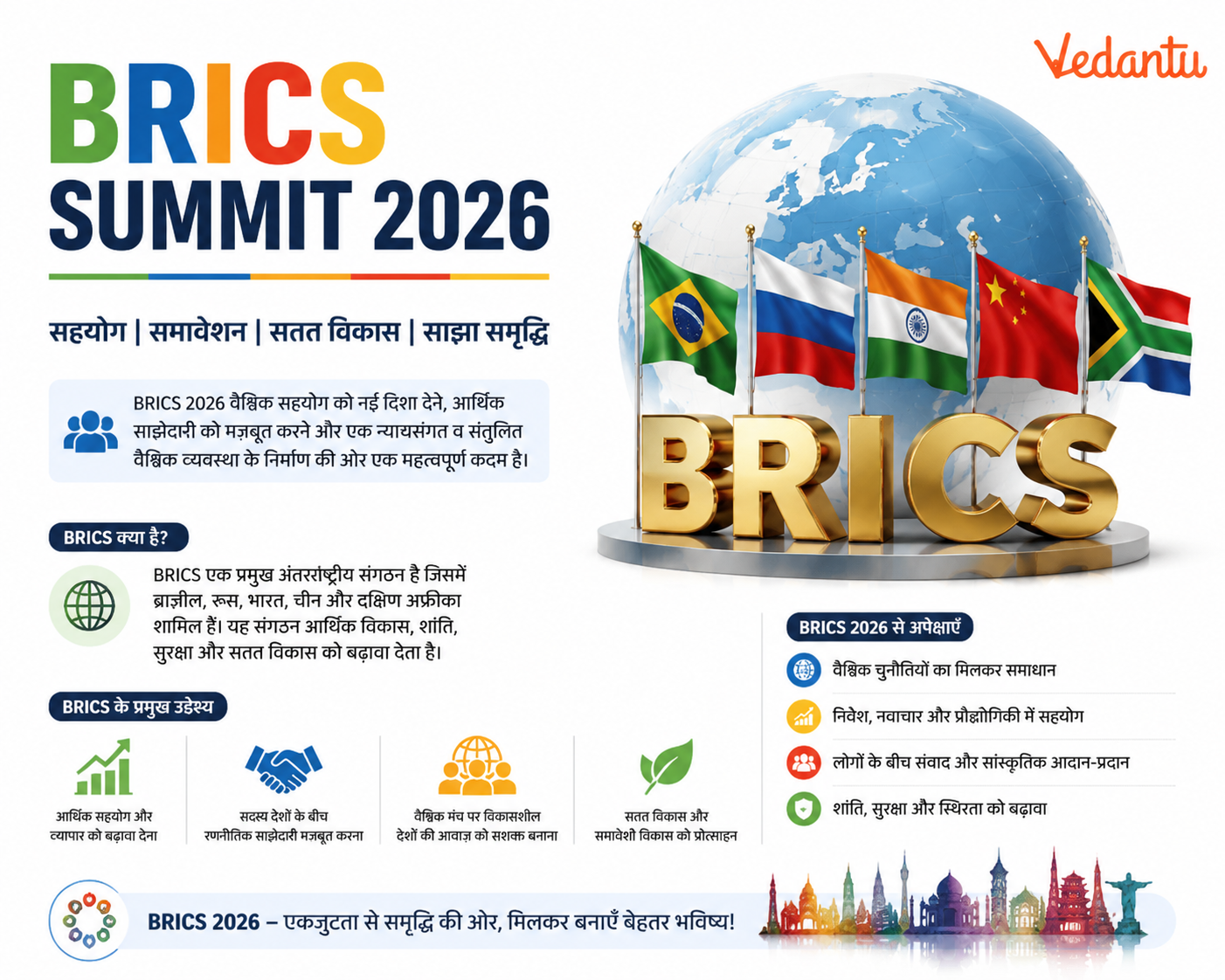
What is BRICS?
BRICS is an intergovernmental organization formed by five major emerging economies. The term BRIC was coined in 2001 by economist Jim O’Neill, and South Africa joined in 2010, making it BRICS. The grouping aims to enhance cooperation among member nations in areas such as finance, trade, health, technology, climate change, and global security.
BRICS Member Countries
| Country | Capital | Year Joined |
|---|---|---|
| Brazil | Brasilia | 2009 |
| Russia | Moscow | 2009 |
| India | New Delhi | 2009 |
| China | Beijing | 2009 |
| South Africa | Pretoria | 2010 |
The first official BRIC Summit was held in 2009 in Yekaterinburg, Russia. After South Africa joined in 2010, the group became BRICS and expanded its global outreach.
Objectives of the BRICS Summit
The BRICS Summit is conducted annually to discuss global challenges and promote cooperation among member nations. The key objectives include:
- Promoting economic growth and development among member countries.
- Reforming global financial institutions such as the IMF and World Bank.
- Encouraging trade cooperation and reducing dependency on dominant global currencies.
- Strengthening political coordination on international issues.
- Enhancing cooperation in science, technology, health, and climate change.
New Development Bank (NDB)
One of the most significant outcomes of the BRICS Summit was the establishment of the New Development Bank in 2014 during the Fortaleza Summit in Brazil. The NDB aims to finance infrastructure and sustainable development projects in BRICS and other developing countries.
- Headquarters - Shanghai, China
- Established - 2014
- Purpose - Funding infrastructure and sustainable projects
Key Areas of Discussion at BRICS Summits
Each BRICS Summit focuses on contemporary global and regional issues. The main discussion areas generally include:
- Global economic stability and trade cooperation
- Counter-terrorism and international security
- Climate change and sustainable development goals
- Digital economy and technological innovation
- Public health cooperation, especially after the COVID-19 pandemic
Importance of the BRICS Summit
The BRICS Summit plays a crucial role in shaping global economic and political discussions. The BRICS countries collectively account for a significant portion of the world’s population, global GDP, and trade. By coordinating policies and presenting unified positions, BRICS strengthens the voice of emerging economies in global governance.
- Represents emerging and developing nations
- Promotes multipolar world order
- Encourages South-South cooperation
- Supports reforms in global financial institutions
Recent Developments in BRICS
In recent years, BRICS has expanded its outreach and discussed the possibility of including new member countries. The group has focused on strengthening local currency trade, digital payment systems, energy security, and climate finance. Expansion and cooperation with other developing nations have increased its geopolitical significance.
Challenges Faced by BRICS
Despite its growing influence, BRICS faces several challenges due to differences in political systems, economic priorities, and regional interests among member nations.
- Geopolitical tensions between member states
- Economic disparities among countries
- Dependence on global financial systems dominated by developed nations
- Coordination challenges in policy implementation
Conclusion
The BRICS Summit is an important international forum that promotes cooperation among major emerging economies. It seeks to reform global governance, enhance economic collaboration, and create a balanced world order. With growing global influence and possible expansion, the BRICS Summit continues to play a vital role in shaping international relations and economic policies. For students and competitive exam aspirants, understanding BRICS is essential as it frequently appears in current affairs, international relations, and general knowledge sections.
FAQs on BRICS Summit 2026: Understanding Its Purpose and Global Role
1. What is the BRICS Summit?
The BRICS Summit is an annual meeting of leaders from the world’s major emerging economies to discuss global economic and political issues.
• BRICS stands for Brazil, Russia, India, China, and South Africa (with new member expansions in recent years).
• It focuses on economic cooperation, global governance reforms, trade, development, and security.
• The summit promotes collaboration among emerging markets and developing countries.
• It is often discussed in People Also Ask queries like “What is BRICS?” and “Why is BRICS important?”
2. When was BRICS formed?
The BRICS group was officially formed in 2009, although the term BRIC was coined earlier in 2001.
• The first BRIC Summit was held in Yekaterinburg, Russia (2009).
• South Africa joined in 2010, making it BRICS.
• The formation aimed to strengthen the voice of emerging economies in global institutions like the UN and IMF.
3. What are the main objectives of the BRICS Summit?
The main objective of the BRICS Summit is to enhance cooperation among member countries for balanced global development.
• Promote economic growth and trade partnerships.
• Reform global financial institutions like the IMF and World Bank.
• Strengthen cooperation in technology, climate change, health, and security.
• Support a multipolar world order and South-South cooperation.
4. Which countries are members of BRICS?
The original members of BRICS are five major emerging economies.
• Brazil
• Russia
• India
• China
• South Africa
• Recently, new members such as Saudi Arabia, UAE, Egypt, Iran, and Ethiopia have been invited/added (expansion phase).
• Expansion strengthens BRICS as a global economic bloc.
5. What is the significance of the BRICS Summit?
The BRICS Summit is significant because it represents major emerging economies influencing global politics and economics.
• BRICS nations account for over 40% of the world’s population.
• They contribute a large share to global GDP and trade.
• The summit promotes alternatives to Western-led institutions.
• It enhances cooperation in energy, infrastructure, digital economy, and sustainable development.
6. What is the New Development Bank (NDB)?
The New Development Bank (NDB) is a financial institution established by BRICS countries to fund infrastructure and development projects.
• Founded in 2014 during the BRICS Summit in Brazil.
• Headquarters in Shanghai, China.
• Supports projects in renewable energy, transportation, water, and urban development.
• Also known as the BRICS Bank.
7. How does the BRICS Summit impact India?
The BRICS Summit strengthens India’s role as a leading emerging economy and global policymaker.
• Enhances trade and investment opportunities.
• Supports India’s push for UN Security Council reforms.
• Promotes cooperation in technology, counter-terrorism, and climate action.
• Helps India balance relations with both Western and non-Western powers.
8. How often is the BRICS Summit held?
The BRICS Summit is held annually with leadership rotating among member nations.
• Each year, one country hosts the summit.
• The host nation sets the theme and agenda.
• Meetings include leaders’ discussions, ministerial meetings, and business forums.
9. What topics are discussed at the BRICS Summit?
The BRICS Summit agenda covers major global and regional issues affecting emerging economies.
• Global economic stability and trade.
• Climate change and sustainable development.
• International security and counter-terrorism.
• Digital economy, artificial intelligence, and innovation.
• Health cooperation, especially after the COVID-19 pandemic.
10. Why is BRICS considered important for global governance?
BRICS is important for global governance because it promotes a more inclusive and multipolar world order.
• Challenges dominance of traditional Western powers.
• Advocates reforms in institutions like the United Nations, IMF, and World Bank.
• Strengthens the voice of developing nations and the Global South.
• Encourages cooperation among large emerging markets to reshape global policies.
