






How Air Transport Systems Work and Their Benefits
Air transportation is one of the fastest and most efficient modes of transport in the modern world. It involves the movement of passengers and goods through aircraft such as airplanes and helicopters. Air transport plays a crucial role in connecting countries, supporting trade, promoting tourism, and enabling rapid emergency services. Due to its speed and global connectivity, air transportation has become an essential part of economic development and international relations.
What is Air Transportation?
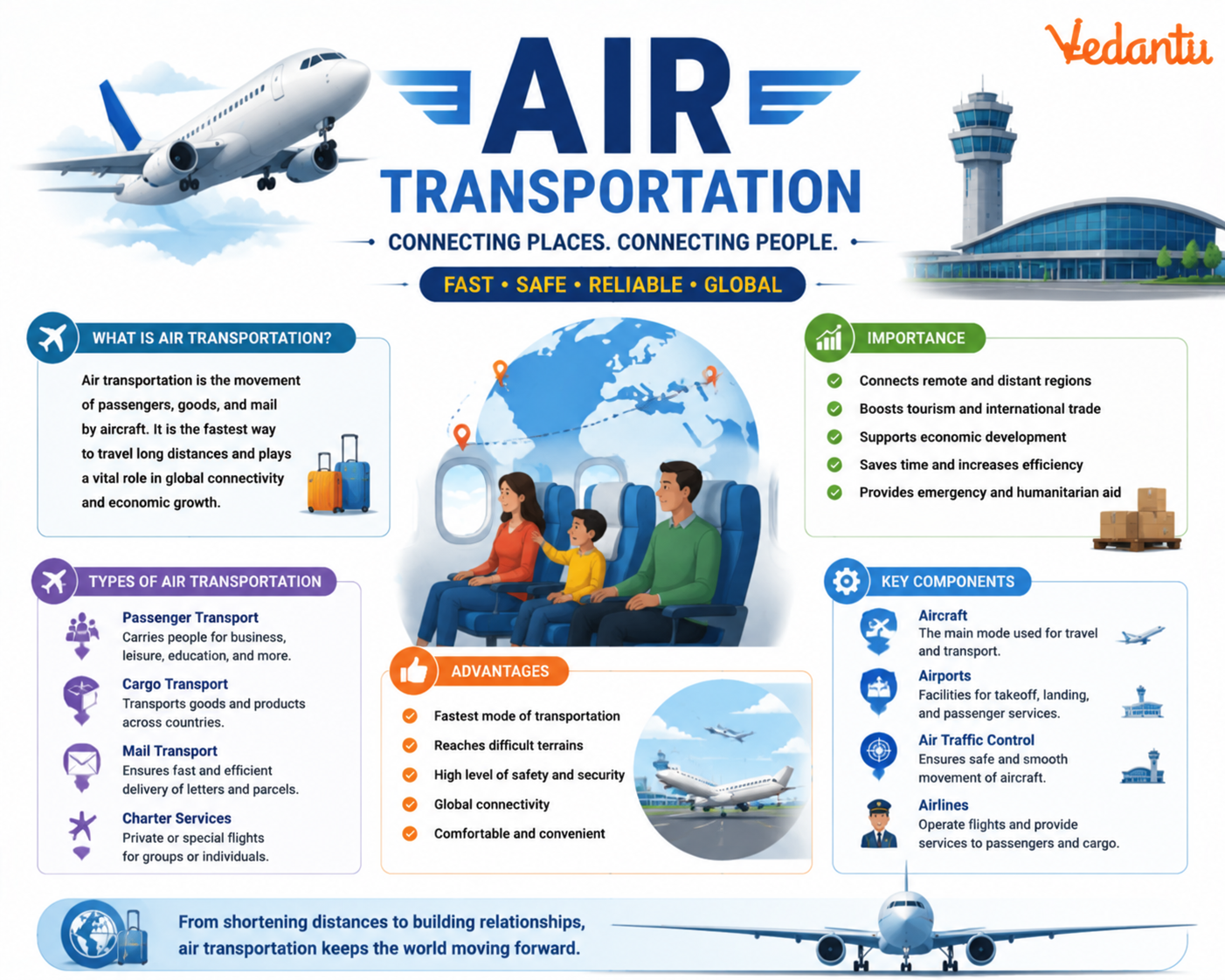
Air transportation refers to the movement of people, cargo, and mail using aircraft through the atmosphere. It operates through a network of airports, air traffic control systems, and airline companies. It is the fastest means of transport over long distances and is especially useful for intercontinental travel.
History of Air Transportation
The development of air transportation began in the early 20th century. The Wright brothers successfully flew the first powered aircraft in 1903. Over time, technological advancements led to the development of commercial airlines, jet engines, and supersonic aircraft.
- 1903 - Wright brothers achieved the first powered flight.
- 1919 - First international commercial flight operated.
- 1950s - Introduction of jet aircraft revolutionized air travel.
- 21st century - Growth of low cost airlines and advanced aviation technology.
Types of Air Transportation
1. Commercial Air Transport
This includes scheduled passenger flights and cargo services operated by airline companies. It connects major cities and countries across the world.
2. Military Air Transport
Used by armed forces for defense operations, troop movement, and transportation of equipment and supplies.
3. Private Air Transport
Includes privately owned aircraft used for personal travel, business trips, and charter services.
4. Cargo Air Transport
Special aircraft are used to transport goods, medicines, and valuable items quickly across long distances.
Components of Air Transportation System
- Aircraft - Airplanes, helicopters, and cargo planes used for transport.
- Airports - Facilities where aircraft take off, land, and undergo maintenance.
- Air Traffic Control - System that manages aircraft movement to ensure safety.
- Airlines - Companies that operate flights for passengers and cargo.
Advantages of Air Transportation
- Fastest mode of transport for long distances.
- Connects remote and inaccessible areas.
- Essential for emergency services and disaster relief.
- Boosts international trade and tourism.
- High level of safety compared to many other transport modes.
Disadvantages of Air Transportation
- High cost of operation and ticket prices.
- Weather dependent and prone to delays.
- Limited capacity compared to sea transport.
- Environmental concerns due to carbon emissions.
Comparison of Air Transportation with Other Modes
| Mode of Transport | Speed | Cost |
|---|---|---|
| Air Transport | Very High | High |
| Rail Transport | Moderate | Moderate |
| Sea Transport | Low | Low |
The table shows that air transportation is the fastest but also one of the most expensive modes of transport. It is mainly preferred for long distance travel where time is an important factor.
Importance of Air Transportation
Air transportation plays a key role in globalization. It helps countries maintain diplomatic relations, promotes cultural exchange, and strengthens economic ties. It is also vital for medical emergencies such as organ transport and air ambulance services. In modern times, air transport supports e commerce and global supply chains by enabling quick delivery of goods.
Air Transportation in India
India has a rapidly growing aviation sector. Major international airports include Indira Gandhi International Airport in Delhi and Chhatrapati Shivaji Maharaj International Airport in Mumbai. The Directorate General of Civil Aviation regulates civil aviation in India. Government initiatives such as the UDAN scheme aim to improve regional air connectivity and make air travel affordable.
Conclusion
Air transportation has transformed the way people and goods move across the globe. Despite its high cost and environmental concerns, it remains the fastest and most efficient means of long distance travel. With continuous technological advancements and improved safety standards, air transportation will continue to play a vital role in global development and connectivity.
FAQs on Air Transportation in English: Meaning, Types and Uses
1. What is Air Transportation?
Air Transportation is the movement of passengers and goods through aircraft such as airplanes and helicopters. It is one of the fastest modes of transport in the world.
• Uses aircraft like commercial planes, cargo planes, and helicopters
• Connects domestic and international destinations
• Important for global trade, tourism, and emergency services
• Managed through airports, air traffic control, and airlines
People also ask: What is air transport? Why is air transportation important?
2. What are the main types of Air Transportation?
The main types of Air Transportation include commercial, cargo, and military aviation services.
• Commercial Air Transport – Carries passengers via scheduled airlines
• Cargo Air Transport – Transports goods and parcels
• Military Aviation – Used for defense and security operations
• Charter Flights – Private or special-purpose flights
People also search: Types of air transport services, categories of aviation.
3. What are the advantages of Air Transportation?
Air Transportation offers speed, global connectivity, and high safety standards compared to other transport modes.
• Fastest means of long-distance travel
• Connects remote and international locations
• Suitable for perishable and high-value goods
• Provides emergency and disaster relief support
People also ask: Benefits of air transport, importance of aviation industry.
4. What are the disadvantages of Air Transportation?
Despite its speed, Air Transportation has limitations such as high cost and weather dependency.
• Expensive compared to road and rail transport
• Affected by bad weather conditions
• Limited carrying capacity for bulky goods
• Contributes to air pollution and carbon emissions
People also search: Problems of air transport, drawbacks of aviation.
5. What is an airport and what are its main functions?
An airport is a facility where aircraft take off, land, and receive passenger and cargo services.
• Provides runways and taxiways
• Manages passenger terminals and baggage services
• Ensures security and customs checks
• Operates air traffic control (ATC)
People also ask: What are the functions of an airport? How does an airport work?
6. What is Air Traffic Control (ATC)?
Air Traffic Control (ATC) is a service that manages aircraft movement to ensure safe and orderly air travel.
• Guides aircraft during takeoff and landing
• Prevents collisions in airspace
• Monitors flight paths using radar systems
• Provides weather and navigation information
People also search: Role of ATC, how air traffic control works.
7. Which was the first successful powered airplane?
The first successful powered airplane was built and flown by the Wright Brothers in 1903.
• Invented by Orville Wright and Wilbur Wright
• First flight on 17 December 1903
• Took place at Kitty Hawk, North Carolina
• Marked the beginning of modern aviation
People also ask: Who invented the airplane? When was the first flight?
8. What is the role of airlines in Air Transportation?
Airlines operate aircraft to transport passengers and cargo across domestic and international routes.
• Provide scheduled and charter flights
• Manage ticketing, baggage, and customer services
• Maintain aircraft safety and maintenance standards
• Follow rules set by civil aviation authorities
People also search: Functions of airlines, airline industry role.
9. What are the major international aviation organizations?
Major international aviation organizations regulate and support global air transport operations.
• ICAO (International Civil Aviation Organization) – Sets global aviation standards
• IATA (International Air Transport Association) – Represents airlines worldwide
• FAA (Federal Aviation Administration) – Regulates aviation in the USA
People also ask: Who regulates international aviation? What is ICAO?
10. Why is Air Transportation important for economic development?
Air Transportation plays a vital role in economic growth by boosting trade, tourism, and global connectivity.
• Promotes international trade and exports
• Supports tourism and hospitality industries
• Creates employment in aviation and airport services
• Enhances global business and investment opportunities
People also search: Importance of air transport in economy, aviation and economic growth.
