







Easy Handicrafts for Kids with Materials Steps and Benefits
Handmade items are referred to as handicrafts. The use of crafts is not limited to decoration; they can also be used for ceremonial events or basic activities.
Knitting and crocheting are two of the most popular types of handicrafts. Both activities are capable of producing a wide range of items that are visually appealing and functional. Knitting is a popular way to make clothing items such as sweaters, mittens, and stocking caps. In this article, you will learn all about handicrafts, their logo, materials, and types of handicrafts.
What are Handicrafts?
Making things by hand that are both decorative and functional is known as a handicraft. Craftspeople or artisans are individuals who produce handicrafts. They use manual labour to create handicraft products.
Using simple tools, skilled people create a wide range of items, ranging from consumer goods to decorative pieces out of paper, wood, clay, shells, rock, stone, metal, and other materials.
Types of Handicrafts
The types of handicrafts vary by group and region. Each group employs a unique set of techniques and decorations. Handicrafts can be made from a variety of natural materials. Palm leaves, grass, and other plant fibres can be used to make baskets. The same technique used to make baskets can also be used to weave hats and house roofs or walls.
Plant fibres or animal wool or hair, such as that of sheep or goats, are used to weave fabrics. These fabrics are frequently adorned with a variety of patterns. Masks, drums, and carvings are frequently made from wood. Jewellery is made from metal and precious stones. Clay can be used to make pots and figurines.
Some of the numerous crafts manufactured in India include Antiques, Art, Baskets, Paper Mache, Ceramics, Clock Making, Embroidery, Block Printing, Decorative Painting, Glass Work, Fabric, Furniture, Gifts, Home Décor, and Jewellery.
Handicrafts in India
Art is defined as a human invention that appeals to the individual's better senses, whereas a craft is a talent, particularly one involving the performing arts. When it comes to India, there is much of both.
Arts and crafts define the cultural strata of a country, community, and race in India, as they do everywhere else. India is well-known for being a multicultural country with a wide range of traditions.
Each subcontinent offers an excess of diverse arts and crafts. When it comes to mediums of expression, terracotta is one of the most popular among Indian craftsmen. Terracotta was first used some 5000 years ago, and the numerous pieces are evidence of exceptional craftsmanship.
Handicrafts for Kids
Young kids love crafts, but they are even better when they are helpful and meaningful!
Crafting promotes the development of fine motor skills. Grabbing a crayon or paint brush strengthens the muscles that will later help preschoolers button their coats, tie their shoes, write, and do other things. It improves pattern recognition and counting.
Critical thinking is encouraged by crafting. It increases strength and durability and encourages nervous readers.
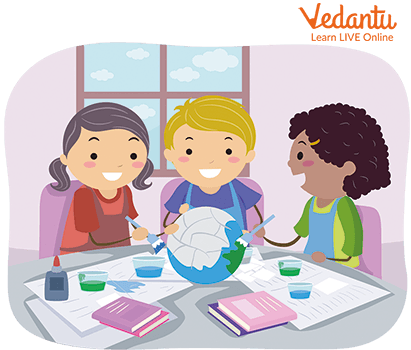
Kids Making Handicraft Items out of Paper
Some useful handicrafts for kids:
Tin punching
Toy making
Doll making
Baking and cooking.
Confectionery
Calligraphy.
Clay sculpting.
Rug making
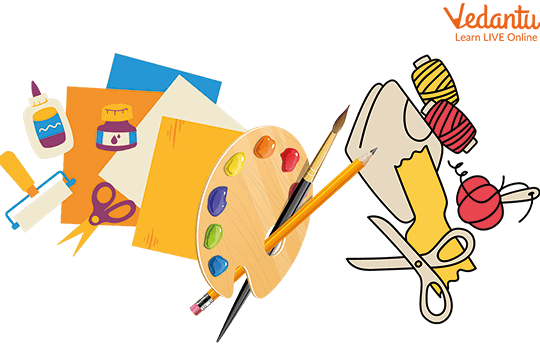
Handicrafts Materials for kids
Handicraft Materials for Kids
Playdough
Water paints
Pom-Pom
Crayons
Glace papers
Masking tape
Glue sticks
Scissors for kids
Handicrafts as Home Decor
If you see around yourself you will observe a lot of home decor items that are made of wood, glass, or paintings which are examples of Handicrafts. Handicraft items have a different kind of rich touch to them because they are sharply detailed.
They add a royal look to your home and enhance its beauty.
Conclusion
Young children can explore and express their emotions through handicrafts. It's a simple and enjoyable way to express your creativity. Handmade items are typically valued higher than factory-made items because they are less common. Handicrafts are not just meant to be made, they are used as home decor which adds an ancient touch to your modern house. There is a different and unique logo for handicrafts present nowadays.
FAQs on Handicrafts for Kids Creative and Educational Craft Ideas
1. What are handicrafts for kids?
Handicrafts for kids are creative activities where children make useful or decorative items using their hands and simple materials. These crafts help develop imagination and fine motor skills.
- Common materials include paper, clay, fabric, beads, and recycled items.
- Examples: paper flowers, greeting cards, clay models, and friendship bands.
- They encourage creativity, patience, and problem-solving.
2. Why are handicrafts important for children?
Handicrafts are important for children because they improve creativity, concentration, and motor skills. Craft activities support both mental and physical development.
- Enhance fine motor skills through cutting, folding, and coloring.
- Build self-confidence when children complete a project.
- Encourage problem-solving and independent thinking.
- Reduce screen time with productive hands-on learning.
3. What are some easy handicraft ideas for kids at home?
Easy handicraft ideas for kids at home include simple, low-cost DIY projects using everyday materials. These crafts require minimal supervision and basic supplies.
- Paper plate masks
- Origami animals
- Handmade greeting cards
- Clay or playdough shapes
- Recycled bottle pen holders
4. How do handicrafts help in a child’s development?
Handicrafts help in a child’s development by strengthening cognitive, emotional, and physical skills. Craftwork supports overall growth through creative engagement.
- Improves hand-eye coordination.
- Boosts creativity and imagination.
- Teaches patience and task completion.
- Encourages teamwork during group craft activities.
5. What materials are commonly used in handicrafts for kids?
Common materials used in handicrafts for kids include safe, inexpensive, and easily available supplies. These materials make craft activities simple and accessible.
- Colored paper and cardboard
- Glue, scissors, and crayons
- Clay or playdough
- Ice cream sticks and beads
- Recycled materials like bottles and newspapers
6. What are the best handicrafts for preschoolers?
The best handicrafts for preschoolers are simple, safe, and focused on basic motor skills. Activities should match their age and attention span.
- Finger painting
- Paper tearing and pasting
- Handprint art
- Simple paper folding
7. How can I teach handicrafts to kids step by step?
You can teach handicrafts to kids step by step by demonstrating clearly and guiding them through each stage of the project. Structured instruction makes crafting easier for children.
- Step 1: Show the finished sample craft.
- Step 2: Explain the materials needed.
- Step 3: Demonstrate each step slowly.
- Step 4: Let children try independently.
- Step 5: Appreciate and display their work.
8. What are some eco-friendly handicrafts for kids?
Eco-friendly handicrafts for kids use recycled and natural materials to create creative projects while protecting the environment. These crafts teach sustainability.
- Newspaper baskets
- Plastic bottle planters
- Cardboard photo frames
- Leaf printing art
9. How do handicrafts improve creativity in children?
Handicrafts improve creativity in children by allowing them to imagine, design, and create unique items from simple materials. Craftwork encourages original thinking.
- Children choose colors and patterns independently.
- They experiment with shapes and designs.
- They learn to turn ideas into physical objects.
10. What safety tips should parents follow during handicraft activities?
Parents should follow basic craft safety rules to ensure children stay safe during handicraft activities. Proper supervision prevents accidents.
- Use child-safe scissors and non-toxic glue.
- Avoid sharp or small choking-hazard items for younger kids.
- Supervise activities involving cutting or hot glue.
- Keep the workspace clean and organized.
