






How to Identify a Yellowjacket and Tell It Apart from Bees
Yellowjackets are bright yellow and black insects that look similar to bees but are actually a type of wasp. They are known for their fast flight, strong sting, and protective nature. Yellowjacket facts show that they are important predators and scavengers in nature. Although they can sting if disturbed, they also help control harmful insects and clean up waste in the environment.
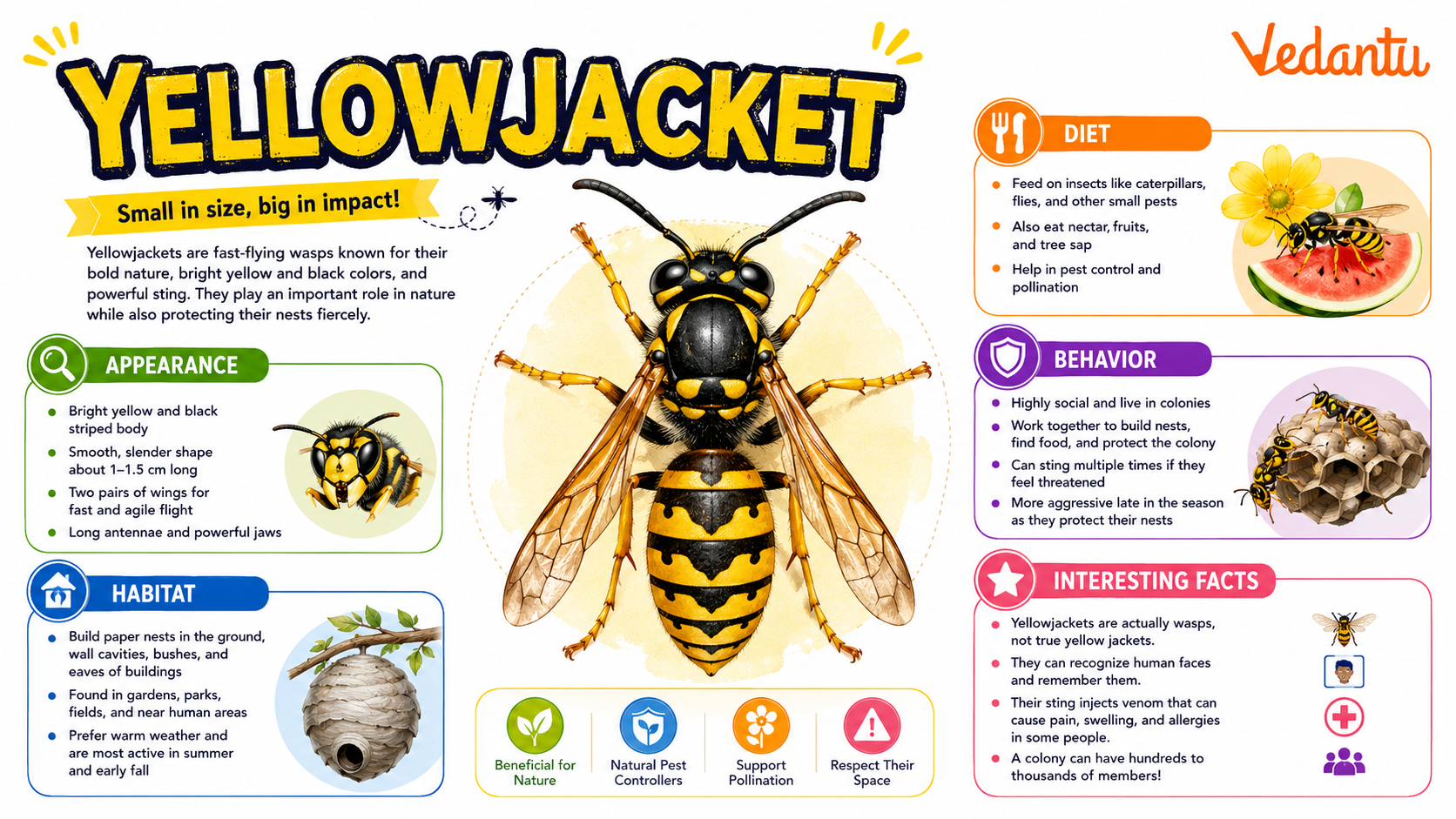
Quick Facts About Yellowjacket
| Feature | Details |
|---|---|
| Common Name | Yellowjacket |
| Animal Group | Insect |
| Family | Vespidae (Wasp family) |
| Size | About 10–16 mm long |
| Habitat | Gardens, forests, fields, underground burrows |
| Diet | Insects, sugary foods, nectar |
| Lifespan | Workers: a few weeks; Queen: up to 1 year |
| Special Feature | Can sting multiple times |
Appearance and Physical Characteristics
- Bright yellow and black striped body
- Smooth and shiny body (less hairy than bees)
- Six legs and two clear wings
- Thin waist between thorax and abdomen
- Strong jaws for chewing insects
Yellowjacket Habitat and Distribution
Yellowjacket habitat areas include many parts of the world. They are commonly found in North America and other temperate regions.
- Underground burrows
- Wall cavities and roof spaces
- Hollow logs or tree trunks
- Thick bushes and shrubs
Diet and Feeding Habits
The yellowjacket diet changes depending on its life stage.
Feed on sugary foods like nectar, fruits, and even human food such as juice or sweets.
Eat chewed-up insects brought by worker wasps.
Catch flies, caterpillars, and other small insects.
Clean up dead insects and leftover food, helping the ecosystem.
Behaviour and Lifestyle
- Highly social insects living in colonies
- Each colony has a queen, workers, and males
- Very protective of their nest
- Active during the day
- Communicate using chemicals called pheromones
Yellowjacket Life Cycle
- Egg: Queen lays eggs inside nest cells.
- Larva: Worm-like young are fed by worker wasps.
- Pupa: Larva forms a protective covering and transforms.
- Adult: Fully developed yellowjacket emerges.
What Makes Yellowjacket Special?
Can sting more than once without losing the stinger.
Build strong nests from chewed wood fibres.
Quick and agile in the air.
Work together to protect their colony.
Importance and Role in Nature
Eat harmful insects that damage crops and plants.
Help in pollinating flowers while feeding on nectar.
Serve as food for birds, mammals, and other insects.
Remove dead insects and organic waste.
Amazing Yellowjacket Facts
- Some colonies can have thousands of members.
- They become more aggressive in late summer.
- They are often confused with bees.
- Their bright colours warn predators to stay away.
- They can detect sweet smells from far away.
- Queens are larger than worker wasps.
Fun Facts for Kids
- Yellowjackets love sugary drinks at picnics.
- They can fly quickly in zigzag patterns.
- Their nests can look like grey paper balls.
- They help farmers by eating crop pests.
- Not all yellow and black insects are bees!
FAQs on Yellowjacket Wasp: Identification, Nesting & Safety Guide
1. What is a Yellowjacket?
A Yellowjacket is a small, black-and-yellow striped wasp known for its bright colors and strong sting.
- It belongs to the wasp family, not bees.
- It has a smooth, shiny body with yellow and black bands.
- It is a type of social insect that lives in colonies.
- People often confuse it with honeybees or hornets.
2. Are Yellowjackets bees or wasps?
Yellowjackets are wasps, not bees.
- They have smooth bodies, unlike fuzzy bees.
- They can sting multiple times.
- They are part of the Vespula and Dolichovespula genera.
- They are closely related to hornets and other social wasps.
3. Why are Yellowjackets aggressive?
Yellowjackets can be aggressive because they protect their nest and look for food.
- They defend their colony if disturbed.
- They are attracted to sugary drinks and meats.
- Late summer makes them more active and protective.
- They may sting if they feel threatened.
4. Where do Yellowjackets build their nests?
Yellowjackets build paper-like nests in hidden or underground places.
- Underground burrows in soil.
- Inside wall cavities or attics.
- In trees or shrubs.
- Nests are made from chewed wood fibers.
5. What do Yellowjackets eat?
Yellowjackets eat both sweet foods and protein-rich insects.
- Nectar and sugary liquids.
- Fruits and sweet snacks.
- Small insects like flies and caterpillars.
- Meat scraps at picnics.
6. Do Yellowjackets sting more than once?
Yes, a Yellowjacket can sting multiple times because it does not lose its stinger.
- Unlike honeybees, their stinger is smooth.
- They can inject venom more than once.
- Stings can cause pain, swelling, or allergic reactions.
- People with allergies should seek medical help immediately.
7. Are Yellowjackets helpful to the environment?
Yellowjackets help control pests and support ecosystems.
- They eat harmful insects like flies.
- They help reduce garden pests.
- They sometimes assist in pollination.
- They are part of the natural food chain.
8. How can you avoid Yellowjacket stings?
You can avoid Yellowjacket stings by staying calm and careful outdoors.
- Do not swat at them.
- Keep food and drinks covered.
- Avoid disturbing nests.
- Wear shoes when walking on grass.
9. What is the life cycle of a Yellowjacket?
The Yellowjacket life cycle includes egg, larva, pupa, and adult stages.
- A queen starts the colony in spring.
- Workers hatch and build the nest.
- The colony grows through summer.
- Most die in winter except new queens.
10. What is the difference between a Yellowjacket and a hornet?
Yellowjackets are smaller and more brightly striped than most hornets.
- Yellowjackets are usually smaller and nest underground.
- Hornets are larger and build aerial paper nests.
- Both are types of social wasps.
- Both can sting multiple times.
