






How to Identify White Grub Damage in Lawns and Get Rid of It Safely
White grubs are the soft, C-shaped larvae of beetles, mostly from the scarab beetle family. Though they look harmless, these tiny underground creatures can seriously damage crops, lawns, and plants by feeding on roots. Understanding White Grub facts, White Grub habitat, and the White Grub life cycle helps farmers and students learn how important and impactful these insects are in nature and agriculture.
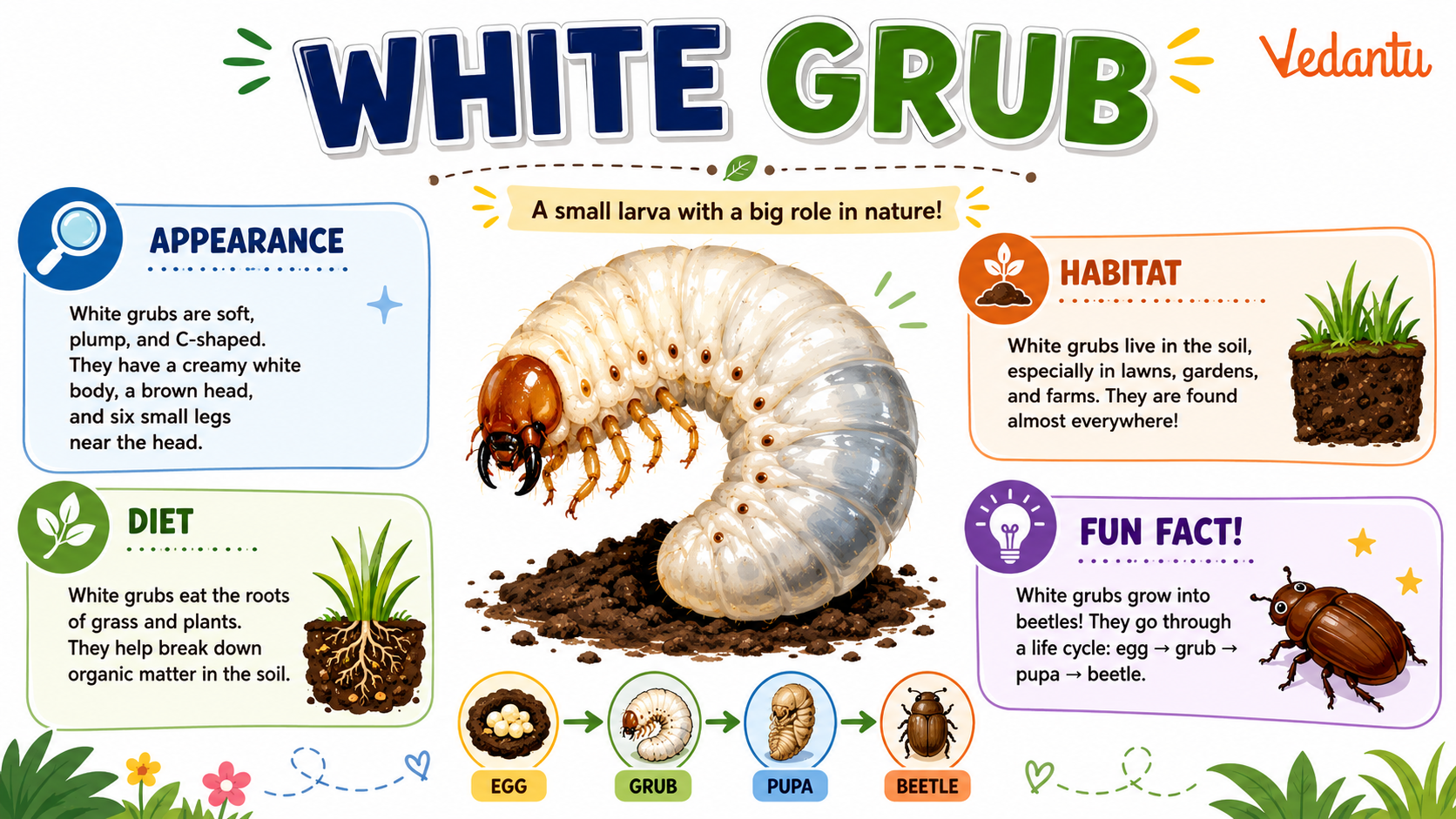
Quick Facts and Statistics
| Feature | Details |
|---|---|
| Common Name | White Grub |
| Scientific Group | Larvae of Scarab Beetles (Family: Scarabaeidae) |
| Animal Group | Insect |
| Size | 1–5 cm long (depending on species) |
| Habitat | Soil, lawns, farms, gardens |
| Diet | Plant roots, organic matter |
| Life Cycle | Complete metamorphosis (Egg → Larva → Pupa → Adult) |
| Importance | Can damage crops and turf grass |
Appearance and Physical Characteristics
- Soft, creamy white or pale body.
- Usually curled into a C-shape.
- Brown head with strong chewing mouthparts.
- Three pairs of small legs near the head.
- Thick, segmented body.
White Grub Habitat and Distribution
- Live mainly underground in soil.
- Common in farms, grasslands, gardens, and lawns.
- Found in many parts of the world, including Asia, Africa, Europe, and North America.
- Prefer moist soil rich in plant roots.
Diet and Feeding Habits
What Do White Grubs Eat?
- Roots of crops (like sugarcane, maize, rice).
- Grass roots in lawns and playgrounds.
- Organic matter in the soil.
Feeding Behaviour
- Feed mostly at night or underground.
- Chew roots using strong mouthparts.
- Cause plants to turn yellow and dry.
Behaviour and Lifestyle
- Live alone but may be found in groups in the same soil area.
- Remain hidden during most of their larval stage.
- Move slowly by crawling in soil.
- Become adult beetles after completing development.
White Grub Life Cycle
Female beetles lay eggs in the soil during the rainy or warm season.
Eggs hatch into grubs that feed on roots for several months.
The grub forms a resting stage in the soil called a pupa.
The adult beetle emerges from the soil and the cycle repeats.
The complete White Grub life cycle usually takes about 1 year, depending on the species and climate.
What Makes White Grubs Special?
Importance and Role in Nature
Amazing White Grub Facts
- White grubs are not a separate species but the larval stage of beetles.
- They can cause serious crop loss in agriculture.
- Birds often dig up lawns to eat white grubs.
- They curl into a C-shape when disturbed.
- Some species remain in the larval stage for more than a year.
- They are most active during warm seasons.
Interesting Facts About White Grub
Fun Facts for Kids
- White grubs look like tiny, curved worms.
- They live secretly under your feet in the soil!
- Birds love to eat them as a snack.
- They turn into flying beetles when grown up.
- They curl up tightly when touched.
FAQs on White Grub: Life Cycle, Lawn Damage, and Easy Control Tips
1. What is a White Grub?
White grub is the larval (baby) stage of certain beetles that live in the soil and feed on plant roots.
- White grubs are soft, C-shaped worms with creamy white bodies.
- They usually have brown heads and six tiny legs.
- They grow into beetles such as June bugs or chafer beetles.
- They are commonly found in lawns, gardens, and farms.
2. What do White Grubs eat?
White grubs mainly eat plant roots, which can damage grass and crops.
- They feed on grass roots in lawns.
- They may attack vegetable plants and field crops.
- Heavy feeding causes wilting, yellowing, and dead patches.
- Animals like birds dig soil to eat grubs.
3. Are White Grubs harmful to lawns?
Yes, white grubs can seriously damage lawns by destroying root systems.
- Grass becomes loose and easy to pull up.
- You may see brown or dry patches.
- Lawns feel spongy when walked on.
- Large infestations may require grub control treatment.
4. How can you identify a White Grub infestation?
A white grub infestation can be identified by damaged grass and visible larvae in soil.
- Look for irregular brown patches in the lawn.
- Check under the soil for C-shaped grubs.
- Notice increased activity of birds or raccoons digging.
- More than 5–10 grubs per square foot means a problem.
5. How do White Grubs grow and develop?
White grubs go through a complete life cycle called metamorphosis.
- Stage 1: Egg laid in soil by adult beetle.
- Stage 2: Larva (white grub) feeds on roots.
- Stage 3: Pupa develops underground.
- Stage 4: Adult beetle emerges from soil.
6. When are White Grubs most active?
White grubs are most active in late summer and early fall when they feed heavily on roots.
- Eggs hatch in mid to late summer.
- Young grubs feed near the soil surface.
- In winter, they move deeper into the soil.
- They return closer to the surface in spring.
7. Are White Grubs harmful to humans?
White grubs are not harmful to humans because they do not bite or spread diseases.
- They do not sting or attack people.
- They live mostly underground.
- Their main damage is to plants and lawns, not humans.
- They are safe to handle but should be washed off hands.
8. How can you control or prevent White Grubs?
White grub control involves proper lawn care and treatment methods.
- Maintain a healthy lawn with regular watering and mowing.
- Use biological control like beneficial nematodes.
- Apply recommended grub control products if needed.
- Avoid overwatering, which attracts beetles to lay eggs.
9. Which beetles turn into White Grubs?
White grubs are the larvae of scarab beetles such as June bugs and chafer beetles.
- Japanese beetles
- June beetles (May beetles)
- Masked chafers
- Other members of the Scarabaeidae family
10. Why are White Grubs important in the ecosystem?
White grubs play a role in the food chain and soil ecosystem despite being pests.
- They serve as food for birds, moles, and other animals.
- They help in breaking down organic matter.
- They are part of the natural soil life cycle.
- Balanced populations support ecosystem health.
