






What Is a Vole? Key Facts, Diet, Habitat, and How to Tell It Apart from Mice
Voles are small, mouse-like mammals that live in fields, forests, and meadows. Though they look similar to mice, they are different animals with shorter tails and rounder faces. Voles are famous for their underground tunnels and fast breeding habits. These little creatures play an important role in nature by shaping soil and serving as food for many predators. Let’s explore interesting vole facts, habitat details, diet, life cycle, and more!
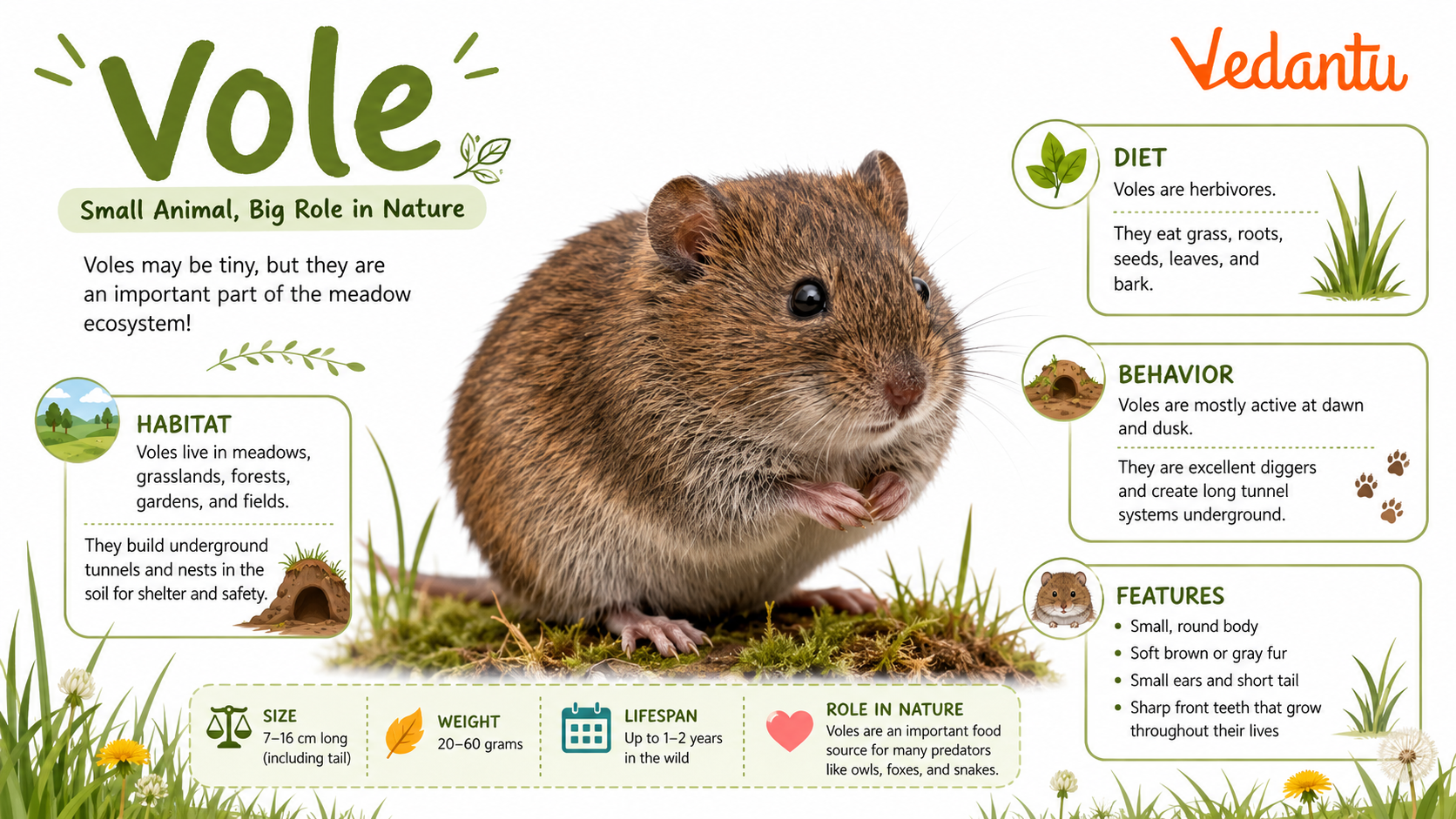
Quick Facts About Vole
| Feature | Details |
|---|---|
| Common Name | Vole |
| Scientific Family | Cricetidae |
| Animal Group | Mammal |
| Size | 8–20 cm long |
| Weight | 20–200 grams |
| Lifespan | 3–12 months (wild) |
| Habitat | Grasslands, forests, meadows, wetlands |
| Diet | Grass, roots, seeds, bark |
| Young One | Pup |
| Conservation Status | Most species: Least Concern |
Appearance and Physical Characteristics
- Small, round body with short legs.
- Short tail compared to mice.
- Small rounded ears, often hidden in fur.
- Blunt snout and tiny eyes.
- Soft brown, grey, or reddish fur.
Vole Habitat and Distribution
- Found in North America, Europe, and Asia.
- Live in grasslands, fields, forests, and wetlands.
- Build shallow underground tunnels.
- Some species live near rivers and marshes.
Voles prefer cool and temperate climates. Their tunnels protect them from predators and harsh weather.
Diet and Feeding Habits
- Grasses and leaves
- Roots and tubers
- Seeds and grains
- Tree bark (especially in winter)
Voles are herbivores. They use their sharp front teeth to gnaw continuously. Because their teeth grow throughout life, they must keep chewing to wear them down.
Behaviour and Lifestyle
Voles are active throughout the day and night in short bursts.
They reproduce quickly, leading to sudden population increases.
Create networks of runways and burrows under grass.
Food source for owls, snakes, foxes, and hawks.
Vole Life Cycle
- Birth: Female gives birth to 3–6 pups after about 3 weeks of pregnancy.
- Baby Stage: Pups are born blind and hairless.
- Growth: Eyes open in about 10 days.
- Adult: Become adults in just 1 month!
Because they grow and reproduce quickly, vole populations can increase rapidly under good conditions.
What Makes Voles Special?
Importance and Role in Nature
- Help aerate soil by digging tunnels.
- Spread plant seeds.
- Serve as prey for many predators.
- Influence plant growth patterns.
Amazing Vole Facts
Interesting Facts About Voles
- Some species form monogamous pairs.
- They communicate using squeaks and scent marks.
- Voles are more active in cooler weather.
- They store food inside burrows for winter.
Fun Facts for Kids
- Voles look like tiny, fluffy potatoes with whiskers!
- They are expert diggers.
- Baby voles grow up in just one month.
- Owls love hunting voles at night.
- They are sometimes called “meadow mice,” but they are not mice.
FAQs on Vole Animal Guide: Identification, Habitat, and Behavior
1. What is a vole?
A vole is a small, mouse-like rodent that lives in fields, forests, and gardens.
- Scientific family: Cricetidae
- Often confused with mice and moles
- Has a short tail, small ears, and a round body
- Common types include the meadow vole and field vole
2. What does a vole look like?
A vole looks like a tiny, round mouse with a shorter tail and smaller ears.
- Body length: 3–9 inches
- Short, furry tail
- Small, partly hidden ears
- Brown or gray fur
3. Where do voles live?
Voles live in grassy and wooded areas across North America, Europe, and Asia.
- Habitats: meadows, gardens, forests, farms
- Build underground tunnels called burrows
- Make surface runways in grass
4. What do voles eat?
Voles mostly eat plants and are considered herbivores.
- Grass and leaves
- Seeds and roots
- Bark from trees in winter
5. Are voles harmful to humans?
Voles are generally not dangerous to humans but can damage plants and crops.
- Rarely bite people
- May carry diseases like other wild rodents
- Can harm lawns and tree roots
6. What is the difference between a vole, a mole, and a mouse?
A vole, mole, and mouse are different small mammals with unique features.
- Vole: short tail, round body, eats plants
- Mouse: long tail, larger ears, pointed nose
- Mole: large digging paws, tiny eyes, eats insects
7. How long do voles live?
Voles have short lifespans and usually live less than one year in the wild.
- Average lifespan: 3–12 months
- Many predators such as owls, snakes, and foxes
- High reproduction rate
8. How do voles reproduce?
Voles reproduce very quickly and can have many babies each year.
- Females can have 5–10 litters annually
- Each litter may have 3–6 pups
- Babies grow up in about one month
9. What animals eat voles?
Many predators rely on voles as a food source in the food chain.
- Owls and hawks
- Snakes
- Foxes and coyotes
- Domestic cats
10. How can you tell if you have voles in your yard?
You can spot voles by looking for surface tunnels and plant damage.
- Narrow runways in grass
- Small burrow holes
- Gnawed tree bark near the ground
