






Why the Turkish Van Cat Loves Water and What Owners Should Know
The Turkish Van Cat is a rare and beautiful cat breed famous for its unique love of water. Unlike most cats, this playful feline enjoys splashing and even swimming! Known for its soft, semi-long coat and striking coloured head and tail, the Turkish Van stands out among other cat breeds. In this page, explore Turkish Van Cat facts, habitat, diet, characteristics, life cycle, and interesting traits in a fun and easy way.
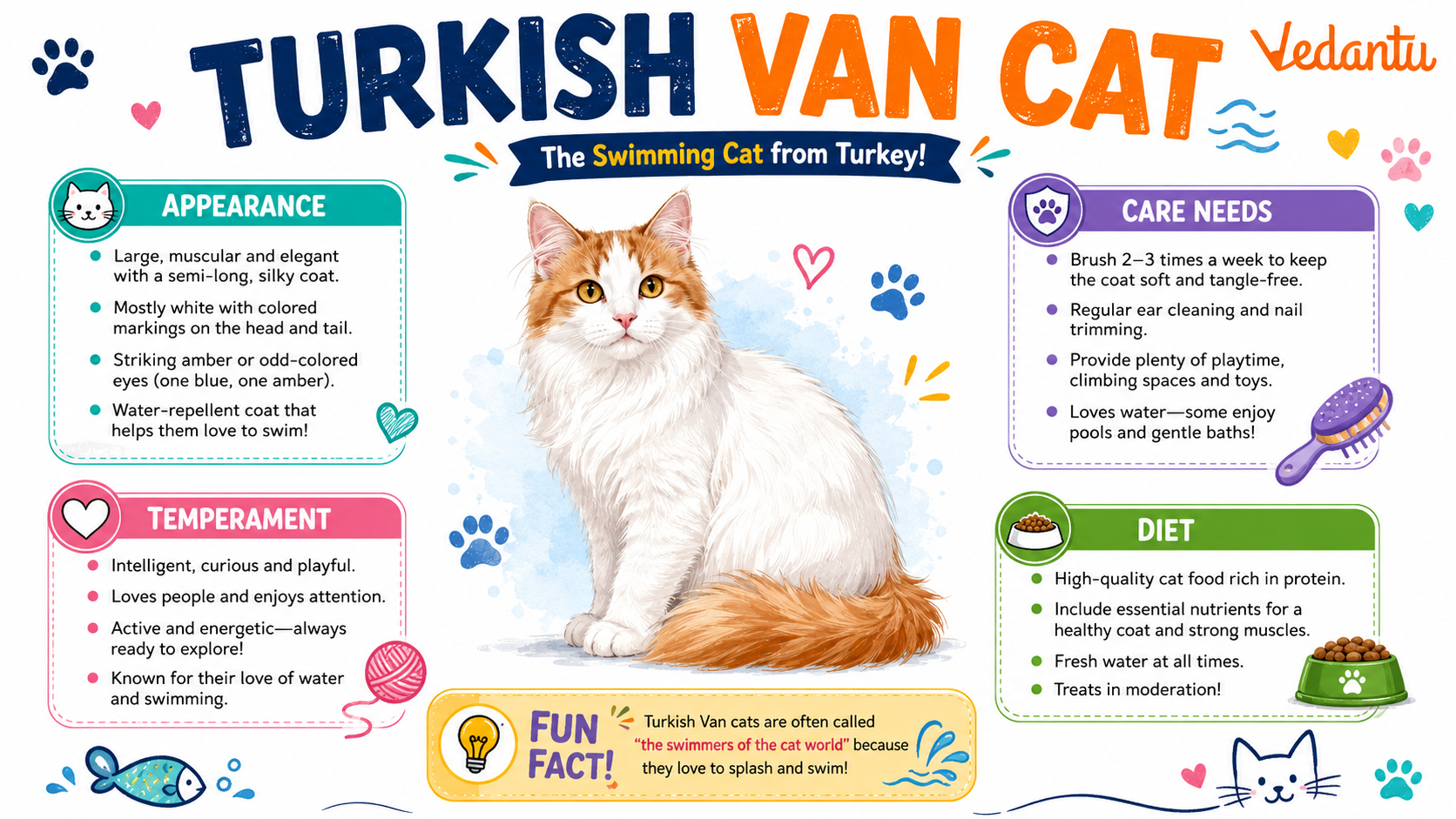
Quick Facts About Turkish Van Cat
| Feature | Details |
|---|---|
| Common Name | Turkish Van Cat |
| Scientific Name | Felis catus |
| Animal Group | Mammal |
| Origin | Lake Van region, Turkey |
| Size | Medium to Large |
| Weight | 4–9 kg |
| Lifespan | 12–17 years |
| Diet | Carnivore |
| Special Feature | Water-resistant coat |
Appearance and Physical Characteristics
- Body: Strong, muscular, and well-balanced.
- Coat: Semi-long, silky, and water-resistant.
- Colour Pattern: Mostly white body with coloured markings on the head and tail (called the “Van pattern”).
- Eyes: Blue, amber, or one of each (odd-eyed).
- Tail: Bushy and ringed with colour.
Habitat and Distribution
The Turkish Van Cat originally comes from the Lake Van region in eastern Turkey. The area has cold winters and warm summers.
- Natural Region: Around Lake Van, Turkey.
- Climate Preference: Can adapt to both cool and warm climates.
- Modern Habitat: Mostly domestic homes worldwide.
Today, Turkish Van Cats are found in many countries as cherished pets.
Diet and Feeding Habits
Turkish Van Cats are carnivores, meaning they eat meat.
Fish, chicken, turkey, and specially prepared cat food.
Small, frequent meals are best for their energy levels.
Unlike most cats, they enjoy playing near water bowls!
Behaviour and Lifestyle
- Very playful and energetic.
- Intelligent and quick learners.
- Often enjoy climbing and exploring.
- Form strong bonds with their families.
- May follow owners around the house.
The Turkish Van Cat characteristics include curiosity, confidence, and a love for interactive games.
Life Cycle of Turkish Van Cat
- Kitten Stage: Born blind and fully dependent on the mother.
- Growing Stage: Begin exploring and playing at 3–4 weeks old.
- Young Adult: Become active and independent within a year.
- Adult Cat: Fully grown by 3–5 years; strong and muscular.
- Senior Stage: Slower but still affectionate in later years.
What Makes the Turkish Van Cat Special?
Temperament and Domestic Life
- Friendly but slightly independent.
- Good with older children.
- Needs space to play and climb.
- Enjoys interactive toys and puzzles.
- Requires regular grooming during shedding season.
Importance and Role with Humans
Amazing Turkish Van Cat Facts
- It is often called the “Swimming Cat.”
- The breed developed naturally, not by human mixing.
- Its coat becomes thicker in winter.
- It matures more slowly than many other cats.
- It is one of the rarest cat breeds in the world.
- Its tail markings often look like coloured rings.
Fun Facts for Kids
FAQs on Turkish Van Cat Breed Guide: Personality, Size, and Care
1. What is a Turkish Van Cat?
The Turkish Van Cat is a rare and ancient cat breed famous for its love of water and unique color pattern.
- Originated in Turkey, near Lake Van
- Known as the “swimming cat”
- Has a mostly white body with colored head and tail
- Considered a natural and ancient cat breed
- Popular among families looking for an active and playful pet
2. Why is the Turkish Van Cat called the swimming cat?
Turkish Van Cats are called swimming cats because they enjoy playing and swimming in water.
- Unlike most cats, they are not afraid of water
- Have a semi-long, water-resistant coat
- Historically lived near Lake Van
- Often splash in bathtubs or shallow pools
- This rare trait makes them unique among domestic cats
3. What does a Turkish Van Cat look like?
The Turkish Van has a striking appearance with a special color pattern called the Van pattern.
- Mostly white fur on the body
- Colored markings on the head and tail
- Bright blue, amber, or odd-colored eyes
- Strong, muscular body
- Soft, semi-long silky coat
4. Are Turkish Van Cats good pets for kids?
Turkish Van Cats can be great pets for kids because they are playful and energetic.
- Love interactive games and toys
- Very intelligent and curious
- Form strong bonds with family members
- Prefer active households
- Need gentle handling and respect
5. How big do Turkish Van Cats get?
Turkish Van Cats are considered a large and strong cat breed.
- Males weigh about 10–20 pounds
- Females are slightly smaller
- Have a muscular and athletic build
- Grow slowly and may take 3–5 years to fully mature
- Known for their powerful jumping ability
6. What is the personality of a Turkish Van Cat?
The Turkish Van personality is active, smart, and adventurous.
- Highly intelligent and quick learners
- Love climbing and exploring high places
- Very loyal to their favorite person
- Can be independent at times
- Enjoy puzzle toys and challenges
7. Do Turkish Van Cats need a lot of grooming?
Turkish Van Cats need moderate grooming despite their semi-long fur.
- Have a soft, single-layer coat
- Brush once or twice a week
- Shed more during seasonal changes
- Do not mat easily
- Regular nail trimming and ear checks are helpful
8. Are Turkish Van Cats rare?
The Turkish Van is considered a rare cat breed worldwide.
- Originally from a specific region in Turkey
- Limited breeding programs outside Turkey
- Recognized by major cat associations
- Often confused with the Turkish Angora
- Harder to find than common domestic cats
9. How long do Turkish Van Cats live?
Turkish Van Cats usually live a long and healthy life with proper care.
- Average lifespan is 12–17 years
- Need balanced nutrition
- Benefit from regular vet checkups
- Stay healthier with exercise and play
- Indoor living increases life expectancy
10. What do Turkish Van Cats eat?
Turkish Van Cats need a balanced and protein-rich diet to stay strong and active.
- High-quality cat food with real meat
- Fresh water available at all times
- Portion control to prevent obesity
- Occasional healthy treats
- Consult a veterinarian for special dietary needs
