






What Makes Thoroughbred Horses So Fast? Speed, Bloodlines, and Racing History
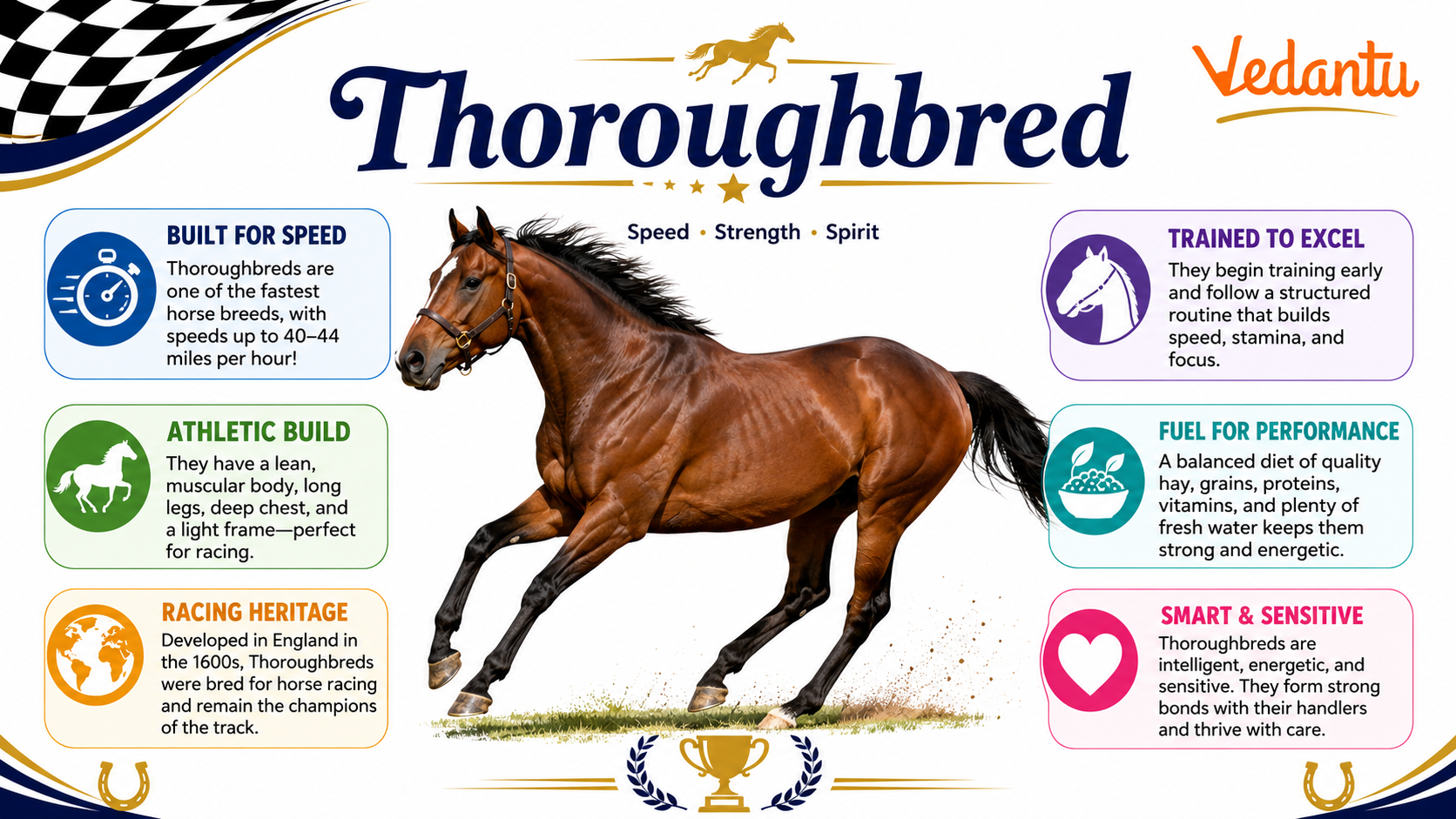
The Thoroughbred is one of the world’s most famous horse breeds, known for its incredible speed, strength, and elegance. Bred mainly for horse racing, this athletic animal has a slim body, long legs, and amazing stamina. Thoroughbred facts show that these horses are not only fast but also intelligent and energetic. Today, they are popular in racing, show jumping, and other equestrian sports around the world.
Quick Facts About Thoroughbred
| Feature | Details |
|---|---|
| Common Name | Thoroughbred |
| Scientific Name | Equus ferus caballus |
| Animal Group | Mammal |
| Type | Horse Breed (Hot-blooded) |
| Height | 15–17 hands (about 152–173 cm) |
| Weight | 450–550 kg |
| Lifespan | 25–30 years |
| Diet | Herbivore (grass, hay, grains) |
| Habitat | Farms, stables, grasslands |
| Special Feature | Exceptional speed and stamina |
Appearance and Physical Characteristics
- Slim, athletic, and muscular body.
- Long neck and refined head.
- Deep chest for strong lungs and heart.
- Long, thin legs with strong tendons.
- Short, smooth coat.
- Common colours: bay, chestnut, black, grey.
Habitat and Distribution
The Thoroughbred habitat is not wild forests or deserts. These horses are domestic animals and live under human care.
- Raised on farms and breeding ranches.
- Kept in stables with open paddocks.
- Found worldwide, especially in the UK, USA, Australia, and India.
- Prefer open grassy fields for exercise.
Diet and Feeding Habits
The Thoroughbred diet is carefully planned to maintain energy, strength, and overall health.
- Mainly grass and hay.
- Grains like oats, barley, and corn for extra energy.
- Fresh water daily.
- Mineral and vitamin supplements.
Behaviour and Lifestyle
- Very energetic and active.
- Intelligent and quick learners.
- Sensitive and alert to surroundings.
- Social animals that enjoy companionship.
- Require regular exercise and training.
Life Cycle and Reproduction
- Birth: A baby horse is called a foal.
- Early Stage: Foals can stand and walk within hours of birth.
- Growth: Young horses are called yearlings at one year old.
- Training Age: Many begin race training around 2 years old.
- Adult Stage: Fully grown by 4–5 years.
The Thoroughbred life cycle usually spans up to 30 years, although racing careers are often shorter.
Temperament and Domestic Life
What Makes Thoroughbred Special?
Importance of Thoroughbred
- Major role in the global horse racing industry.
- Boosts economy through sports and tourism.
- Improves other horse breeds through selective breeding.
- Provides employment in farms, training, and veterinary care.
Amazing Thoroughbred Facts
Interesting Facts About Thoroughbred
- The name “Thoroughbred” means pure-bred.
- They are used in famous races like the Kentucky Derby.
- Some retired racehorses become therapy horses.
- The breed registry is carefully maintained for pedigree tracking.
Fun Facts for Kids
- A baby Thoroughbred can run shortly after birth!
- They love to gallop in open fields.
- Each horse has unique markings on its face and legs.
- They sleep both standing up and lying down.
- They communicate using neighs and body language.
FAQs on Thoroughbred Horse: Breed Facts, Traits, and Racing Legacy
1. What is a Thoroughbred horse?
A Thoroughbred is a fast and powerful horse breed best known for horse racing.
- The Thoroughbred horse was developed in England in the 17th and 18th centuries.
- It is famous for speed, agility, and stamina.
- Most modern racehorses come from this special breed.
- They are commonly seen in flat racing, derby races, and equestrian sports.
2. Why are Thoroughbreds used for horse racing?
Thoroughbreds are used for racing because they are one of the fastest horse breeds in the world.
- They have long, strong legs built for high speed.
- Their bodies are lightweight and athletic.
- They have great endurance and competitive spirit.
- They dominate famous races like the Kentucky Derby and Royal Ascot.
3. Where did the Thoroughbred breed originate?
The Thoroughbred breed originated in England through careful breeding.
- It began in the late 1600s and early 1700s.
- Three foundation stallions were important: the Byerley Turk, Darley Arabian, and Godolphin Arabian.
- These horses were crossed with English mares to create the modern racehorse.
4. How fast can a Thoroughbred run?
A Thoroughbred can run up to about 40–44 miles per hour (64–71 km/h).
- This makes them one of the fastest land animals.
- They can keep high speeds for longer distances than many other breeds.
- Their speed is why they are leaders in professional horse racing.
5. What do Thoroughbred horses look like?
Thoroughbreds have a tall, slim, and athletic appearance.
- They usually stand between 15 to 17 hands high.
- They have a deep chest, long neck, and powerful legs.
- Common coat colors include bay, chestnut, black, and gray.
- Their sleek body helps them move quickly and smoothly.
6. What do Thoroughbreds eat?
Thoroughbreds eat a balanced diet to stay strong and healthy.
- They mainly eat hay and grass.
- Racehorses also get grains like oats and corn for energy.
- They need fresh water, vitamins, and minerals every day.
- Proper nutrition supports their muscle growth and stamina.
7. Are Thoroughbreds only used for racing?
No, Thoroughbreds are also used in many other equestrian sports besides racing.
- They compete in show jumping and dressage.
- They are popular in eventing competitions.
- Some become pleasure riding or therapy horses after racing.
- Their intelligence and athleticism make them very versatile.
8. How long do Thoroughbred horses live?
A Thoroughbred usually lives between 25 and 30 years with good care.
- Race careers often start at about 2 years old.
- They retire from racing while still young.
- Good veterinary care and exercise help them live longer lives.
9. What is special about Thoroughbred bloodlines?
Thoroughbred bloodlines are carefully recorded to track ancestry and performance.
- All registered Thoroughbreds trace back to the three foundation sires.
- The General Stud Book keeps official records.
- Strong bloodlines often produce faster and healthier racehorses.
10. How are Thoroughbred horses trained?
Thoroughbreds are trained with special exercise programs to build speed and strength.
- Training starts when they are young, around 1–2 years old.
- They practice running short and long distances.
- Trainers focus on fitness, balance, and racing skills.
- Good training keeps the horse safe and ready for competition.
