






Where Do Tamarins Live, What Do They Eat, and How Do They Survive in the Wild?
The tamarin is a small, lively monkey known for its long tail, sharp claws, and adorable moustache-like fur. Found mainly in the tropical rainforests of Central and South America, tamarins are active, social, and full of energy. Despite their tiny size, they are excellent climbers and play an important role in their ecosystem. Let’s explore fascinating tamarin facts, habitat, diet, characteristics, and life cycle in this fun learning page!
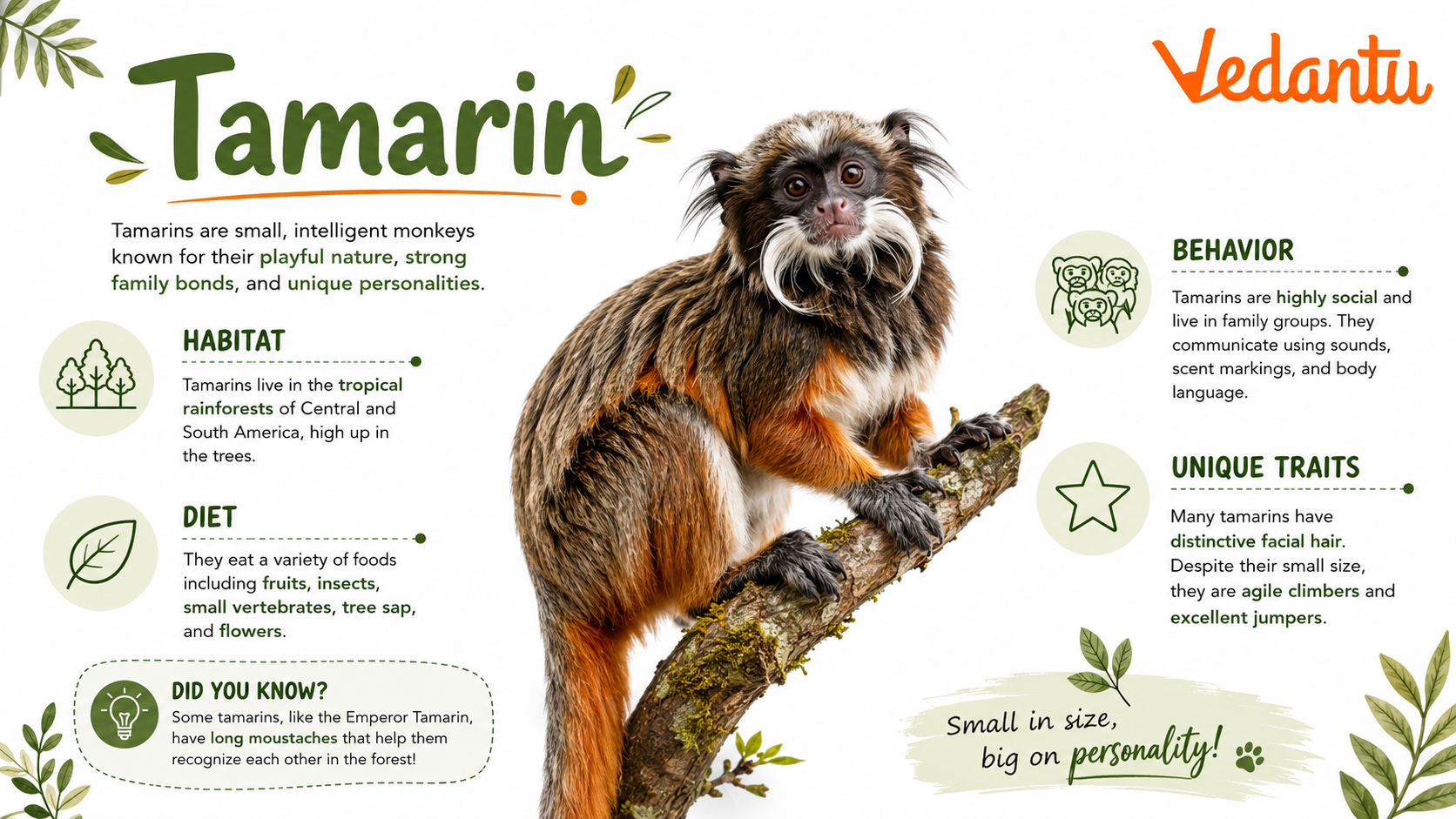
Quick Facts About Tamarin
| Feature | Details |
|---|---|
| Common Name | Tamarin |
| Scientific Family | Callitrichidae |
| Animal Group | Mammal (Primate) |
| Size | 20–30 cm (body length) |
| Weight | 300–600 grams |
| Lifespan | 10–15 years (wild) |
| Habitat | Tropical rainforests |
| Diet | Fruits, insects, nectar, small animals |
| Movement | Climbing and jumping in trees |
| Conservation Status | Some species Endangered |
Appearance and Physical Characteristics
- Small body with a long tail (often longer than the body).
- Soft fur in shades of brown, black, white, or golden.
- Some species have a white moustache or beard.
- Sharp claws instead of flat nails (helps in gripping trees).
- Long fingers perfect for climbing.
Tamarin Habitat and Distribution
- Found in Central and South America.
- Countries include Brazil, Peru, Colombia, and Bolivia.
- Live in tropical rainforests and river forests.
- Prefer dense trees with plenty of food and hiding spots.
Tamarin Diet and Feeding Habits
- Omnivores – eat both plants and animals.
- Main food: fruits and insects.
- Also eat tree sap, nectar, spiders, and small lizards.
- Use sharp teeth to bite tree bark and drink sap.
Behaviour and Lifestyle
- Live in small social groups of 3–15 members.
- Communicate using chirps, whistles, and facial expressions.
- Active during the day (diurnal).
- Very playful and energetic.
- Work together to protect their territory.
Tamarin Life Cycle
- Birth: Usually twins are born after about 4–5 months of pregnancy.
- Infant Stage: Babies cling to their father’s back for protection.
- Juvenile Stage: Young tamarins learn climbing and food searching skills.
- Adult Stage: Become fully grown in about 1–2 years.
What Makes Tamarin Special?
Types of Tamarins
- Golden Lion Tamarin – Bright orange fur.
- Emperor Tamarin – Long white moustache.
- Cotton-top Tamarin – Fluffy white crest on head.
- Black-mantled Tamarin – Dark body with lighter chest.
Importance and Role in Nature
Amazing Tamarin Facts
- Most tamarins give birth to twins.
- They can rotate their heads almost 180 degrees.
- They mark their territory using scent glands.
- Golden Lion Tamarins were once close to extinction.
- They sleep in tree holes at night.
- Their long tails help them balance during fast jumps.
Fun Facts for Kids
- Tamarins are about the size of a squirrel.
- They love sweet fruits.
- Baby tamarins ride on their dad’s back.
- Some look like they have funny white hairdos!
- They chatter with high-pitched sounds.
FAQs on Tamarin Monkeys: Fascinating Facts, Behavior, and Habitat
1. What is a tamarin?
Tamarin is a small type of New World monkey that lives in the rainforests of Central and South America.
- Belongs to the Callitrichidae family
- Known for its tiny size and long tail
- Has claw-like nails instead of flat nails
- Includes species like the Emperor Tamarin and Golden Lion Tamarin
2. Where do tamarins live?
Tamarins live in tropical rainforests of Central and South America.
- Found in countries like Brazil, Peru, Colombia, and Bolivia
- Live high in trees (arboreal animals)
- Prefer warm, humid forest habitats
- Stay in areas with lots of fruits and insects
3. What do tamarins eat?
Tamarins are omnivores, meaning they eat both plants and animals.
- Fruits and berries
- Insects like ants and beetles
- Tree sap and nectar
- Small reptiles and bird eggs
4. How big is a tamarin?
Tamarins are very small monkeys, about the size of a squirrel.
- Body length: 8–12 inches (20–30 cm)
- Tail length: 12–16 inches (longer than body)
- Weight: Around 1 pound (400–500 grams)
5. Are tamarins endangered?
Some tamarin species are endangered due to habitat loss and illegal pet trade.
- Golden Lion Tamarin is classified as endangered
- Deforestation destroys rainforest homes
- Conservation programs help protect them
- Wildlife reserves support population growth
6. Why is the Emperor Tamarin special?
The Emperor Tamarin is famous for its long white mustache that looks like a king’s beard.
- Named after Emperor Wilhelm II of Germany
- Lives in the Amazon rainforest
- Uses vocal sounds to communicate
- Has sharp claws for climbing trees
7. How do tamarins communicate?
Tamarins communicate using sounds, facial expressions, and body language.
- High-pitched calls to warn about danger
- Scent marking to show territory
- Facial signals within family groups
- Tail movements during social interaction
8. Do tamarins live alone or in groups?
Tamarins live in small social groups called troops.
- Usually 2–15 members
- Led by a dominant breeding female
- Family members help raise babies
- Work together to find food
9. How long do tamarins live?
Tamarins can live up to 15 years in captivity and slightly less in the wild.
- Wild lifespan: 8–12 years
- Captivity lifespan: Up to 15 years
- Face threats from predators and habitat loss
- Zoos provide protected environments
10. What are the different types of tamarins?
There are several types of tamarin species found in South American rainforests.
- Golden Lion Tamarin
- Emperor Tamarin
- Cotton-top Tamarin
- Golden-headed Lion Tamarin
