






How to Identify a Starling and Understand Its Behavior
The starling is a small, energetic bird known for its shiny feathers and incredible group flying displays. Found in many parts of the world, starlings are famous for forming huge flocks called murmurations that move like flowing clouds in the sky. These birds are clever, adaptable, and excellent singers. Let’s explore interesting Starling facts, their habitat, diet, characteristics, life cycle, and why they are important in nature.
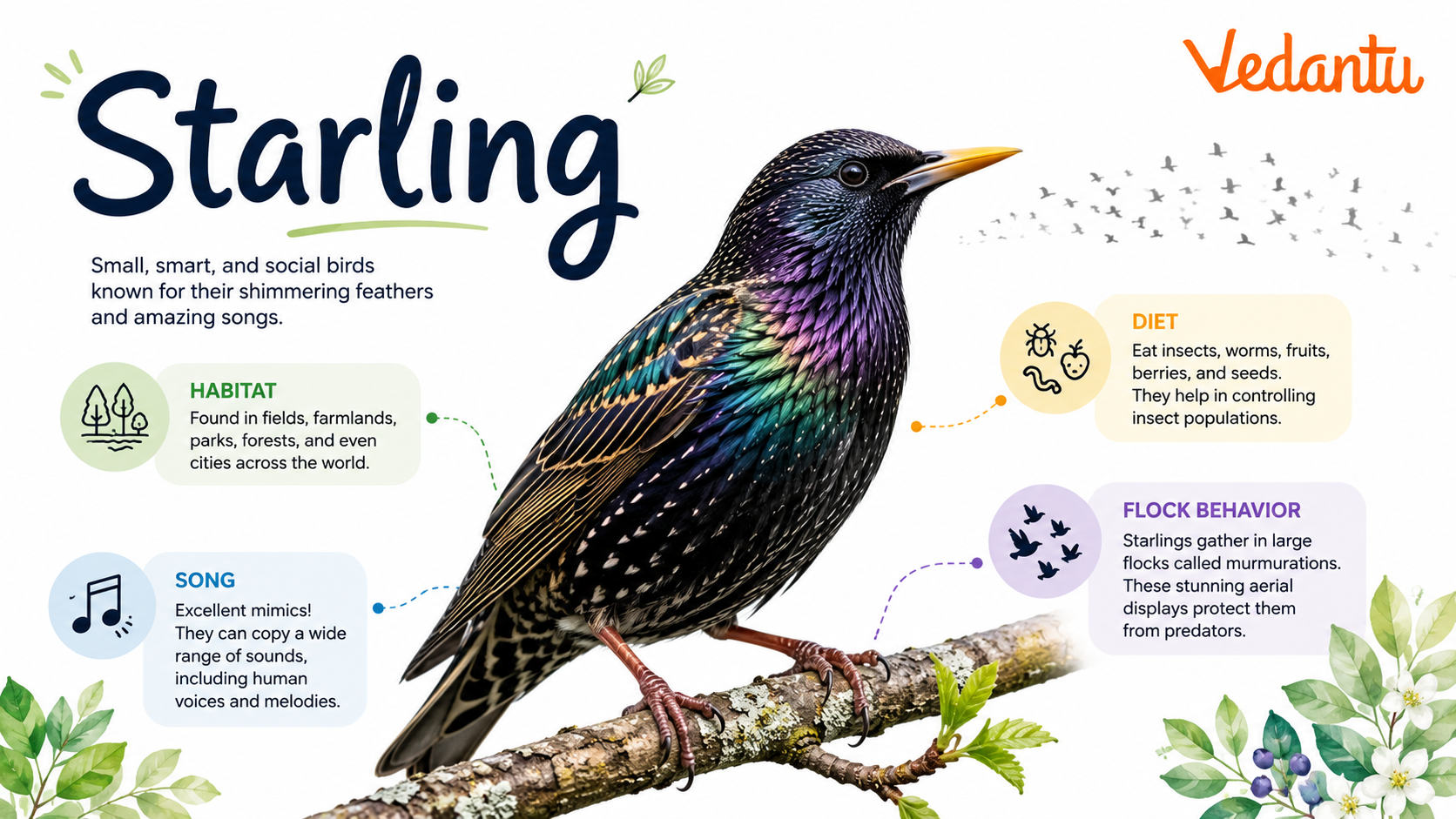
Quick Facts About Starling
| Feature | Details |
|---|---|
| Common Name | Starling |
| Scientific Name | Sturnus vulgaris (Common Starling) |
| Animal Group | Bird |
| Size | About 20 cm long |
| Weight | 60–100 grams |
| Lifespan | 2–3 years in wild (can live longer) |
| Habitat | Grasslands, cities, farms, woodlands |
| Diet | Omnivore – insects, fruits, seeds |
| Special Feature | Large synchronized flocks (murmurations) |
Appearance and Physical Characteristics
- Small to medium-sized bird with a short tail.
- Glossy black feathers with purple and green shine.
- White or pale spots during winter season.
- Sharp, pointed yellow beak (especially in breeding season).
- Strong legs for walking and hopping on the ground.
Habitat and Distribution
The Starling habitat includes open fields, gardens, farms, parks, and even busy cities. They easily adapt to places where humans live.
- Originally native to Europe and parts of Asia.
- Now found in North America, Australia, and New Zealand.
- Prefer areas with trees for nesting and open ground for feeding.
- Often roost in large groups in trees or buildings.
Diet and Feeding Habits
Starling diet: They are omnivores, which means they eat both plants and animals.
- Insects like beetles, worms, and caterpillars
- Fruits and berries
- Seeds and grains
- Food scraps in urban areas
They use their strong beaks to probe into soil and grass to find hidden insects.
Behaviour and Lifestyle
- Very social birds that live in large flocks.
- Active during the day (diurnal).
- Walk and hop on the ground while feeding.
- Communicate using whistles, clicks, and mimic sounds.
- Famous for forming murmurations – huge swirling flocks in the sky.
Sound and Call
Starlings are talented mimics. They can copy:
- Other birds’ songs
- Car alarms
- Phone ringtones
- Human whistles
Their songs are loud, varied, and often heard during the breeding season.
Life Cycle of a Starling
- Egg Stage: Female lays 4–6 pale blue eggs in a nest.
- Incubation: Eggs hatch in about 12–15 days.
- Chick Stage: Both parents feed the chicks insects.
- Fledgling: Young birds leave the nest after 3 weeks.
- Adult: Join flocks and begin breeding in the next season.
Flight Adaptations
What Makes Starling Special?
Importance and Role in Nature
Amazing Starling Facts
Fun Facts for Kids
- A group of starlings is called a murmuration.
- They love to take dust baths.
- They can walk instead of hopping like many birds.
- They sometimes copy human speech sounds.
- Their flocks look like moving clouds at sunset.
FAQs on Starling Bird: Fascinating Facts, Habitat and Sounds
1. What is a Starling?
A Starling is a small to medium-sized bird known for its shiny feathers and amazing flock movements.
- The most common type is the Common Starling (European Starling).
- It belongs to the Sturnidae bird family.
- Starlings are famous for flying in huge groups called murmurations.
- They are intelligent birds that can copy sounds and voices.
2. Where do Starlings live?
Starlings live in many parts of the world, including Europe, North America, Asia, and Australia.
- The European Starling was introduced to North America in the 1800s.
- They live in cities, farms, forests, and grasslands.
- Starlings build nests in tree holes, buildings, and nest boxes.
3. What do Starlings eat?
Starlings are omnivores, which means they eat both plants and animals.
- Insects like beetles, caterpillars, and worms
- Fruits such as berries and apples
- Seeds and grains
- Small invertebrates
4. Why do Starlings fly in big groups?
Starlings fly in large groups called murmurations to stay safe and warm.
- Flying together protects them from predators like hawks.
- The swirling patterns confuse enemies.
- Group flying helps them find food and roosting spots.
5. What is a murmuration?
A murmuration is a large flock of starlings flying together in swirling, wave-like patterns.
- Thousands of birds move as one group.
- They change direction quickly and smoothly.
- This behavior usually happens at sunset.
6. Are Starlings good at copying sounds?
Yes, starlings are excellent mimics and can copy many different sounds.
- They imitate other birds.
- They can copy car alarms and phone ringtones.
- Some pet starlings can even mimic human speech.
7. What do baby Starlings look like?
Baby starlings, called chicks, are small and gray-brown in color.
- They hatch from pale blue eggs.
- Both parents feed the chicks insects.
- Young starlings leave the nest after about 3 weeks.
8. Are Starlings invasive species?
In some countries, like the United States, the European Starling is considered an invasive species.
- They were introduced in 1890 in New York.
- They compete with native birds for nesting spaces.
- They can damage crops and farms.
9. How can you identify a Starling?
You can identify a starling by its glossy feathers and short tail.
- Shiny black or dark green feathers with white spots
- Yellow beak during breeding season
- Strong, fast flight
- Noisy and social behavior
10. Why are Starlings important in nature?
Starlings play an important role in the ecosystem by controlling insects and spreading seeds.
- They eat harmful agricultural pests.
- They help disperse fruit seeds.
- They are part of the food chain for predators.
