






Why Do Songbirds Sing? Types, Habitats, and Unique Traits Explained
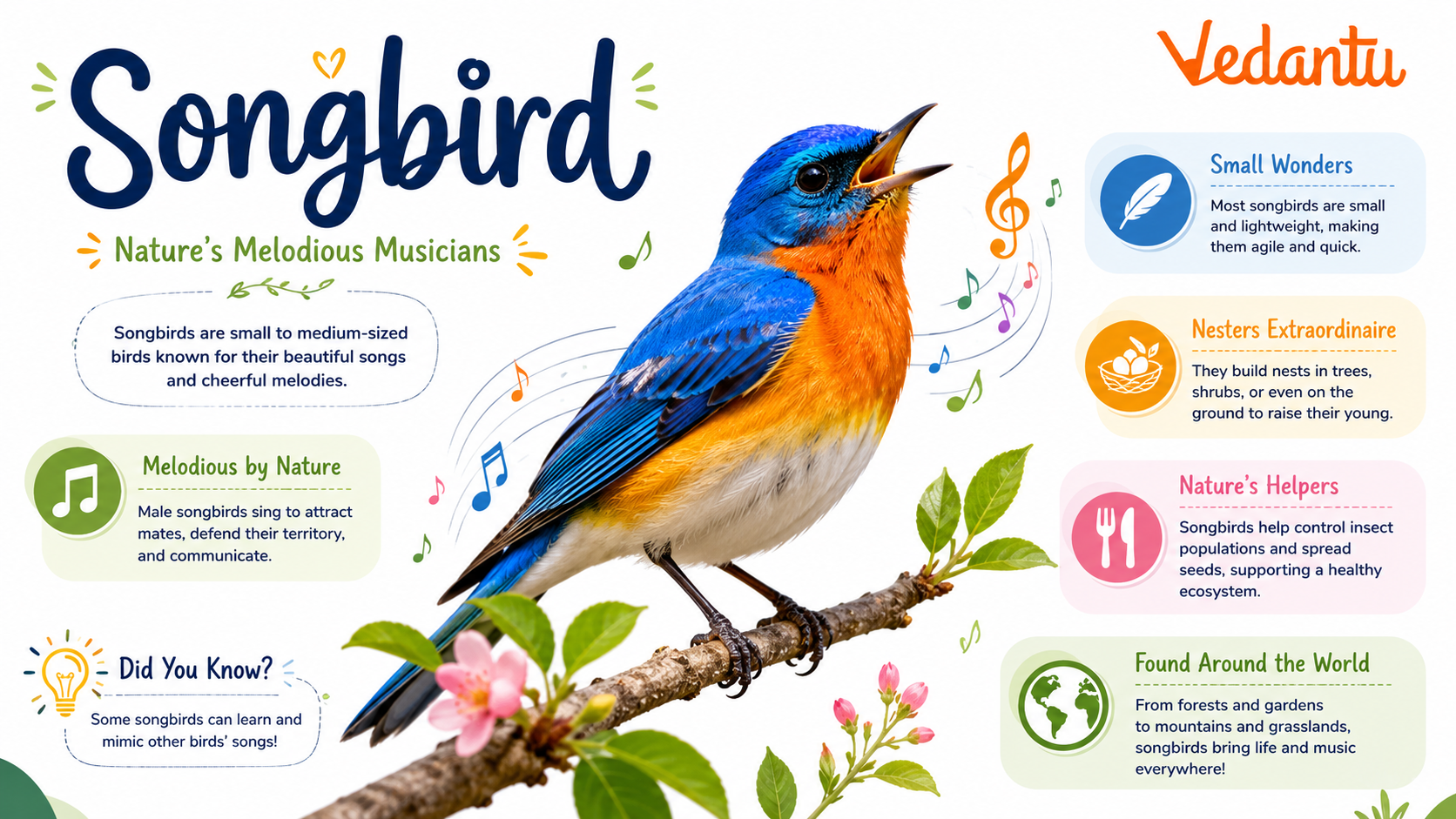
Quick Facts About Songbirds
| Feature | Details |
|---|---|
| Common Name | Songbird |
| Scientific Group | Suborder Passeri (Order: Passeriformes) |
| Animal Group | Bird |
| Size | Usually 10–25 cm (varies by species) |
| Weight | About 10–60 grams (most species) |
| Habitat | Forests, gardens, grasslands, wetlands, cities |
| Diet | Insects, seeds, fruits, nectar |
| Special Feature | Complex vocal organ called syrinx |
| Young One | Chick |
Appearance and Physical Characteristics
- Small to medium-sized bodies with lightweight bones.
- Strong feet designed for perching on branches.
- Sharp, pointed beaks (shape depends on diet).
- Bright or soft-coloured feathers like brown, yellow, blue, red, or black.
- Well-developed syrinx (voice box) for singing.
Songbird Habitat and Distribution
- Found on every continent except Antarctica.
- Live in forests, woodlands, grasslands, and wetlands.
- Many species live in gardens and cities.
- Some migrate long distances during winter.
Different species prefer different climates. Some love tropical rainforests, while others survive in cold temperate regions. Trees and shrubs are important because they provide food, shelter, and nesting sites.
Diet and Feeding Habits
Many songbirds eat insects like caterpillars, beetles, and ants.
Sparrows and finches eat seeds using strong, short beaks.
Some species feed on fruits and flower nectar.
They control insect populations and spread seeds.
The Songbird diet depends on the species and season. During breeding season, many eat more insects to feed their growing chicks.
Behaviour and Lifestyle
- Mostly active during the day (diurnal).
- Males often sing to attract mates and protect territory.
- Some species are social, others are solitary.
- Many migrate in flocks during seasonal changes.
Sound and Song
Songbirds are famous for their sweet and complex songs. Their music is not random—it has meaning.
- To attract mates: Males sing to impress females.
- To mark territory: Songs warn other birds to stay away.
- To communicate: Calls are used for danger alerts.
Flight Adaptations
- Lightweight bones help in easy flight.
- Strong chest muscles power their wings.
- Feathers provide lift and control.
- Tails help with balance and direction.
Songbird Life Cycle
- Egg: Female lays eggs in a nest built on trees or shrubs.
- Chick: Eggs hatch after about 10–14 days.
- Fledgling: Young birds learn to fly after a few weeks.
- Adult: They grow, sing, find mates, and reproduce.
The Songbird life cycle is usually short. Many species live 2–10 years, depending on the environment.
What Makes Songbirds Special?
Types and Diversity
- Sparrows
- Finches
- Robins
- Nightingales
- Canaries
- Blackbirds
Importance and Role in Nature
Amazing Songbird Facts
- Songbirds make up more than half of all bird species.
- Their syrinx can produce complex melodies.
- Some can imitate other birds and even human sounds.
- Many species sing at sunrise, called the “dawn chorus.”
- They have excellent eyesight.
- Some species remember hundreds of different songs.
Interesting Facts About Songbirds
Fun Facts for Kids
- Some songbirds can sing over 1,000 different notes!
- Baby songbirds learn songs from their parents.
- Many songbirds are smaller than your hand.
- They hop instead of walking on the ground.
- You can attract them by placing bird feeders.
FAQs on Songbird Guide: Fascinating Facts About Nature’s Best Singers
1. What is a songbird?
A songbird is a type of bird known for its beautiful and musical singing voice.
- Songbirds belong to the scientific group called Passerines or perching birds.
- They have special vocal organs called the syrinx that help them create complex songs.
- Common examples include sparrows, robins, nightingales, and canaries.
- They are found in forests, gardens, parks, and even cities around the world.
2. Why do songbirds sing?
Songbirds sing mainly to communicate and protect their space.
- To attract a mate during the breeding season.
- To defend their territory from other birds.
- To warn others about danger or predators.
- Young birds also sing to practice and learn songs.
3. Where do songbirds live?
Songbirds live in many different habitats across the world.
- Forests and woodlands
- Gardens and backyards
- Grasslands and meadows
- Mountains and wetlands
4. What do songbirds eat?
Most songbirds eat a mix of plant and animal foods depending on the species.
- Insects like worms, beetles, and caterpillars
- Seeds and grains
- Fruits and berries
- Nectar from flowers (in some species)
5. How do songbirds learn their songs?
Songbirds learn their songs by listening to adult birds and practicing.
- Young birds copy the songs of their parents or nearby adults.
- They go through a practice stage called subsong.
- Over time, their song becomes clear and strong.
- Some species can even learn new sounds from their environment.
6. What makes songbirds different from other birds?
Songbirds are different because of their advanced singing ability and perching feet.
- They have a specialized voice box called the syrinx.
- Most have three toes forward and one backward for gripping branches.
- They produce more complex songs than many other birds.
- They belong to the large bird order Passeriformes.
7. Are all small birds songbirds?
No, not all small birds are songbirds, even if they chirp.
- Some small birds belong to different groups like hummingbirds or woodpeckers.
- True songbirds are part of the Passeri suborder.
- Size does not decide if a bird is a songbird.
- The key feature is their ability to produce musical songs.
8. Can songbirds migrate?
Yes, many songbirds migrate to find food and warmer weather.
- They travel long distances between breeding and wintering areas.
- Migration can cover thousands of kilometers.
- Birds use the sun, stars, and Earth’s magnetic field to navigate.
- Examples include the American Robin and Warblers.
9. Why are songbirds important to the environment?
Songbirds play an important role in keeping ecosystems healthy.
- They help control insect populations.
- They spread seeds that grow new plants and trees.
- They are part of the food chain for larger animals.
- Their songs add natural beauty to forests and parks.
10. How can kids help protect songbirds?
Kids can help protect songbirds by creating safe and friendly environments.
- Put out bird feeders and fresh water.
- Plant native plants and flowers.
- Avoid using harmful pesticides.
- Keep cats indoors to protect nesting birds.
