






Types of Shellfish and How They Benefit Your Health
Shellfish are fascinating aquatic animals that live inside hard outer shells. They are found in oceans, rivers, and lakes around the world. From crabs and lobsters to clams and oysters, shellfish come in many shapes and sizes. These creatures play an important role in marine ecosystems and are also important for humans as food and for pearl production. Let’s explore amazing shellfish facts, habitat, diet, characteristics, and life cycle in a fun and easy way!
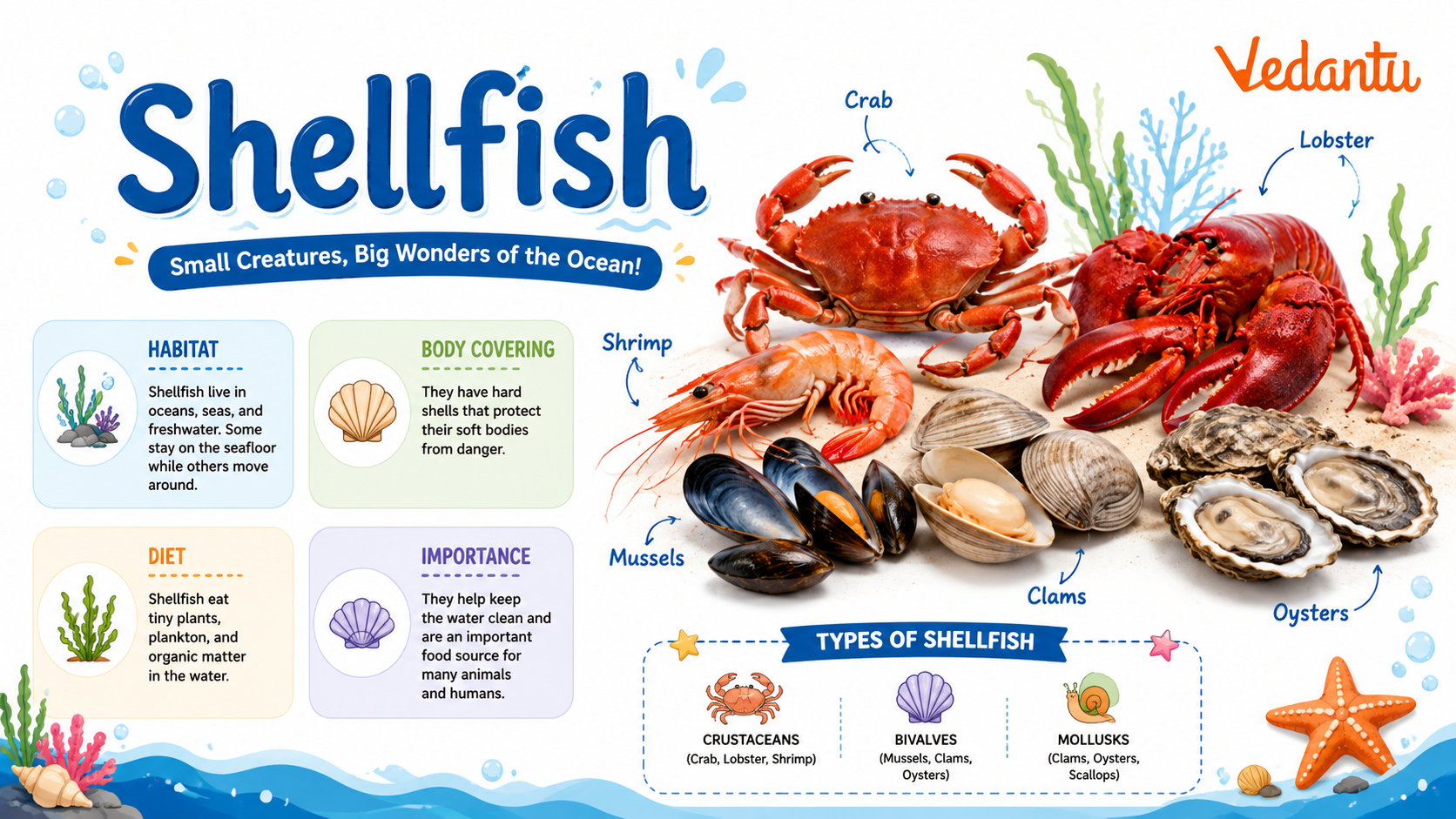
Quick Facts About Shellfish
| Feature | Details |
|---|---|
| Animal Group | Invertebrates (no backbone) |
| Main Types | Crustaceans and Mollusks |
| Habitat | Oceans, seas, rivers, and lakes |
| Body Covering | Hard shell or exoskeleton |
| Diet | Algae, plankton, small animals |
| Lifespan | Few years to over 100 years (varies by species) |
| Special Feature | Protective shell and strong claws (in some) |
Types and Diversity of Shellfish
Crustaceans
Include crabs, lobsters, shrimps, and prawns. They usually have jointed legs and a hard outer skeleton.Mollusks
Include clams, oysters, mussels, and scallops. They have soft bodies protected by two-part shells.Appearance and Physical Characteristics
- Have a hard outer shell for protection.
- Soft body inside the shell.
- Some have claws (like crabs and lobsters).
- Most have multiple legs for walking or swimming.
- Shell colours can be brown, red, grey, white, or even purple.
Shellfish Habitat
- Found in salty ocean water and freshwater rivers.
- Live on the seabed, buried in sand, or attached to rocks.
- Some hide in coral reefs.
- Prefer cool, clean water.
Shellfish Diet and Feeding Habits
- Many shellfish are filter feeders.
- They filter tiny plants and plankton from water.
- Crabs and lobsters eat small fish, algae, and dead animals.
- They help keep water clean by filtering it.
Behaviour and Lifestyle
- Most are slow movers.
- Crabs can walk sideways.
- Some are active at night.
- Use claws and shells for defence.
- Many hide under rocks to escape predators.
Shellfish Life Cycle
- Egg Stage: Females release eggs into water.
- Larva Stage: Tiny larvae float in water.
- Juvenile Stage: Develop shells and settle on the seabed.
- Adult Stage: Grow larger and reproduce.
What Makes Shellfish Special?
Importance and Role in Nature
Amazing Shellfish Facts
- Some clams can live for over 100 years.
- Lobsters can regrow lost claws.
- Crabs have 10 legs.
- Oysters can change gender during their lifetime.
- Some shellfish glow under certain light.
- They have existed for over 500 million years.
Interesting Facts About Shellfish
Fun Facts for Kids
- Crabs walk sideways, not forward!
- Oysters can clap their shells shut.
- Lobsters taste with their legs.
- Some shells are spiral-shaped.
- Shellfish do not have bones.
FAQs on Shellfish Guide: Meaning, Varieties, and Nutrition Explained
1. What are shellfish?
Shellfish are aquatic animals with shells that live in oceans, rivers, and lakes.
- Shellfish are a type of seafood and marine animal.
- They usually have a hard outer shell for protection.
- There are two main groups: crustaceans and mollusks.
- Common examples include shrimp, crab, lobster, clams, oysters, and mussels.
- People also ask: Are shellfish fish? No, they are not fish because they do not have backbones.
2. What are the main types of shellfish?
The two main types of shellfish are crustaceans and mollusks.
- Crustaceans: shrimp, crab, lobster, crayfish.
- Mollusks: clams, oysters, mussels, scallops, squid.
- Crustaceans have jointed legs and hard shells.
- Mollusks often have soft bodies, sometimes protected by shells.
- People also search: difference between crustaceans and mollusks.
3. Where do shellfish live?
Shellfish live in saltwater and freshwater environments around the world.
- Most shellfish live in oceans and seas.
- Some species live in rivers, lakes, and ponds.
- Many mollusks attach to rocks or stay buried in sand.
- Crustaceans often crawl on the sea floor or swim.
- People also ask: Do shellfish live in coral reefs? Yes, many do.
4. Are shellfish healthy to eat?
Shellfish are healthy seafood because they are rich in protein, vitamins, and minerals.
- High in protein and low in fat.
- Contain important nutrients like omega-3 fatty acids, zinc, and vitamin B12.
- Support heart health and brain development.
- Should be cooked properly to avoid foodborne illness.
- People also search: benefits of eating shellfish.
5. What is a shellfish allergy?
A shellfish allergy is when the immune system reacts badly to eating shellfish.
- Common with shrimp, crab, lobster, and other crustaceans.
- Symptoms include itching, swelling, stomach pain, or trouble breathing.
- It is one of the most common food allergies.
- People with this allergy should avoid all shellfish.
- People also ask: Can children outgrow shellfish allergy? Sometimes, but often it lasts for life.
6. Are shellfish the same as fish?
Shellfish are not the same as fish because they do not have backbones.
- Fish are vertebrates with internal skeletons.
- Shellfish are invertebrates with outer shells.
- Fish have scales and fins.
- Shellfish may have claws, legs, or soft bodies.
- People also search: difference between fish and shellfish.
7. How do shellfish protect themselves?
Shellfish protect themselves using hard shells and other defense methods.
- Their hard outer shell keeps predators away.
- Crabs and lobsters use claws to defend themselves.
- Some mollusks hide in sand or attach tightly to rocks.
- Octopus and squid (mollusks) can release ink.
- People also ask: Why do shellfish have shells? For protection and support.
8. How do shellfish grow?
Shellfish grow by molting or by building larger shells as they age.
- Crustaceans shed their old shell in a process called molting.
- After molting, a new bigger shell hardens.
- Mollusks slowly add layers to their shells.
- Growth depends on food, water quality, and habitat.
- People also search: how do crabs grow new shells?
9. Why are shellfish important to the environment?
Shellfish are important because they help keep water clean and support marine ecosystems.
- Oysters and clams filter water by removing tiny particles.
- They are food for fish, birds, and humans.
- They help maintain healthy marine ecosystems and food chains.
- Some build reefs that protect shorelines.
- People also ask: How do shellfish help the ocean? By filtering and recycling nutrients.
10. Can kids learn about shellfish safely?
Kids can safely learn about shellfish through books, aquariums, and supervised activities.
- Visit an aquarium to see live crabs and starfish.
- Read children’s books about marine life and sea animals.
- Observe shells at the beach without harming animals.
- Always wash hands after touching sea creatures.
- People also search: fun facts about shellfish for kids.
